
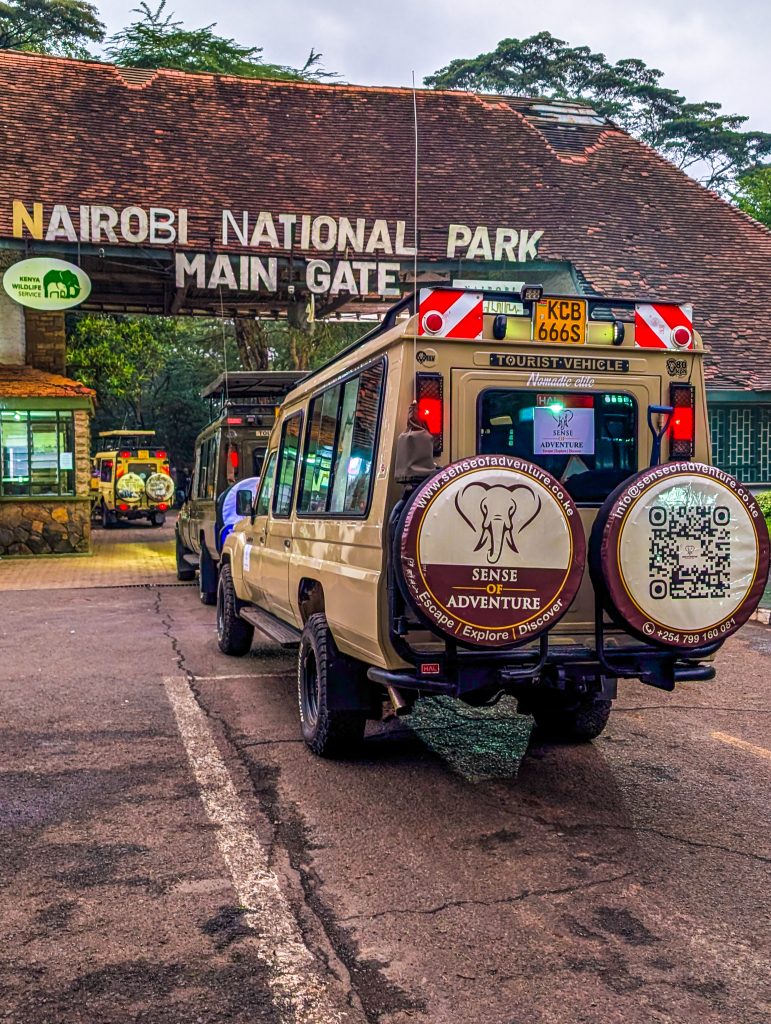
Safari Before Your Flight. Or After. Or Instead of the City.
Sense of Adventure runs Nairobi National Park game drives any day, for any duration, for guests in transit or in the city. Please contact us, and we can have a vehicle at your hotel in 30 minutes.
Nairobi National Park Guide: What Wildlife Lives Inside Nairobi National Park?
Nairobi National Park Guide — Nairobi National Park has a unique southern boundary that remains open, creating a vital wildlife corridor connecting the park to the Kitengela plains. Unlike most protected areas in Kenya, many animals here are not completely fenced in. Large herbivores including wildebeest, zebra, hartebeest, and eland migrate seasonally between the park and the surrounding dispersal ecosystem, maintaining one of the country’s last remaining urban wildlife migration routes.
The park’s predators lions, leopards, and cheetahs, are resident throughout the year, making a Nairobi National Park safari one of the best wildlife experiences near Nairobi city. Most notably, the park is home to the Kenya Wildlife Service’s most intensive black rhino sanctuary, where more than 50 endangered black rhinos are individually monitored using GPS tracking technology. Rhino sightings in Nairobi National Park are among the most reliable and rewarding in any Kenya safari destination
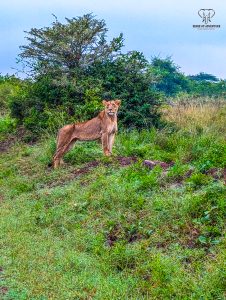
🍁 Nairobi National Park Wildlife Roster
Big predators: Lion (approximately 35 individuals), leopard, cheetah (small but active population).
Large herbivores: Black rhino (50+, KWS sanctuary, highly reliable sightings), buffalo, zebra, wildebeest, hartebeest, eland, kongoni, impala, Thomson’s gazelle, giraffe.
Birds: 400+ species, including ostriches, secretary birds, crowned cranes, various raptors (martial eagle, bateleur), and the Athi-Kapiti endemic species corridor.
Absent: Elephant (too large for the park’s size; resident elephants move freely on the corridor) and hippo (found only in the Mbagathi River corridor).
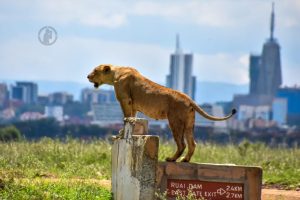
Nairobi National Park Guide: Five Essential Nairobi National Park Experiences
Black Rhino With the City Behind It
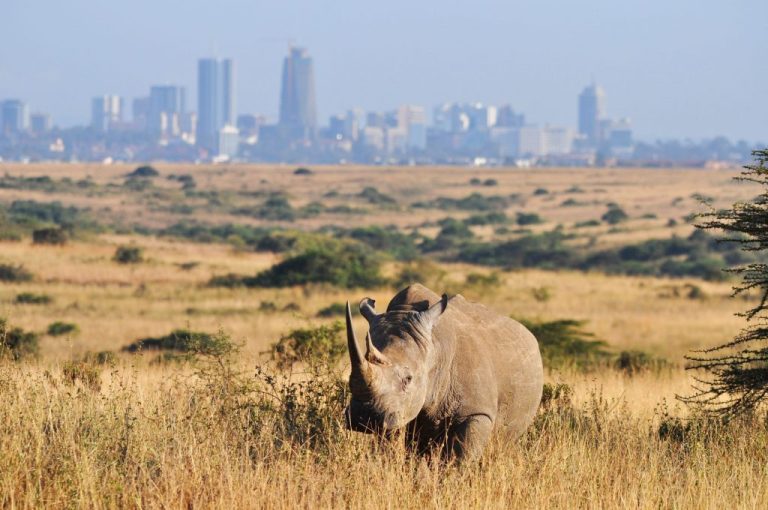
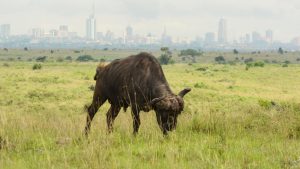
The definitive Nairobi National Park photograph, and the image that most succinctly captures what is extraordinary about Kenya’s urban-wildlife relationship, is a black rhino against Nairobi’s skyscraper skyline. It is not staged. It is not manipulated. Both the rhino and the skyline are real, simultaneous, and genuinely co-existing in the same frame. Sense of Adventure’s guides know the rhino’s seasonal ranges within the park and position vehicles at the right angle to capture both skyline and animal in the same image.
Lion and Cheetah Sightings — Urban Predators
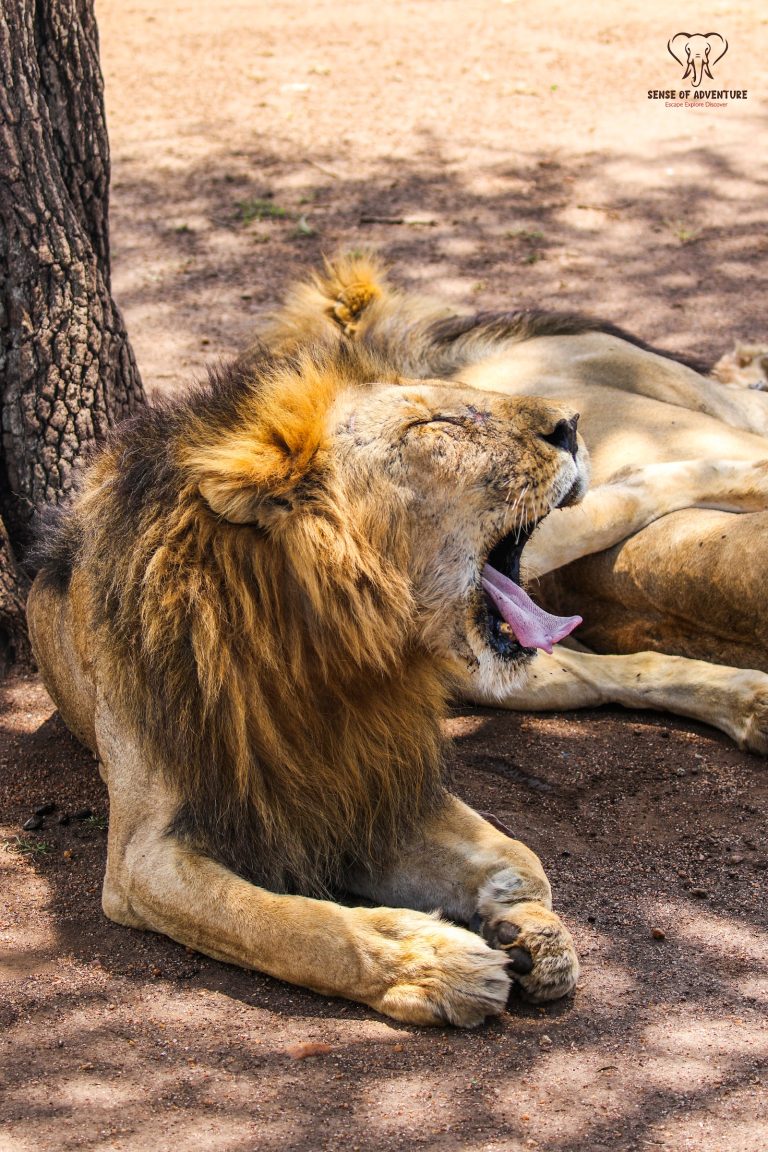
Nairobi National Park’s lion population, approximately 35 individuals across three prides, yields reliable sightings on most morning game drives. The Mbagathi River pride is the most consistently seen; the corridor lions move between the park and the Kitengela plains on a schedule that Sense of Adventure’s guides track daily. Cheetah sightings are less frequent but regular; the open grassland of the park’s eastern section is ideal cheetah habitat, and the small resident population is well-monitored.
Ivory Burning Monument — Conservation History
In 1989, Kenya’s president, Daniel arap Moi, burned 12 tonnes of confiscated ivory in Nairobi National Park in one of the most significant symbolic acts in conservation history, signaling Kenya’s absolute opposition to the ivory trade and helping to turn global opinion against elephant poaching. The Ivory Burning Monument at the site of the burn is a deeply resonant piece of wildlife conservation history, and Sense of Adventure includes it in extended Nairobi National Park visits for guests who want the historical context of Kenya’s efforts to protect its wildlife.
Athi River Gorge — Riverine Forest Birding
The Mbagathi River and its confluence with the Athi in the park’s southern section create a riverine forest zone that concentrates bird species and offers leopard habitat quite different from the open grassland above. Walking is permitted in some sections with a ranger, and the gorge’s fig trees, hippo pools, and dense canopy produce a completely different acoustic and visual experience from the open plains game drive. Sense of Adventure includes the gorge section in birding-focused itineraries for Nairobi National Park.
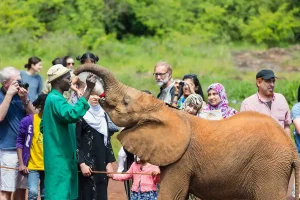
We had a 10 am flight to London. Our guide picked us up at 5:45 am from the hotel. By 9 am5:30 am, we had seen a black rhino, a cheetah, and six lions. We were at the airport by 9:45. I told everyone on the plane, and nobody believed me.
— Sense of Adventure guest, Nairobi National Park, February 2025
Using Nairobi National Park as a Safari Warm-Up or Wind-Down
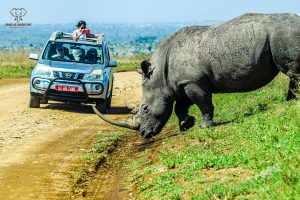
Black Rhinos 20 Minutes From Your Hotel. True Story.
Sense of Adventure runs Nairobi National Park game drives at any time 5:30am departures, half-day excursions, and layover safaris. WhatsApp us now to arrange yours.
Frequently Asked Questions — Nairobi National Park
Can I see the Big Five in Nairobi National Park?
How long does a Nairobi National Park game drive take?
A standard morning game drive runs 3–4 hours (05:30–09:00 or 06:00–10:00). A half-day drive runs 4–5 hours and covers more of the park. A full-day drive is possible but unusual; most guests prefer a morning drive in the park followed by other Nairobi activities (Sheldrick, Giraffe Center). Sense of Adventure customizes drive duration to your Nairobi schedule and flight times.
Is Nairobi National Park worth visiting if I’m doing the Masai Mara?
Yes — for different reasons. The Masai Mara delivers vastly more wildlife in a greater landscape. Nairobi National Park delivers the unique experience of seeing wildlife against an urban backdrop, reliable black rhino sightings, and complete convenience for guests with limited time. Many guests who have done both rate the Nairobi park as a deeply unusual and valuable experience that the Masai Mara, for all its superiority in density, cannot replicate.
What is the entry fee for Nairobi National Park?
Park entry fees for non-residents are set by KWS and subject to change. As of 2025, they run approximately USD 80 per adult per visit. Sense of Adventure includes all park fees in game drive costs with no hidden additions; the price we quote is the price you pay, inclusive of vehicle, guide, park entry, and fuel.
Can you see lions in Nairobi National Park?
Yes. Lions are resident predators inside the park and are frequently seen during morning game drives.
How long do you need for Nairobi National Park?
A half-day safari (4–6 hours) is usually sufficient, though full-day experiences offer additional attractions.
Are rhino sightings guaranteed?
While wildlife can never be fully guaranteed, rhino sightings are highly reliable in Nairobi National Park.
Can I visit directly from the airport?
Yes. Many travelers visit directly from Jomo Kenyatta International Airport during layovers or before departure flights.
Book Your Nairobi National Park Safari
Ready to experience Kenya’s most unique urban safari?
Contact Sense of Adventure today for:
- Private game drives
- Airport transfer safaris
- Full-day Nairobi wildlife tours
- Luxury Kenya safari planning
- Customized travel itineraries
📧 reservations@senseofadventure.co.ke
📱 WhatsApp: +254 799 160 081