
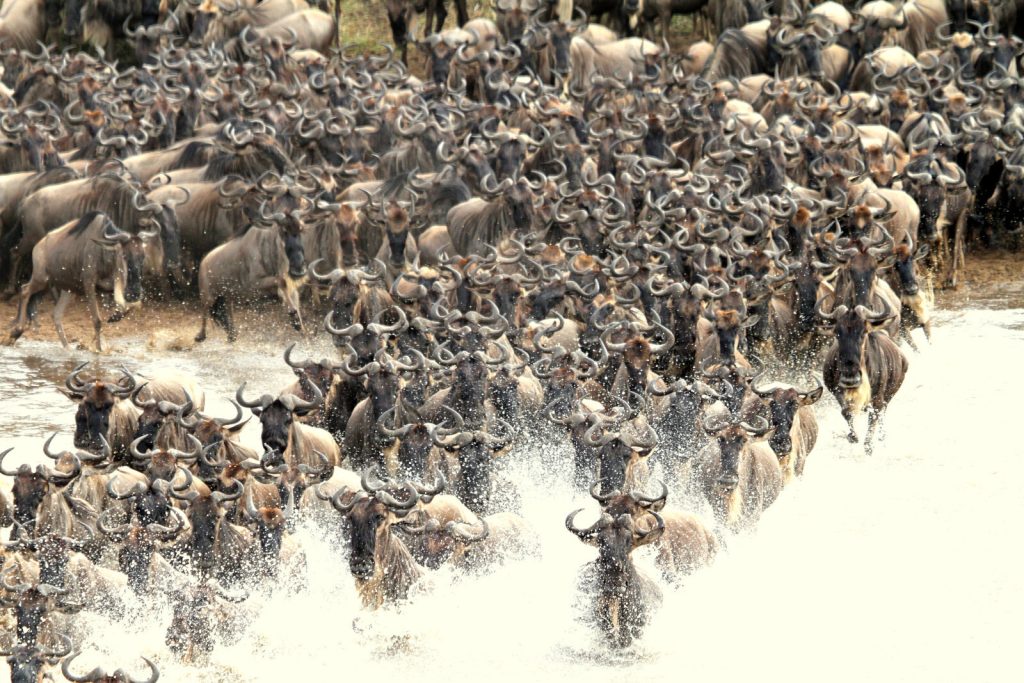
The Great Migration is the largest overland animal movement on earth — 1.5 million wildebeest, 200,000 zebras, and 500,000 Thomson’s gazelles circling the 1,800 km Serengeti-Mara ecosystem in an annual pattern driven entirely by grass and rainfall. When these animals are in Kenya’s Masai Mara — from approximately July to October — they pile up at the Mara and Talek rivers in herds of tens of thousands, then explode across the water in river crossings that are simultaneously the most chaotic, the most violent, and the most extraordinarily alive spectacle in the natural world. Nile crocodiles, who have waited months for this exact moment, erupt from the water beneath the crossing animals. Lions wait on the far bank. The noise is physical. Sense of Adventure has been positioning guests at the river crossings for years — this guide tells you exactly what you need to know to be there at the right moment.
Be at the River When the Crossing Happens
Sense of Adventure’s guides monitor crossing activity daily and position guests at the right point on the right day. Contact us to plan your Great Migration safari.
The Great Migration Calendar — Kenya’s Window
| Month | Location | Key Event | Sense of Adventure Verdict |
|---|---|---|---|
| Jan – Mar | Southern Serengeti | Calving season — 500,000 calves born | Extraordinary but in Tanzania |
| Apr – May | Central Serengeti | Moving north through Seronera | In transit — Tanzania |
| Jun | Western Serengeti | Grumeti River crossings begin | Advance guard entering Mara |
| Jul – Aug | Masai Mara | Peak river crossings — the main event | ⭐⭐⭐⭐⭐ Best time to be in the Mara |
| Sep – Oct | Masai Mara | Maximum herds — multiple daily crossings | ⭐⭐⭐⭐⭐ Peak density in Kenya |
| Nov | Moving south | Return migration begins | Tail end — good but tapering |
How River Crossings Actually Work
The Mara River crossings are not scheduled — no crossing happens at the same place or time twice. Understanding what triggers a crossing is the key to being there when one happens. Wildebeest are simultaneously driven by the urge to cross and paralysed by fear of the crocodiles and the river itself. A herd will gather at a crossing point — sometimes 10,000–30,000 animals — and spend two to six hours building and releasing the psychological pressure required to begin. The crossing, when it comes, is instantaneous: a single animal launches in and within seconds the entire mass follows. It lasts 20–40 minutes at full intensity, then the river is empty again. The whole event unfolds without warning and ends without announcement.
🔍 How Sense of Adventure Positions You at the Right Crossing
Daily intelligence: Our guides communicate with a network of ranger scouts, balloon pilots, and fellow guides across the Mara ecosystem every morning. By 06:00 we know which crossing points have herd buildups and which have cleared.
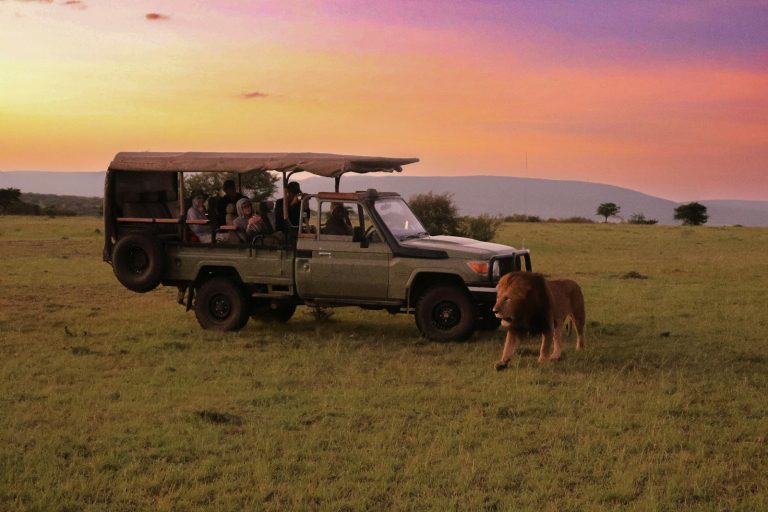
Vehicle positioning: We position our vehicles at the crossing point before the herd arrives — not after. Arriving at an active crossing means driving through the herd and disturbing it. Arriving early means a front-row position with time to set up cameras.
Multi-day commitment: A single day in the Mara during crossing season does not guarantee a crossing — it gives you a good chance. Three nights gives you three morning drives and three afternoon drives, and almost guarantees at least one crossing. Sense of Adventure recommends a minimum of 3 nights during peak season (Aug–Sep).
We waited at the river for three hours. Nothing. Then one wildebeest at the front looked at the water and walked in, and 15,000 animals followed in thirty seconds. The crocodiles came from both banks. I could not process what I was seeing. My hands were shaking.
— Sense of Adventure guest, Mara River crossing, August 2024
Great Migration Beyond the Crossing
The river crossings are the peak event, but the migration transforms the entire Masai Mara during July–October. The plains are covered with wildebeest for as far as you can see in every direction. The predator density surges — lions, cheetahs, and leopards all benefit from the abundance and their hunting behaviour becomes more frequent and more visible. Hyena clan activity increases dramatically. The rivers are full of crocodiles in permanent ambush. Every game drive during migration season delivers wildlife encounters that would be extraordinary at any other time of year but are simply normal during the crossing season. See our Masai Mara guide and our game drive guide for the full picture. Book through our Kenya safari planning guide for migration-season itineraries.
1.5 Million Animals. One River. One Right Moment.
Sense of Adventure has the experience and the connections to put you at the right crossing at the right time. Contact us now to plan your Great Migration safari.
Frequently Asked Questions — Great Migration Kenya
Is the Great Migration guaranteed every year?
The wildebeest enter the Masai Mara every year — the migration is as reliable as any natural event can be. What is not guaranteed is a river crossing on any specific day. River crossings happen multiple times per week during peak season (August–September) but their timing within the day is unpredictable. Sense of Adventure’s multi-day itineraries maximise the probability of witnessing at least one crossing — with 3 nights in the Mara during August or September, virtually all our guests see at least one crossing.
When is the absolute best time for the Great Migration in Kenya?
August and September are the peak months for both maximum wildebeest density in the Mara and the most frequent river crossings. July sees the advance herds arrive with increasing crossing activity from mid-month. October sees the herds at full density but beginning the southward return, with crossings in the opposite direction. Sense of Adventure recommends August–September as the peak window, with July and early October as excellent alternatives if August–September dates are not available.
Can I see the Great Migration without going to the Masai Mara?
The Kenya section of the Great Migration is centred entirely in the Masai Mara. The Serengeti portion of the circuit is in Tanzania. There is no equivalent migration event in Kenya’s other parks — the Masai Mara is the only destination for the crossing experience. Sense of Adventure can arrange combined Kenya-Tanzania migration itineraries for guests who want to experience both the Grumeti and Mara crossings.
How much does a Great Migration safari cost?
Migration season (July–October) commands premium pricing at Mara camps — demand is at its annual peak. Mid-range camps run USD 300–500 per person per night fully inclusive during migration. Luxury conservancy camps run USD 600–1,500+. Sense of Adventure provides specific pricing for all camp categories and can design a migration safari at any budget tier — contact us with your group size and preferred dates for an accurate quote.