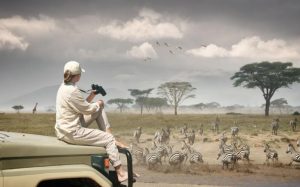
Solo safari in Kenya is more common than most people realise — and more rewarding than many first-time solo travellers expect. The solitary game drive, with a guide whose full attention is on your questions and interests rather than divided across four different guests with different priorities, is arguably the finest way to experience the African bush. The intimacy of a small tented camp, where you become part of the atmosphere rather than part of a group, is available to solo travellers in a way it isn’t to parties of four. And the specific quality of sitting at a campfire alone in Africa, processing a day that produced things you have never seen before, is its own complete experience. Sense of Adventure books solo Kenya safaris regularly, and this guide addresses every practical question, cost, safety, vehicle sharing, and the specific nuances of travelling alone in East Africa.
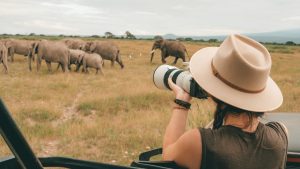
Solo Safari Kenya — We Plan It With You.
Sense of Adventure handles solo Kenya safari bookings, including vehicle sharing options, single supplement management, and camps that genuinely suit solo travellers. Contact us now.
The Solo Safari Cost Reality — Supplements Explained
The biggest practical challenge of a solo Kenya safari is the single supplement, the additional charge most camps and lodges apply when a single person occupies a tent or room designed for two. In a camp where the standard rate is USD 400 per person per night based on double occupancy, the single supplement typically adds 30–50% to the nightly rate, making the solo cost USD 520–600 per night. On top of this, a private vehicle is often required for solo guests travelling outside of joining a shared vehicle, adding USD 80–120 per day.
The total cost of a solo safari is therefore genuinely higher per person than the same trip taken by a couple. Sense of Adventure reduces this in several ways: we identify camps that charge low or zero single supplements; we match solo guests with other solo travellers for shared vehicles where travel styles are compatible; and we recommend low-season travel where the supplement impact is smaller as a proportion of the reduced base rate.
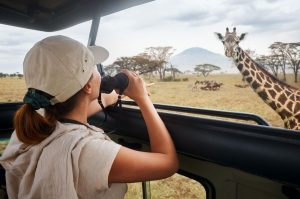
Five Reasons Solo Safari Kenya Is Actually Better
The guide is entirely yours
No compromise on stopping times, no managing other guests’ priorities, no six-person conversation overriding the birdsong. The guide-to-guest relationship on a solo safari is the most direct and educational possible.
You process it differently
Seeing a cheetah hunt alone with no one to turn to, no shared reaction, just you and the guide and the animal, produces a quality of full personal presence that group travel often dissipates. What you see on a solo safari tends to stay more vividly than what you see in company.
Camp social dynamics work for solo travellers
Quality Kenya camps gather their guests for communal dinners where the day’s sightings are shared across all tables. Solo travellers are fully incorporated into this culture; you will not eat alone, and the shared dinner at a small tented camp is often the most interesting social experience of the trip.
Complete schedule flexibility
You want to stay at the leopard sighting for three hours? You want to skip the afternoon drive and walk? You want the vehicle to be positioned for photography rather than ticking off sightings? Solo safari gives you every decision without negotiation.
Kenya is genuinely safe for solo travellers
The safari ecosystem in Kenya, including camps, guides, charter flights, and park gates, is a thoroughly structured environment. From the moment a solo guest arrives at Wilson Airport to the moment they return, every element is managed by Sense of Adventure. Safety in Kenya’s safari areas is not a concern for solo travellers who book through a reputable operator.
Sense of Adventure’s Solo Safari Practical Guide
Single supplement: We identify specific camps with low or zero single supplements and prioritise these for solo guests. We tell you the exact supplement before booking, no surprises.
Vehicle sharing: For solo guests open to sharing a vehicle, Sense of Adventure matches compatible solo travellers from our bookings, same interests, a similar travel style, compatible age range. We do not force sharing; we offer it when the match is good.
Best solo months: March–June and November offer the lowest single supplements as a proportion of total cost. Low season rates mean the premium hurts less in absolute terms, and camps are quieter, which solo travellers often prefer.
Our recommendation: Amboseli and the Mara conservancies are both excellent for solo travellers. Amboseli’s flat, accessible landscape suits solo guests new to safari; the conservancy camps’ communal dinner culture specifically benefits solo guests who prefer company in the evenings but solitude on the drives.
I went alone. Everyone told me I shouldn’t. My guide became one of the most interesting people I have met anywhere. The communal dinners at the camp were better conversations than most dinner parties I have been to. And the drives no one to talk to, just me and the animals and the silence. I needed that.
— Sense of Adventure solo guest, Masai Mara, November 2024
Going Alone? We’ve Done This Hundreds of Times.
Sense of Adventure books solo Kenya safaris regularly — low-supplement camps, vehicle sharing options, and the right parks for solo travellers. Contact us with your dates and budget.
Frequently Asked Questions — Solo Safari Kenya
Is it safe to go on safari alone in Kenya?
Yes — Kenya’s safari areas are among the safest tourist environments in Africa for solo travellers. The structured nature of safari travel (camp, vehicle, guide, charter flights between destinations) means solo guests are never alone in the sense of being unsupported. Sense of Adventure maintains contact with all solo guests throughout their safari and has emergency protocols in place for every destination. Female solo travellers book Kenya safaris with Sense of Adventure regularly and without incident.
What is the single supplement, and how much is it?
The single supplement is the additional charge that camps levy when one guest occupies accommodation designed for two. It typically runs 30–50% of the per-person double-occupancy rate, so a USD 400/night rate becomes USD 520–600 for a solo traveller. Some camps charge a flat supplement; others charge the full double rate for single occupancy. Sense of Adventure identifies low-supplement options specifically for solo guests and quotes the exact supplement upfront before any booking commitment.
Can I join a shared vehicle to reduce solo safari costs?
Yes — many budget and mid-range camps in the Masai Mara reserve operate shared vehicles as their standard offering. Sense of Adventure can also match solo travellers from different bookings into shared private vehicles when travel styles are compatible. For guests committed to a private vehicle, the additional cost is typically USD 80–120 per day, worth it for photography and itinerary flexibility, optional for guests prioritising cost management.