
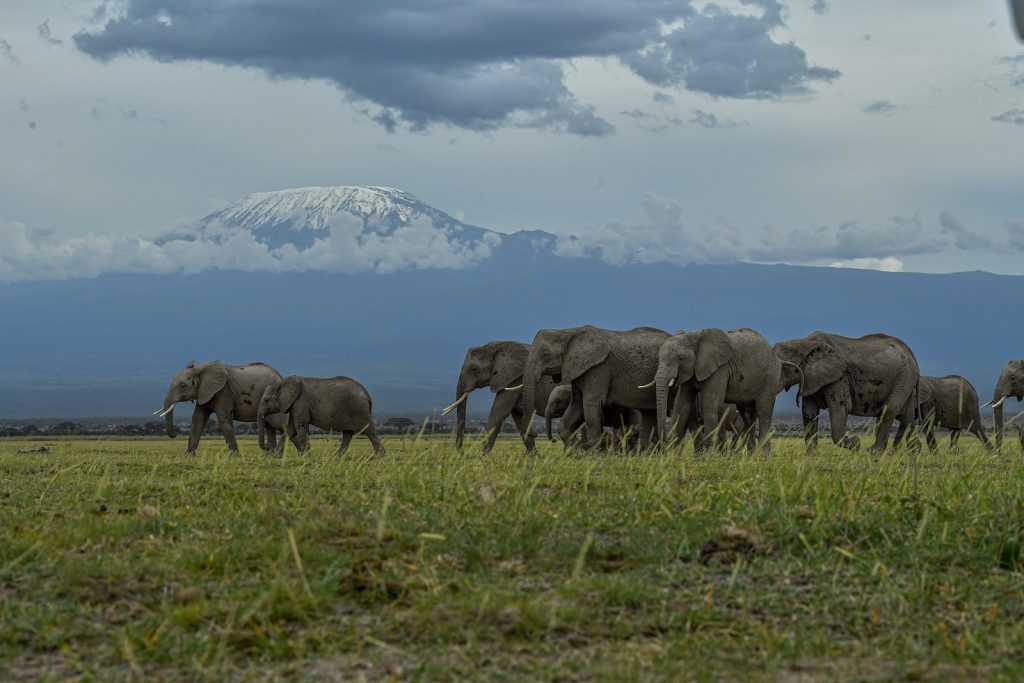
There is one image that defines Kenya in the global imagination more than any other: a herd of elephants moving across golden savannah with the snow-capped peak of Mount Kilimanjaro rising beyond them in the clear African sky. That image is Amboseli National Park — and the reality, when you are sitting in an open game vehicle watching it unfold at first light, is even more extraordinary than any photograph.
Amboseli is Kenya’s second-most-visited national park after the Masai Mara, and for good reason. It delivers a very specific combination of qualities — extraordinary elephant herds, a compact size that makes game viewing highly efficient, and a backdrop so dramatic it barely seems real — that makes it one of the most rewarding safari destinations in East Africa. This is your complete guide to planning an Amboseli safari in 2026.
Where Is Amboseli National Park?
Amboseli National Park sits in southern Kenya, approximately 240 kilometres southeast of Nairobi near the Tanzanian border at the base of Mount Kilimanjaro. The park covers 392 square kilometres — considerably smaller than the Masai Mara’s 1,510 sq km — which contributes to its efficiency as a game viewing destination. Everything is within reach, distances between sightings are short, and the open habitat means little time is spent searching.
The name Amboseli derives from the Maasai word for “salty, dusty place” — a reference to the dry lake bed at the park’s centre, a remnant of an ancient lake that dried up thousands of years ago. Despite the aridity of the surrounding land, underground water from Kilimanjaro’s glaciers filters through the volcanic rock and emerges as permanent springs and swamps in the heart of the park — the Enkiama and Longinye swamps that form the ecological heartbeat of the Amboseli ecosystem.
Amboseli National Park at a Glance
Amboseli National Park is managed by the Kenya Wildlife Service and sits at the heart of a much larger ecosystem of Maasai community land and conservancies, where wildlife moves freely beyond the park boundary. The wider area is recognised by UNESCO as a biosphere reserve under its Man and the Biosphere Programme, which highlights the balance between conservation and the pastoral communities who share this land with the animals.
- Location: southern Kenya, on the border with Tanzania, below Mount Kilimanjaro.
- Size: 392 square kilometres, compact and mostly flat.
- Famous for: large, relaxed elephant herds and views of Kilimanjaro.
- Best time: the dry seasons, June to October and January to February.
- Getting there: around 4–5 hours by road from Nairobi, or a short flight from Wilson Airport.

The Elephants of Amboseli
Amboseli is Africa’s greatest elephant-watching destination. The park is home to one of the most studied wild elephant populations on earth — research begun by Dr Cynthia Moss in 1972 and continued by the Amboseli Elephant Research Project for over five decades has produced the deepest scientific understanding of elephant behaviour and social structure available anywhere. Many of Amboseli’s individual elephants are identified by name by researchers, and their family histories span multiple generations.
The elephant herds here are large, relaxed, and extraordinarily habituated to vehicles — you can sit within twenty metres of a breeding herd of fifty elephants and watch family dynamics, calf play, and matriarch decision-making in total detail. In the dry season (June–October), the herds concentrate around the swamps, creating spectacular scenes of hundreds of elephants moving through the papyrus and reeds with Kilimanjaro as a backdrop. These are among the most photographed wildlife images in the world — and they are genuinely this beautiful in person.
Amboseli’s bull elephants are particularly famous. The park has historically been home to some of Africa’s largest-tusked bulls — old males with tusks that sweep nearly to the ground, a sight that was once common across Africa but is now extraordinarily rare due to decades of poaching. Seeing these ancient bulls in Amboseli is a profound privilege.
You can read more about the long-running research on these families on the Amboseli Trust for Elephants website. Knowing a little of their story makes every sighting in Amboseli National Park more meaningful.
Wildlife Beyond Elephants
While elephants are the headline act, Amboseli delivers a full supporting cast. Lion and cheetah patrol the open plains, particularly around the dry lake bed where visibility is extensive. Leopard are present but more elusive in the park’s thornbush edges. Buffalo congregate near the swamps in large breeding herds. Giraffe, zebra, wildebeest, and a wide variety of antelope species — including impala, Grant’s gazelle, and the elegant gerenuk in the drier eastern sections — populate the plains.
Birdlife is exceptional, particularly in the swamp habitats. Amboseli’s wetlands support large breeding colonies of sacred ibis, yellow-billed storks, and various heron species, while the surrounding bush is rich in raptors, rollers, and bee-eaters. Over 600 bird species have been recorded in the Amboseli ecosystem — making it a world-class birding destination alongside its mammal-watching credentials. This is part of what makes Amboseli such a strong component of a multi-park Kenya safari circuit.
Kilimanjaro: The World’s Most Dramatic Backdrop
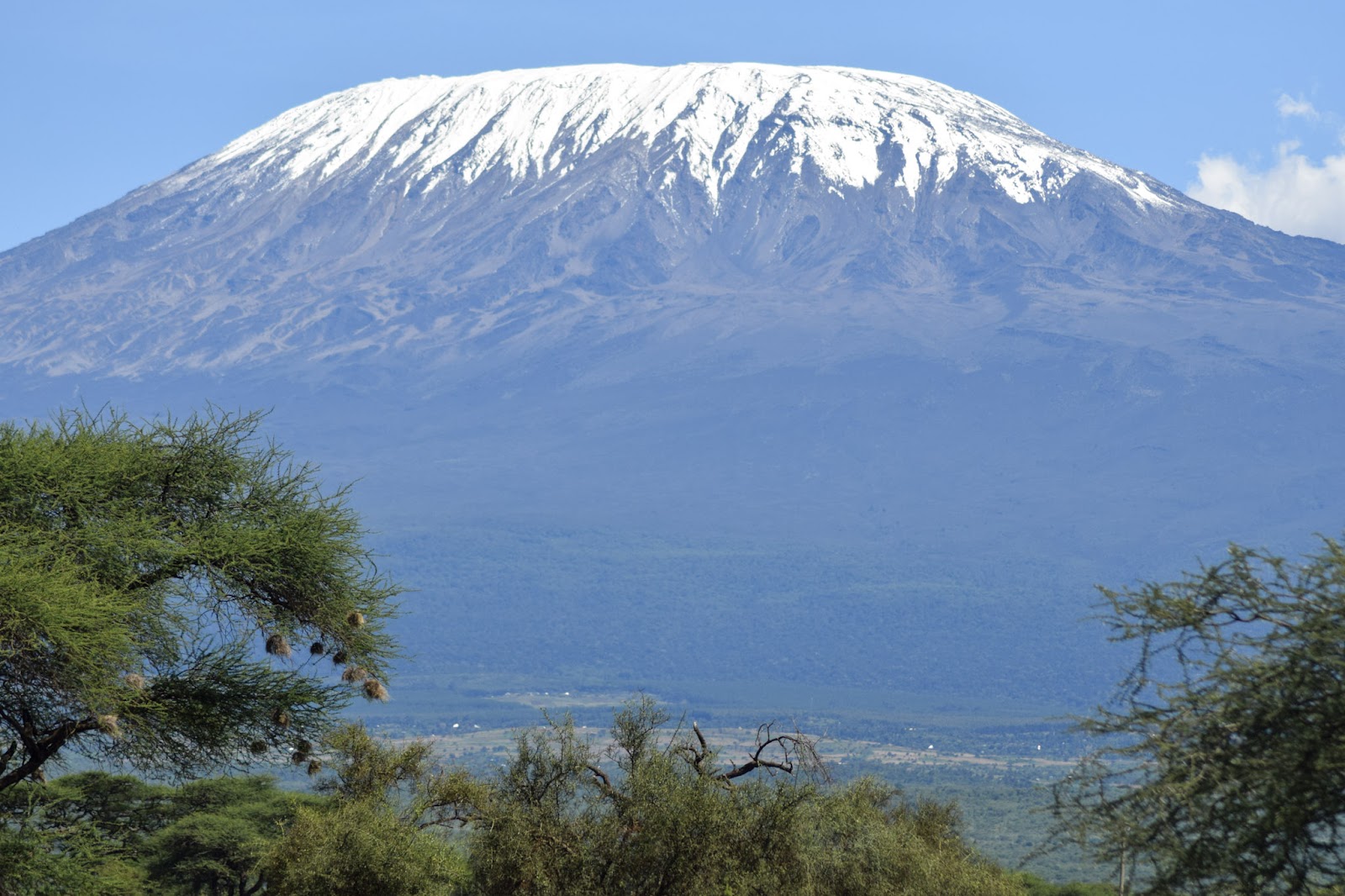
Mount Kilimanjaro sits just across the Tanzanian border, 50 kilometres from the centre of Amboseli — close enough that on a clear day it dominates the entire southern horizon from a height of 5,895 metres. The peak is Africa’s highest point and the world’s highest free-standing mountain.
Cloud patterns around Kilimanjaro are dynamic. The summit is typically clearest in the early morning and late afternoon; midday clouds often build around the upper slopes. This makes early morning game drives — departing at 06:00 as the light turns golden — the most rewarding for combining elephant and Kilimanjaro in the same frame. Many photographers describe the thirty minutes after sunrise in Amboseli, with elephant silhouettes moving through shallow swamp mist as Kilimanjaro glows above, as the most beautiful light they have ever photographed.
If seeing the mountain from the plains makes you want to stand on its summit, you can combine your safari with a climb. Our 7-day Kilimanjaro trek on the Machame route crosses into Tanzania, and many travellers finish with a few relaxing nights in Amboseli National Park to rest their legs while watching elephants below the peak they have just climbed.
Top Things to Do in Amboseli National Park
Most of your time in Amboseli National Park is spent on game drives, but the park offers more variety than its size suggests. These are the experiences we build into most itineraries.
Morning and Afternoon Game Drives
The classic day in Amboseli starts with an early drive, when the light is soft, predators are still active and Kilimanjaro is most likely to be clear. After breakfast and a rest at camp, an afternoon drive takes you back to the swamps as elephants come in to drink and feed. Because the park is compact, you spend more time watching animals and less time driving between them.
Observation Hill
Observation Hill, also known as Normatior, is one of the few places in Amboseli National Park where you can leave the vehicle. A short walk up the path brings you to a viewpoint over the swamps, the dry lake bed and, on a clear day, Kilimanjaro. It is the best place to understand the layout of the park and a good spot for a picnic lunch.
Photography in Amboseli
Amboseli is one of the best places in Africa for wildlife photography, thanks to its open plains, big skies and huge, calm elephants. Dust in the dry season can create beautiful backlit scenes at sunrise and sunset. Photographers who want more time and a specialist approach can join our 4-day Amboseli elephant photographic safari.
Maasai Culture
The Maasai have lived alongside wildlife in the Amboseli area for generations, grazing their cattle in the surrounding land. Many camps can arrange a visit to a nearby community, where you can learn about daily life, traditional homes and the role of livestock in Maasai culture. Ask us to include a respectful, community-run visit in your itinerary.
When to Visit Amboseli
Amboseli rewards visitors year-round, but different seasons offer distinct experiences:
- June–October (dry season): Wildlife concentrates around the swamps as surrounding water sources dry up. Kilimanjaro views are typically clear, particularly June-August before the clouds build later in the season. Elephant viewing is at its most concentrated and spectacular.
- January–February (short dry season): Excellent game viewing, lush post-rain landscapes, slightly lower prices than peak season, and exceptional birding. Often the best Kilimanjaro photography light of the year due to clear air and dramatic cloud formations.
- November–December (short rains): Brief afternoon showers, but the park greens up beautifully and the resident wildlife is superb. Lower prices and fewer visitors.
- April–May (long rains): Wettest months, some access tracks difficult. Lowest prices. A handful of camps close for maintenance.
For the broader Kenya safari seasonal picture, see our guide on the best time to visit Masai Mara — the seasonal rhythms are broadly similar across Kenya’s southern parks.
Getting to Amboseli
From Nairobi, Amboseli is accessible two ways. Scheduled charter flights from Wilson Airport connect to Amboseli’s main airstrip in approximately 40–45 minutes — the most efficient option for travellers. By road, the journey takes 4–5 hours depending on the route: either via Namanga (the Tanzania border crossing town) and then west into the park, or via Emali on the Nairobi-Mombasa highway and then south. Both routes pass through spectacular Maasai country. A 4WD vehicle is required for park roads.
Our guide to getting from Nairobi to Amboseli compares the routes, distances and travel times in more detail. Most international visitors also need an Electronic Travel Authorisation to enter Kenya, which you apply for through the official Kenya eTA portal before you fly.
Where to Stay in Amboseli National Park
Accommodation in and around Amboseli National Park ranges from simple tented camps to comfortable lodges and exclusive camps in the private conservancies on the park’s edge. Lodges inside the park, such as Ol Tukai Lodge and Amboseli Serena Safari Lodge, put you close to the swamps for early starts. Camps in the conservancies outside the park often offer more privacy and activities such as guided walks and night drives, which are not allowed inside the national park itself.
Our guide to where to stay in Amboseli compares the main options, so you can match the lodge to your budget and travel style. We always confirm the latest details with each property before we book.
Amboseli Safari Packages
How long should you spend in Amboseli National Park? Two nights is enough to see the elephants and catch Kilimanjaro on at least one clear morning, while three nights gives you time to relax and explore every corner. These packages are a good starting point, and each can be adapted to your dates:
- Amboseli day safari from Nairobi, for travellers with only one free day.
- 2-day Amboseli safari, with an overnight stay and three game drives.
- Amboseli and Masai Mara safari, combining Kenya’s two most famous parks.
- Tsavo and Amboseli safari, ideal if you are heading to or from the coast.
Combining Amboseli With the Masai Mara
Amboseli and the Masai Mara are Kenya’s two most popular national parks and they complement each other almost perfectly on a 7–10 day Kenya circuit. Three nights in Amboseli (elephants, Kilimanjaro photography, open plains) followed by four nights in the Masai Mara (Big 5, wildebeest migration, predator density) gives travellers the complete Kenya safari experience. We design this circuit routinely — fly between the two parks (approximately 50 minutes) and you cover extraordinary ground without long road transfers.
For the full multi-park Kenya safari cost picture, see our Kenya safari cost guide. And when you are ready to plan, our team will build an itinerary around your specific dates, priorities, and budget.
Practical Tips for Your Amboseli Safari
- Park fees: entry fees for Amboseli National Park are set by the Kenya Wildlife Service and paid electronically. Rates differ for international visitors, residents and citizens and change from time to time, so we include them in your safari quote.
- Dust: Amboseli can be very dusty in the dry season. Bring a scarf or buff, and protect your camera with a cover or bag.
- Layers: early mornings can be cool, while afternoons are hot and sunny. Pack a fleece, a sun hat and sun cream.
- Binoculars: they make a huge difference for birds and distant cats on the open plains.
- Stay in the vehicle: except at marked points such as Observation Hill, visitors must remain in their vehicles inside the park.
Or call us: +254 799 160 081 — we love planning great safaris.
Frequently Asked Questions About Amboseli National Park
What is Amboseli National Park famous for?
Amboseli National Park is famous for its large, relaxed elephant herds and its views of Mount Kilimanjaro, Africa’s highest mountain, just across the border in Tanzania. Its elephants are among the most studied in the world, and the park’s open plains and swamps make wildlife easy to see and photograph.
How many days do you need in Amboseli National Park?
Two nights is ideal for most travellers. It gives you at least three game drives and several chances to see Kilimanjaro clear of cloud, which usually happens early in the morning. A day trip from Nairobi is possible but involves long hours on the road, so an overnight stay is far more relaxing.
Can you see the Big Five in Amboseli National Park?
You can see elephant, buffalo and lion fairly reliably, and leopard occasionally, but rhinos are not normally seen in Amboseli. Most travellers combine Amboseli with the Masai Mara or a rhino sanctuary such as Lake Nakuru or Ol Pejeta to complete the Big Five on the same trip.
When is the best time to see Kilimanjaro from Amboseli?
Kilimanjaro is most often clear in the early morning and late afternoon, especially during the dry months from June to October and in January and February. Clouds tend to build around the summit during the middle of the day, so plan your drives and photographs for the first and last hours of light.
How far is Amboseli National Park from Nairobi?
Amboseli National Park is about 240 kilometres south-east of Nairobi. The drive takes around 4–5 hours, depending on the route and traffic, via Namanga or Emali. Alternatively, a scheduled flight from Wilson Airport reaches the park’s airstrip in roughly 40–45 minutes, leaving more time for game drives.
Is Amboseli National Park good for families?
Yes. The park is compact, the drives between sightings are short and elephants are easy for children to spot and enjoy. Observation Hill gives everyone a chance to stretch their legs, and several lodges welcome families. It works well combined with the Masai Mara or the coast on a family safari.
Can you do walking safaris in Amboseli National Park?
Walking is not allowed inside Amboseli National Park itself, apart from marked spots such as Observation Hill. However, several camps in the community conservancies around the park offer guided bush walks with experienced Maasai guides. These walks focus on tracks, plants and smaller wildlife, and add a different perspective to your game drives.