
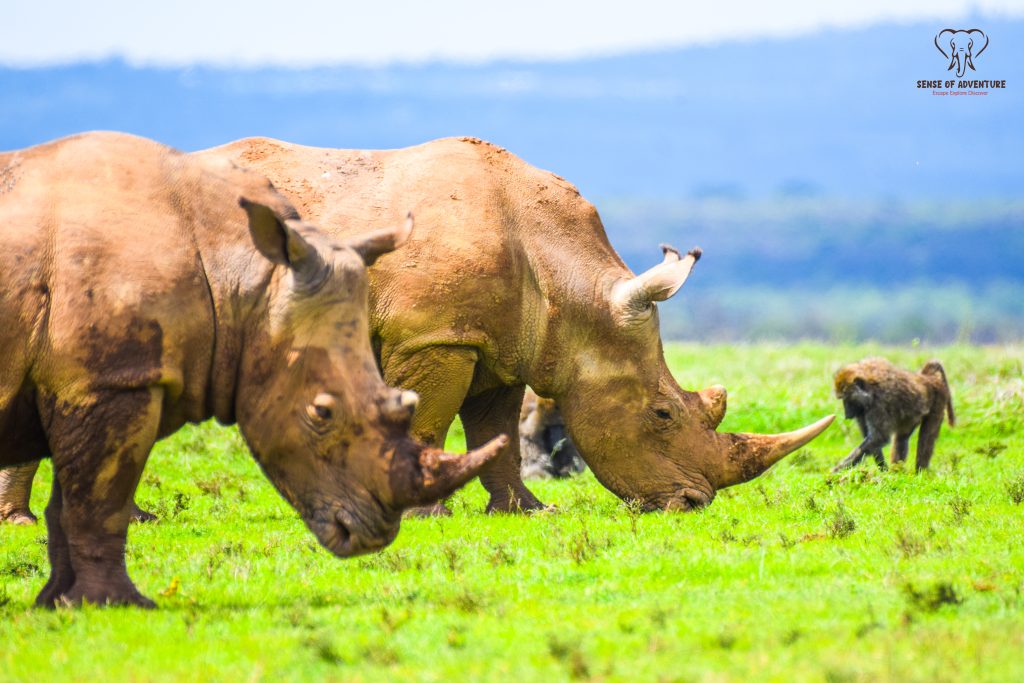
On the northern slopes of Mount Kenya, where the forest gives way to open savannah and the Laikipia Plateau stretches northward toward the distant blue haze of the Matthews Range, lies one of Africa’s most extraordinary private wildlife sanctuaries. Lewa Wildlife Conservancy — 62,000 acres of fenced private conservation land — is a place where the fate of some of Africa’s most endangered species is being written in real time, and where the quality of the safari experience rivals anything the continent has to offer.
Lewa is perhaps best known internationally for its rhino conservation programme — one of the most successful in Africa — but its wildlife diversity goes far beyond this flagship achievement. Wild dog, reticulated giraffe, Grevy’s zebra, lion, leopard, elephant, and a remarkable diversity of plains game make Lewa one of Kenya’s most comprehensive and rewarding wildlife destinations. And because it is a private conservancy with strictly limited visitor numbers, the experience here has an exclusivity and intimacy that the popular national parks, for all their magnificence, simply cannot match.
The Conservation Story: How Lewa Came to Be
Lewa’s conservation story begins in the 1980s on what was then the Craig family’s cattle ranch — Lewa Downs. Faced with the catastrophic rhino poaching crisis that was eliminating East Africa’s rhino population at industrial scale, the Craig family and their partners made an extraordinary decision: to convert their cattle ranch into a dedicated wildlife sanctuary and pour their resources into protecting the rhino that had taken refuge on their land.
The Ngare Sergoi Rhino Sanctuary was established in 1984. In 1995, the entire Lewa Downs property was converted from cattle ranching to wildlife conservation, with the establishment of the Lewa Wildlife Conservancy as a non-profit trust. In 2013, Lewa was incorporated into the Mount Kenya UNESCO World Heritage Site, recognising its ecological connectivity to the mountain’s ecosystem.
Today, Lewa’s success is measured in numbers that would have seemed impossible in the 1980s: the conservancy protects over 200 rhino — representing approximately 14% of Kenya’s entire black rhino population — along with 450+ elephants, 70+ lion, 440 Grevy’s zebra (one of the world’s largest populations of this critically endangered species), and 14,000+ individual animals across 50+ mammal species. The conservancy’s anti-poaching unit — over 150 rangers using aircraft, vehicles, and dogs — patrols the landscape around the clock.
Wildlife at Lewa
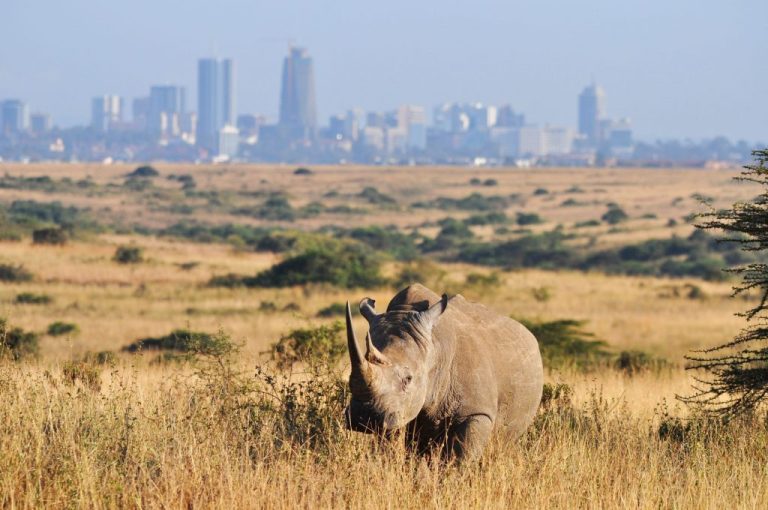
Rhino: Both black and white rhino are present at Lewa in good numbers. Sightings are remarkably reliable — the conservancy’s relatively small size and the rangers’ knowledge of individual animals means your guide can often locate rhino within the first hour of a game drive. Watching a black rhino — one of Africa’s most endangered large mammals — grazing on the open Lewa plains with the snow-covered dome of Mount Kenya on the horizon is an experience of profound privilege. See our Big Five guide for context on why rhino sightings carry such significance.
Grevy’s Zebra: Lewa holds one of the world’s largest and most genetically important Grevy’s zebra populations. These strikingly beautiful animals — with their narrow, densely packed stripes, enormous rounded ears, and white bellies — are critically endangered, with fewer than 3,000 remaining in the wild across northern Kenya and Ethiopia. Lewa’s breeding success has contributed significantly to the global population, and the Lewa-Borana landscape is the single most important refuge for the species. The Samburu ecosystem is another key stronghold.
African Wild Dog: Lewa is one of Kenya’s most reliable destinations for African wild dog sightings — a species that has been eliminated from most of its former range across East Africa. The wild dog packs that range across the Lewa-Borana landscape are well-known to the conservancy’s guides, and an encounter with a hunting pack — moving at extraordinary speed through the scrub in coordinated pursuit — is one of Africa’s most electrifying wildlife experiences.
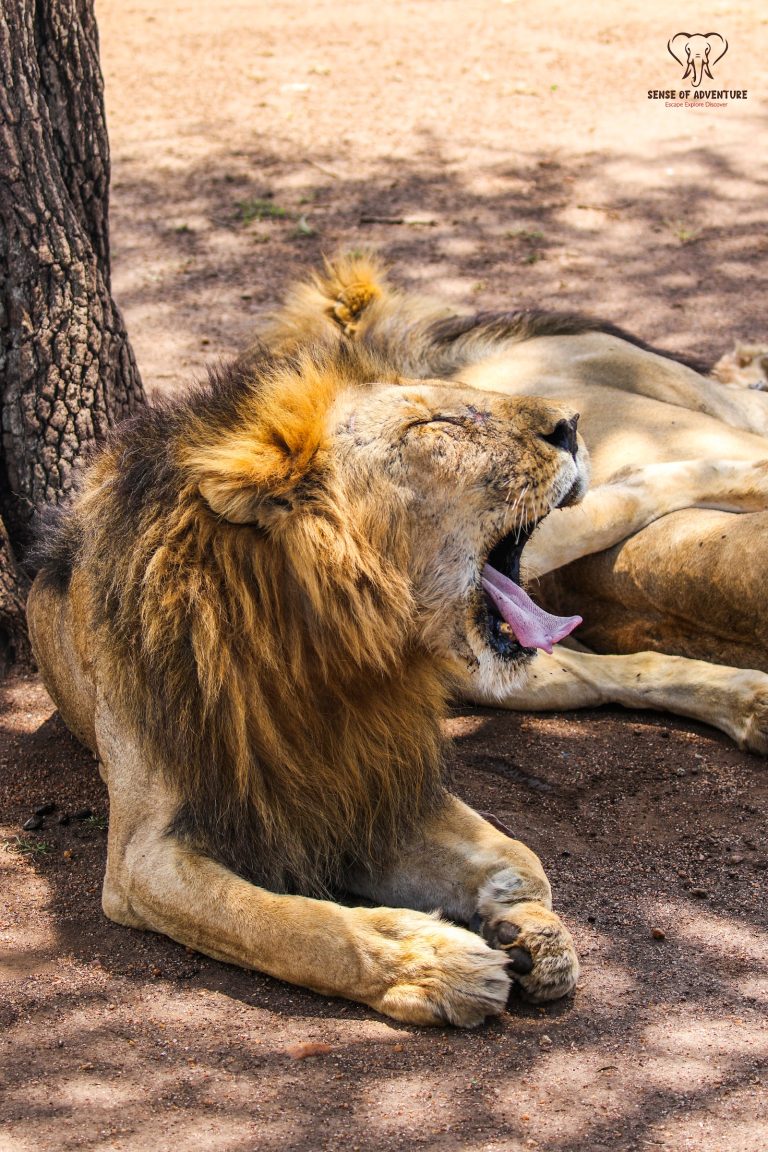
Lion and Leopard: Both are present and regularly sighted. The relatively open terrain of much of Lewa makes lion finding particularly productive. Leopard favour the rocky hillsides and dense luggas of the conservancy’s more rugged terrain.
Elephant: Lewa’s elephants move freely between the conservancy and the adjacent Borana Conservancy and the Mount Kenya forest above — part of the larger Northern Rangelands ecosystem. Family herds and impressive bulls are regular sightings throughout the year.
The Lewa Safari Experience
Because Lewa is a private conservancy with access restricted to guests of its affiliated lodges, the game drive experience is fundamentally different from that of the national parks. There are no set roads — game vehicles can go anywhere on the property, following animals off-track wherever the wildlife leads. There is no limit on time spent with any individual animal or group. Night drives and guided bush walks with armed rangers are standard rather than exceptional. And the concentration of wildlife in a relatively contained area means that every game drive produces multiple significant sightings.
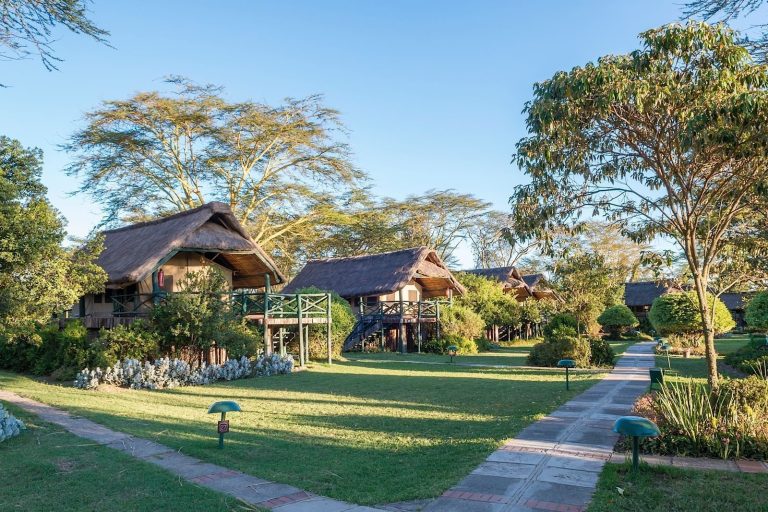
Lewa’s camps and lodges are among Kenya’s finest. Accommodation ranges from the intimate, family-friendly Lewa House and Lewa Safari Camp to the ultra-exclusive and architecturally extraordinary Lewa Wilderness — each offering personalised service, exceptional guiding, and the immersive connection to the landscape that defines the best Kenya safari experiences. See our Kenya safari cost guide for an understanding of the pricing structure at private conservancy level.
The Lewa Marathon
Lewa hosts one of the world’s most extraordinary running events: the Safaricom Lewa Marathon, held annually in June. Runners complete a half or full marathon across the conservancy’s open savannah — past rhino, elephant, and giraffe, with Mount Kenya as a backdrop. The event raises significant funds for Lewa’s conservation and community programmes and has attracted international runners alongside local Kenyan athletes. If your visit coincides with June, the marathon weekend is a genuinely remarkable experience even for non-runners.
Combining Lewa in a Kenya Safari Circuit
Lewa combines naturally with Samburu (one hour south by charter flight) on a northern Kenya circuit, or with the Masai Mara on a north-to-south Kenya circuit that covers the full ecological and wildlife range of the country. A recommended 8-night circuit: Nairobi → Samburu (2 nights) → Lewa (2 nights) → Masai Mara (4 nights). This combination covers the Samburu Special Five, Lewa’s rhino and wild dog, and the Mara’s migration and Big Five in a single seamless journey. Our team designs this circuit regularly — talk to us about the right timing and camp selection for your specific dates.
💬 WhatsApp Us — Plan Your Safari Today
Call or WhatsApp: +254 729 837 481