
Masai Mara vs Serengeti is the question almost every East Africa safari traveller asks, and the right answer depends on your dates, your budget and where you fly in. The Masai Mara and the Serengeti are the two greatest safari destinations in Africa — perhaps in the world. Both form part of the same vast ecosystem, divided only by the Kenya-Tanzania border. Both witness the Great Wildebeest Migration. Both deliver extraordinary Big 5 game viewing. And both leave travellers fundamentally changed by what they have seen.
So which should you choose? The honest answer is: if your itinerary and budget allow it, do both. But for those who need to choose, this guide gives you a clear, honest comparison of the two destinations so you can make the decision that is right for your trip. As a Kenya-based operator, we will be straight with you about when the Serengeti might actually be the better choice — and when the Masai Mara is simply unbeatable.
For complete Masai Mara planning, see our Ultimate Masai Mara Safari Guide. For the timing of the migration on the Kenyan side, read our Wildebeest Migration guide.
Masai Mara vs Serengeti at a Glance
If you are short on time, this summary shows the main differences. Each point is explained in more detail below.
| Masai Mara (Kenya) | Serengeti (Tanzania) | |
|---|---|---|
| Size | About 1,510 sq km reserve, plus private conservancies | About 14,763 sq km national park |
| Migration months | Roughly July to October | Roughly November to July, varying by area |
| Signature event | Mara River crossings | Calving season on the southern plains |
| Main gateway | Nairobi (short flight or road transfer) | Arusha or Kilimanjaro |
| Game density | Very high in a compact area | High, spread over a much larger area |
| Best for | Short trips, first safaris, Kenya coast add-ons | Longer trips, Ngorongoro and Zanzibar add-ons |
The Basics: What They Have in Common
The Masai Mara and the Serengeti share the same ecosystem. They are connected by open savannah across the Kenya-Tanzania border, and the same herds of wildebeest and zebra travel between them annually. Both support the full suite of East African megafauna: lion, leopard, elephant, buffalo, cheetah, hyena, wild dog (occasionally), hippo, crocodile, giraffe, and hundreds of antelope species. Both have world-class safari infrastructure, excellent camps and lodges, and guiding traditions built over decades. The similarities are significant — which is exactly why the differences matter so much when choosing between them.
Size: Serengeti Is Vastly Larger
The Serengeti National Park covers approximately 14,763 square kilometres. The Masai Mara National Reserve covers 1,510 square kilometres. The Serengeti is nearly ten times the size of the Mara. This has significant implications:
In the Serengeti, wildlife can be more dispersed across a larger area, and game drives sometimes require more distance between sightings. In the Masai Mara, the wildlife density per square kilometre is higher, and the reserve is small enough that a good guide knows exactly where to find specific animals on any given morning. Many first-time safari visitors find the Mara’s compactness produces a more consistently impressive game drive experience.
The Serengeti’s size, however, means it contains extraordinary ecological variety — from the short-grass plains of the south to the woodlands of the central Seronera, the river systems of the western corridor, and the hills of the north. A week in the Serengeti feels like multiple different ecosystems.
The Serengeti is also a UNESCO World Heritage Site; the UNESCO listing for Serengeti National Park explains why it is so important for migrating wildlife. Official park information is published by Tanzania National Parks (TANAPA).
The Migration: Different Phases, Same Animals
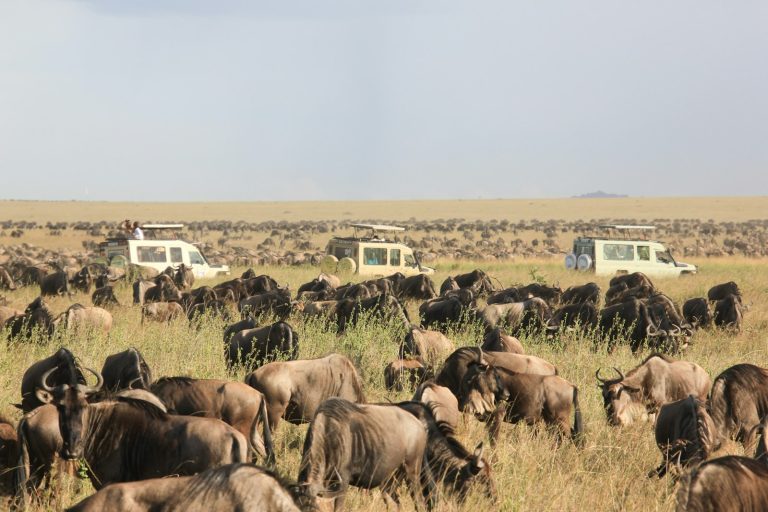
The wildebeest migration follows a roughly clockwise annual loop. The Masai Mara receives the herds from approximately July through October — the famous Mara River crossing phase, when the animals cross from Tanzania into Kenya and back. The Serengeti hosts the migration for the rest of the year, including the spectacular calving season (January-March on the southern plains) and the dramatic western corridor crossing phase (May-June).
For river crossing drama specifically — the defining image of the migration — the Masai Mara has the advantage. The Mara River crossing section in Kenya is particularly compact, well-positioned camps are closer to the crossing points, and the volume of crossings concentrated into a shorter river stretch creates the most spectacular individual crossing events. The Mara crossings in August and September are legendary.
For the calving season, the Serengeti’s southern plains are incomparable — an extraordinary spectacle of birth, predation, and new life that happens on a scale simply not available in the Mara. The Ndutu area of the Serengeti in February-March is, for our money, one of the most extraordinary wildlife experiences on earth.
Remember that the migration follows the rain, not the calendar, so dates move from year to year. Our honest guides to whether the Great Migration is guaranteed and why wildebeest migrate explain how to plan around this.

Masai Mara vs Serengeti Month by Month
- January to March: the herds are usually on the southern Serengeti plains around Ndutu for calving. Serengeti wins for the migration; the Mara still has excellent resident wildlife and fewer visitors.
- April to May: the long rains. Many camps in both parks close or offer lower rates. Resident game is good, but some roads are muddy.
- June: the herds move through the Serengeti’s western corridor and towards the north.
- July to October: the herds are mainly in the northern Serengeti and the Masai Mara, with river crossings on both sides of the border. The Mara is easier to reach and more compact.
- November to December: the herds head south again through the Serengeti. The Mara is green and quiet, with strong big cat sightings.
Accessibility and Getting There
The Masai Mara is significantly easier to reach from Nairobi than the Serengeti is from any major hub. From Wilson Airport in Nairobi, the flight to the Mara takes 45 minutes. For travellers entering through Nairobi (which covers most visitors to East Africa), this is a clear advantage. Read our guide on getting to Masai Mara from Nairobi for full transfer details.
The Serengeti is accessed most easily from Kilimanjaro International Airport (KIA) or Arusha Airport in Tanzania, or via charter flights from Nairobi that cross into Tanzania. The logistics of combining Kenya and Tanzania on one itinerary are manageable — we design these circuits frequently — but they require more planning, additional visas (or an East Africa Tourist Visa), and slightly more travel time.
Crossing Between Kenya and Tanzania
Although the two parks share a border, there is no direct tourist crossing between them inside the parks. Travellers either fly between Kenya and Tanzania or drive via an official land border, which adds a full travel day. Our guide to the Masai Mara to Serengeti border crossing explains the routes in detail.
A note on visas: the East Africa Tourist Visa covers Kenya, Uganda and Rwanda, but not Tanzania, so you will need a separate Tanzanian visa. For Kenya, most visitors now apply for an Electronic Travel Authorisation (eTA) instead of a visa. Always check current entry rules before you book flights.
Cost Comparison
Both destinations have accommodation options across the full budget spectrum, from simple tented camps to ultra-luxury lodges. Generally speaking, the Serengeti’s most exclusive and remote camps carry a premium reflecting the cost of operating deep within Tanzania’s enormous park system. Masai Mara costs are comparable at the mid-range level and slightly lower on average at the budget end, partly because of Kenya’s more developed safari infrastructure near Nairobi.
Tanzania’s national park fees are among the highest in Africa. The Serengeti entry fee for non-residents is approximately $80 per person per day — similar to the Masai Mara reserve fee. However, the Ngorongoro Conservation Area (often combined with Serengeti) charges an additional crater fee of $200+ per vehicle per descent.
Park fees change often on both sides of the border, and Masai Mara reserve fees have risen in recent years. For current Kenyan rates, see our Kenya national parks entrance fees 2026 guide before you set your budget.
For a detailed breakdown of Masai Mara costs specifically, read our Masai Mara safari cost guide.
Crowds and Vehicle Numbers
Crowds are a fair concern in any Masai Mara vs Serengeti comparison. Because the Mara National Reserve is compact and close to Nairobi, popular sightings and river crossing points can draw many vehicles in August and September. The Serengeti spreads its visitors over a much larger area, although the central Seronera area and the northern crossing points can also be busy in peak season.
The Mara has a strong answer to crowding: the private conservancies around the reserve. They limit the number of vehicles at a sighting and offer off-road driving, walks and night drives, while still letting guests visit the reserve for the crossings. Our guide to the Masai Mara reserve vs private conservancies explains the trade-offs.
Wildlife Beyond the Migration
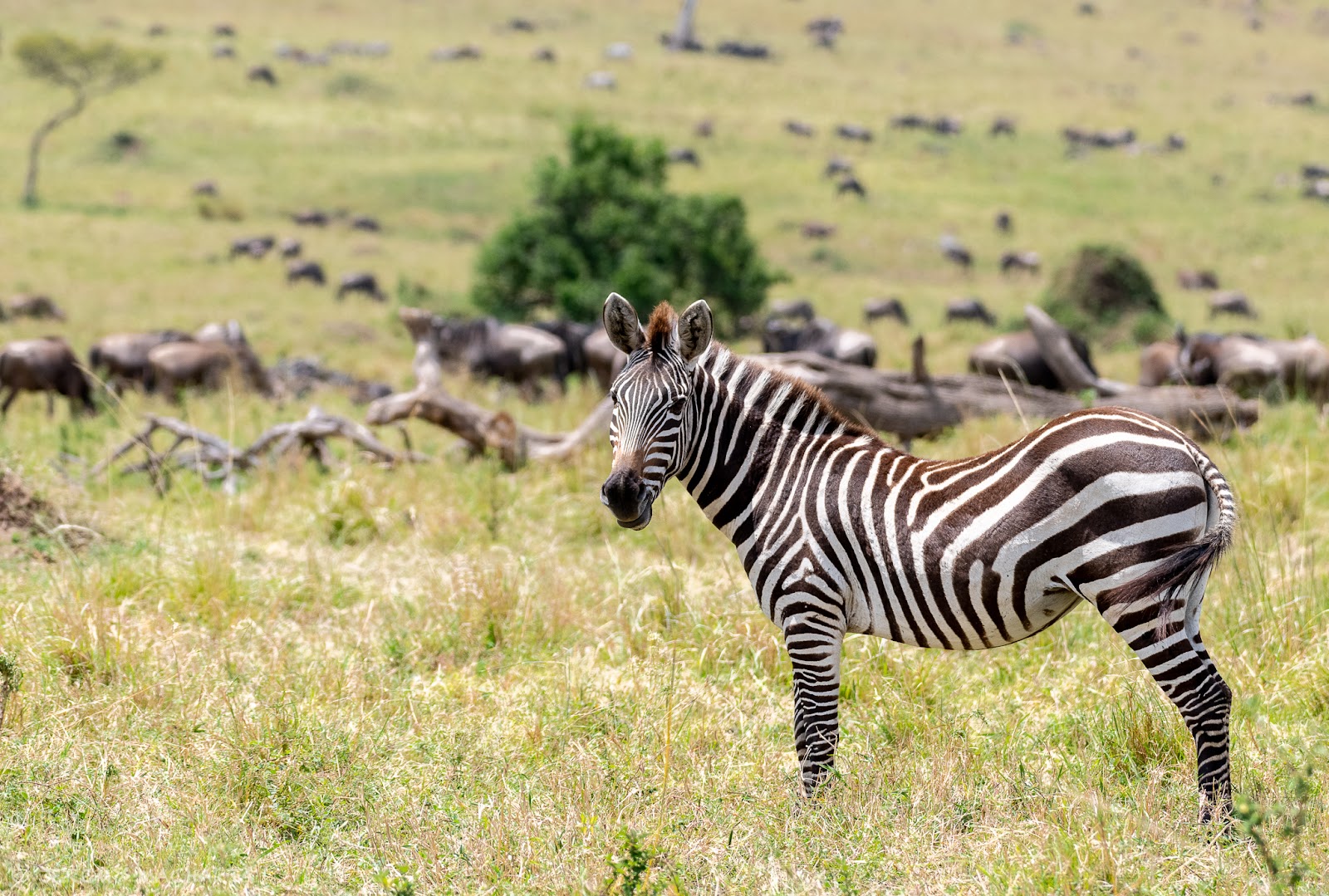
Outside migration season, both destinations deliver outstanding year-round game viewing. The Mara’s Big 5 are present year-round, with particularly strong lion and leopard sightings. The Serengeti’s central Seronera Valley has one of Africa’s densest leopard populations and is famous for its spectacular tree-climbing lions in the Seronera woodlands. Cheetah sightings tend to be excellent in both destinations, though the Serengeti’s southern open plains during calving season produce some of the best sustained cheetah encounters anywhere.
Wild dogs — increasingly rare across East Africa — are occasionally seen in the Mara’s conservancies and in the Serengeti’s north. Rhino are present in the Ngorongoro Crater in reasonable numbers, making a Ngorongoro addition to a Serengeti itinerary the most reliable way to see rhino in the broader region.
Which Should You Choose?
Choose the Masai Mara if:
- You are flying in and out of Nairobi and have limited time
- You want the most concentrated, high-density game viewing experience
- You are visiting between July and October and want the Mara River migration crossings
- This is your first African safari and you want the most reliably extraordinary experience
- You want to combine your safari with the Kenyan coast (Mombasa, Diani, Lamu)
Choose the Serengeti if:
- You want to witness the calving season (January-March) on the southern plains
- You are visiting Tanzania anyway and want to combine with Ngorongoro or Zanzibar
- You want the experience of the world’s largest savannah ecosystem and its ecological variety
- You have already done the Masai Mara and want a new perspective
Do both if:
- You have 10+ days and a flexible itinerary
- You want the complete East Africa safari experience in a single trip
- You are a serious wildlife photographer wanting both ecosystems and seasonal phases
Masai Mara vs Serengeti for a First Safari
For most first-time visitors with a week or less, we suggest the Masai Mara. You can be on a game drive within hours of landing in Nairobi, the wildlife is dense, and a three or four night stay usually delivers lions, elephants and buffalo many times over. The Serengeti rewards travellers with more time who want a bigger, wilder feeling and are happy to spend more time travelling between areas. If you are still comparing countries, our guide to the best African safari country may help.
Sample Itineraries
- Mara only, short stay: the 3-day Masai Mara safari package from Nairobi.
- Mara in migration season: the Great Migration safari in the Masai Mara, timed for the river crossings.
- Serengeti and northern Tanzania: the 8-day Tanzania safari with Serengeti, Ngorongoro, Tarangire and Lake Manyara.
- Both parks in one trip: the 10-day Kenya and Tanzania classic: Masai Mara and Serengeti, or the Great Migration safari across Kenya and Tanzania.
For more on combining the two countries, read our Kenya and Tanzania safari planning tips.
Frequently Asked Questions
Is the Masai Mara or the Serengeti better for the Great Migration?
It depends on the month. From about July to October, the Masai Mara and northern Serengeti offer the famous river crossings, and the Mara is easier to reach. From about January to March, the southern Serengeti hosts the calving season. Choose the park that matches your travel dates rather than one that is better overall.
Can you visit the Masai Mara and the Serengeti on the same trip?
Yes. Many travellers combine them on a trip of ten days or more. As there is no direct tourist crossing inside the parks, you either fly between Kenya and Tanzania or drive via an official land border. You will need entry permission for both countries, so plan visas and flights early.
Which is cheaper, the Masai Mara or the Serengeti?
At the mid-range level, costs are often similar. The Masai Mara can work out cheaper for short trips because it is close to Nairobi and can be reached by road. Remote Serengeti camps and the extra cost of adding Ngorongoro often make Tanzania itineraries more expensive. Park fees change frequently on both sides.
Is the Masai Mara part of the Serengeti?
They are part of the same Mara-Serengeti ecosystem but are separate protected areas in two countries. The Masai Mara National Reserve is in Kenya and the Serengeti National Park is in Tanzania. The same wildebeest and zebra herds move freely between them, but visitors must cross through official border points.
How many days do you need in the Masai Mara or the Serengeti?
Three to four nights in the Masai Mara is enough for most first safaris, thanks to its compact size and high game density. The Serengeti is much larger, so four to six nights, often split between two areas, works better. To see both parks well, allow at least ten days including travel.
Let Us Build Your Perfect East Africa Safari
Whether you choose the Masai Mara, the Serengeti, or the complete Kenya-Tanzania circuit, Sense of Adventure designs itineraries that make the most of every day. We work across both countries and have deep knowledge of both ecosystems — giving you honest advice about which destination fits your dates, your priorities, and your budget. Talk to our team today and let us show you what is possible.
Or call us directly: +254 799 160 081 — we are always happy to help.