
A realistic Masai Mara safari cost in 2026 runs from about $150 per person per night at a simple camp to well over $1,500 at the most exclusive lodges, plus reserve fees, transport and extras. One of the first questions every traveller asks when planning a Masai Mara safari is: how much will this actually cost? It is a fair and important question — and one that deserves an honest, detailed answer rather than vague price ranges that tell you nothing useful. At Sense of Adventure, we believe in transparent pricing, so here is a realistic breakdown of what a Masai Mara safari costs in 2026, at every budget level.
Before diving in, it is important to understand that Masai Mara safari costs vary based on four main factors: the accommodation you choose, the time of year you visit, whether you fly or drive, and the number of people in your group. We will walk through all of these. For context on what different accommodation options look like in practice, see our guide to the best Masai Mara camps and lodges.
Masai Mara Safari Cost at a Glance (2026)
This summary brings together the figures explained in detail further down. All prices are in US dollars, per person, and are a guide only; every quote depends on your dates, camp and group size.
| Cost item | Typical 2026 range | Notes |
|---|---|---|
| Budget camp | $150–$350 per night | Full board, shared game drives |
| Mid-range tented camp | $350–$700 per night | En-suite tents, smaller groups |
| Luxury camp or lodge | $700–$2,500+ per night | Private vehicles, top guiding |
| Reserve entry fee (non-resident adult) | $100 per day (Jan–Jun), $200 per day (Jul–Dec) | Set by Narok County, not KWS |
| Flight from Nairobi | $250–$450 each way | About 45 minutes to an hour |
| Hot air balloon | $550–$650 | Includes bush breakfast |
| Tips | $15–$25 per day | Guide and camp staff combined |
Understanding How Safari Pricing Works
Most Masai Mara camps and lodges price on a per person per night, full-board basis. This means your accommodation cost includes your room, all meals, and typically two game drives per day. What is usually not included: park fees, conservancy fees, drinks (especially premium wine and spirits), laundry, tips, and optional activities like hot air balloon safaris or cultural visits.
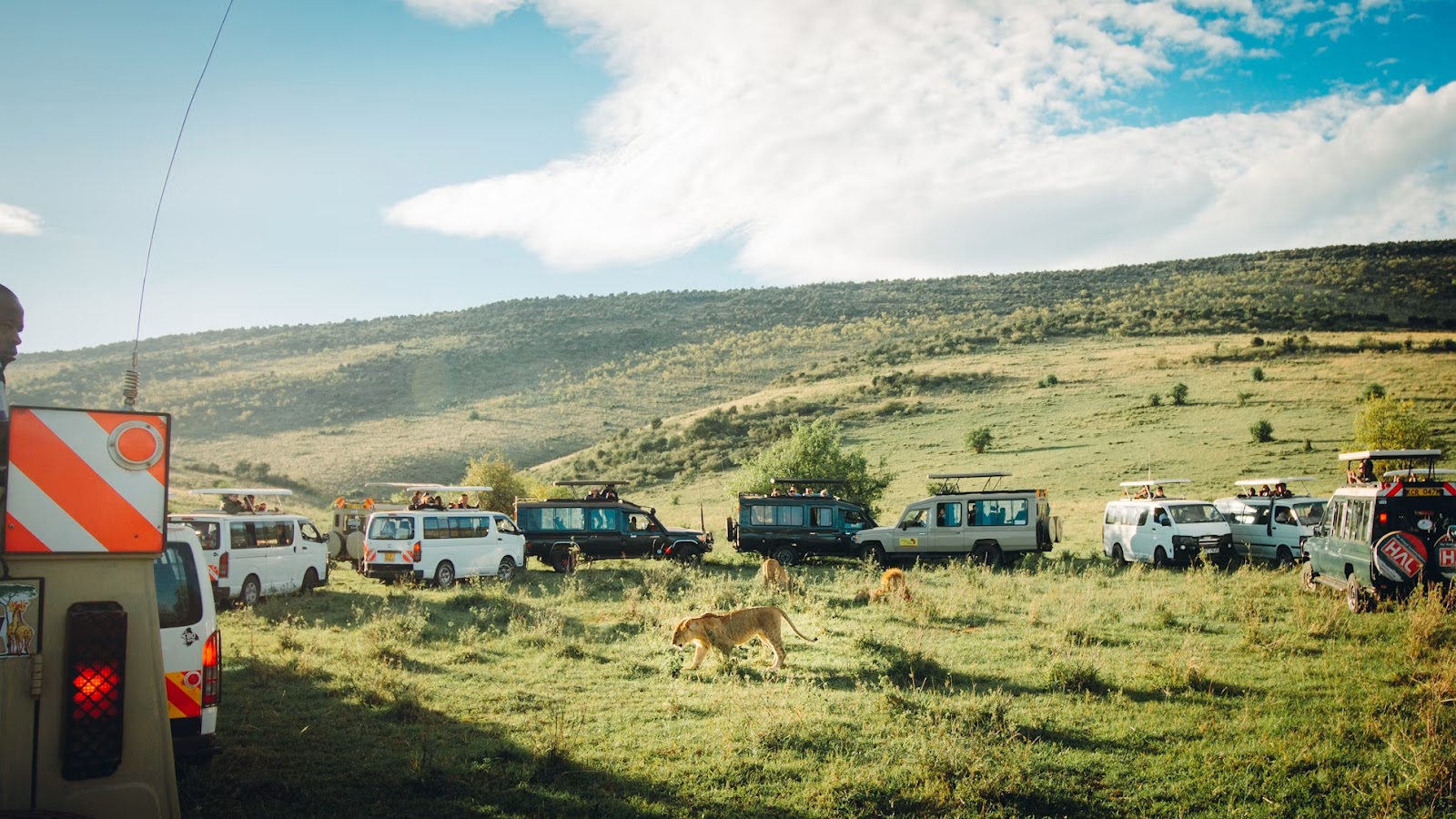
The Masai Mara National Reserve is managed by Narok County Government rather than the Kenya Wildlife Service, and it sets its own seasonal entry fee for non-residents: $100 per adult per day from January to June, rising to $200 per adult per day from July to December. Community conservancies set their own fees, typically ranging from $40–$120 per person per day, which are often included in the lodge rate. These fees are an important part of the safari cost calculation and are sometimes underemphasised in headline rates.
Accommodation rates also change significantly by season. Peak season (July–October) commands the highest rates. Green season (November–March) can be 20–40% lower. Long rains (April–May) see the lowest rates of the year — sometimes 40–50% below peak season prices. For detailed seasonal information, see our best time to visit Masai Mara guide.
Package Price or Pay-as-You-Go?
You can book a Masai Mara safari in two ways. A package bundles your vehicle, guide, accommodation, meals and park fees into one price, which makes the true Masai Mara safari cost easy to compare. Booking each part yourself can look cheaper at first, but reserve fees, vehicle hire, fuel and transfers soon add up.
Whichever way you book, ask for a written list of what is included. Our guide to what is included in a Kenya safari shows the items to check line by line.
Masai Mara Park Fees in 2026
Park fees are the part of the Masai Mara safari cost that surprises most travellers, because many older blog posts still quote the former flat rate. The Mara does not follow the standard Kenya Wildlife Service structure used at parks such as Amboseli, Tsavo and Nairobi National Park, where most non-resident adults pay $80.
For a three-day stay inside the reserve, an adult non-resident pays about $300 in fees between January and June, or about $600 between July and December. Fees apply for each 24-hour period you spend in the reserve, so a stay at a camp just outside the boundary can still mean daily fees if you drive in each day.
Reserve Fees vs Conservancy Fees
If you stay in one of the private community conservancies that border the reserve, you pay a conservancy fee instead of, or as well as, the reserve fee. These fees go to the Maasai landowners who lease their land for wildlife, and they are usually built into the camp rate. If you want to visit the main reserve for the river crossings, reserve fees apply on those days too.
Our guide to the Masai Mara reserve vs private conservancies explains the trade-offs, and our Kenya national parks entrance fees 2026 page lists every park rate in one place. For official information on the parks run by the national wildlife authority, see the Kenya Wildlife Service.

Budget Safari: $150–$350 Per Person Per Night
Budget-friendly safaris in the Masai Mara are genuinely possible, but require some trade-offs. At this price point, you are looking at permanent tented camps or simple lodges outside the main reserve (often around the Sekenani or Talek gate areas), with smaller rooms and more basic facilities. The wildlife viewing is still excellent — you are in the same ecosystem, driving through the same plains — but you may have larger group game drives (6–7 seats per vehicle), less flexibility in your schedule, and simpler meal options.
What you will not compromise on: the fundamental quality of the safari experience. The animals do not know or care which lodge you are staying in. Many budget-traveller guests have some of their most memorable wildlife encounters, purely because the Mara’s wildlife density is that high.
What budget covers: Accommodation, meals, 2 game drives per day, basic service.
Additional costs: Reserve fees ($100–$200 per day depending on season), conservancy fees if applicable, tips ($15–25/day recommended), optional activities.
Typical minimum stay cost (3 nights, excluding flights and reserve fees): about $450–$1,050 per person.
The Camping Option
The lowest Masai Mara safari cost usually comes from a camping safari in permanent tents with proper beds at campsites on the edge of the reserve. Our 4-day Masai Mara and Lake Nakuru camping safari starts from USD 590 per adult sharing, with park entry fees, meals, a 4×4 vehicle with pop-up roof and a driver-guide included. Solo travellers can join other guests to share costs.
For more ideas at this level, see our round-up of the best budget safari camps in Kenya.
Mid-Range Safari: $350–$700 Per Person Per Night
This is the sweet spot for most Masai Mara travellers — the level at which the safari experience becomes genuinely comfortable and special without the premium price of the top-end camps. At this price point, you can expect well-appointed en-suite tented camps with proper furnishings, hot water, and real beds rather than cots. Game drives are typically in smaller groups (4–6 per vehicle), with more personalised guiding. Some mid-range camps sit inside community conservancies, giving you night drive access and lower vehicle density.
Service is attentive, meals are excellent (many camps serve locally sourced food with real culinary care), and the overall experience feels like a genuine adventure with proper comfort. This is the price point at which many first-time safari travellers discover they are, in fact, luxury travellers at heart.
What this covers: Comfortable accommodation, all meals, 2+ game drives daily, more personalised service.
Typical minimum stay cost (4 nights, excluding flights): $2,000–$3,500 per person, including park fees.
Luxury Safari: $700–$2,500+ Per Person Per Night
The luxury end of the Masai Mara market is genuinely world-class. At this level, you are staying in a small, exclusive camp of typically 6–12 tents, with a very high staff-to-guest ratio, private game drives in your own vehicle, personalised guiding, exceptional food (often with bush dinners under the stars and private picnic breakfasts), and every logistical detail managed flawlessly. Some of the world’s finest safari camps are in the Masai Mara — camps that are as much about the total immersive experience as the wildlife itself.
At the ultra-luxury end ($1,500+/night), you can expect private pool suites, bespoke itineraries, expert guides with advanced naturalist qualifications, and exclusive access to areas of the ecosystem that other vehicles simply cannot reach. Many of these camps close during the rainy season and are booked by sophisticated returning travellers who know exactly what they are looking for.
What this covers: Private accommodation, all meals and premium drinks, private game drives, specialist guiding, exclusive conservation access.
Typical minimum stay cost (5 nights, excluding flights): $5,000–$15,000+ per person.
If you would rather have one price that covers flights, camp and game drives, our 4-day fly-in Masai Mara luxury safari starts from USD 3,200 per person, and beach guests can join our 3-day Masai Mara fly-in safari from Diani, from USD 1,450 per person. Final prices depend on season and camp.
The Cost of Getting There
Your Nairobi to Masai Mara transfer is a significant cost component. There are two main options:
By air: Charter flights from Wilson Airport (Nairobi) to Mara airstrips cost approximately $250–$450 per person each way, depending on the aircraft type and airstrip destination. Flying saves you 5–6 hours of driving each way and is the preferred option for most travellers.
By road: A private road transfer from Nairobi costs approximately $200–$350 each way for the vehicle (up to 4 pax). It is longer and more tiring, but some travellers prefer the overland experience. For a detailed breakdown of the road vs. flight option, read our guide to getting to Masai Mara from Nairobi.
Light aircraft usually limit luggage to a modest allowance in soft-sided bags, so check your airline’s limit before you pack. Paying for an extra seat for luggage or camera gear is possible on some flights, but adds to the total.
Optional Extras Worth Budgeting For
- Hot air balloon safari: $550–$650 per person — a once-in-a-lifetime experience worth every cent if budget allows.
- Private vehicle upgrade: At mid-range camps, upgrading from a shared to a private game drive vehicle typically costs $100–$200 extra per day — highly recommended for small families or couples.
- Cultural Maasai visits: Usually $20–$50 per person.
- Tips: Budget $15–$25 per person per day for guide and camp staff tips combined.
Costs People Forget to Budget For
The headline Masai Mara safari cost rarely includes everything. Plan for these items as well, so the final bill matches your budget:
- Kenya eTA: most visitors need an Electronic Travel Authorisation, applied for online through the official Kenya eTA portal. Our packages list it at about USD 30 per person.
- Travel insurance: choose a policy with medical evacuation cover. Our Kenya travel insurance guide explains what to check.
- Vaccinations and malaria tablets: see a travel clinic six to eight weeks before you fly.
- Nights in Nairobi: most international flights arrive late or leave late, so many itineraries need a hotel night at each end.
- Drinks, laundry and souvenirs: small amounts, but they add up over several days.
- Single supplement: solo travellers often pay extra for a room on their own, so ask about sharing options.
Sample Masai Mara Safari Cost for 3 Nights
To show how the numbers fit together, here is a simple worked example for one adult on a three-night stay, using the ranges in this guide. These are illustrations rather than quotes.
Budget Example
Three nights at a budget camp at $150–$350 per night comes to $450–$1,050. Add three days of reserve fees ($300 from January to June, $600 from July to December), road transport shared with other guests, and $45–$75 in tips. A camping package with fees included, such as the one above, is often the simplest way to keep this level of trip affordable.
Mid-Range Example
Three nights at a mid-range tented camp at $350–$700 per night comes to $1,050–$2,100. Add reserve or conservancy fees, a return flight from Nairobi at $500–$900, and tips. If you add a balloon flight, budget a further $550–$650. This is the level most of our first-time guests choose.
How the Season Changes Your Masai Mara Safari Cost
Timing has more effect on price than almost any other choice. From July to October, the Great Migration brings the highest camp rates of the year and the higher reserve fee. Camps close to the Mara River fill early, so booking well ahead matters more than finding a discount.
January to March and November offer excellent resident wildlife with lower camp rates, while April and May bring the lowest prices of all, with some camps closed for the long rains. Remember that the higher reserve fee runs from July to December, so a December trip may have lower camp rates but still the higher fee. For the trade-offs of travelling in wetter months, read our honest look at the pros and cons of a green season safari in Kenya.
How to Get the Best Value
Several strategies consistently deliver better value on Masai Mara safaris. Travelling as a group of 4 or more significantly reduces per-person costs. Booking during shoulder season (January-February or November) saves 20–35% on accommodation while still delivering superb wildlife viewing. Combining a few nights in a conservancy (where night drives and walks are included) with nights in the main reserve often delivers better overall value than staying exclusively in the reserve. And booking early — particularly for peak season — secures the best camps at the best rates before prices rise.
As a local Kenyan operator, Sense of Adventure has direct relationships with camps across all price points and can often secure rates not available to the public. We also build itineraries that maximise your game time and minimise unnecessary costs — the kind of local knowledge that makes a real difference to your budget.
Smart Ways to Lower Your Masai Mara Safari Cost
- Stay longer in one place: three nights in one camp costs less in transfers than three camps in three nights.
- Fly one way, drive the other: you save on one flight and still enjoy the Rift Valley views by road.
- Share a vehicle: joining other guests splits the cost of the vehicle, fuel and guide.
- Travel in January to June: the lower reserve fee alone saves $100 per adult per day.
- Use a payment plan: spreading the cost makes early booking easier; see our page on safari deposits and payment plans.
Before you pay a deposit, our checklist of questions to ask before booking a safari helps you compare quotes fairly. For wider travel information about Kenya, the official Magical Kenya tourism site is a useful resource, and the UK government’s Kenya travel advice covers entry and safety updates.
Frequently Asked Questions
How much does a 3-day Masai Mara safari cost?
A short Masai Mara safari costs least on a shared camping package: our 4-day camping trip with Lake Nakuru starts from USD 590 per adult with fees included. A 3-day fly-in stay from Diani starts from USD 1,450, and luxury fly-in stays cost several thousand dollars. The biggest factors are your camp, whether you fly or drive, the season and how many people share the vehicle.
How much are Masai Mara park fees in 2026?
For non-resident adults, the Masai Mara National Reserve charges $100 per day from January to June and $200 per day from July to December. The reserve is run by Narok County, so its fees differ from Kenya Wildlife Service parks. Conservancy fees are separate and usually included in the camp rate.
Is the Masai Mara cheaper than the Serengeti?
For short trips, the Masai Mara is often cheaper because it is close to Nairobi and can be reached by road. At the mid-range level costs are similar, while remote Serengeti camps and Ngorongoro fees can make Tanzania more expensive. Compare full itineraries rather than nightly rates alone.
What is the cheapest time to visit the Masai Mara?
April and May are usually the cheapest months, with some camps offering their lowest rates of the year during the long rains. January to June also has the lower reserve fee. The trade-off is wetter weather, muddier roads and a few camps closing for maintenance.
Is a Masai Mara safari worth the cost?
For most travellers, yes. The Mara has one of the highest densities of wildlife in Africa, so even a short, simple stay usually brings lions, elephants and other big game. Choosing the right season and camp level for your budget matters more than spending as much as possible.
Do I need to pay park fees in cash?
No. On a booked safari, your operator normally pays the fees for you and includes them in your quote. Standard Kenya Wildlife Service parks no longer accept cash at the gate. Always confirm in writing whether reserve or conservancy fees are included in your price.
Get a Personalised Safari Quote
Every safari we build is priced transparently with a full itemised breakdown — accommodation, park fees, transfers, and every optional extra clearly listed. No hidden costs, no surprises. Tell us your travel dates, group size, and budget, and we will come back with a proposal that fits.
Or call us directly: +254 799 160 081 — we are always happy to help.