
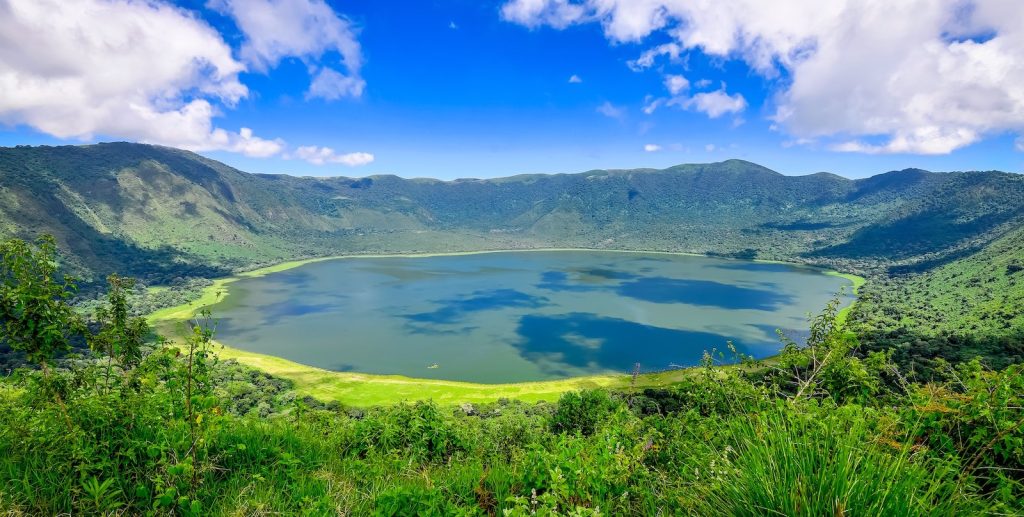
Imagine a natural arena the size of a small country — 260 square kilometres of open savannah, wetland, and acacia forest enclosed within the walls of an ancient volcanic crater, with a concentration of wildlife so extraordinary that the Maasai named it Ngorongoro, meaning “the gift of God.” The Ngorongoro Crater in northern Tanzania is exactly this: the world’s largest intact volcanic caldera and one of the planet’s most densely populated wildlife habitats, where the entire Big Five — including one of East Africa’s most reliable black rhino populations — live in a self-contained ecosystem that has few parallels anywhere on earth.
The Ngorongoro Crater is an essential component of any Tanzania safari and one of the world’s genuinely iconic natural wonders. This is your complete guide to planning a crater safari in 2026.
The Geology: Why the Crater Exists
Ngorongoro was formed approximately 2–3 million years ago when a massive volcano — estimated to have been as tall as Kilimanjaro — collapsed inward after a violent eruption depleted its magma chamber. The resulting caldera is 19 kilometres across and up to 600 metres deep, with rim elevations between 2,286 and 2,400 metres. The crater rim provides a dramatic viewpoint from which the entire crater floor is visible — a vast, bowl-shaped landscape of golden grass, acacia woodland, the soda lake of Lake Magadi, and the dark-green swamp of Lerai Forest.
The crater’s enclosed nature creates a near-perfect ecological system: wildlife that enters the crater from the surrounding Ngorongoro Conservation Area (NCA) tends to stay, drawn by the permanent water and year-round grass. The crater supports approximately 25,000–30,000 large mammals within its 260 square kilometres — one of the highest animal densities on earth.
Wildlife in the Crater
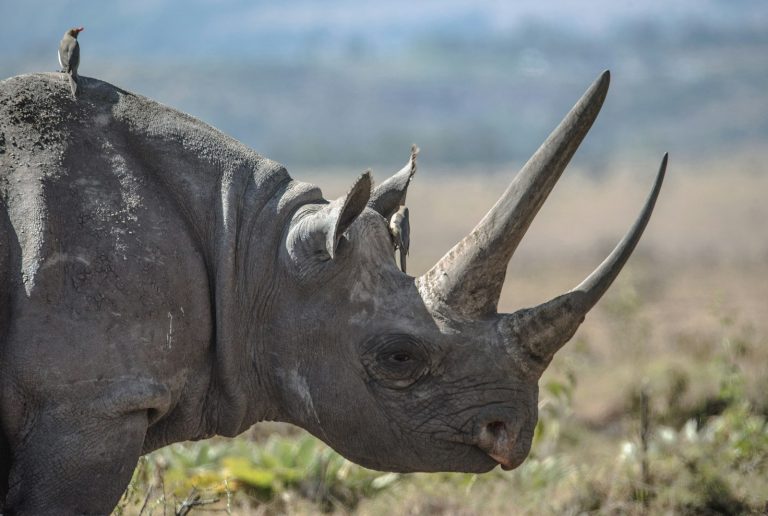
Black Rhinoceros: The Ngorongoro Crater is one of the best places in East Africa to see black rhino — the species that the poaching crisis of the 1970s-1990s brought to the brink of extinction. A small population (currently around 26 individuals) lives permanently within the crater, protected by an intensive anti-poaching programme. Encounters are not guaranteed — the crater is 260 square kilometres, and rhino are naturally elusive — but sighting rates here are higher than in any open (unfenced) park in East Africa. A rhino encounter in the crater is a genuinely special experience.
Lion: The crater’s enclosed geography has produced an inbred but robust lion population of approximately 60–70 individuals. The isolation means the crater lions have a limited gene pool, but intensive management and occasional lion immigration from outside helps maintain population health. The crater’s open terrain makes lion finding extremely productive — often visible on the Malanja Depression grasslands and along the Munge Stream in the morning.
Elephant: Old bull elephants with impressive tusks frequent the crater floor, particularly around the Lerai Forest. Breeding herds also descend from the rim periodically. Ngorongoro’s elephants are less habituated to vehicles than those in Amboseli and should be approached with appropriate caution.
Hippo: A large hippo pool near the Ngoiti stream provides reliable hippo viewing throughout the day. In the morning, hippos can often be seen moving across the crater floor between the pool and their grazing areas.
Flamingo: Lake Magadi — the shallow soda lake on the crater floor — hosts flamingo flocks that vary in number with the alkalinity of the water. In good conditions, pink curtains of flamingos along the lake shore create images that recall Lake Nakuru at its most spectacular.
Wildebeest, zebra, and gazelle: The crater’s grassland plains support year-round resident populations of blue wildebeest, Burchell’s zebra, Thomson’s and Grant’s gazelles, eland, hartebeest, and Cape buffalo. These are not migratory animals — they live permanently within the crater — which means the wildlife viewing here is consistent year-round, unlike the migration-dependent peaks of the Serengeti or Masai Mara.
Crater Descents: What to Know
Access to the crater floor is strictly managed. Only 4WD vehicles with a valid NCA permit may descend, and the number of vehicles on the crater floor at any time is limited. Descent roads (two main routes: Seneto in the west, Lerai in the south) are steep, winding, and spectacular. Most crater visits are structured as full-day descents, entering at 07:30 and departing by 18:00.
Park fees for the Ngorongoro Conservation Area are significant: the NCA entry fee plus the crater service fee can add up to $200+ per person per day, with an additional vehicle fee. These costs are separate from accommodation and should be factored into your Tanzania safari budget. See our Kenya safari cost guide for the broader cost framework — Tanzania’s fees are comparable at this level.
Ngorongoro Rim Accommodation
Accommodation at Ngorongoro is located on the crater rim rather than on the floor (no overnight stays on the crater floor are permitted). Rim lodges offer extraordinary views across the crater — particularly at sunrise, when mist fills the basin below and the crater edge glows in early light. The crater’s altitude (2,300m+) means rim nights are cool to cold — bring warm layers even in the dry season.
Combining Ngorongoro With the Serengeti
Ngorongoro and the Serengeti are the two pillars of Tanzania’s northern safari circuit and are almost always visited together. The standard circuit from Kilimanjaro Airport: Tarangire (2 nights) → Serengeti (3–4 nights) → Ngorongoro (2 nights, crater descent on day 2) → return to Arusha. This 7–8 night Tanzania circuit covers extraordinary wildlife variety and can be combined with Zanzibar for the complete Tanzania experience. From Kenya, our team handles the cross-border logistics of combining Kenya and Tanzania parks on a single itinerary.
💬 WhatsApp Us — Plan Your Safari Today
Call or WhatsApp: +254 799 160 081