
Chimpanzee trekking Uganda style means walking into ancient rainforest with a ranger and spending an hour with wild chimpanzees, and this guide explains where to go, how permits work and how to plan the trip.
There is a sound in Kibale Forest that stops you mid-step — a cascade of wild hooting and drumming that builds from a murmur to a crescendo that seems to shake the trees themselves. Then silence. Then movement. And suddenly, a chimpanzee drops from the canopy ten metres above you and walks past with an unhurried confidence that makes it very clear who owns this forest. Chimpanzee trekking in Uganda is one of East Africa’s most thrilling and least talked-about wildlife experiences — and it belongs on every serious East Africa safari itinerary.
Uganda hosts approximately 5,000 chimpanzees — one of Africa’s largest national populations — across several protected areas. Kibale National Park in western Uganda is the premier destination, with the highest density of chimpanzees in East Africa and the most habituated groups available for trekking. But Kyambura Gorge in Queen Elizabeth National Park, Budongo Forest in Murchison Falls, and several other forest patches also offer extraordinary chimp encounters in very different settings.
✅ Chimpanzee Trekking Uganda: The Quick Answer
- Best place: Kibale National Park, Uganda’s “primate capital”, with the most reliable chimpanzee sightings.
- Other options: Kyambura Gorge in Queen Elizabeth National Park and Budongo Forest near Murchison Falls.
- Permits: chimpanzee trekking Uganda permits are issued by the Uganda Wildlife Authority (UWA); book well ahead for June–September and December–February.
- Time with the chimps: one hour on a standard trek, or most of the day on the Chimpanzee Habituation Experience.
- Minimum age: usually 12 years for chimpanzee tracking in Kibale.
- Best combined with: gorilla trekking in Bwindi and a game drive or boat trip in Queen Elizabeth National Park.
🌎 Ready to Start Planning?
Our Kenya safari experts are on WhatsApp right now — ask us anything about dates, destinations, or costs.
💬 WhatsApp Us Now or call +254 799 160 081
Kibale National Park: Uganda’s Chimp Capital
Kibale National Park covers 766 square kilometres of moist tropical rainforest and woodland in western Uganda, near the foothills of the Rwenzori Mountains. The park protects over 1,000 chimpanzees — one of the world’s largest protected chimpanzee populations — alongside 12 other primate species including the red colobus monkey, black-and-white colobus, grey-cheeked mangabey, and the olive baboon. With 13 primate species, Kibale is sometimes called the “primate capital of the world.”
The Kanyanchu visitor centre is the hub for chimpanzee trekking, with two main trekking sessions daily (morning: 08:00, afternoon: 14:00). Groups of up to six permit holders are led by experienced Uganda Wildlife Authority rangers into the forest to locate the habituation groups. Once found, visitors spend one hour with the chimpanzees — watching them feed, groom, play, travel, and occasionally engage in the dramatic territorial displays (the drumming and hooting) that shake the forest.
The proximity is extraordinary — chimpanzees are far less cautious about distance than mountain gorillas, and encounters at close range (sometimes less than 3 metres) are common. Rangers will still ask you to keep a respectful distance, and the chimps themselves decide how close they come.
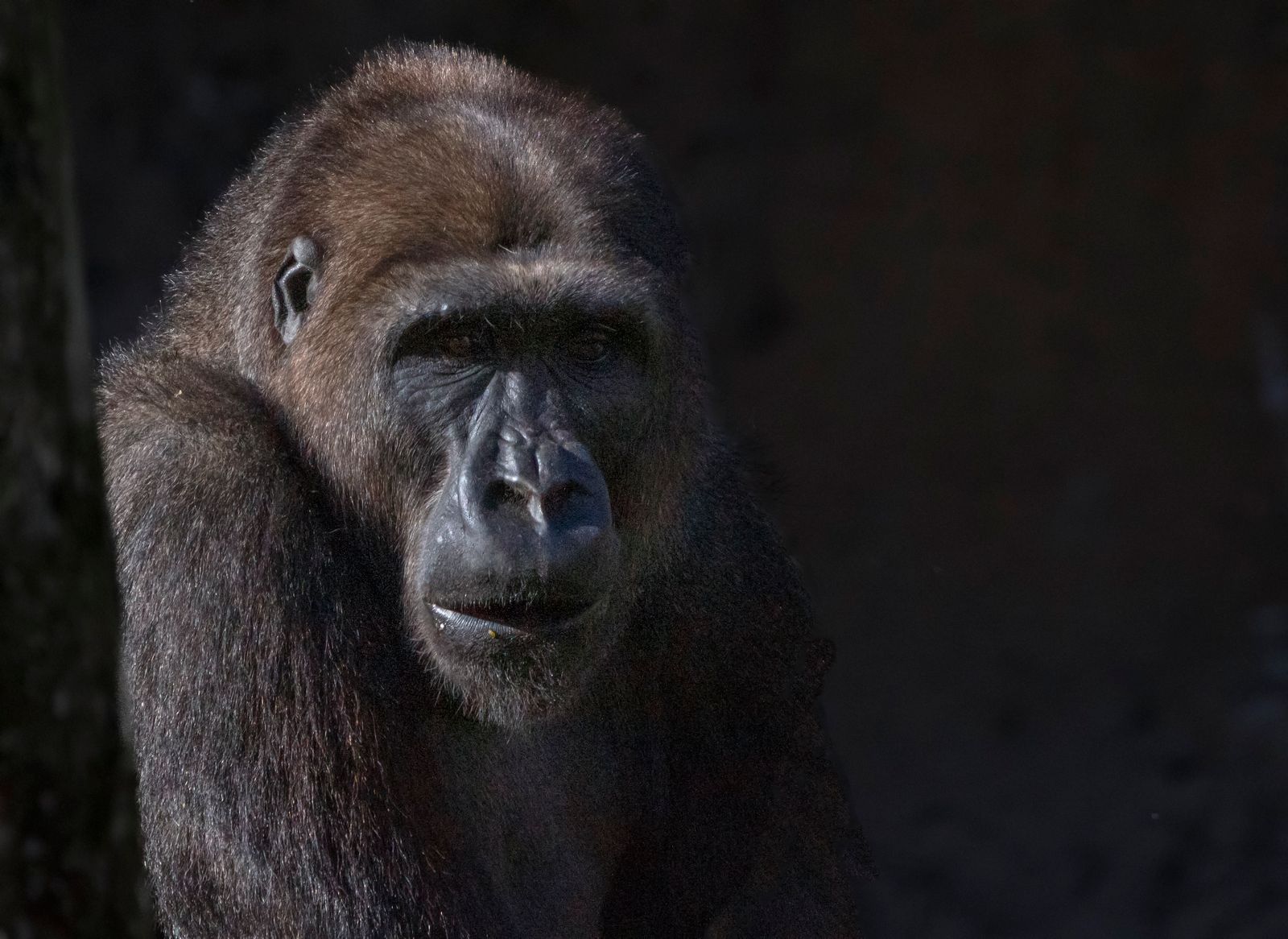
A typical chimpanzee trekking Uganda day in Kibale
Your day starts with a briefing at Kanyanchu, where rangers explain the rules and split visitors into small groups. You then walk along forest trails, listening for calls and looking for fresh signs such as dropped fruit. Rangers often know roughly where the group slept the night before, which helps them find the chimps quickly.
The walk can take anything from 30 minutes to several hours, depending on where the chimps are feeding. The terrain in Kibale is fairly flat compared with Bwindi, so most reasonably fit travellers manage it comfortably. Once you find the group, your hour begins, and it always passes far too quickly.
Chimp Habituation Experience: A Full Day with the Forest
For a deeper chimpanzee trekking Uganda experience, the Chimpanzee Habituation Experience (CHEX) allows visitors to spend a full day with a chimpanzee group that is still in the process of being habituated to human presence. These groups are observed from early morning through the evening, giving a complete picture of a day in chimpanzee life: dawn wake-up calls, morning feeding in the canopy, midday social grooming sessions, and the evening nest-building that ends each day.
The CHEX permit costs more than a standard trekking permit, but it delivers an immersively different experience — the depth of observation over a full day is genuinely extraordinary for wildlife enthusiasts and photographers.
📅 Get a Free Custom Itinerary
Tell us your travel dates and we will send you a fully personalised safari proposal — no obligation, no pressure.
Kyambura Gorge: The Valley of Apes
Within Queen Elizabeth National Park, the Kyambura Gorge (pronounced “Chamura”) is a dramatic 100-metre-deep canyon carved through the savannah by the Kyambura River, its steep walls clothed in dense riverine rainforest entirely surrounded by open grassland. A small, isolated chimpanzee community — perhaps 30 individuals — lives entirely within this gorge, cut off from other chimpanzee populations by the surrounding savannah.
This isolation gives Kyambura’s chimpanzees a poignancy that adds to the already extraordinary experience: you descend into the gorge on a guided walk, following the chimps through dense forest while, above the gorge rim, savannah wildlife — elephant, buffalo, Uganda kob — move across the open plains.
Kyambura chimp sightings are less guaranteed than Kibale’s (the small community is more mobile and sometimes difficult to locate), but when the encounter happens — in that dramatic canyon setting — it is one of the most atmospheric wildlife experiences in Uganda.
Other Chimpanzee Trekking Uganda Sites
Kibale and Kyambura are the best-known chimpanzee trekking Uganda options, but they are not the only ones. Your route through the country often decides which forest makes the most sense.
Budongo Forest, Murchison Falls
Budongo Forest lies on the southern edge of the Murchison Falls Conservation Area in north-western Uganda. It is a large tropical forest with tall mahogany trees and a habituated chimpanzee community that you can track with rangers. It pairs naturally with a Nile boat trip to the foot of Murchison Falls, as on our Uganda Murchison Falls & Nile Safari (4 Days).
Ngamba Island and other options
If you have only a day near Entebbe, Ngamba Island Chimpanzee Sanctuary on Lake Victoria cares for orphaned and rescued chimpanzees. It is a sanctuary rather than wild trekking, but it is a good choice for short stays and supports chimp conservation. Smaller forests such as Kalinzu, near Queen Elizabeth National Park, also offer chimp walks.
Why Choose Chimpanzee Trekking Uganda?
Wild chimpanzees can also be seen in Rwanda’s Nyungwe Forest and in Tanzania’s Gombe and Mahale Mountains national parks. So why do so many travellers pick chimpanzee trekking Uganda trips? The main reason is reliability. Kibale’s habituated groups give some of the best chances of a sighting anywhere in Africa, and the park is easy to combine with gorillas and savannah game drives.
Uganda also offers variety. In one week you can track chimps in Kibale, take a boat trip on the Kazinga Channel, look for tree-climbing lions in Ishasha and trek mountain gorillas in Bwindi. If you prefer Rwanda, our Rwanda Gorillas & Nyungwe Chimps (6 Days) trip is a good alternative, and Visit Rwanda has more on Nyungwe.
Who is chimpanzee trekking Uganda suitable for?
Chimp treks suit most active travellers aged 12 and over. You do not need to be an athlete, but you should be comfortable walking for a few hours on uneven, sometimes muddy ground. Families with teenagers, couples, photographers and keen birders all enjoy it. Younger children can visit Ngamba Island or walk in Bigodi instead.
Chimp Trekking Permits and Booking
Uganda chimpanzee trekking permits are issued by the Uganda Wildlife Authority. Standard trekking in Kibale has been priced at around USD $200–$250 per person in recent UWA tariffs, and the full-day CHEX experience costs more. UWA reviews its prices from time to time, so check the current fees on the Uganda Wildlife Authority website or ask us before you book.
Permits should be booked in advance — particularly for June-September and December-February peak seasons. We handle all Uganda permit booking as part of our East Africa safari packages, coordinating chimp permits alongside gorilla permits at Bwindi for the ultimate Uganda primate circuit.
What a chimpanzee trekking Uganda permit includes
Your permit covers the guided trek with a UWA ranger and your time with the chimpanzees. Park entry fees, transport, accommodation and tips are separate. Most travellers book the permit as part of a full trip, so the transport to Kibale, lodge nights and timing are all arranged together.
Combining Chimps With a Broader Uganda or East Africa Circuit
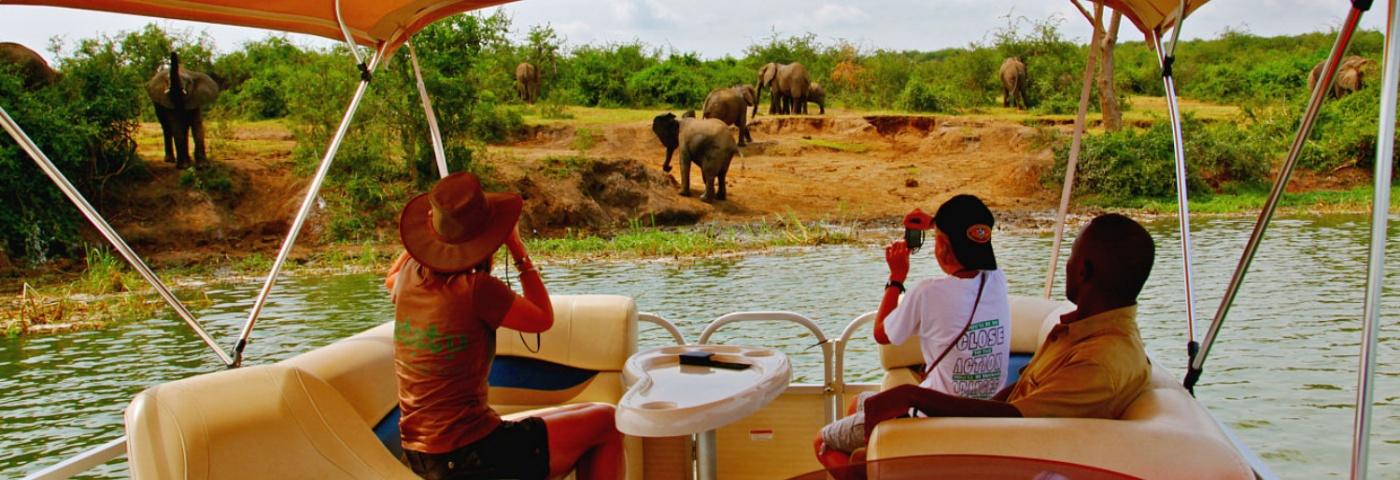
Chimp trekking at Kibale pairs naturally with Queen Elizabeth National Park (tree-climbing lions, hippos, and the Kyambura Gorge chimps) on a western Uganda circuit, and with gorilla trekking at Bwindi for the ultimate Uganda safari.
The classic Uganda primate circuit from Entebbe: Kibale chimpanzees (2 nights) → Queen Elizabeth National Park (2 nights) → Bwindi gorilla trek (2 nights) → Entebbe. Seven nights, two of Africa’s greatest primate experiences, and extraordinary savannah wildlife in between. Talk to our team about combining Uganda with a Kenya or Tanzania safari on a larger East Africa itinerary.
Sample chimpanzee trekking Uganda itineraries
- 5 days: Kibale chimps and Bwindi gorillas — our Uganda Gorillas & Chimps Safari (5 Days).
- 7 days: Kibale, Queen Elizabeth National Park and Bwindi — see our Uganda Wildlife & Gorillas Safari (7 Days).
- 11 days: chimps and gorillas plus the Big Five in Kenya — our Gorillas & Savannah – Rwanda, Uganda & Kenya (11 Days).
Ask us for current chimpanzee trekking Uganda prices, which depend on the season, your lodge choice and the cost of permits. You can also browse all our Uganda safari packages and our Uganda safari lodges and camps.
Best Time for Chimpanzee Trekking in Uganda
Chimpanzee trekking Uganda trips run all year. Uganda has two drier seasons, roughly June to September and December to February, when forest trails are firmer and easier to walk. These are the most popular months, so permits and lodges fill up first.
The wetter months of March to May and October to November bring heavier rain, muddy paths and fewer visitors. Chimps are often easier to find when forest fruit is plentiful, so the wet season can be very rewarding if you do not mind getting muddy. Morning treks are generally more active, as the chimps feed after waking.
Chimpanzee Trekking Uganda Rules and Etiquette
Chimpanzee trekking Uganda rules protect both you and the chimpanzees, which can catch human illnesses such as colds and flu. Your ranger will brief you, but these are the main points:
- Keep your distance: UWA asks visitors to stay around 8 metres from the chimps.
- Do not trek if you are ill: tell the rangers if you have a cold, flu or other infection.
- No flash photography: turn off your flash and keep noise to a minimum.
- No eating near the chimps: keep food and drink away from the group.
- Stay with your group: follow the ranger and never try to approach or feed a chimp.
- Wear a mask if asked: rangers may require masks during the viewing hour.
What to Pack for Chimp Trekking
Good kit makes a chimpanzee trekking Uganda day far more comfortable, especially if it rains. Bring the following:
- Waterproof hiking boots: forest trails are often wet and slippery.
- Long trousers and long sleeves: tuck trousers into socks to keep out biting safari ants.
- A light rain jacket: showers can arrive suddenly, even in the dry season.
- Gardening gloves: handy for grabbing branches and vines.
- A small daypack with water and snacks: for the walk, not for the viewing hour.
- A camera with good low-light performance: the forest is dark, and flash is not allowed.
How to Get to Kibale National Park
For most chimpanzee trekking Uganda trips, Kibale is the base. The park lies in western Uganda near the town of Fort Portal. By road it is roughly a five- to six-hour drive from Kampala or Entebbe, through green hills and tea plantations. Many travellers break the journey with a night near Kampala after arriving at Entebbe International Airport.
Domestic flights from Entebbe to airstrips in western Uganda can shorten the trip, followed by a road transfer to your lodge. Coming from Kenya, the quickest option is usually a regional flight from Nairobi to Entebbe. Our private Kenya safari packages can be extended into Uganda in this way.
Bigodi Wetland Sanctuary
Next to Kibale, the community-run Bigodi Wetland Sanctuary offers a gentle guided walk through papyrus swamp. It is excellent for birds and monkeys, and the fees support local projects. It makes a perfect add-on to any chimpanzee trekking Uganda itinerary, ideally on the afternoon after your morning trek.
Chimpanzee Trekking Uganda: Frequently Asked Questions
How much does chimpanzee trekking in Uganda cost?
Standard chimpanzee trekking permits in Kibale have been priced at around USD 200 to 250 per person in recent UWA tariffs, with the full-day habituation experience costing more. Park entry, transport and lodges are extra. Check current permit prices with the Uganda Wildlife Authority or ask us for an up-to-date quote.
Is chimpanzee trekking Uganda difficult?
Most treks in Kibale are moderate. The forest is fairly flat, but trails can be muddy and the chimps sometimes move fast, so you may walk for several hours. Kyambura Gorge is steeper, with a climb back out. Anyone with reasonable fitness and good boots will usually manage comfortably.
How close can you get to the chimpanzees?
UWA asks visitors to stay around 8 metres from the chimpanzees to protect them from human illnesses. In practice the chimps sometimes walk closer to you on their own. If that happens, stay calm, follow the ranger’s instructions and never reach out to touch them.
Can I do gorilla and chimpanzee trekking on the same trip?
Yes, and it is the most popular way to plan a chimpanzee trekking Uganda trip. Kibale and Bwindi are both in the west of the country, linked by a scenic drive through Queen Elizabeth National Park. A five- to seven-day trip lets you trek both great apes and enjoy a savannah game drive in between.
How far ahead should I book chimpanzee trekking Uganda permits?
For the busy months of June to September and December to February, book three to six months ahead, because each habituated group takes only a small number of visitors a day. In quieter months a few weeks may be enough. If you also want gorilla permits, book both together as early as possible.
Is Kibale or Kyambura Gorge better for chimps?
Kibale is better if seeing chimpanzees is your priority, because its habituated groups give the most reliable sightings in Uganda. Kyambura Gorge is smaller and sightings are less certain, but the canyon setting is stunning. If you have time, trek in Kibale and add Kyambura as a bonus.
Ready to plan your chimpanzee trekking Uganda adventure? Send us your dates and we will check permit availability and build a route around it. For wider travel information, the UK Foreign Office advice for Uganda is a useful starting point.
🏑 Book Your Safari With Sense of Adventure
Kenya-based experts. Real local knowledge. Transparent pricing. We have been doing this for years — let us show you why our guests keep coming back.
💬 WhatsApp Us — Plan Your Safari Today
Call or WhatsApp: +254 799 160 081