Queen Elizabeth National Park Uganda is the safari for travellers who want lions in fig trees, thousands of hippos, chimpanzees in a hidden gorge and more than 600 bird species, all in one park on the western Uganda circuit.
Queen Elizabeth National Park is Uganda’s most biodiverse protected area and one of East Africa’s most compelling yet undervisited safari destinations. Named after Queen Elizabeth II following her 1954 visit, this sprawling 1,978 square kilometre park in western Uganda encompasses extraordinary ecological diversity: open savannah, dense forest, volcanic crater lakes, the vast wetlands of the Kazinga Channel, and the forested depths of the Kyambura Gorge — all set against the dramatic backdrop of the Rwenzori Mountains on the western horizon.
What makes Queen Elizabeth National Park Uganda truly exceptional is its combination of savannah and forest species in a single destination. Tree-climbing lions, enormous hippo concentrations, abundant elephants, and the spectacle of Uganda kob (the antelope depicted on Uganda’s coat of arms) on the open Ishasha plains, combined with chimpanzees in the Kyambura Gorge and extraordinary birdlife — over 600 species — make this one of Africa’s most diverse and rewarding parks.
✅ Queen Elizabeth National Park Uganda: The Quick Answer
- Where: western Uganda, between Lake Edward and Lake George, in the shadow of the Rwenzori Mountains.
- Famous for: the tree-climbing lions of Ishasha, the Kazinga Channel boat cruise, chimpanzees in Kyambura Gorge and over 600 bird species.
- Getting there: about 6 hours by road from Entebbe or Kampala, or around 1 hour by light aircraft.
- Best time: the drier months, roughly June to September and December to February.
- Time needed: two nights at the very least; three nights if you want Ishasha as well as Mweya and Kasenyi.
- Cost from: our 7-day Uganda Wildlife & Gorillas Safari, which includes the park and a gorilla trek, starts from USD 3,200 per person.
🌎 Ready to Start Planning?
Our Kenya safari experts are on WhatsApp right now — ask us anything about dates, destinations, or costs.
💬 WhatsApp Us Now or call +254 799 160 081
Why Visit Queen Elizabeth National Park Uganda?
Most travellers come to Uganda for the mountain gorillas, and many treat the rest of the country as a long drive between airports. That is a mistake. Queen Elizabeth National Park Uganda is the country’s classic savannah safari, and it gives a gorilla trip the big-game balance that makes it feel like a complete African holiday.
The park is also wonderfully varied. In a single day you can drive the open Kasenyi plains at dawn, cruise the Kazinga Channel in the afternoon and watch the sun set over crater lakes. Visitor numbers are modest compared with the Masai Mara or the Serengeti, so sightings often feel private, and the landscapes — green, volcanic and watery — look nothing like the dry plains of Kenya.
How Queen Elizabeth National Park Uganda compares with Kenya’s parks
If you have already been on safari in Kenya, expect a different rhythm. Big cats are fewer and harder to find than in the Mara, and there are no rhinos in the park. In return, Queen Elizabeth National Park Uganda offers boat-based game viewing, primates, superb birdlife and the strange spectacle of lions resting in trees. Many of our guests combine the two countries, pairing the Mara’s predators with Uganda’s forests and apes.

The Tree-Climbing Lions of Ishasha
Uganda’s single most famous wildlife attraction is also one of Africa’s most bizarre and wonderful — the tree-climbing lions of Ishasha, in the remote southern sector of Queen Elizabeth National Park Uganda. Lions across Africa occasionally climb trees, but the Ishasha lions do it routinely, spending hours draped across the branches of massive fig trees with their legs dangling, regarding the world with magnificent indifference. The behaviour is thought to be partly a response to biting insects on the ground and partly a learned social tradition passed down through the generations of Ishasha’s resident prides.
Ishasha is a full 2–3 hours’ drive from the park’s main Mweya sector, so visiting it typically involves an overnight stay in the southern sector or a very long day’s drive. The sightings — a pride of lions sprawled in the upper canopy of a massive fig tree, with the Maramagambo Forest as a backdrop — are genuinely extraordinary and completely unlike any lion encounter you will have elsewhere in East Africa.
Most Uganda safari operators visit Ishasha en route between Queen Elizabeth and Bwindi, making it a natural stop on the western Uganda gorilla circuit.
Tips for finding the Ishasha lions
Lions are most likely to be up in the trees during the heat of the day, roughly late morning to mid-afternoon, so Ishasha suits a midday visit better than most game drives. Your guide will check the known fig trees one by one. Sightings are common but never guaranteed, so treat the lions as a wonderful bonus rather than the only reason to visit. Look out too for Uganda kob, topi and buffalo on the surrounding plains.
Kazinga Channel: Africa’s Greatest Boat Safari
The Kazinga Channel connects Lake Edward and Lake George through the heart of Queen Elizabeth National Park Uganda. A two-hour boat trip on the channel is one of Uganda’s premier wildlife experiences and, by some measures, one of Africa’s finest boat safaris. The channel supports one of Africa’s highest hippo concentrations — approximately 5,000 individuals — and enormous crocodile populations.
But the spectacle goes far beyond hippos and crocodiles: elephants drink at the water’s edge within metres of the boat, African fish eagle pairs call from dead trees on the bank, and an extraordinary procession of waterbirds — goliath heron, yellow-billed stork, African spoonbill, Malagasy pond heron, and dozens more — line the shoreline in numbers that make serious birders weep with joy.
The launch trip runs twice daily from the Mweya peninsula (morning and afternoon), and the afternoon trip — with golden light on the channel and wildlife activity peaks as the temperature drops — is particularly spectacular. This is one experience that no Uganda safari should miss.

📅 Get a Free Custom Itinerary
Tell us your travel dates and we will send you a fully personalised safari proposal — no obligation, no pressure.
Chimpanzees in Kyambura Gorge
Kyambura Gorge is a sunken river valley cut into the savannah on the eastern edge of Queen Elizabeth National Park Uganda. From the rim it looks like a green scar across the plains; down below, a strip of tropical forest shelters a small community of chimpanzees, as well as black-and-white colobus, red-tailed monkeys and forest birds.
Chimpanzee tracking here is a guided morning walk led by Uganda Wildlife Authority rangers. Because the group is small and the forest is enclosed, sightings are less reliable than in nearby Kibale National Park, but the setting is spectacular and the walk itself is rewarding. If chimpanzees are a priority, plan a dedicated day in Kibale as well; our guide to chimpanzee trekking in Uganda explains both options.
Birdwatching in Queen Elizabeth National Park Uganda
Queen Elizabeth National Park Uganda is one of Africa’s premier birdwatching destinations. Over 600 species have been recorded across its varied habitats — a number that places it among the top birdwatching sites on the continent. The Maramagambo Forest harbours rare Albertine Rift endemics including the African green broadbill and the forest ground thrush. The Kyambura Gorge adds riverine forest species.
The open savannah is home to the martial eagle, bateleur, and secretary bird. And the Kazinga Channel’s waterbirds, as noted above, are simply extraordinary in diversity and density.
For serious birders, a dedicated Queen Elizabeth birding itinerary — combining the channel boat trip, Maramagambo Forest walks, and Kyambura Gorge — can produce 200+ species in three days. Combined with Uganda’s other birding strongholds (Bwindi, Mabamba Swamp for shoebill stork), Uganda rivals any destination in Africa for birdwatching. Talk to our team about building a birding-focused Uganda itinerary.
Wildlife Beyond the Headlines
The Kasenyi plains in the northern sector of Queen Elizabeth National Park Uganda support large concentrations of Uganda kob — a medium-sized, golden-brown antelope that lives in enormous herds and stages remarkable lek displays during breeding season (dominant males defending small territories within a traditional display ground, with females choosing their preferred mate).
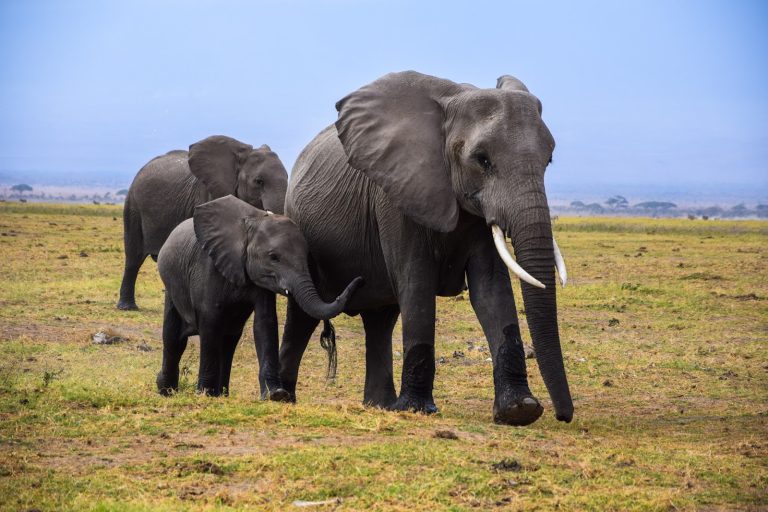
Elephant herds roam freely between the savannah and forest edges. Leopard are present but more elusive than in East Africa’s drier parks. Giant forest hog, warthog, topi, and waterbuck add to the plains game variety.
Big Five status in Queen Elizabeth National Park Uganda
Queen Elizabeth National Park Uganda has lion, leopard, elephant and buffalo, but no rhino, so it is not a full Big Five park. Uganda’s only rhinos live at Ziwa Rhino Sanctuary, north of Kampala. If completing the Big Five matters to you, add a Kenyan rhino stronghold such as Ol Pejeta or Lake Nakuru to your trip; our Big Five Africa safari guide shows where each animal is easiest to see.
The Park’s Sectors at a Glance
Queen Elizabeth National Park Uganda is large, and each sector has its own character. Planning your nights around them saves a great deal of driving.
- Mweya Peninsula: the park’s hub, overlooking the Kazinga Channel and Lake Edward. The boat launches leave from here, and it is a convenient base for the northern plains.
- Kasenyi Plains: open grassland north-east of Mweya, best for Uganda kob, lion and morning game drives.
- Crater lakes and Katwe: a scenic drive past old volcanic craters, plus the traditional salt workings of Lake Katwe.
- Kyambura Gorge: the forested gorge for chimpanzee tracking.
- Maramagambo Forest: forest walks, primates and birds on the southern edge of the park.
- Ishasha: the remote southern sector with the tree-climbing lions, on the route to Bwindi.
Best Time to Visit Queen Elizabeth National Park Uganda
Queen Elizabeth National Park Uganda sits on the Equator, so temperatures are pleasant all year. The best time to visit is during the drier months, roughly June to September and December to February. Tracks are firmer, the grass is shorter and animals are easier to find, and these months also suit gorilla trekking in Bwindi.
Visiting in the rainy seasons
The wetter periods usually fall around March to May and October to November. Rain often comes in heavy afternoon showers rather than all day, the scenery is lush and birdlife is at its best, with migrants present from roughly November to April. Some tracks, especially around Ishasha, can become muddy, so allow extra driving time. For a wider view of seasons in the region, see our guide to the best East Africa safari itineraries.
Getting to Queen Elizabeth National Park
Queen Elizabeth National Park Uganda is approximately 6 hours from Entebbe (Kampala) by road, or 1 hour by chartered light aircraft from Entebbe airport. The park is almost always visited as part of the western Uganda circuit — combined with Kibale chimpanzee trekking and Bwindi gorilla trekking.
The road journey from Kibale to Queen Elizabeth takes approximately 2.5 hours; from Queen Elizabeth to Bwindi (via Ishasha) takes 3–4 hours on variable road quality. Flying between sectors on charter aircraft saves significant time and is recommended for travellers with limited days. Talk to our team to build your Uganda circuit efficiently around your available time.
Flying from Nairobi
Many of our guests start in Kenya. There are regular flights from Nairobi to Entebbe, which makes it easy to reach Queen Elizabeth National Park Uganda and to add Uganda before or after a Kenya safari. Remember that Kenya and Uganda have separate entry rules: check the official Kenya eTA website for Kenya and current Uganda requirements before you book flights.
What a Queen Elizabeth Safari Costs
The cost of visiting Queen Elizabeth National Park Uganda depends on the number of nights, whether you drive or fly, the lodge level and whether you add gorilla or chimpanzee permits, which are the biggest single expense on most Uganda trips. These are the current “from” prices on our own Uganda packages, per person:
- Uganda Wildlife & Gorillas Safari (7 Days): from USD 3,200, including Queen Elizabeth, Ishasha, the Kazinga Channel and one gorilla permit.
- Uganda Gorillas & Chimps Safari (5 Days): a shorter primate-focused alternative.
- Gorillas & Savannah – Rwanda, Uganda & Kenya (11 Days): for travellers who want gorillas and the Masai Mara on one trip.
Park entry fees and permit prices are set by the Uganda Wildlife Authority and change from time to time, so always check current rates when you book. Tips, drinks and personal extras are usually extra. Travelling with friends or family and sharing a vehicle lowers the cost per person.
Where to Stay
Accommodation in and around Queen Elizabeth National Park Uganda ranges from simple bandas to comfortable lodges and luxury tented camps. Most visitors base themselves near Mweya or the Kasenyi plains for the channel and the northern game drives, then spend a night near Ishasha or move straight on to Bwindi. We match the lodge to your budget and route rather than pushing one property, so tell us how you like to travel.
Sample Itinerary: Three Nights in the Park
Three nights let you see Queen Elizabeth National Park Uganda at a relaxed pace and arrive at Bwindi rested for your trek.
- Day 1: drive from Kibale or Entebbe, with an afternoon game drive or the crater lakes on the way in.
- Day 2: early game drive on the Kasenyi plains, lunch at the lodge, then the afternoon Kazinga Channel cruise.
- Day 3: morning chimpanzee walk in Kyambura Gorge, or a slow morning and a visit to the Katwe salt lake.
- Day 4: drive south through Ishasha to look for tree-climbing lions, then continue to Bwindi.
What to Pack for Queen Elizabeth National Park Uganda
Uganda is greener and wetter than most of Kenya, so pack for sun, showers and forest walks.
- Light, neutral-coloured clothing in khaki, olive or brown.
- A light waterproof jacket for sudden showers and the boat cruise.
- Long trousers, long sleeves and sturdy walking shoes for Kyambura Gorge.
- Binoculars and a zoom lens for birds and lions in trees.
- Insect repellent and any anti-malaria tablets your doctor recommends.
- A hat, sunglasses and high-factor sunscreen.
Uganda no longer requires a yellow fever certificate for entry (the rule was removed in October 2026), but the vaccine is still recommended, and Kenya, Rwanda, Tanzania or your airline may ask for proof when you travel on from Uganda. Malaria is present in the park. Speak to a travel clinic well before you go and check the latest UK government travel advice for Uganda.
Mistakes to Avoid
- Rushing through in one night: you will miss either the channel or the plains, and Ishasha will be impossible.
- Expecting Mara-style cat numbers: lions are present but fewer, so enjoy the variety rather than counting predators.
- Skipping the afternoon boat cruise: it is the highlight for most visitors.
- Underestimating road times: distances in western Uganda look short on a map but take time to drive.
- Booking permits late: gorilla and chimpanzee permits sell out in peak months, so secure them first.
Queen Elizabeth National Park Uganda: Frequently Asked Questions
Is Queen Elizabeth National Park Uganda worth visiting?
Yes. Queen Elizabeth National Park Uganda is the country’s best all-round savannah park, with tree-climbing lions, the Kazinga Channel boat cruise, elephants, chimpanzees and over 600 bird species. It sits on the route between Kibale and Bwindi, so it adds big-game safari to a gorilla trip with very little extra travel.
How many days do you need in Queen Elizabeth National Park?
Plan for two nights at the very least and three if you can. Two nights cover a morning game drive, the Kazinga Channel cruise and the crater lakes. A third night gives you time for Kyambura Gorge and lets you drive through Ishasha for the tree-climbing lions on your way to Bwindi.
Are tree-climbing lions guaranteed in Ishasha?
No sighting is guaranteed in the wild, but the Ishasha lions are seen in trees often, especially from late morning to mid-afternoon when the ground is hot. Your guide will check the favourite fig trees. Even if the lions are on the ground, Ishasha’s plains have kob, topi, buffalo and elephants.
Can you see the Big Five in Queen Elizabeth National Park?
Not all of them. The park has lion, leopard, elephant and buffalo, but rhinos are absent. Leopards are shy and seen less often than lions. To complete the Big Five, combine Uganda with a Kenyan park that protects rhinos, such as Ol Pejeta Conservancy or Lake Nakuru National Park.
How far is Queen Elizabeth National Park from Bwindi?
The drive from the Mweya area to Bwindi takes roughly 3–4 hours via Ishasha, depending on road conditions and which sector of Bwindi you are trekking in. Many travellers break the journey with a stop for the tree-climbing lions. Charter flights are available if you are short of time.
What is the best month to visit Queen Elizabeth National Park?
June to September and December to February are the most reliable months, with drier tracks and easier game viewing. They also suit gorilla trekking in Bwindi. The rainy months bring greener scenery, fewer visitors and excellent birding, but some tracks, especially around Ishasha, can become slippery.
Ready to plan your own Queen Elizabeth National Park Uganda safari? Tell us your dates, group size and budget, and we will build a Uganda or Kenya-and-Uganda route that fits. For official park information, visit the Uganda Wildlife Authority. If you would also like Kenya’s big cats, see our private Kenya safari options.
🏑 Book Your Safari With Sense of Adventure
Kenya-based experts. Real local knowledge. Transparent pricing. We have been doing this for years — let us show you why our guests keep coming back.
💬 WhatsApp Us — Plan Your Safari Today
Call or WhatsApp: +254 799 160 081