
This Lake Naivasha Kenya guide covers everything you need for a visit: boat trips among hippos, walking on Crescent Island, cycling in Hell’s Gate, where to stay and when to go. Lake Naivasha is the freshwater gem of Kenya’s Rift Valley — a beautiful, papyrus-fringed lake at 1,884 metres altitude, rich in wildlife, surrounded by acacia woodland and flower farms, and close enough to Nairobi (90 kilometres, about 1.5 hours) to make it one of the most accessible and rewarding safari experiences in Kenya. For travellers looking for a short getaway from Nairobi, a tranquil addition to a longer safari circuit, or a genuinely memorable day trip, Lake Naivasha consistently over-delivers.
The lake is famous for its hippos — one of Kenya’s most accessible hippo populations lives in the shallow papyrus margins — and its extraordinary birdlife. African fish eagles perch on dead acacias above the water, calling their haunting cry across the lake surface. Great white pelicans wheel overhead. Malachite kingfishers dart along the reed edges in flashes of electric blue. And at Crescent Island — a partially submerged volcanic crater island connected to the shore by a causeway at low water — you can walk freely among wildlife on a privately managed sanctuary that is one of Kenya’s most unique wildlife experiences.
Lake Naivasha Kenya at a Glance
- Location: floor of the Great Rift Valley, about 90 km north-west of Nairobi.
- Altitude: roughly 1,884 metres, so days are warm and nights cool.
- Water: freshwater, unlike the soda lakes of Nakuru, Elementaita and Bogoria.
- Headline wildlife: hippos, African fish eagles, pelicans, giraffes, zebras and waterbuck.
- Signature activities: boat trips, Crescent Island walks and cycling in nearby Hell’s Gate.
- Ideal stay: a day trip from Nairobi, or one to two nights on a wider safari.
Where Is Lake Naivasha?
Lake Naivasha lies in the floor of the Great Rift Valley, 90 kilometres from Nairobi via the A104 Naivasha highway — the same road that passes the dramatic escarpment viewpoint and descends into the Rift Valley. The drive from Nairobi to Naivasha is itself spectacular: the road climbs to the escarpment rim at approximately 2,400 metres and then descends steeply into the valley, with views that stretch across one of the world’s great geological features. Lake Naivasha is visible from the escarpment rim on a clear day.
The lake sits at an elevation that gives it a refreshingly cool microclimate compared to Kenya’s lower-altitude parks. Mornings on the lake can be misty and atmospheric; middays are warm and clear; evenings cool rapidly. The altitude also means Naivasha is malaria-free, which makes it particularly appealing for families and travellers who want a wildlife experience without prophylaxis requirements.
Getting to Lake Naivasha Kenya from Nairobi
Most visitors arrive by road. A private safari vehicle or car from Nairobi takes about one and a half to two hours, depending on traffic leaving the city. There are two common routes: the main A104 highway via Limuru and the escarpment viewpoints, or the older Mai Mahiu road, which drops into the valley earlier and passes the foot of Mount Longonot.
Leave Nairobi early if you can. Morning traffic out of the city can be slow, and the lake is at its most beautiful in the soft light before ten o’clock. If you are coming from the Masai Mara, Naivasha sits neatly on the way back to Nairobi, so it breaks up a long road day very well.

Boat Trips: The Best Way to Experience Naivasha
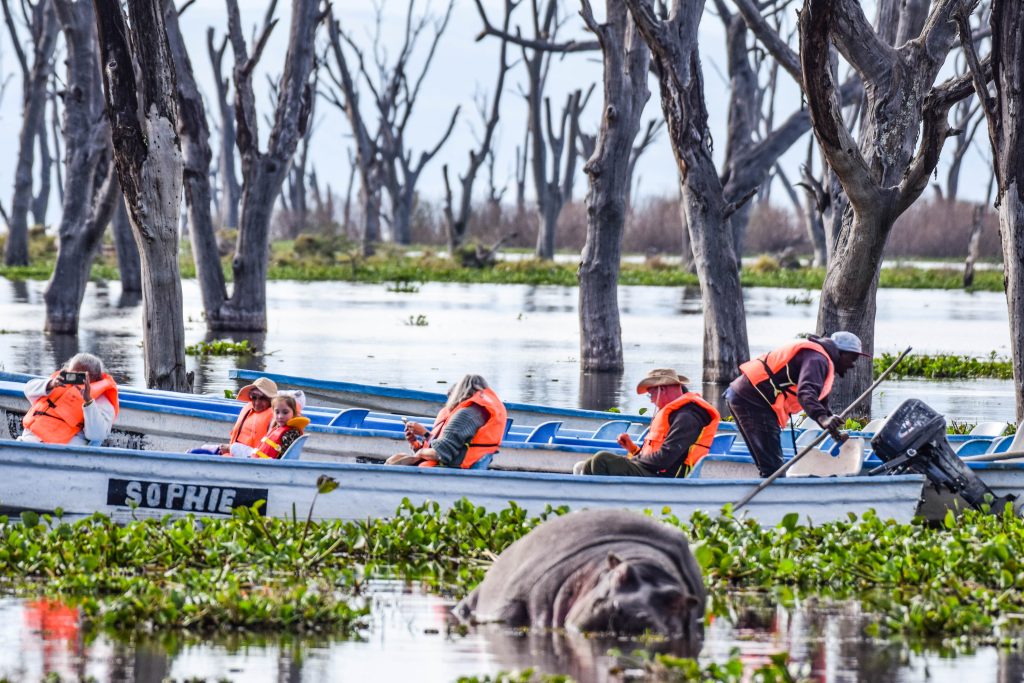
A boat trip on Lake Naivasha is the centrepiece of most visits. Several operators along the southern shore offer motorboat trips (typically 1–2 hours) that explore the lake’s hippo pools, papyrus channels, and open water. The boats approach hippo pods closely — close enough to see the sunburned pink skin behind their ears and hear the deep rumbling vocalisations that communicate within the group. Hippos are among Africa’s most dangerous animals and this proximity is managed carefully by experienced boatmen who understand the animals’ behaviour and maintain safe distances.
The birdwatching from the boat is exceptional. African fish eagle, great white pelican, great crested grebe, African jacana (walking on floating vegetation), malachite kingfisher, giant kingfisher, goliath heron, and numerous duck and tern species populate the lake. Over 400 bird species have been recorded in the Naivasha area — making it one of East Africa’s premier birdwatching destinations. Serious birders should add a full morning on the lake specifically for birds.
For a closer look at how the boat outings work, read our dedicated Lake Naivasha boat safari guide.
Crescent Island: Walking Freely With Wildlife
Crescent Island is one of Kenya’s most underrated wildlife experiences and a highlight of any Naivasha visit. The island — privately owned and managed — is a predator-free sanctuary where visitors can walk unescorted among wildlife: giraffe, zebra, wildebeest, gazelle, and waterbuck move freely across the island’s open grassland and acacia woodland. The sensation of walking alongside a giraffe with the lake glittering behind and the Rift Valley escarpment rising in the distance is genuinely extraordinary — a freedom from the game vehicle that is rare in Kenya and deeply memorable.
Crescent Island has been used as a filming location multiple times, including for the movie Out of Africa. The combination of its open landscape, wildlife diversity, and lakeside setting makes it one of the most beautiful locations in the entire Kenya Rift Valley.
Our Crescent Island walking safari guide explains how to reach the island and what you are likely to see on foot.

Hell’s Gate: The Perfect Pairing
Lake Naivasha and Hell’s Gate National Park sit 1.5 kilometres apart and make an outstanding same-day combination. A morning cycling through Hell’s Gate’s dramatic gorge scenery among giraffe and zebra, followed by an afternoon boat trip on Lake Naivasha among hippos and fish eagles, makes for one of Kenya’s most varied and enjoyable full-day itineraries. Many of our Nairobi-based day trips follow this exact format.
More Things to Do Around Lake Naivasha Kenya
Boat trips, Crescent Island and Hell’s Gate are the big three, but the wider Naivasha basin has enough to fill a relaxed long weekend. These are the activities we most often add for guests who stay two nights or more.
Hike Mount Longonot
The dormant volcano of Mount Longonot rises just south-east of the lake. The climb to the crater rim is steep but short, and the full rim loop rewards fit walkers with views straight down into a forested crater and across the lake. Start early to avoid the midday heat. Our Mount Longonot National Park guide covers the route in detail.
Visit Elsamere
Elsamere, on the southern shore, was the lakeside home of Joy Adamson, author of Born Free. Today it is a small museum and conservation centre where you can learn about her life and work, then enjoy afternoon tea on lawns that run down to the water. Black-and-white colobus monkeys often move through the trees.
Explore Crater Lake and Lake Oloiden
West of the main lake, a small green crater lake sits inside a sanctuary where you can walk among plains game. Nearby Lake Oloiden, a smaller and more alkaline neighbour, sometimes attracts flamingos. Both are quieter than the main southern shore and good for birders and photographers.
Relax at the Geothermal Spa
Naivasha sits on one of Kenya’s most active geothermal areas, and the Olkaria power stations near Hell’s Gate harness that heat for electricity. A geothermal spa inside Hell’s Gate lets you soak in naturally warm, mineral-rich water after a day of cycling or walking.
Best Time to Visit Lake Naivasha Kenya
Naivasha is a year-round destination. Because it is a permanent freshwater lake, hippos and water birds are present in every month, and boat trips run throughout the year unless the weather is stormy.
The driest months, roughly late June to October and January to February, bring the clearest skies and the easiest conditions for Crescent Island walks and cycling in Hell’s Gate. The long rains, usually from around March to May, and the short rains in November and December, turn the landscape green and bring fewer visitors. Rain tends to fall in afternoon showers, so mornings are often still good for being on the water.
Migrant birds from Europe and Asia arrive from around October to April, which makes those months especially rewarding for birdwatchers. Weekends and Kenyan public holidays are busier, as Naivasha is a favourite escape for Nairobi residents.
Accommodation at Lake Naivasha
Lake Naivasha has a wide range of accommodation along its southern shore — from budget bandas and guesthouses to mid-range lakeside camps and a few genuinely lovely luxury properties. Sleeping at the lake (rather than visiting as a day trip) transforms the experience: early morning mist over the water, hippos calling through the night, and the extraordinary dawn chorus of fish eagles and herons make for one of Kenya’s most atmospheric overnight experiences.
Several properties sit directly on the lake shore and offer private jetties for boat access. Hippos sometimes graze on the lawns of lakeside camps at night — a reminder that Naivasha is genuinely wild despite its proximity to Nairobi. Follow your camp’s guidance on evening movements outside your accommodation.
Staying Safe Around Hippos and Water
Hippos look calm, but they are fast on land and protective of their space, especially at night when they leave the water to graze. A few simple habits keep every visit safe:
- Never walk along the shoreline after dark; use the escort your lodge provides.
- Keep a respectful distance on boat trips and follow the boatman’s instructions.
- Always wear the life jacket provided, even on calm water.
- Do not stand between a hippo and the water if you see one grazing on a lawn.
- Stay on the marked paths on Crescent Island and give giraffes and buffalo-sized animals plenty of room.
For wider safety guidance before you travel, check the UK government’s Kenya travel advice, which is updated regularly.
Conservation: A Lake Under Pressure
Lake Naivasha is a Ramsar-listed wetland of international importance, recognised for its birdlife and freshwater habitat. You can read the site description on the Ramsar Sites Information Service.
The lake also supports a large flower-growing industry and a growing town, so water use, pollution and invasive plants such as water hyacinth are ongoing concerns. Water levels rise and fall over the years, and in recent years higher levels have flooded parts of the shoreline. Choosing lodges and boat operators that follow local guidelines helps keep this wetland healthy for hippos and birds alike.
How to Combine Lake Naivasha in a Kenya Safari
Lake Naivasha works well as a standalone destination (1–2 nights), as a day trip from Nairobi, or as part of a Rift Valley circuit that includes Lake Nakuru and potentially Lake Bogoria. It also makes a natural first or last night on a Masai Mara safari itinerary — drive from Nairobi, spend a night at Naivasha, then continue along the escarpment to the Mara the following morning, arriving in time for an afternoon game drive. Read our guide on the Nairobi to Masai Mara route for detail on how this fits together logistically.
For families, Naivasha is particularly appealing: the malaria-free altitude, the boat trips, Crescent Island’s predator-free walking, and the generally relaxed pace make it one of Kenya’s most kid-friendly destinations. See our Kenya family safari guide for more on incorporating Naivasha into a family itinerary.
Sample Lake Naivasha Kenya Itineraries
- One day from Nairobi: our Crescent Island & Hell’s Gate day trip combines a walk among giraffes with cycling through the gorge.
- A relaxed weekend: our Naivasha weekend getaway plan spreads the highlights over two unhurried days.
- With young children: the Lake Naivasha Family Safari (4 Days) adds Hell’s Gate and Lake Nakuru with short drives.
- As part of a classic circuit: the 6-day Kenya group safari links the Masai Mara, Lake Nakuru and Naivasha.
For general travel information about the Rift Valley and the rest of the country, the official Magical Kenya tourism website is a helpful starting point.
Lake Naivasha Kenya: Frequently Asked Questions
How far is Lake Naivasha from Nairobi?
Lake Naivasha is about 90 kilometres north-west of Nairobi. The drive usually takes one and a half to two hours, depending on traffic and which route you take. That makes it one of the easiest wildlife destinations to reach from the capital, and a very comfortable day trip.
Can you see hippos at Lake Naivasha?
Yes. Lake Naivasha has one of Kenya’s most accessible hippo populations, living in the shallow papyrus margins. A one- to two-hour boat trip almost always finds several pods at close but safe range. Hippos also graze on lakeside lawns at night, so lodges provide escorts after dark.
Is Lake Naivasha worth visiting?
Yes, especially if you want variety close to Nairobi. In a single day you can take a boat trip among hippos, walk among giraffes on Crescent Island and cycle through Hell’s Gate. It is also an ideal stopover between Nairobi and the Masai Mara.
Is Lake Naivasha safe for families?
Yes, it is one of Kenya’s most family-friendly destinations. The altitude means it is considered a low malaria risk area, distances are short and many activities are on foot or by boat. Children should wear life jackets on the water and stay with an adult around the shoreline, especially at dusk.
Can you swim in Lake Naivasha?
No. Swimming in Lake Naivasha is not safe because of hippos, and occasional crocodile sightings have been reported in the wider area. Enjoy the water from a boat with a life jacket instead, and use your lodge’s swimming pool if you want a swim.
How long should I spend at Lake Naivasha?
One full day covers the main highlights, but one or two nights let you enjoy early morning boat trips, sunset on the lake and a hike up Mount Longonot. Many travellers spend one night at Naivasha on the way to or from the Masai Mara.
Or call us: +254 799 160 081 — we love planning great safaris.