

A Great Migration safari takes you to the Masai Mara or the Serengeti when more than a million wildebeest, with hundreds of thousands of zebras and gazelles, move across the plains in search of fresh grass. In Kenya, the herds are usually in the Masai Mara from about July to October, when the famous Mara River crossings happen. Our packages start from USD 590 per person.
Sense of Adventure is a licensed safari company based in Nairobi, and migration season is our busiest time of year. On this page you will find every Great Migration safari we run, side by side, with honest advice on timing, river crossings, where to stay, what it costs and how far ahead to book.
Table of Contents

✅ Great Migration Safari: The Quick Answer
- When: the herds are usually in Kenya’s Masai Mara from July to October; river crossings peak from late July to September.
- Where: the Masai Mara in Kenya and the northern Serengeti in Tanzania, either side of the Mara River.
- How long: at least three full days in the Mara; four or five days gives you a far better chance of a crossing.
- Price: from USD 590 per person for a camping trip to USD 4,600 for a 12-day Kenya and Tanzania migration safari.
- Book: six to nine months ahead for August and September, when the best riverside camps fill first.
Planning a migration trip?
Tell us your dates and we will tell you honestly where the herds are likely to be, and which camp puts you closest.
What Is the Great Migration?
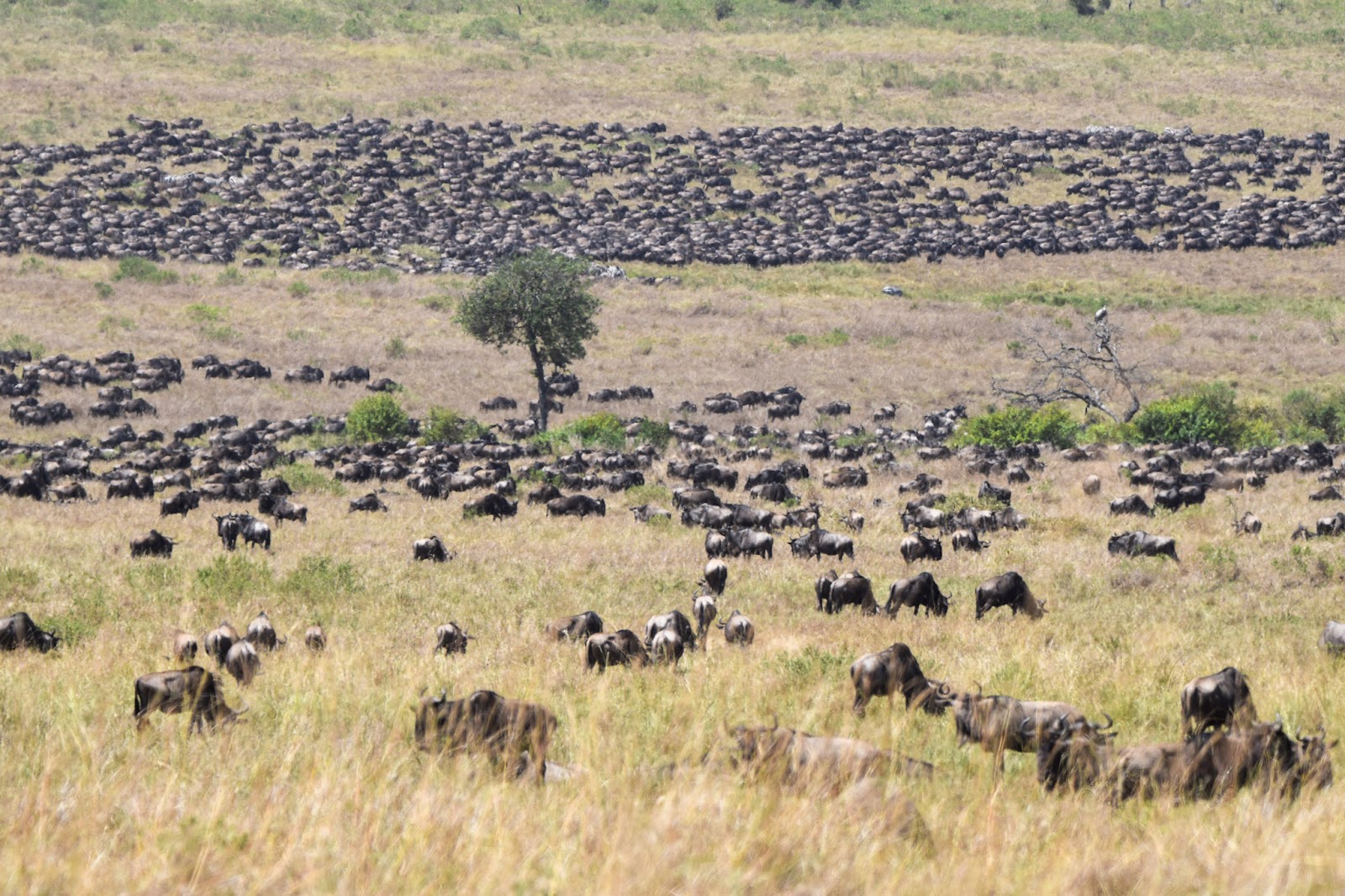
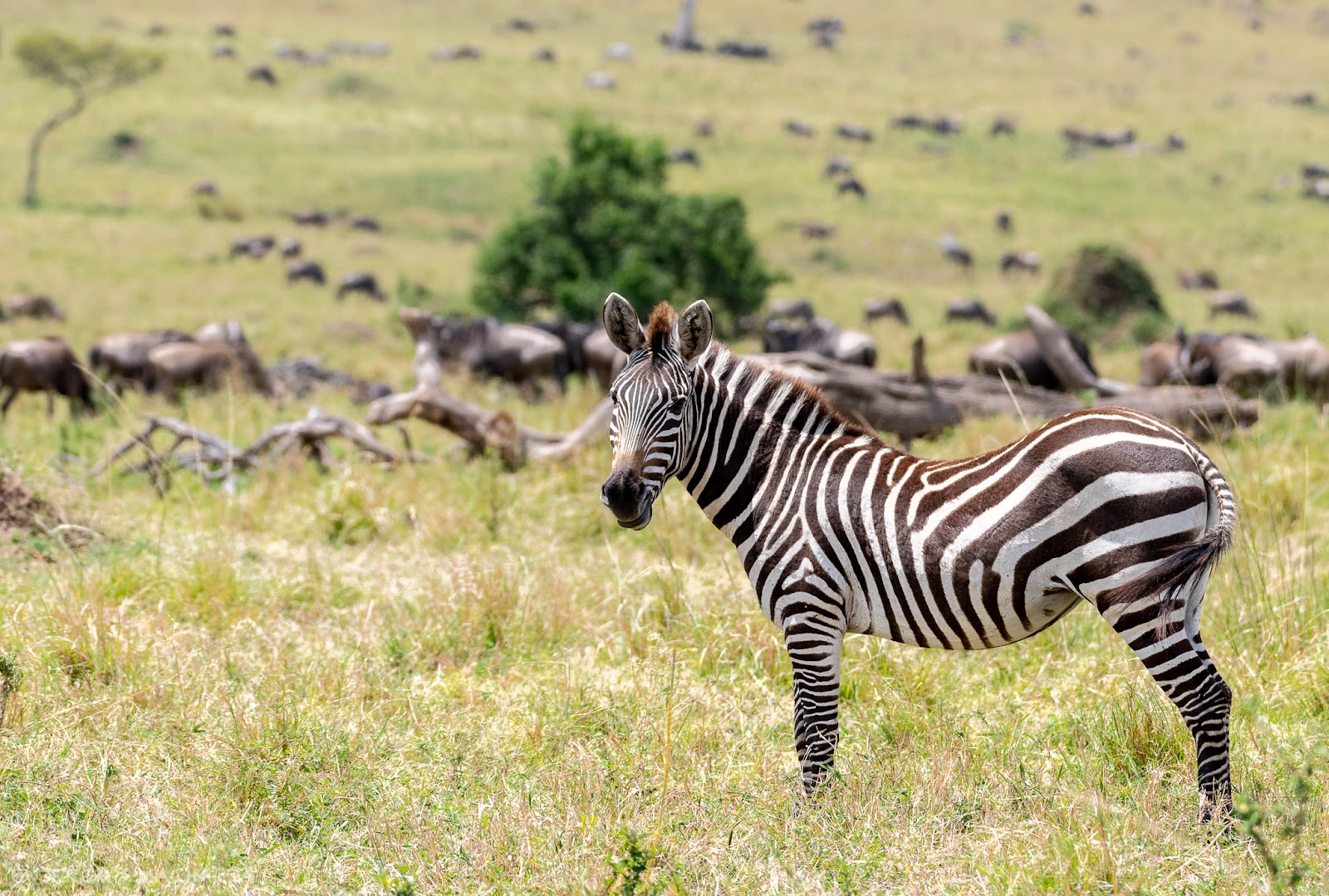
The Great Migration is the year-round movement of wildebeest, zebras and gazelles around the Serengeti and Masai Mara ecosystem, following the rain and the grass it brings. It is not a single event but a circle that never stops, and every month has its own drama.
Between January and March the herds are in the southern Serengeti in Tanzania, where around half a million calves are born in a few weeks. From April to June they move north and west through the Serengeti. By July the leading herds reach the Mara River, and from then until about October they graze the Masai Mara’s open plains in Kenya, crossing the river back and forth. In November the short rains pull them south again.
Where the herds go, the predators follow. A Great Migration safari is as much about lions, cheetahs, leopards, hyenas and crocodiles as it is about wildebeest. For a deeper explanation, read our Great Migration Kenya guide.
Compare Our Great Migration Safari Packages
Every Great Migration safari below can be run privately and adjusted to your dates. They are listed from the lowest to the highest starting price per person. Prices depend on season, group size and the camps you choose, and we confirm the exact cost in a written quote.
Masai Mara & Lake Nakuru Camping Safari
4 days · camping · best value
The lowest-cost way to see the herds, with comfortable campsites, hot showers and freshly cooked meals.
From USD 590 per person
View itinerary →3-Day Masai Mara Safari
3 days · road safari
A short migration trip from Nairobi with two full days of game drives on the Mara plains.
From USD 650 per person
View itinerary →Great Migration Safari – Masai Mara
5 days · July to October
Four nights in the Mara, timed for the herds, with full days at the river to wait for a crossing.
From USD 1,450 per person
View itinerary →Great Migration Photographic Safari
5 days · photography
Private vehicle, long hours in the best light and a guide who positions you for the shot.
From USD 2,400 per person
View itinerary →Big Cats Photographic Safari
6 days · big cats
Six days focused on the lions, cheetahs and leopards that hunt the migration herds.
From USD 2,600 per person
View itinerary →Celebration Safari – Mara Conservancy
5 days · conservancy
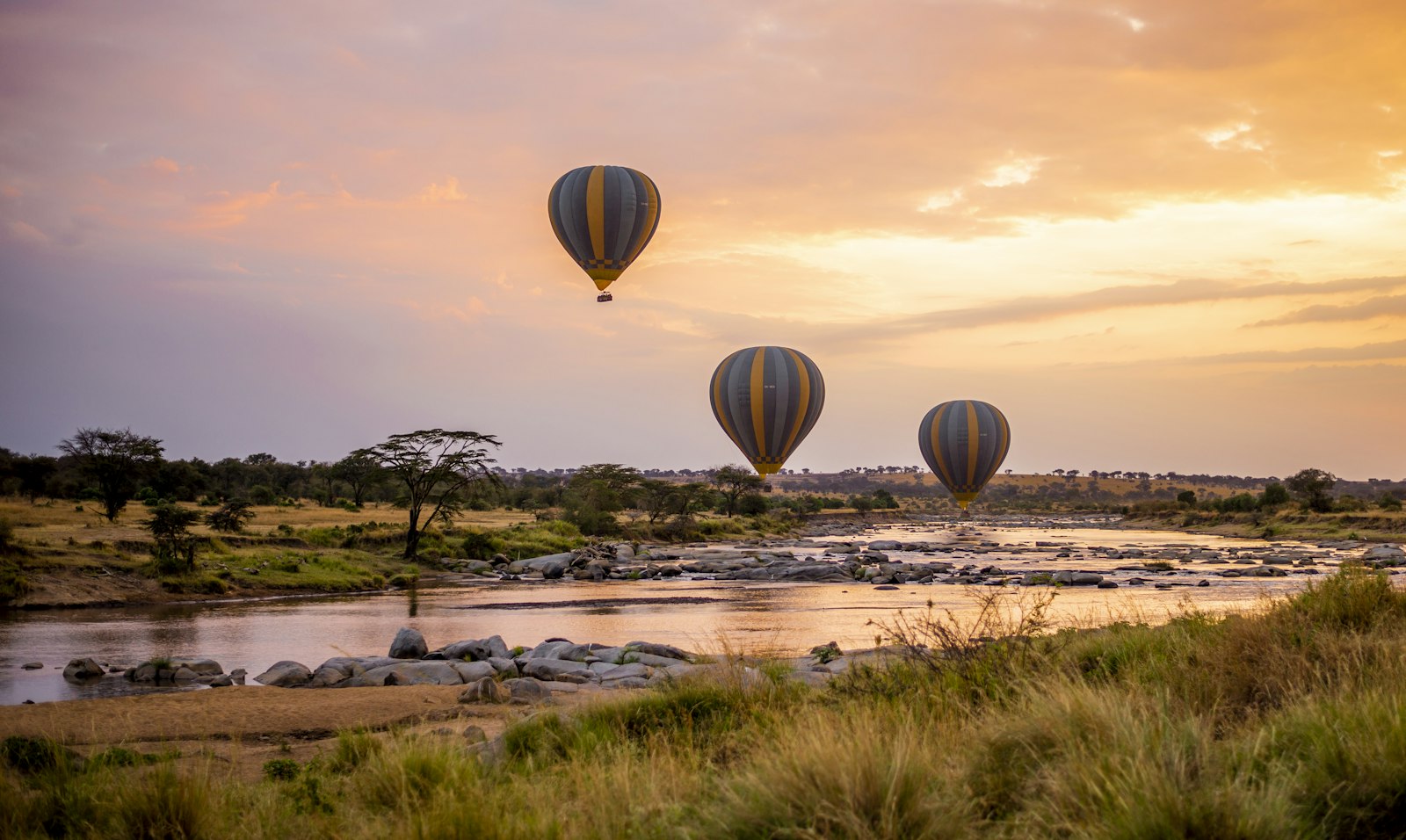
A private conservancy, a balloon flight and a bush dinner for a migration trip that marks a milestone.
From USD 2,950 per person
View itinerary →Fly-in Masai Mara Luxury Safari
4 days · luxury fly-in
Fly from Nairobi in about an hour and stay in a top camp close to the action.
From USD 3,200 per person
View itinerary →Kenya & Tanzania Classic Safari
10 days · two countries
The Masai Mara, the Serengeti and the Ngorongoro Crater in one journey.
From USD 3,500 per person
View itinerary →Great Migration Safari Kenya & Tanzania
12 days · both sides of the river
Follow the herds in the Masai Mara and the northern Serengeti, then finish at the Ngorongoro Crater.
From USD 4,600 per person
View itinerary →Expert tip from our Nairobi team: if a river crossing is the main reason for your trip, choose at least four nights in the Mara and stay at a camp within reach of the main crossing points. Crossings can happen several times in a day, or not at all for two days, and time at the river is what makes the difference.
When Is the Best Time for a Great Migration Safari?
The best time for a Great Migration safari in Kenya is from July to October, with the most river crossings usually between late July and September. But the herds follow the rain, not the calendar, so timings shift by a few weeks from year to year.
| Months | Where the herds usually are | What to expect |
|---|---|---|
| January to March | Southern Serengeti and Ndutu, Tanzania | Calving season, thousands of newborns, intense predator action |
| April to May | Central Serengeti, Tanzania | Long rains, herds on the move, lowest prices |
| June | Western corridor, Serengeti | Grumeti River crossings, herds heading north |
| July to August | Northern Serengeti and Masai Mara | First Mara River crossings, herds pour into Kenya |
| September to October | Masai Mara, Kenya | Peak grazing in the Mara, frequent crossings, big-cat hunts |
| November to December | Moving south through the Serengeti | Short rains, herds leaving Kenya, quieter camps |
If you can only travel outside July to October, the Masai Mara is still superb for big cats, and a trip to the southern Serengeti from January to March gives you the calving season. See Masai Mara or Serengeti by month and the best time to visit the Masai Mara.
The Mara River Crossings: What to Expect
A Mara River crossing is when thousands of wildebeest and zebras gather on the bank and then plunge into the water, past waiting crocodiles, to reach the grass on the other side. It is loud, chaotic and unforgettable.
How likely is a crossing on a Great Migration safari?
Crossings are never guaranteed. Herds can gather at the river for hours and then turn away, or cross several times in a single day. With three or four full days in the Mara between late July and September, many guests see at least one crossing, but nobody can promise it. Read our honest answer to whether the Great Migration is guaranteed.
How to give yourself the best chance
- Stay at least four nights in the Mara in August or September.
- Choose a camp close to the main crossing points or in the Mara Triangle.
- Take full-day game drives with a picnic lunch so you can wait at the river.
- Travel in a private vehicle so you decide how long to stay at a crossing point.
- Trust your guide: they share information by radio and read how the herds behave.
Kenya or Tanzania for Your Great Migration Safari?
Kenya is the easier and often better-value choice for a Great Migration safari from July to October, while Tanzania is best for the calving season from January to March. Many guests combine both on one trip.
| Masai Mara, Kenya | Serengeti, Tanzania | |
|---|---|---|
| Best migration months | July to October | December to July (calving January to March) |
| Size of area | Compact, herds concentrated | Vast, herds more spread out |
| Getting there | 5 to 6 hours by road or 1 hour by air from Nairobi | Usually a flight from Arusha or a long drive |
| Typical cost | Often lower for the same standard | Higher park and concession fees |
| River crossings | Mara River, Kenyan side | Mara River, northern Serengeti side |
Our 10-day and 12-day itineraries cover both sides of the river, and our Kenya and Tanzania safari guide explains border crossings and visas.
What Does a Great Migration Safari Cost?
A Great Migration safari in Kenya costs from about USD 590 per person for a 4-day camping trip to USD 3,200 or more for a 4-day fly-in luxury safari. Prices rise in peak season because camps and park fees cost more from July.
The Masai Mara National Reserve charges non-resident adults a higher daily fee from July to December than from January to June, and the best migration camps charge peak rates in August and September. Fees can change, so we always quote the current rate when you book. For a full breakdown, read how much a Masai Mara safari costs.
- Camping and budget: from USD 590 per person, shared or private vehicle, campsites with hot showers.
- Mid-range: about USD 1,400 to 2,500 per person for 4 to 5 days in a comfortable tented camp.
- Luxury and conservancy: USD 2,900 and up, with fly-in transfers, top camps and private guiding.
Get a free Great Migration safari quote
Send us your dates on WhatsApp and we will reply with camp options and an honest price.
Where to Stay on a Great Migration Safari
The camp you choose matters as much as the dates. On a Great Migration safari you want to be close to where the herds are, and the herds move.
Riverside camps in the reserve
Camps near the Mara River and in the Mara Triangle put you closest to the main crossing points. They book out first for August and September, so reserve early.
Private conservancies
Conservancies such as Mara North, Olare Motorogi and Naboisho limit vehicle numbers, allow night drives and walks, and still let you drive into the reserve for crossings. They suit guests who want quieter sightings between river visits. Read reserve vs conservancies and inside or outside the Masai Mara.
Mobile and seasonal camps
Some camps move with the herds and set up only for migration season. They offer an authentic bush feel and put you right in the path of the wildebeest.
What You Will See on a Great Migration Safari
Beyond the wildebeest, a Great Migration safari is the best time to see predators in action, because the herds bring an easy supply of food.
- Lions: large prides hunting wildebeest and zebras on the open plains.
- Cheetahs: chasing gazelles and young wildebeest in daylight.
- Leopards: along the rivers and in the trees of the riverine forest.
- Crocodiles and hippos: in the Mara River, waiting at crossing points.
- Hyenas and vultures: following the herds and cleaning up after hunts.
How to Book Your Great Migration Safari
- Pick your window: July to October for Kenya, January to March for calving in Tanzania.
- Choose a package above or tell us your budget and travel style.
- Get a written quote with camps, inclusions and exclusions listed.
- Confirm with a deposit to hold your camp and vehicle. See deposits and payment plans.
- Prepare to travel: apply for your eTA, pack light for any flights and get ready for the river.
Expert tip from our Nairobi team: for August, start planning the year before. If you are flexible, late October and early July often have the herds with fewer vehicles and slightly lower rates. See how far in advance to book.
Before you travel, apply for your Kenya Electronic Travel Authorisation, check your government’s advice such as the UK travel advice for Kenya, and read more about Kenya’s parks on Magical Kenya.
Why Book Your Migration Safari With Sense of Adventure?
- Local and licensed: a Nairobi operator licensed by the Tourism Regulatory Authority (TRA1/47/C01/77087).
- Guides who know the herds: they track movements daily during the season.
- Packages for every budget: from camping trips to fly-in luxury in the conservancies.
- Honest advice: we tell you where the herds are likely to be, not just what sells.
- Safety: complimentary AMREF emergency evacuation cover on every trip.
Great Migration Safari FAQs
When is the best time for a Great Migration safari in Kenya?
The herds are usually in the Masai Mara from July to October, and river crossings are most frequent from late July to September. Timings shift a little each year because the herds follow the rain.
How much does a Great Migration safari cost?
Our Great Migration safari packages start from USD 590 per person for a 4-day camping trip and USD 1,450 for a 5-day migration safari, up to USD 4,600 for 12 days across Kenya and Tanzania. Prices depend on season and camps.
Is a Mara River crossing guaranteed?
No. Crossings depend on the herds, the rain and the river. With four or more days in the Mara between late July and September, your chances are good, but no honest operator can guarantee it.
Is the Great Migration better in Kenya or Tanzania?
Kenya is best from July to October, when the herds are concentrated in the compact Masai Mara. Tanzania is best for the calving season from January to March. Combining both is ideal if you have 10 days or more.
How many days do I need for a Great Migration safari?
Plan at least three full days in the Masai Mara, and ideally four or five. Extra days give you more time at the river and a much better chance of seeing a crossing and big-cat hunts.
How far in advance should I book a migration safari?
Book six to nine months ahead for August and September, and up to a year ahead for groups or popular riverside camps. July and October are easier to book later.
Can I see the migration on a short safari from Nairobi?
Yes. Our 3-day Masai Mara safari runs from Nairobi and works well from July to October, though a longer stay improves your chances of a river crossing.
How do I book a Great Migration safari with Sense of Adventure?
Choose a package or send your dates and group size by WhatsApp on +254 799 160 081 or email info@senseofadventure.co.ke. We reply with a written quote and confirm once your deposit is paid.
🏕 Book Your Great Migration Safari With Sense of Adventure
Kenya-based experts. Real local knowledge. Transparent pricing. Tell us your dates and we will put you where the herds are.
Related Safari Guides
- › Masai Mara safari packages
- › Luxury Kenya safari packages
- › Private Kenya safari packages
- › Is the Masai Mara crowded?
- › Masai Mara hot air balloon safari
Official park resource: Kenya Wildlife Service ↗