
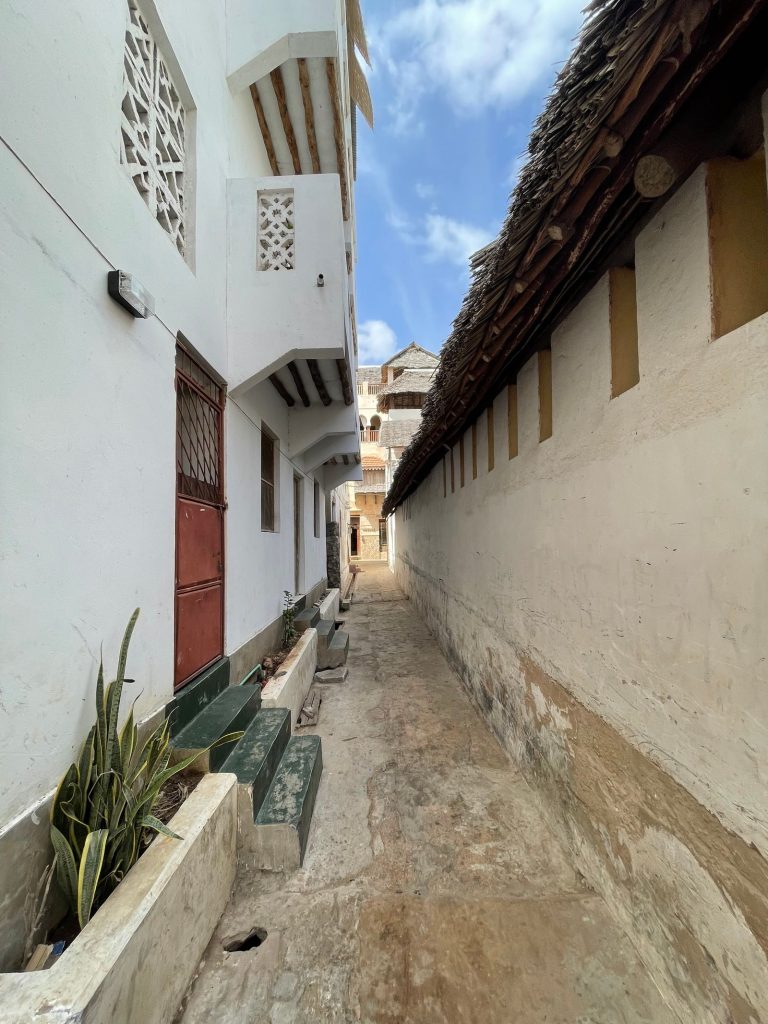
Stone Town Zanzibar compresses a thousand years of Indian Ocean trade into a few square kilometres of coral-stone alleyways. UNESCO World Heritage-listed since 2000, this labyrinth of narrow streets mixes Swahili, Arab, Persian, Indian and European architecture in a way found nowhere else on earth — intricately carved wooden doors studded with brass, spice-scented markets, mosques beside churches beside a cathedral built atop the old slave market. It is also, more darkly, ground zero for the East African slave trade’s historical reckoning, and the birthplace of Freddie Mercury. Most Kenya-based travellers reach it as an easy extension from the coast, and Sense of Adventure treats a Stone Town day as essential cultural counterpoint to beach time.
Add Zanzibar’s Old Heart to Your Coast Trip
A short flight from the Kenyan coast puts you in Stone Town’s alleyways by lunchtime. Ask about the combination.
Why Stone Town Looks Like Nowhere Else
Stone Town grew wealthy on cloves, ivory and — for a brutal century — enslaved people funnelled through what was East Africa’s largest slave market, a history the town confronts directly at the Anglican cathedral built over the old auction site and its harrowing underground holding chambers. That same trade wealth built the ornate merchant houses whose carved doors — Indian-style with brass studs, or Omani-Arab with geometric patterns — remain the town’s signature detail, over 500 documented and dated. Spice plantations inland earned Zanzibar its “Spice Island” name, and guided tours still walk visitors through cloves, vanilla, cinnamon and cardamom growing in situ. Add Freddie Mercury’s modest birth house, now a small museum-shop, and the town’s layered identity — Swahili, Arab, Indian, colonial, rock-and-roll — becomes tangible in a single walk.
Our guide walked us into the old slave chambers beneath the cathedral without warning what it would feel like — heavy, silent, essential. An hour later we were laughing over cardamom tea at a spice farm. Stone Town holds both truths at once and doesn’t flinch from either.
— Sense of Adventure guest, Kenya-Zanzibar combination trip
The 5 Essential Stone Town Experiences
The Slave Market Memorial — Zanzibar’s hardest, most necessary stop
The Anglican Cathedral of Christ Church stands directly on the site of East Africa’s largest slave market, closed in 1873. Beneath it, preserved holding chambers where captives were kept before auction can be visited, alongside a moving memorial sculpture. It is not a comfortable visit, and it should not be — go with an informed guide.
The Carved Door Walk — reading Stone Town’s architecture
Over 500 elaborately carved wooden doors — Indian brass-studded style versus Omani geometric-pattern style, each telling you something about the original merchant owner’s origin and wealth — turn a simple walk into an open-air museum. Guides spot details (fish for fertility, chains for the trader’s business) that transform ordinary doorways into stories.
Darajani Spice Market — colour, scent and street food
The central market hums with vendors selling cloves, vanilla, tamarind, dried fish, fresh produce and the day’s catch, plus Zanzibar’s famous street food at dusk on Forodhani Gardens seafront — grilled seafood skewers, Zanzibar pizza, sugarcane juice. It is sensory overload in the best possible way.
A Spice Farm Tour — seeing the “Spice Island” at the source
Short trips inland walk you through working plantations growing cloves, cinnamon, nutmeg, cardamom, vanilla and black pepper, guides plucking, crushing and explaining each as you go, often finishing with a tropical fruit tasting and fresh spice tea. It explains the wealth — and the name — behind everything in town.
Freddie Mercury’s Birthplace — Stone Town’s rock-and-roll footnote
Queen’s legendary frontman was born Farrokh Bulsara in Stone Town in 1946 to a Parsi family; his modest childhood home now operates as a small museum-shop crowded with photos and memorabilia. It is a quick, joyful stop that adds an unexpected modern layer to the old town’s history.
Combine Kenya and Zanzibar
A short flight links our Kenyan coast trips to Stone Town — ask us to add the extension to your itinerary.
Stone Town Facts
- UNESCO status: listed as a World Heritage Site in 2000 for its unique fusion of Swahili, Arab, Persian, Indian and European architecture.
- The doors: over 500 historic carved doors documented, each style hinting at the original owner’s cultural origin.
- Dark history: the site was East Africa’s largest slave market until abolition in 1873; the cathedral and chambers memorialise it today.
- Spice Island: clove, vanilla, cinnamon and nutmeg plantations built Zanzibar’s historic wealth and its enduring nickname.
- Famous son: Freddie Mercury (Farrokh Bulsara) was born in Stone Town in 1946; his birth house is now a small museum.
- Getting there: short flights connect Zanzibar directly with Nairobi, Mombasa and Kenya’s coastal airstrips.
Extending a Kenya Coast Trip to Zanzibar
Stone Town pairs naturally with our 5-day Zanzibar Beach & Stone Town itinerary, or as an add-on after Diani Beach. Read our Zanzibar honeymoon guide for beach pairing ideas, and the Watamu Marine Park guide if building a longer coast-and-islands route.
History, Spice and a Rock Star’s Birthplace
One old town, a thousand years of story. Message us to add Stone Town to your Kenya-coast trip.
Frequently Asked Questions
What makes Stone Town, Zanzibar, worth visiting?
Stone Town is a UNESCO World Heritage site blending Swahili, Arab, Persian, Indian and European architecture in one walkable old town — famous for its 500+ carved doors, spice markets, sobering slave-trade history and as the birthplace of Freddie Mercury.
What is the slave market history in Stone Town?
Stone Town hosted East Africa’s largest slave market until its abolition in 1873. The Anglican Cathedral of Christ Church now stands on the site, with preserved underground holding chambers and a memorial sculpture that visitors can view with a guide.
Can you combine a Kenya safari with Stone Town, Zanzibar?
Yes — short flights connect Kenya’s coast and Nairobi directly to Zanzibar, making a Stone Town extension a straightforward addition to any Kenyan beach or safari itinerary. Many travellers pair it with Diani Beach or Watamu for a combined Kenya-Tanzania coastal trip.
Was Freddie Mercury really born in Stone Town?
Yes — Queen’s Freddie Mercury, born Farrokh Bulsara, was born in Stone Town in 1946 to a Parsi family before later moving away as a child. His modest childhood home is now a small museum and shop popular with fans visiting the old town.
What should I do on a spice tour in Zanzibar?
A Stone Town spice tour walks you through working plantations growing cloves, vanilla, cinnamon, nutmeg and pepper, with guides explaining each plant’s history and uses, usually finishing with fresh spice tea and tropical fruit tasting — a relaxed half-day complement to the old town’s history walks.