
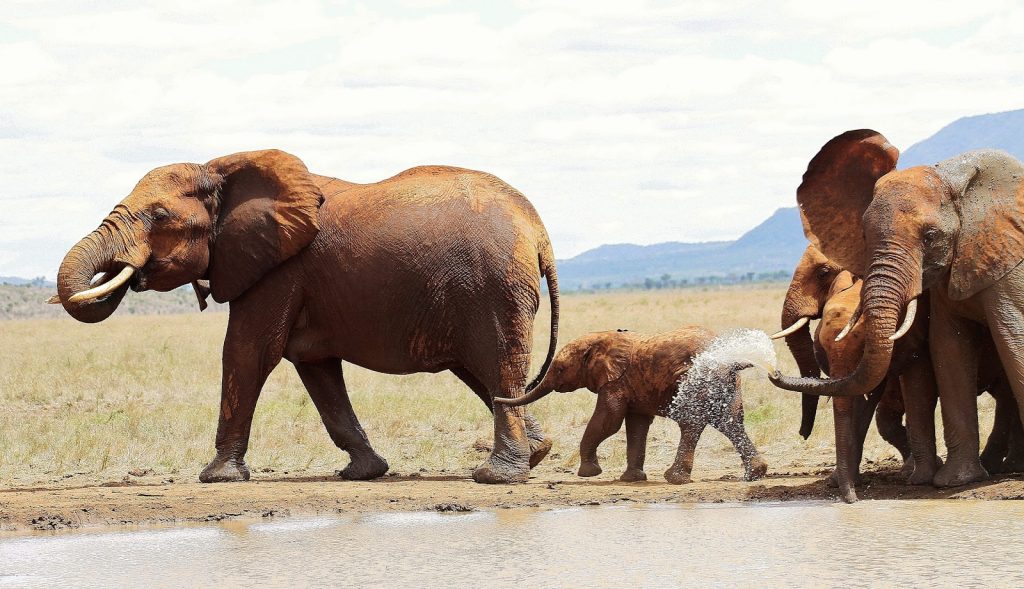
Sheldrick elephant orphans in Tsavo aren’t a side attraction — they’re the reason Tsavo East became a conservation story in the first place. In 1948, David Sheldrick was appointed the park’s founding warden, and he and his wife Daphne began raising orphaned elephant calves there decades before the now-famous Nairobi Nursery existed. That work never left Tsavo. Today, two stockade sites deep inside the park — Voi and Ithumba — are where hand-raised orphans spend their final years learning to be wild elephants again, some eventually leading herds of their own past the very keepers who once bottle-fed them. Sense of Adventure guests on a Tsavo safari are, more often than most realise, driving through the results of that work.
See Where the Story Continues
Ask us about a Tsavo safari built around the areas where reintegrated elephant herds actually roam.
From Nairobi Nursery to Tsavo’s Wild Herds
Orphaned elephant calves — usually found after their mothers die from drought, snares or poaching — are first stabilised at the Sheldrick Trust’s Nairobi Nursery. Once weaned and strong enough, many are moved on to one of the reintegration units inside Tsavo East, where the process of returning to wild life properly begins. It isn’t fast: full independence can take up to ten years, and roughly 30 elephants remain under active care at the Voi unit alone at any given time, fed by hand before sunrise every single day.
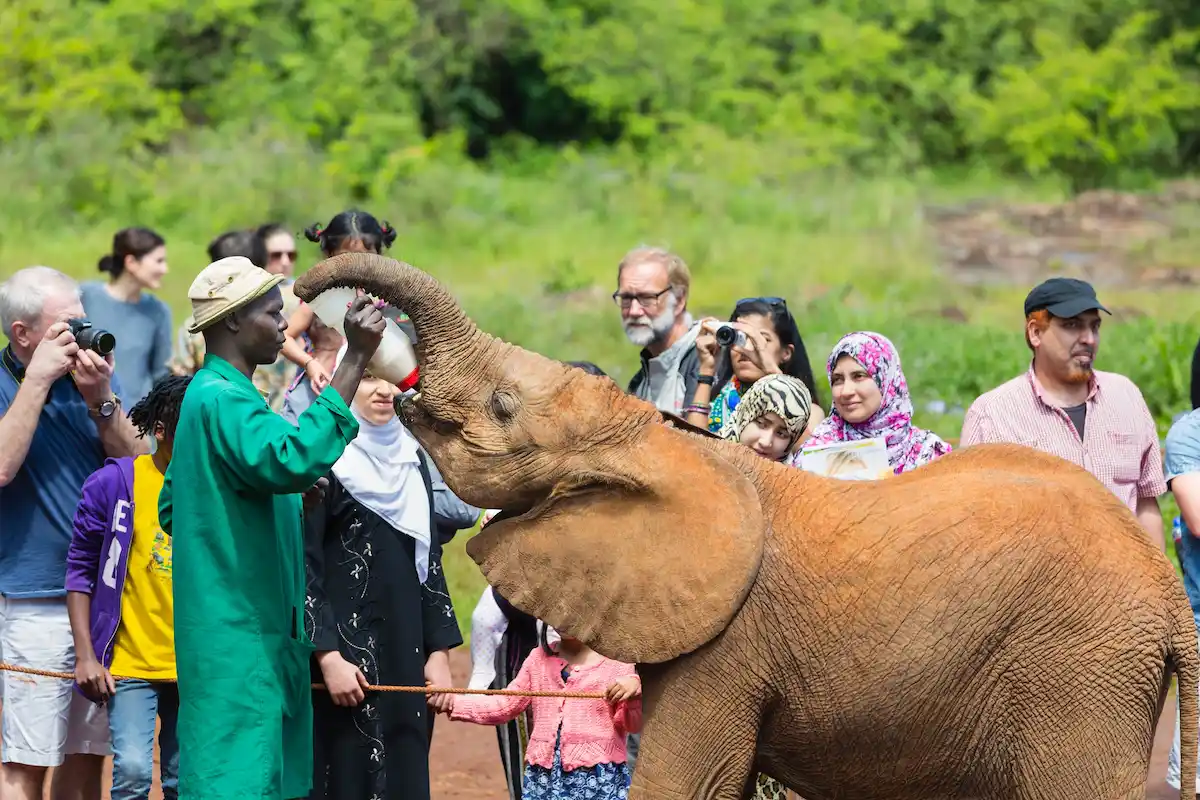
Our guide pointed out a matriarch near a waterhole and said, almost casually, that she’d been hand-raised as a calf and now had three of her own. I’d assumed every elephant we saw was simply born wild. Some of the most impressive ones weren’t.
— Sense of Adventure guest, Tsavo East game drive
7 Things to Know About Tsavo’s Reintegrated Elephants
It Started With David and Daphne Sheldrick in 1948
David Sheldrick was appointed the founding warden of Tsavo East National Park in 1948, and he and his wife Daphne raised their first orphaned elephants there decades before the Sheldrick Wildlife Trust existed as an organisation. The work that began as one couple’s response to orphaned calves around them became the template for elephant rehabilitation used worldwide today.
The Voi Reintegration Unit — Where the Story Began
The Voi stockades sit at the base of Mazinga Hill, overlooking the southern section of Tsavo East, on the same ground where David and Daphne raised their earliest orphans. More than 45 ex-orphans launched from Voi are now living fully wild lives, and several have returned with wild-born calves of their own to visit the keepers who once hand-raised them.
The Ithumba Reintegration Unit — Deep Wilderness, Wild Herds
Established in 2004 in Tsavo East’s untouched northern sector, Ithumba is now one of the Trust’s most successful units. It isn’t unusual for wild herds of 100 or more elephants to gather near the stockades, drawn by the resident ex-orphans — a sign of how thoroughly some of these elephants have been accepted back into wild elephant society.
How Long Reintegration Actually Takes
There’s no fixed timeline. Some orphans transition to independence faster; others remain semi-dependent on the Trust’s care for up to a decade before fully rejoining wild herds. Keepers describe it as a gradual process of longer and longer absences, rather than a single release moment — the elephant sets the pace, not a schedule.
The Elephants Choose When They’re Ready
Reintegration isn’t forced. Orphans at Voi and Ithumba come and go from the stockades freely once old enough, spending increasing time with wild herds before eventually stopping their returns altogether. It’s a deliberately slow, elephant-led process — one of the reasons the Trust’s reintegration rate is considered a global benchmark in wildlife rehabilitation.
A Recent Graduation: Toto, Natibu & Mwinzi
On 20 April 2026, three more hand-raised orphans — Toto, Natibu and Mwinzi — graduated to the Ithumba Reintegration Unit, the latest step in journeys that began years earlier at the Nairobi Nursery. It’s a reminder that this isn’t a closed historical story; new elephants are still moving through the same pipeline right now.
Spotting Ex-Orphans on a Real Tsavo Safari
Guests on a Tsavo East game drive won’t get a guided tour of the stockades themselves, but sightings of reintegrated elephants and their wild-born calves happen naturally around the Voi and Ithumba areas — often without a visitor even realising which herd they’re watching until a guide points it out.
Build a Safari Around Tsavo’s Elephant Story
Message us and we’ll route your game drives through the parts of Tsavo East where these herds are most often seen.
Tsavo’s Elephant Reintegration Story at a Glance
- Founding year: David Sheldrick became Tsavo East’s warden in 1948, decades before the Trust formalised its Orphans’ Project.
- Voi unit: roughly 30 elephants remain under active care there today, with 45+ already living wild.
- Ithumba unit: established 2004, sometimes visited by wild herds of 100+ elephants.
- Timeline: full reintegration can take up to 10 years, led entirely by the elephant’s own pace.
- Recent graduates: Toto, Natibu and Mwinzi moved to Ithumba on 20 April 2026.
- Trust-wide: around 150 rescued orphans are now living wild, some with their own wild-born calves.
Where This Fits Into a Tsavo Safari
This history sits behind two of Tsavo’s other famous elephant stories — our red elephants of Tsavo guide covers the dust-bathing behaviour that gives the park’s herds their distinctive colour, while the Ngulia Rhino Sanctuary guide is Tsavo’s other major conservation comeback, on the western side of the park. For a trip that takes in Tsavo East where these reintegrated herds actually roam, the Tsavo East & West Safari (3 Days) is the itinerary to start from.
Meet Kenya’s Wild Success Stories in Person
Message us on WhatsApp and let’s plan a Tsavo safari that puts you in the right part of the park at the right time.
Frequently Asked Questions
What is the Sheldrick Wildlife Trust’s connection to Tsavo?
The Sheldrick Wildlife Trust’s connection to Tsavo dates back to 1948, when David Sheldrick became Tsavo East National Park’s founding warden and, with his wife Daphne, began raising orphaned elephants there. Today the Trust runs two reintegration units inside Tsavo East — Voi and Ithumba — where hand-raised orphans transition back to wild life.
Can I visit the Sheldrick reintegration units in Tsavo?
The Voi and Ithumba reintegration units are working conservation sites inside Tsavo East, not public visitor centres like the Sheldrick Trust’s Nairobi Nursery. Safari guests exploring Tsavo East with a knowledgeable guide sometimes encounter reintegrated elephants and their wild-born calves naturally during game drives in the areas around these units.
How many orphaned elephants have been released into Tsavo?
More than 45 ex-orphans from the Voi Reintegration Unit alone are now living fully wild lives in Tsavo, with Trust-wide numbers across all units reaching roughly 150 rescued elephants living wild, some with wild-born calves of their own.
How long does elephant reintegration take at Tsavo’s units?
Reintegration has no fixed timeline and can take up to 10 years. Orphans at Voi and Ithumba gradually spend more time with wild herds as they mature, at their own pace, until they eventually stop returning to the stockades altogether.
What is the difference between the Nairobi Nursery and the Tsavo units?
The Nairobi Nursery is where newly rescued elephant calves are first stabilised and hand-raised. Once old enough, many move to the Voi or Ithumba Reintegration Units inside Tsavo East, where the actual process of returning to wild elephant life takes place over several years.