
Masai Mara airstrips are small dirt runways spread across the reserve and its conservancies, and the one you land on depends on your camp. Scheduled light aircraft reach them from Nairobi’s Wilson Airport in about 45 to 60 minutes, with a 15 kg soft-bag limit. By road, the same journey takes roughly six hours.
Fly and you are in a game-viewing vehicle within about an hour of leaving Nairobi; drive and you get a long day of changing Kenyan landscape, from the Rift Valley escarpment to the Mara’s rougher access roads. We are Sense of Adventure, a TRA-licensed safari operator based at Mountain Mall on Thika Road in Nairobi, and we book both routes, depending on budget, time and what each traveller wants from the journey itself. This guide explains how the Masai Mara airstrips work, which strip serves which part of the Mara, what the flight is really like, and when the road makes more sense.
✅ Masai Mara Airstrips: Quick Answer
- How many: more than ten Masai Mara airstrips serve the reserve and conservancies, including Keekorok, Ol Kiombo, Musiara, Kichwa Tembo and Mara Serena.
- Which one: your camp decides your airstrip; we book the right one once your stay is confirmed.
- Flight time: about 45 to 60 minutes from Wilson Airport in Nairobi, depending on stops.
- Luggage: 15 kg per person including hand luggage, in a soft bag.
- Transfer: your camp vehicle meets the plane; the drive to camp is usually 15 to 60 minutes.
- By road: roughly 5.5 to 6.5 hours from Nairobi, cheaper but it uses most of a day each way.
Already chosen a camp? Tell us its name and we will confirm the right airstrip and flight.
Find My Camp’s AirstripFlying Into the Masai Mara: Airstrips and Airlines
More than ten named Masai Mara airstrips serve the wider ecosystem. Keekorok, Musiara, Ol Kiombo, Kichwa Tembo and Mara Serena sit inside or near the main reserve, while other strips serve individual conservancies, such as Mara North and Ol Seki in Naboisho. Safarilink, AirKenya Express and Governors’ Aviation all run scheduled flights from Wilson Airport in Nairobi.
A flight usually takes 45 minutes to an hour, depending on how many other airstrips it stops at along the way. Fares change with the season, the airline and the route, so we quote the current fare with your trip rather than a fixed figure. On our fly-in packages the flights are already built into the price.
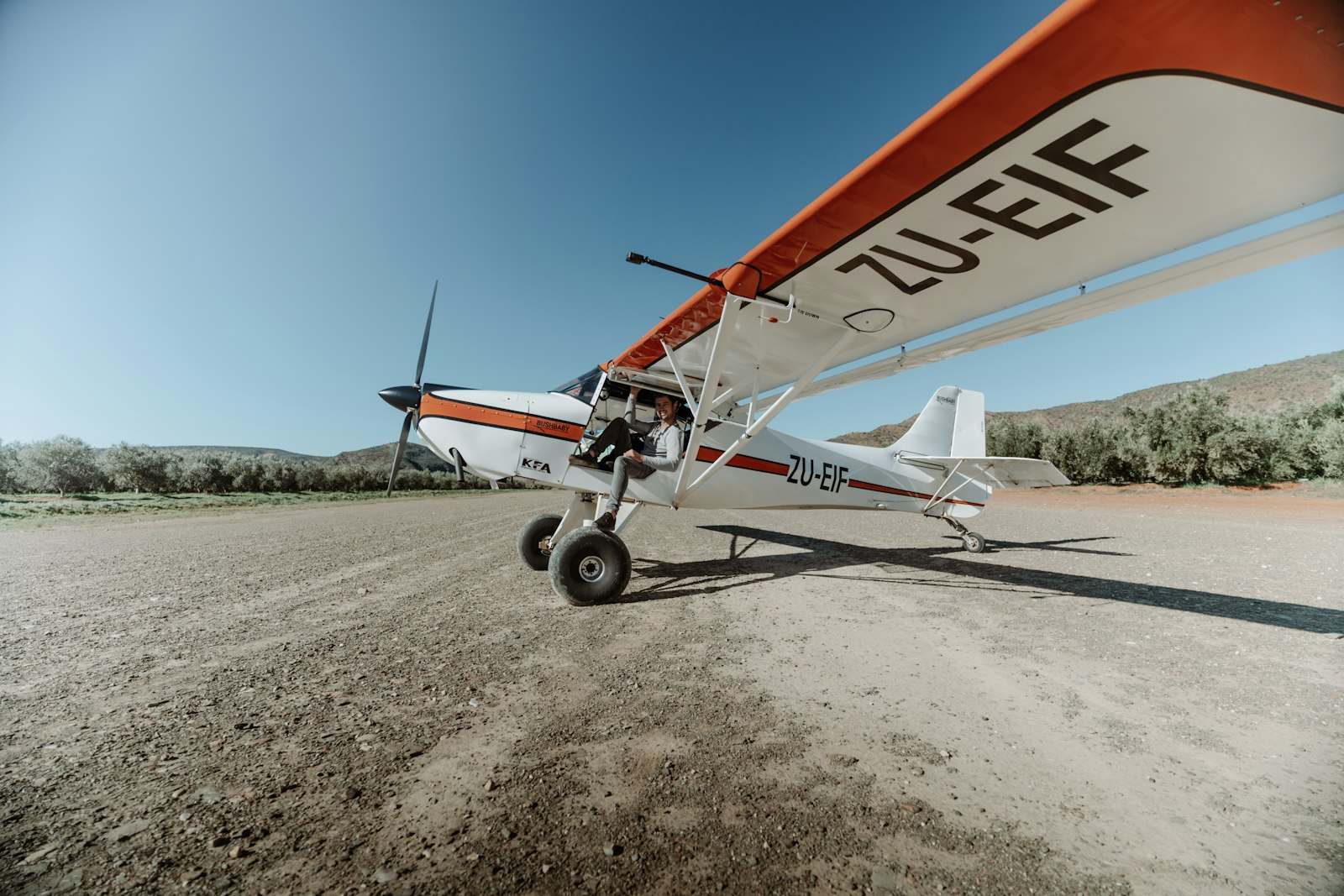
What Masai Mara airstrips actually look like
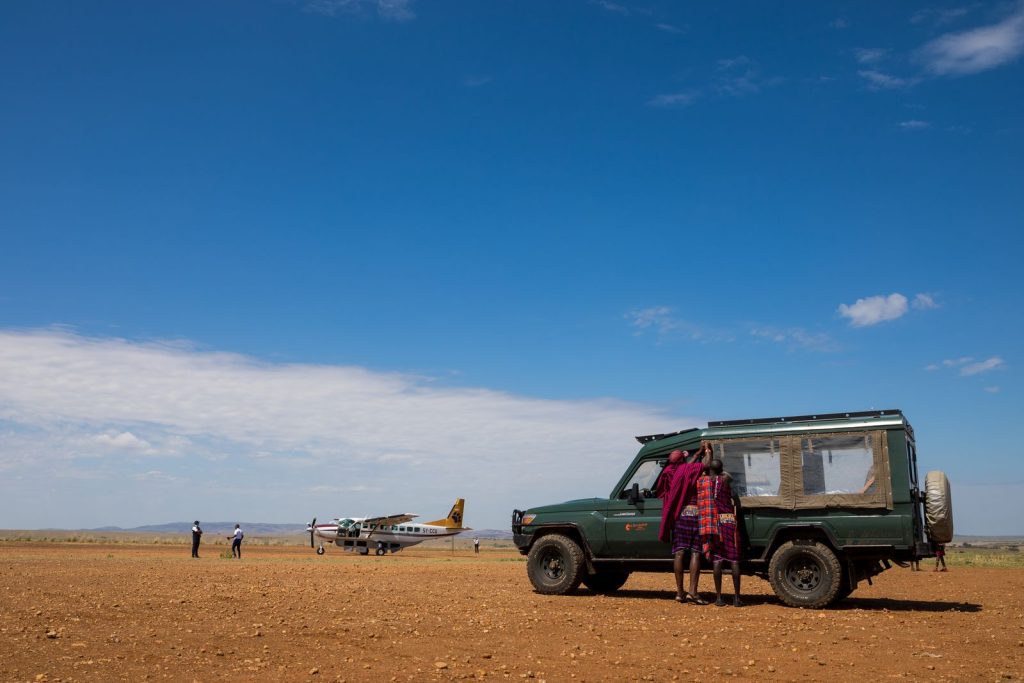
Do not expect an airport. Masai Mara airstrips are graded dirt or murram runways, often with nothing more than a windsock, a small shelter and a parked safari vehicle or two. There is no check-in desk, no security queue and no baggage belt. Your guide meets you as you step down, and your bags are loaded straight from the aircraft into the vehicle.
Animals sometimes wander onto the runway, so pilots may make a low pass to clear giraffe, zebra or gazelle before landing. Many guests say this is one of the most memorable moments of the whole trip.
Expert tip from our Nairobi team: if you land in Nairobi on an overnight international flight, avoid booking a same-morning connection to the Mara. A night in Nairobi first leaves room for immigration queues and cross-city traffic to Wilson, and it means you start your first game drive rested rather than exhausted.
Masai Mara Airstrips by Area: Which Strip Serves Your Camp
Because camps are spread over a huge area, each one is matched to the nearest Masai Mara airstrip. The table below gives a simple picture of which part of the Mara each main strip serves. Your operator confirms the exact strip once your camp is booked, and on busy days a flight may stop at two or three strips in turn.
| Airstrip | Area it serves | Good to know |
|---|---|---|
| Keekorok | Central and southern part of the main reserve | Handy for camps in the heart of the reserve |
| Ol Kiombo | Central reserve, Talek area | One of the busiest Masai Mara airstrips |
| Musiara | Northern reserve near the Mara River | Close to Governors’ Camp and the river crossings |
| Kichwa Tembo | North-west, below the Oloololo Escarpment | Serves camps near the Triangle’s northern edge |
| Mara Serena | Mara Triangle, west of the river | Quieter side of the reserve |
| Conservancy strips | Mara North, Naboisho (Ol Seki), Olare Motorogi and others | Smaller Masai Mara airstrips with short transfers to conservancy camps |
Reserve camps versus conservancy camps
If you stay inside the national reserve, you will usually land at Keekorok, Ol Kiombo, Musiara or Mara Serena. If you stay in a private conservancy, you will often use a strip inside or next to that conservancy, which keeps your transfer short. Our Masai Mara conservancies guide and our comparison of Mara North, Naboisho and Olare Motorogi explain how camp location shapes the whole trip.
For camp ideas by area, see our pages on Mara Triangle luxury camps, Mara North Conservancy camps, and we can also arrange riverside camps near Musiara on request.
Not Sure Whether to Fly or Drive?
Send us your dates, group size and budget, and we will compare a flight to the nearest Masai Mara airstrip with a road transfer, side by side.
Six Things to Know About Masai Mara Airstrips and Transfers
Which Airstrip You Fly Into Depends on Your Camp
Camps are matched to one of the Masai Mara airstrips rather than one shared Mara airport, so Keekorok, Musiara, Ol Kiombo, Kichwa Tembo, Mara Serena and the conservancy strips each serve different groups of properties. Your operator books your flight to match your camp once your stay is confirmed.
Expect a Small Aircraft With a Strict Luggage Limit
Light aircraft flying to Masai Mara airstrips enforce a strict 15 kilogram limit per person, including hand luggage, and need soft-sided bags such as duffels rather than hard suitcases so they fit the luggage pod. Many Nairobi hotels and operators can store anything over the limit, which is worth arranging in advance.
Camp Transfers Add 15 to 60 Minutes After Landing
A camp vehicle meets every flight at Masai Mara airstrips, and the drive from the strip to camp runs from about 15 minutes for nearby camps to around an hour for more remote conservancy properties. Many guides treat this transfer as your first informal game drive rather than a rushed shuttle.
The Road Route Takes About Six Hours
Skipping the Masai Mara airstrips and driving from Nairobi covers roughly 225 to 275 kilometres depending on your gate, taking about 5.5 hours to eastern gates such as Sekenani, Talek or Ololaimutia, and 6 to 6.5 hours to western gates like Musiara or Oloololo. The route runs on tarmac to Narok, then on a rougher final stretch to the gate.
Flying Costs More but Saves an Entire Day
A flight costs more per person than a road transfer, but the road uses most of a travel day each way. For shorter trips, especially anything under five days, flying usually makes more sense, so you spend your limited time in the Mara rather than on the road.
A Multi-Destination Trip Often Mixes Both
Travellers combining the Mara with other Kenyan parks sometimes fly one leg and drive another, particularly if a road route passes a park worth a stop. Discuss your full itinerary with your operator before booking flights yourself, as the most efficient routing differs from leg to leg.
Wilson Airport: Where Flights to Masai Mara Airstrips Begin
Scheduled flights to the Masai Mara airstrips leave from Wilson Airport, Nairobi’s domestic airport, not from Jomo Kenyatta International Airport (JKIA), where most international flights land. Wilson is run by the Kenya Airports Authority and sits on the south-west side of the city, towards Langata.
If you are connecting straight from an overnight international flight, allow generous time for immigration, baggage and the road transfer across Nairobi. Many travellers prefer a night in Nairobi first. Our JKIA to Wilson Airport guide covers the transfer in detail.
Checking in for a flight to the Masai Mara airstrips
Check-in at Wilson is simple but strict about weight. Your bags, and sometimes your hand luggage, are weighed, so pack to the limit before you leave your hotel. Bring your passport or ID and your ticket details. Flights are small, so boarding is quick and seating is usually unassigned.
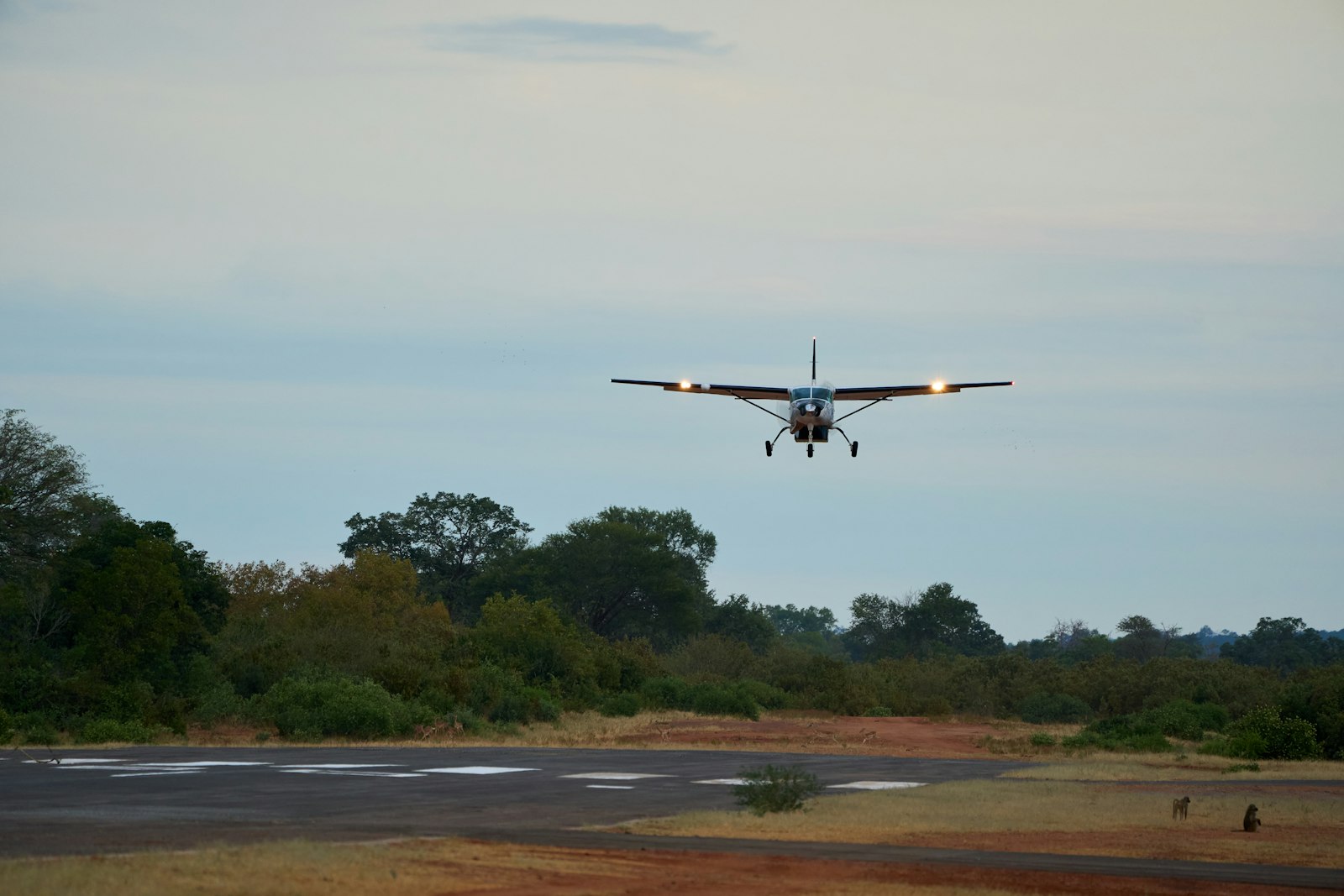
What the Flight to the Masai Mara Airstrips Is Like
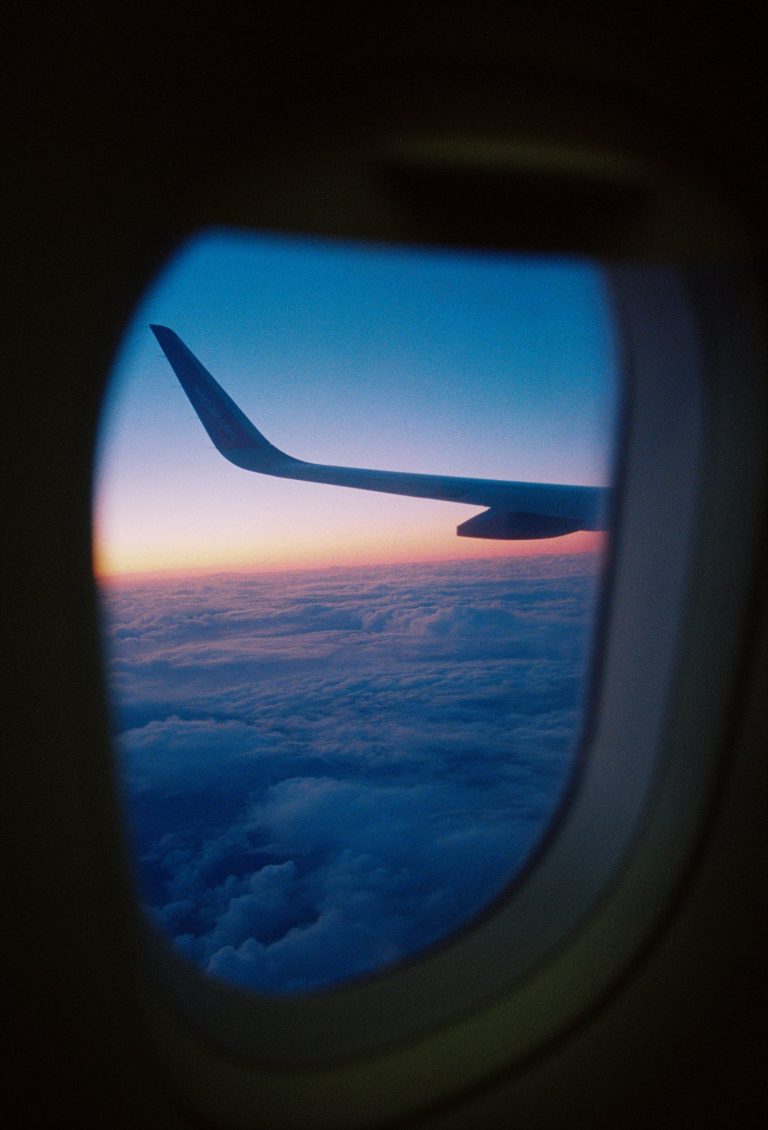
The aircraft are usually single- or twin-engine planes carrying a small number of passengers, with the pilot often in plain view. You fly over the Ngong Hills and the Rift Valley, and then the land opens into the Mara’s grassy plains. On a clear morning the views are superb.
Flights can stop at several Masai Mara airstrips in turn, a little like a bus route, which is why one trip takes 45 minutes and another closer to an hour. Each stop is brief. Stay seated unless the pilot tells you it is your strip, and keep an eye on the windows for wildlife.
Tips for a comfortable bush flight
- Sit on the shady side if you can, especially in the afternoon.
- Take motion-sickness tablets before boarding if you are prone to it; small planes feel bumps more.
- Keep a light layer to hand, as early flights can be cool.
- Have your camera ready but keep it secure during take-off and landing.
- Use the toilet at Wilson; there are no facilities on board and few at the strips.
Luggage Rules for Masai Mara Airstrips
The 15 kg rule is the single most important thing to know about flying to Masai Mara airstrips. The limit includes hand luggage and camera gear, and bags must be soft so they can be squeezed into the aircraft’s hold. Hard-shell suitcases are often refused.
If you need more weight, for example for long lenses, some airlines let you buy an extra seat for luggage; ask us and we will check what is possible on your flight. Leave city clothes and gifts in storage in Nairobi. Our safari luggage weight limits guide covers packing in detail.

Driving to the Masai Mara: The Road Option
The road trip avoids the Masai Mara airstrips altogether. It climbs out of Nairobi, drops down the Rift Valley escarpment with wide views across the valley floor, and runs on tarmac to Narok, the last big town. From there a rougher road leads to the gates. Most road safaris stop at a viewpoint on the escarpment and in Narok for a break.
The final stretch can be bumpy, particularly after rain, so the journey is part of the adventure. It also suits travellers who want to see more of rural Kenya. For distances and timings in detail, see our Nairobi to Masai Mara distance guide.
Flying vs Driving at a Glance
This table sets the two routes side by side so you can see which suits your trip.
| Factor | Fly to a Masai Mara airstrip | Drive by road |
|---|---|---|
| Time from Nairobi | About 45-60 min, plus camp transfer | About 5.5-6.5 hours |
| Cost | Higher per person | Lower, especially for groups sharing a vehicle |
| Luggage | 15 kg in a soft bag | Much more flexible |
| Game viewing on arrival | Same day, often on the transfer | Usually an afternoon drive on arrival |
| Best for | Short trips, honeymooners, luxury stays | Budget trips, families, longer road circuits |
Our fly-in vs road safari guide goes further into the decision, and our Masai Mara safari cost guide shows how transport fits an overall budget.
When to Fly: Seasons, Weather and Booking
Flights to the Masai Mara airstrips run all year. In the rainy months, usually around April to May and again in November, a storm can delay a flight or make a strip muddy, and pilots may wait for the weather to clear. Build a little slack into connecting plans. Our Kenya weather by month guide shows what to expect.
From July to October, during the Great Migration, flights and camps are at their busiest. Seats on small aircraft to the Masai Mara airstrips are limited, so it pays to book early, ideally at the same time as your camp. In recent seasons the reserve has charged non-resident adults USD 100 a day from January to June and USD 200 from July to December, so check current rates with the Mara Conservancy or Narok County before you travel; on our packages they are included.
How many nights to plan around your flights
Morning flights usually arrive in time for lunch and an afternoon drive, while afternoon return flights let you fit in a last morning drive. Even so, three nights is a comfortable minimum. Our guide on whether 2 days in the Masai Mara is enough explains why.
Travelling in Migration Season? Book Your Seats With Your Camp
The best camps and flight times go early between July and October. Send your dates and we will request flights and rooms together in one written quote.
Quote My Flights and CampMasai Mara Airstrip and Transfer Facts at a Glance
- Flight time: 45 minutes to an hour from Wilson Airport, Nairobi, depending on the route.
- Airlines: Safarilink, AirKenya Express and Governors’ Aviation run scheduled Mara flights.
- Luggage limit: 15 kilograms per person including hand luggage, soft-sided bags only.
- Camp transfer time: 15 to 60 minutes from airstrip to camp, depending on location.
- Road transfer time: 5.5 to 6.5 hours from Nairobi, depending on which gate you enter.
- Fares: flights to Masai Mara airstrips vary by season and route; on our fly-in packages, flights are included.
Getting Around Once You Land at Masai Mara Airstrips
Once you land at one of the Masai Mara airstrips, getting around is simple: your camp’s vehicle and guide take you everywhere. On a fly-in safari, game drives usually use the camp’s own open or pop-up-roof 4x4s, shared with other guests unless you book a private vehicle. On a road safari, your own vehicle and driver-guide stay with you for the whole trip.
Inside the main reserve, vehicles must stay on tracks, while conservancies often allow walks, night drives and off-road driving to sightings, within their rules. If you want a vehicle to yourself, ask about our private Kenya safari options.
Combining the Mara with other parks by air
Scheduled light-aircraft routes also link the Mara with other safari areas on some days, which makes a multi-park trip possible without long drives. Routes and days change, so we confirm what runs on your dates. Our luxury fly-in safari is one example, from USD 8,900 per person, and our luxury Kenya safari page shows more.
Budget Option: The Road Safari
If you are watching costs, a road safari is better value than flying to the Masai Mara airstrips. Our Masai Mara camping safari starts from USD 750 per person, travelling by road from Nairobi. See all our Masai Mara safari packages and our Kenya safari from Nairobi options for both fly-in and road trips.
Plan Your Journey Alongside the Rest of Your Trip
How you get to the Mara is worth planning alongside the rest of your itinerary rather than as an afterthought. Our Masai Mara safari from Nairobi guide goes deeper into the fly-versus-drive decision, our Masai Mara safari cost guide shows how transport fits into an overall budget, and our Masai Mara conservancies guide explains why your camp location determines which airstrip you will use.
For general destination information, Magical Kenya, the official tourism site, is a useful starting point, and the GOV.UK travel advice for Kenya covers safety and entry rules.
Masai Mara Airstrips FAQs
How long is the flight from Nairobi to the Masai Mara?
A scheduled flight from Wilson Airport in Nairobi to the Masai Mara usually takes 45 minutes to an hour, depending on how many other airstrips it stops at along the way. Safarilink, AirKenya Express and Governors’ Aviation operate scheduled routes, and your camp vehicle meets you on landing.
How much luggage can I bring on a flight to the Masai Mara?
Light aircraft serving the Mara enforce a strict 15 kilogram limit per person, including hand luggage, and need soft-sided bags rather than hard suitcases. Many Nairobi hotels and operators can store excess luggage while you are on safari, and some airlines sell an extra seat for heavy camera kit.
How long does it take to drive from Nairobi to the Masai Mara?
Driving takes roughly 5.5 hours to eastern gates such as Sekenani or Talek, and 6 to 6.5 hours to western gates like Musiara or Oloololo, covering about 225 to 275 kilometres. The road is tarmac to Narok, followed by a rougher stretch to the gate, with breaks along the way.
How many Masai Mara airstrips are there?
There are more than ten airstrips across the reserve and its conservancies. The best known are Keekorok, Ol Kiombo, Musiara, Kichwa Tembo and Mara Serena, plus strips serving conservancies such as Mara North and Naboisho. Each camp uses its nearest strip, and flights may stop at several in turn.
Which airstrip should I fly into for the Masai Mara?
Your airstrip depends on your camp, since each is served by a nearby strip such as Keekorok, Musiara, Ol Kiombo, Kichwa Tembo or Mara Serena. We book the correct flight once your camp is confirmed, so you do not need to choose the strip yourself or worry about the routing.
Are there facilities at the Mara airstrips?
Very few. Most are dirt runways with a windsock and perhaps a small shelter, and there is no terminal, shop or baggage belt. Use the toilet at Wilson Airport before you board, and carry water. Your camp vehicle is usually waiting beside the plane when you land.
Is it better to fly or drive to the Masai Mara?
Flying is faster and generally better for shorter trips, as it takes under an hour compared with roughly six hours by road, though it costs more per person. Driving suits longer trips, groups sharing a vehicle and itineraries that combine the Mara with other parks along the way.
Land at the Right Strip, With Your Guide Waiting
From Wilson Airport check-in to the vehicle waiting beside the plane, our Nairobi team plans every step of your arrival in the Mara, by air or by road.
Kenya-based experts. Real local knowledge. Transparent pricing.