Hyena species in Kenya come down to two true hyenas, the spotted hyena and the striped hyena, plus a third, surprising member of the hyena family: the termite-eating aardwolf. The spotted hyena is the one you will meet on safari, and its reputation as a cowardly scavenger is badly wrong. Long-term research, including more than three decades of study in the Masai Mara, shows spotted hyenas kill most of what they eat and live in large clans run by females. The striped hyena is shy, solitary and mostly nocturnal. Sense of Adventure plans safaris that show you the real hyena story.
✅ Hyena Species in Kenya: Quick Answer
- How many? Two hyena species in Kenya, spotted and striped, plus the aardwolf from the same family.
- Most common: the spotted hyena, seen on most game drives in the Masai Mara, Amboseli, Tsavo and Nairobi National Park.
- Rarest sightings: striped hyena and aardwolf, mostly at night in the dry north and Laikipia.
- Hunter or scavenger? Spotted hyenas kill most of their own food in many studied areas.
- Best bet: a Mara safari for spotted hyena dens, plus a conservancy with night drives for the rare ones.
- From: our 4-day Masai Mara & Lake Nakuru Camping Safari starts at USD 590 per person.
Keen to watch the most social of the hyena species in Kenya at its den? Tell us when you travel.
Find Me a Hyena DenHyena Species in Kenya: Two Hyenas and an Aardwolf
The hyena family, Hyaenidae, has only four living species worldwide, and three of them live in Kenya. The spotted hyena and striped hyena are the “true” hyenas most people picture. The aardwolf is a small, slender cousin that eats termites rather than meat. The fourth species, the brown hyena, lives only in southern Africa.
Older articles, including an earlier version of this page, often say there are just two hyena species in Kenya. That is correct if you count only bone-crushing hyenas, but it leaves out the aardwolf, which is a genuine member of the same family. Knowing all three makes night drives far more interesting.
Why hyena species in Kenya are worth your time
Hyenas are among the most social, intelligent and misunderstood carnivores in Africa. Watching a spotted hyena clan at a den, or catching a striped hyena in a spotlight, often becomes a highlight that guests talk about long after the lions.
Why “Just a Scavenger” Is the Wrong Reputation
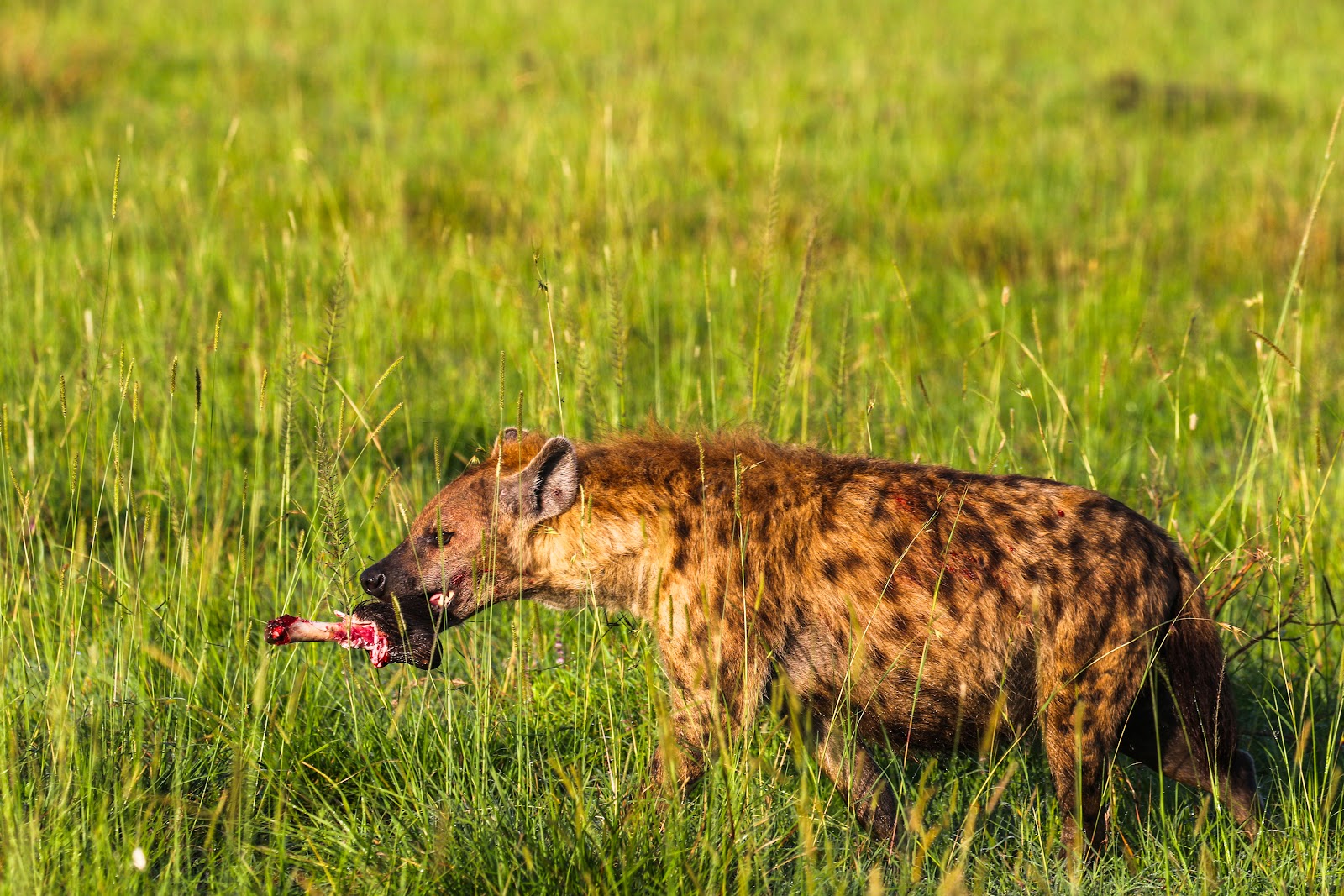
Spotted hyenas are skilled hunters. Classic research in Tanzania’s Serengeti and Ngorongoro in the 1960s, and long-term work in the Masai Mara since the late 1980s, found that they kill most of the food they eat in many areas. Clans hunt wildebeest, zebra, topi and gazelles, often chasing at speed over several kilometres.
They do scavenge too, and they will push lions off a kill when they have the numbers. But the traffic often runs the other way: lions regularly steal kills from hyenas. The cartoon villain picture leaves out half the story.
Clan life is just as surprising. Spotted hyena clans are led by females, which are slightly larger than males and dominant over them. Cubs inherit their mother’s rank, so a low-born cub learns its place early. Young males usually leave their birth clan after reaching maturity, often at two to three years old or later, and join a new clan at the bottom of the order.
The 3 Hyena Species in Kenya, One by One
Spotted Hyena — Kenya’s Common, Clan-Based Species — female-led, skilled hunters
The species most visitors meet, found across the Masai Mara, Amboseli, Tsavo, Samburu, Lake Nakuru, Nairobi National Park and the Aberdares. Listed as Least Concern by the IUCN, though numbers outside protected areas are falling. See our Masai Mara hyenas guide.
Striped Hyena — Rare, Solitary and Rarely Seen — a prize sighting after dark
Smaller and shaggier, with a striped coat and a mane it can raise when alarmed. It forages alone at night in drier country and is listed as Near Threatened. Most sightings come on night drives in Laikipia and the north.
Aardwolf — The Termite-Eating Hyena — small, shy and nocturnal
Looks like a small striped hyena but feeds almost entirely on termites, licking them from the ground with a broad, sticky tongue. Listed as Least Concern, but seldom seen because it is active mainly at night.
How to Identify Hyena Species in Kenya
In good light, the hyena species in Kenya are easy to tell apart. Look at the coat, the ears and the size.
Spotted hyena
The largest of the three, with a sandy to grey-brown coat covered in dark spots, rounded ears, a heavy head and sloping back. You will hear it before you see it: the rising “whoop” call carries a long way at night, and the famous “laugh” is a sign of excitement or stress.
Striped hyena
Smaller and lighter, with dark vertical stripes on the body and legs, tall pointed ears and a long, shaggy mane along the back. When threatened, it raises the mane to look much bigger than it is.
Aardwolf
Much smaller, about the size of a large fox, with a pale coat, a few bold stripes and a mane like the striped hyena. Its teeth are tiny, because it eats termites, not meat. If a “small striped hyena” is licking the ground, it is an aardwolf.
Hyena Species in Kenya Compared
This table sums up the three hyena species in Kenya, how likely you are to see each and where to look.
| Species | Look | Diet | Where in Kenya | Sighting odds |
|---|---|---|---|---|
| Spotted hyena | Large, spotted, round ears | Hunts and scavenges | Mara, Amboseli, Tsavo, Samburu, Nakuru, Nairobi NP | High |
| Striped hyena | Striped, shaggy mane, pointed ears | Mainly scavenges, eats small prey and fruit | Laikipia, Samburu, Tsavo and other dry areas | Low, mostly at night |
| Aardwolf | Fox-sized, pale, few stripes | Termites | Open grassland and dry bush, including Laikipia | Low, mostly at night |
Daytime Dens or Night Drives?
Spotted hyena dens are easiest in the Mara by day. Striped hyenas and aardwolves need a conservancy where night drives are allowed. Tell us which matters more and we will suggest the right base for the hyena species in Kenya you most want to see.
Where to See Hyena Species in Kenya
Spotted hyena: almost every major park
The Masai Mara is the best place to watch spotted hyenas, the most common of the hyena species in Kenya. Clans are large, dens are often near the tracks, and the open plains make behaviour easy to watch. Amboseli, Tsavo, Samburu and Lake Nakuru also have good numbers, and Nairobi National Park has hyenas a short drive from the city. In the Aberdares, hyenas sometimes visit the waterholes in front of the tree lodges at night; see our Aberdare Big Five guide.
Striped hyena: the dry north and Laikipia
Of the hyena species in Kenya, the striped hyena is the one most people never see. Your best chance is a night drive in a Laikipia conservancy or in the dry country around Samburu, where it forages alone after dark. It also lives in Tsavo and other dry areas, but sightings there are rare.
Aardwolf: open country at night
Aardwolves favour open grassland and dry bush with plenty of termite mounds. They turn up on night drives in Laikipia and occasionally in the conservancies around the Mara. Treat any sighting as a lucky bonus.
Night Drives: Your Best Chance of the Rare Ones
Night drives are not allowed inside the Masai Mara National Reserve or most national parks, so the rarer hyena species in Kenya are easiest to find from a private conservancy. Conservancies around the Mara, such as Ol Kinyei and Naboisho, and many in Laikipia offer guided night drives with a spotlight.
On a night drive, you may also see genets, bushbabies, aardvarks and hunting lions. Our guide to night drives on safari explains how they work, and Ol Kinyei, Lemek and Enonkishu shows one good area near the Mara.
Hyena Species in Kenya: Behaviour Worth Watching
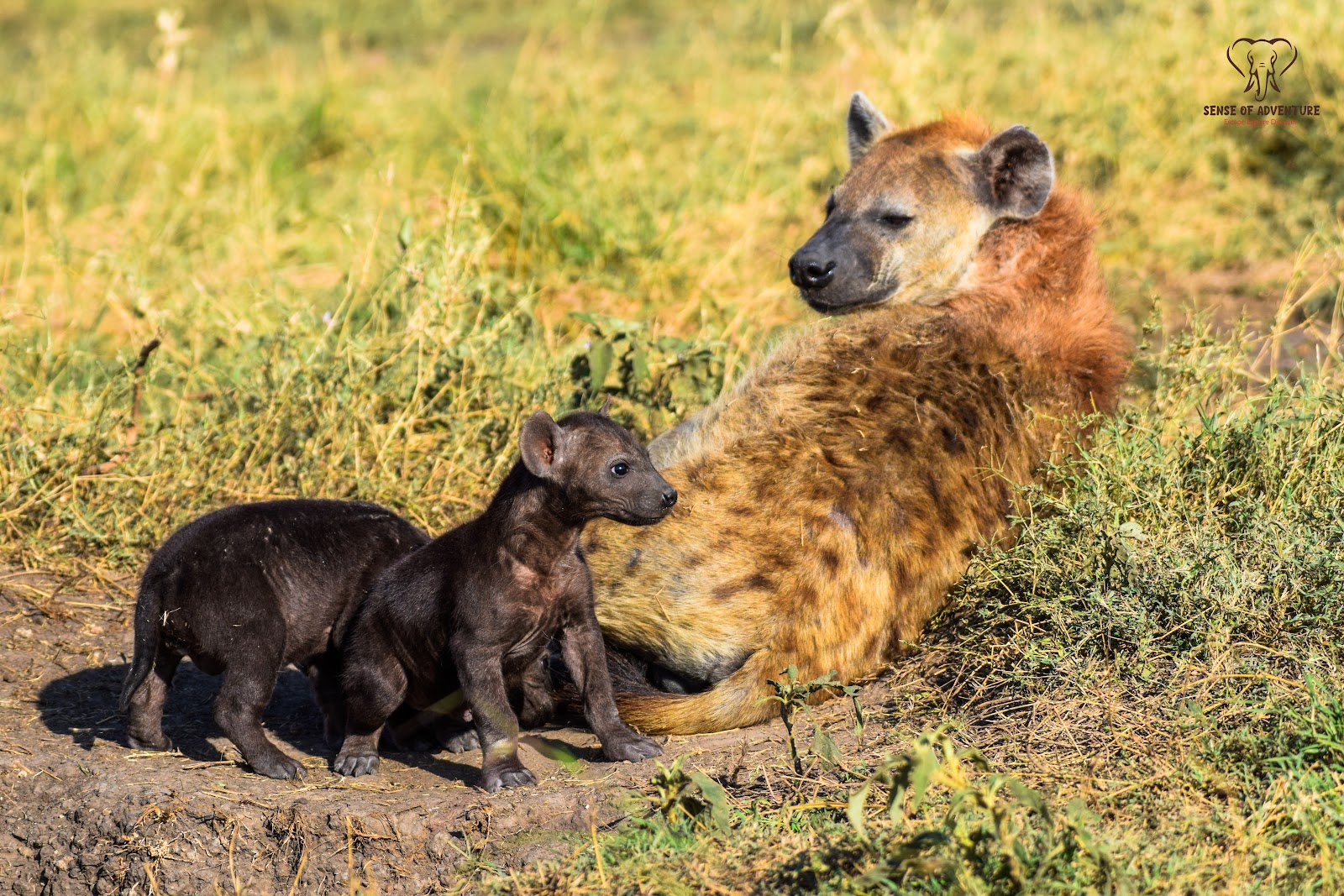
Once you know what to look for, the hyena species in Kenya put on some of the best behaviour of any safari. At a spotted hyena den, cubs tumble around the entrance while adults come and go, greeting each other with a ritual sniffing ceremony that reinforces rank. Cubs are born dark brown, almost black, and gain their spots as they grow.
At a kill, watch how quickly a clan gathers. The whoop call can draw clan members from several kilometres away, and a large group can finish a wildebeest remarkably fast, bones included. When lions and hyenas meet at a carcass, numbers usually decide who wins.
Striped hyenas and aardwolves are quieter. If you are lucky on a night drive, watch a striped hyena raise its mane when it feels threatened, or an aardwolf pause at a termite trail and lick steadily for minutes at a time.
Best Time to See Hyena Species in Kenya
All three hyena species in Kenya are resident all year, so you can see the spotted hyena in any month. Timing changes what you see rather than whether you see one.
- July to October: the Great Migration fills the Mara with wildebeest and zebra, so hyena hunts and kills are frequent and dramatic.
- January to March: warm and dry, with short grass, good den viewing and fewer vehicles.
- April, May and November: the rains bring green scenery and lower rates; some tracks get muddy, but dens are still active.
Early morning is the best time of day. Hyenas are often still active after a night of hunting, and cubs play outside the den in soft light.
Getting There and What It Costs
The Masai Mara is about five to six hours by road from Nairobi, or roughly an hour by light aircraft from Wilson Airport. Laikipia is about four hours north by road, or a short flight. Most trips to see hyena species in Kenya combine the Mara with a conservancy that offers night drives.
These starting prices come from trips on our site; your written quote confirms the price for your dates:
- Masai Mara & Lake Nakuru Camping Safari (4 days): from USD 590 per person.
- 3-Day Masai Mara Safari: from USD 650 per person.
- Big Cats Photographic Safari (6 days): from USD 2,600 per person, with time to wait at dens and kills.
The Masai Mara, run by Narok County, charges non-resident adults USD 100 per day from January to June and USD 200 per day from July to December. Conservancies charge their own nightly fees, explained in our conservancy fees guide.
Get a Written Predator Safari Quote
Send your dates and group size, and we will quote a Mara stay with a night-drive conservancy, built around the hyena species in Kenya you want to see, with park and conservancy fees itemised. Fees rise in July, so dates matter.
Quote My Hyena SafariWatching Hyena Species in Kenya Responsibly
- Keep a respectful distance from dens and switch off the engine; cubs come out more when it is quiet.
- Never feed hyenas or leave food out at camp; animals that learn to link people with food can become dangerous.
- Stay in the vehicle in parks and reserves, and follow your guide on walks in conservancies.
- Keep tents zipped at night; hyenas are curious and will investigate smells around camp.
Read about the status of each species on the IUCN Red List, and about Kenya’s parks and wildlife rules from the Kenya Wildlife Service.
Hyena Species in Kenya: Key Facts
- Clan size: spotted hyena clans range from a handful of animals to 80 or more, organised around female dominance.
- Hunting: in many studied areas, spotted hyenas kill most of their own food; the share varies with place and prey.
- Social rank: cubs inherit their mother’s rank, and females outrank males.
- Male dispersal: young males usually leave their birth clan after maturity and join a new clan at the bottom.
- Where spotted hyenas live: most of Kenya’s parks and reserves, with the Masai Mara the best place to watch them.
- Striped hyena and aardwolf: the rarest hyena species in Kenya to see, being solitary and nocturnal; striped hyena is listed as Near Threatened.
Building a Predator-Focused Kenya Safari
Our Masai Mara hyenas guide covers clan life and den visits in more depth. Combine hyena viewing with big cat tracking via our Big Cats Photographic Safari, and see what happens after a kill in our Masai Mara vultures guide.
To see all the hyena species in Kenya, pair the Mara with Laikipia for night drives; our Laikipia vs Masai Mara comparison helps you split the days. Compare every Mara trip on our Masai Mara safari packages page, or start from a Kenya safari from Nairobi. Check entry rules on the official Kenya eTA portal before you fly.
Hear the Whoop, See the Clan
From playful cubs at a Mara den to a striped hyena caught in the spotlight in Laikipia, we will build a private predator safari around the hyena species in Kenya that most people misjudge.
Frequently Asked Questions
How many hyena species live in Kenya?
Kenya has two true hyena species, the spotted hyena and the striped hyena, plus the aardwolf, a termite-eating member of the same family. That makes three of the world’s four hyena-family species. The spotted hyena is common in most parks; the striped hyena and aardwolf are shy, nocturnal and much harder to see.
Do hyenas only scavenge, or do they hunt?
Spotted hyenas are skilled hunters. Long-term studies in East Africa, including the Masai Mara, show they kill most of their own food in many areas, taking wildebeest, zebra, topi and gazelles. They also scavenge and sometimes take kills from lions, but lions often steal from hyenas too. The scavenger-only label is a myth.
Are spotted hyena clans led by males or females?
Females lead. Female spotted hyenas are slightly larger than males and dominant over them, and cubs inherit their mother’s rank. Even a low-ranking adult female usually outranks immigrant males. Young males leave their birth clan after reaching maturity and join a new clan at the bottom of the hierarchy.
Which hyena species in Kenya is easiest to see?
The spotted hyena is by far the easiest. You are likely to see it in the Masai Mara, Amboseli, Tsavo, Samburu, Lake Nakuru and Nairobi National Park, especially early in the morning. The Masai Mara is the best place to watch clan life and dens, because hyenas are numerous and the plains are open.
Where can you see a striped hyena in Kenya?
Your best chance is a night drive in a Laikipia conservancy or in the dry country around Samburu. Striped hyenas are solitary and mostly nocturnal, so daytime sightings are rare. Night drives are not allowed in the Masai Mara National Reserve or most national parks, so choose a conservancy that offers them.
Are hyenas dangerous to safari visitors?
None of the hyena species in Kenya is a danger to people in vehicles, and attacks on tourists are extremely rare. In unfenced camps, they may wander through at night, so keep tents zipped, never leave food outside and walk with a guard after dark. Follow your guide’s instructions and you can enjoy hyenas safely.
What is an aardwolf?
The aardwolf is a small member of the hyena family that eats termites rather than meat. It looks like a slim, fox-sized striped hyena with a mane, but has tiny teeth and licks termites from the ground with its tongue. It is mostly nocturnal, so sightings usually come on night drives.