
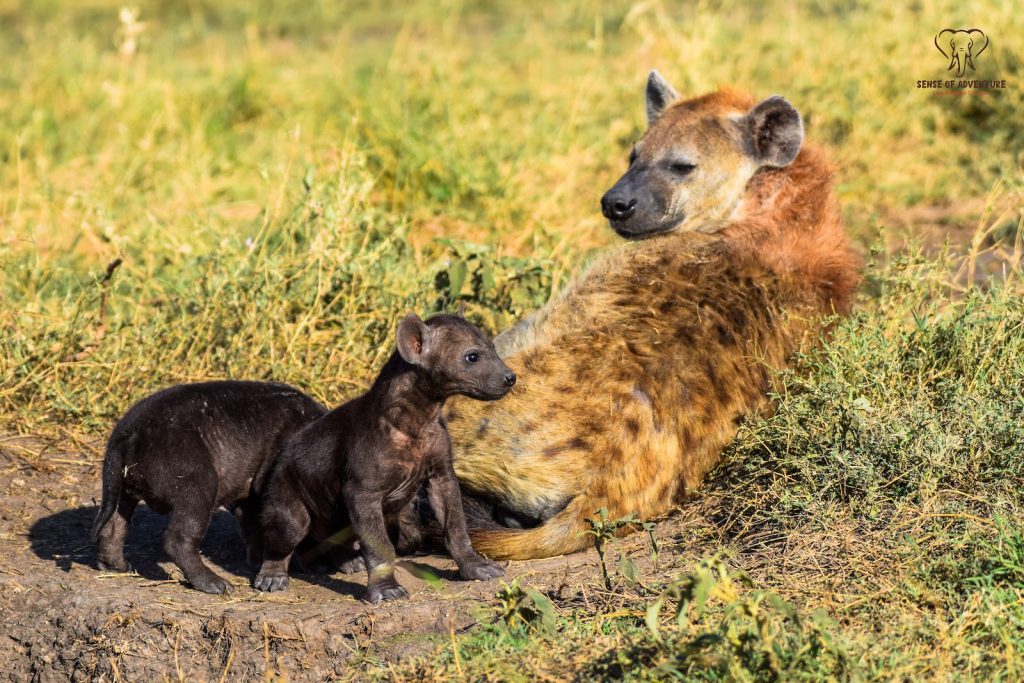
Hyenas of the Masai Mara are the ecosystem’s most misunderstood stars. Forget the cackling villains of the movies: spotted hyenas are intelligent, matriarch-led hunters whose clans can outnumber a lion pride four to one — and in the Mara they kill the majority of what they eat rather than scavenging it. Watch a den site at dawn, fuzzy black pups tumbling over a patient female, and the cartoon image collapses on the spot. Their whooping calls carrying across the night plains are the true soundtrack of the Mara. Sense of Adventure guides give hyenas the game-drive time they deserve, and guests are converted every single trip.
Meet the Mara’s Smartest Predator
Den sites, clan politics and night-time whoops — ask us to build real predator diversity into your game drives.
Inside the Hyena Clans of the Masai Mara
The Masai Mara supports one of Africa’s densest spotted hyena populations, organised into clans of up to eighty animals ruled entirely by females — every adult male ranks below the lowest-ranking female. Clans defend territories, wage border skirmishes and raise pups at communal den sites that stay active for months, making them wonderfully reliable places to watch behaviour. Long-term research in the Mara ecosystem shows hyenas hunt around 70% of their own food, running down wildebeest and topi in coordinated chases at up to 60 km/h — and it is often lions who steal from them, not the reverse.
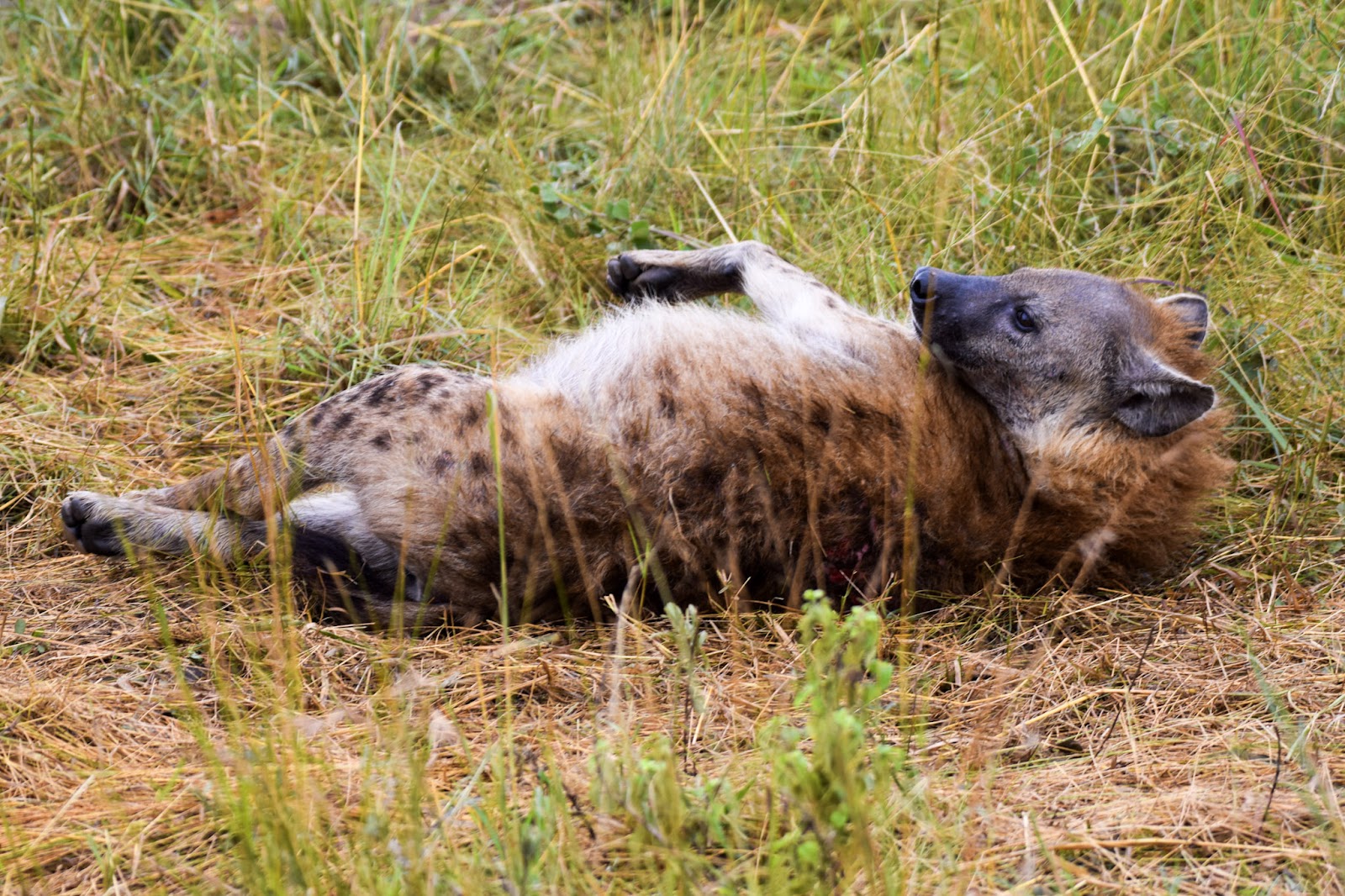
I’d have skipped the “hyena stop” if our guide hadn’t insisted. Twenty minutes at the den and I was obsessed — pups chewing his shoelaces… well, nearly, aunties babysitting, the matriarch inspecting everyone. Funniest, cleverest animals of the whole safari.
— Sense of Adventure guest, first-time safari
The 5 Essential Hyena Experiences in the Masai Mara
A Den Site at Dawn — pup kindergarten in session
Communal dens are the heart of clan life: black-coated pups emerge at first light to wrestle, chew anything available and pester babysitting aunts while mothers return from the night’s hunting. Dens stay active for months, so guides know exactly where the current nurseries are. Thirty quiet minutes here outperforms almost any other predator sighting for pure behaviour.
The Night Chorus — the Mara’s signature soundtrack
That rising whoop-whoop rolling across the plains after dark is hyenas keeping in contact — each voice individually recognisable to clan mates up to five kilometres away. Heard from your tent with a dying campfire nearby, it is the sound that tells you exactly where on earth you are. Guests ask about it at breakfast every single morning.
A Clan Hunt — endurance running, not theft
Watch a hyena clan select, test and run down a wildebeest over two kilometres and you will never call them scavengers again. Their stamina hunting — loping at 40-60 km/h until prey exhausts — succeeds more often than a lion pride’s ambush. Migration season turns these hunts into a near-daily spectacle in the right areas.
The Lion-Hyena Rivalry — Africa’s oldest turf war
Lions and hyenas steal from each other constantly, and the standoffs — a lioness on a kill ringed by twenty whooping, mobbing hyenas — are among the most electric scenes the Mara offers. Numbers usually decide it. When the balance tips and the clan surges in, you understand instantly why each species hates the other.
The Carcass Cleanup — nature’s recycling in fast-forward
With 1,100 psi bone-crushing jaws and digestion that extracts nutrition from skeleton itself, a clan can reduce a wildebeest to a stain in under half an hour. It is gruesome, riveting and ecologically vital — hyenas keep the Mara clean and disease in check. The speed genuinely has to be seen to be believed.
See the Mara Beyond the Big Five Checklist
The best safaris savour behaviour, not just species lists. Let’s design game drives with time for the real dramas.
Spotted Hyena Facts Worth Knowing
- Girl power: clans of up to 80 are strictly female-led — every male ranks below every adult female.
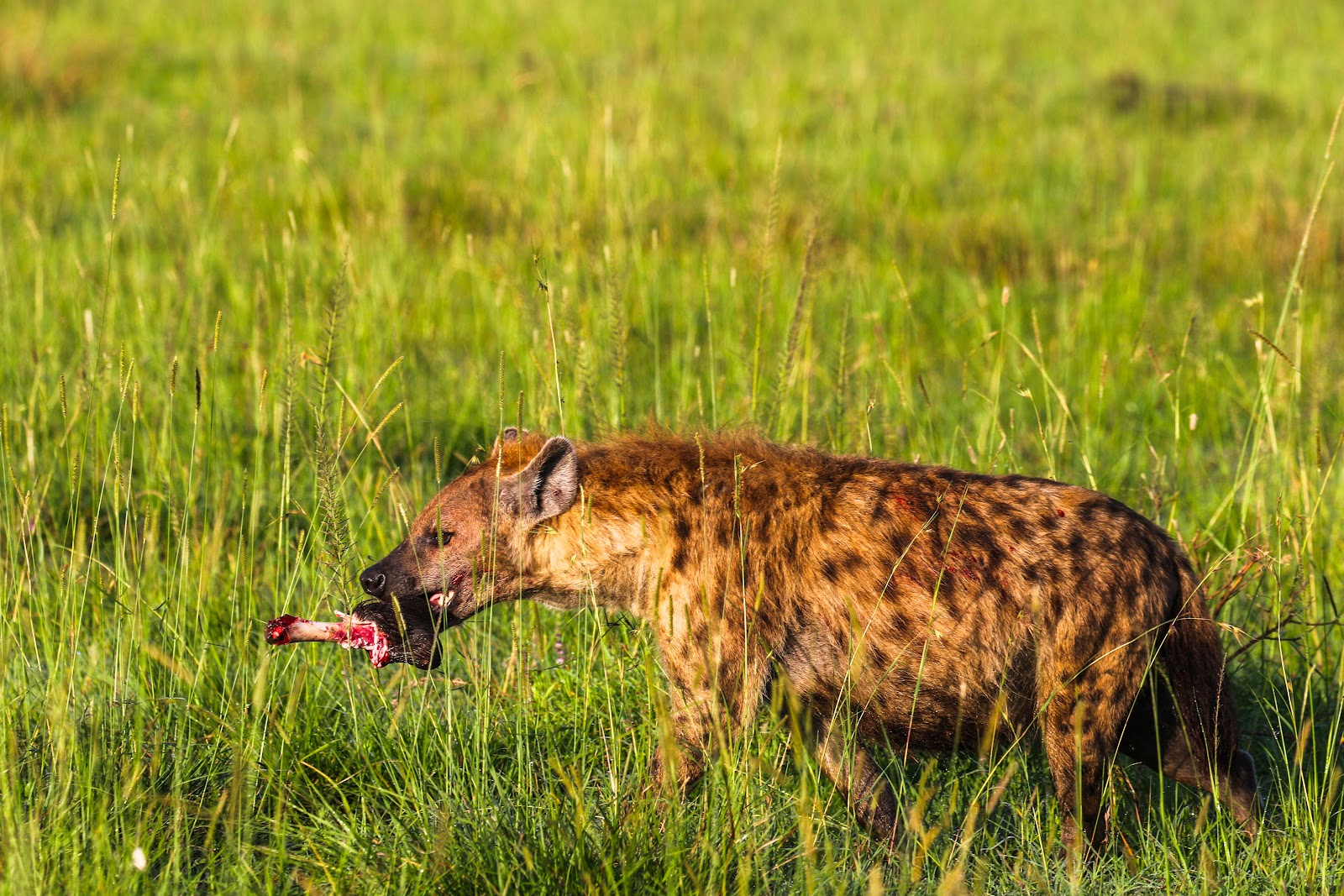
- Hunters first: Mara-ecosystem research shows about 70% of hyena food is hunted, not scavenged; lions steal from hyenas more than the reverse.
- Bite force: at roughly 1,100 psi, hyena jaws crack buffalo femurs — among the strongest bites of any land mammal.
- Vocal range: whoops, grunts, giggles and lows form one of Africa’s richest vocal repertoires, carrying 5 km at night.
- Brainpower: hyenas outperform chimpanzees in some cooperative problem-solving tests — clan life demands serious social intelligence.
- Where to look: den sites shift, but the Talek plains and reserve border zones are perennial hyena strongholds.
Where Hyenas Fit in Your Predator Safari
Hyena dens and lion-hyena standoffs feature on any well-guided 3-day Masai Mara safari, and photographers get dedicated behaviour time on the Big Cats Photographic Safari. Round out the predator picture with our guides to the lions of the Masai Mara and the Mara’s cheetahs.
The Clans Are Out There Whooping
Come hear the Mara’s real night music. Message us and we’ll plan your predator-rich safari today.
Frequently Asked Questions
Are there hyenas in the Masai Mara?
Yes — the Masai Mara holds one of Africa’s densest spotted hyena populations, organised into female-led clans of up to eighty animals. Their communal den sites and constant rivalry with lions make hyenas some of the most rewarding predators to watch in the reserve.
Do hyenas in the Masai Mara hunt or just scavenge?
Masai Mara hyenas are primarily hunters. Long-term research in the ecosystem shows spotted hyenas actively hunt around 70% of their food, running down wildebeest and topi in coordinated endurance chases. Lions actually steal kills from hyenas more often than hyenas steal from lions.
What sound do hyenas make at night in the Mara?
The famous rising “whoo-oop” you hear at night in the Masai Mara is the spotted hyena’s long-distance contact call, audible up to five kilometres away. Clans also giggle when excited or nervous — the “laugh” that gave hyenas their reputation — plus grunts, lows and squeals.
Can you see hyena pups on safari in the Masai Mara?
Yes. Masai Mara hyena clans raise pups at communal den sites that stay active for months, and guides track the current nurseries. Early morning is best, when dark-coated pups play at the den entrance while adults return from hunting. Quiet, patient vehicles get wonderful viewing.
Are hyenas dangerous to tourists in the Masai Mara?
Hyenas in the Masai Mara pose virtually no risk to visitors following normal safari rules: stay in the vehicle on game drives and inside your camp’s escorted paths at night. Hyenas are bold around camps after dark, so never leave shoes or food outside your tent — they will be tested.