Nairobi National Park vs Ol Pejeta is really a choice between time and completeness. Nairobi National Park sits about 7 km from the city centre and gives you lions, rhinos, buffalo and giraffe in a half-day, but no wild elephants. Ol Pejeta is about four hours north and offers all of the Big Five, the last northern white rhinos and night drives.
Sense of Adventure is a TRA-licensed private safari company based at Mountain Mall on Thika Road, Nairobi. We run private game drives in Nairobi National Park most weeks, and we plan Laikipia safaris that include Ol Pejeta Conservancy. This Nairobi National Park vs Ol Pejeta guide is for you if you have limited days in Kenya, a long layover, or clients to advise. It covers access, wildlife, activities, seasons, fees and sample plans, so you can choose with confidence.
Nairobi National Park vs Ol Pejeta: Not Sure Which Fits?
Send us your dates and flight times. Our Nairobi team will tell you honestly whether a half-day in the city park, a night or two at Ol Pejeta, or both, suits your trip.
Nairobi National Park vs Ol Pejeta at a Glance
Nairobi National Park is a small, fenced government park on the edge of the capital, while Ol Pejeta is a larger private conservancy on the equator in Laikipia. The table sets out the differences that matter most when you plan, as a quick Nairobi National Park vs Ol Pejeta checklist.
| Nairobi National Park vs Ol Pejeta | Nairobi National Park | Ol Pejeta Conservancy |
|---|---|---|
| Type | Government national park run by Kenya Wildlife Service (KWS) | Private, not-for-profit wildlife conservancy |
| Location | Southern edge of Nairobi, off Lang’ata Road | Laikipia County, west of Nanyuki, on the equator |
| Size | About 117 km² | About 360 km² |
| Travel time from Nairobi | Usually 20 to 60 minutes, depending on traffic | About four hours by road, or a short flight to Nanyuki |
| Big Five | Four: lion, leopard, buffalo, rhino (no wild elephants) | All five |
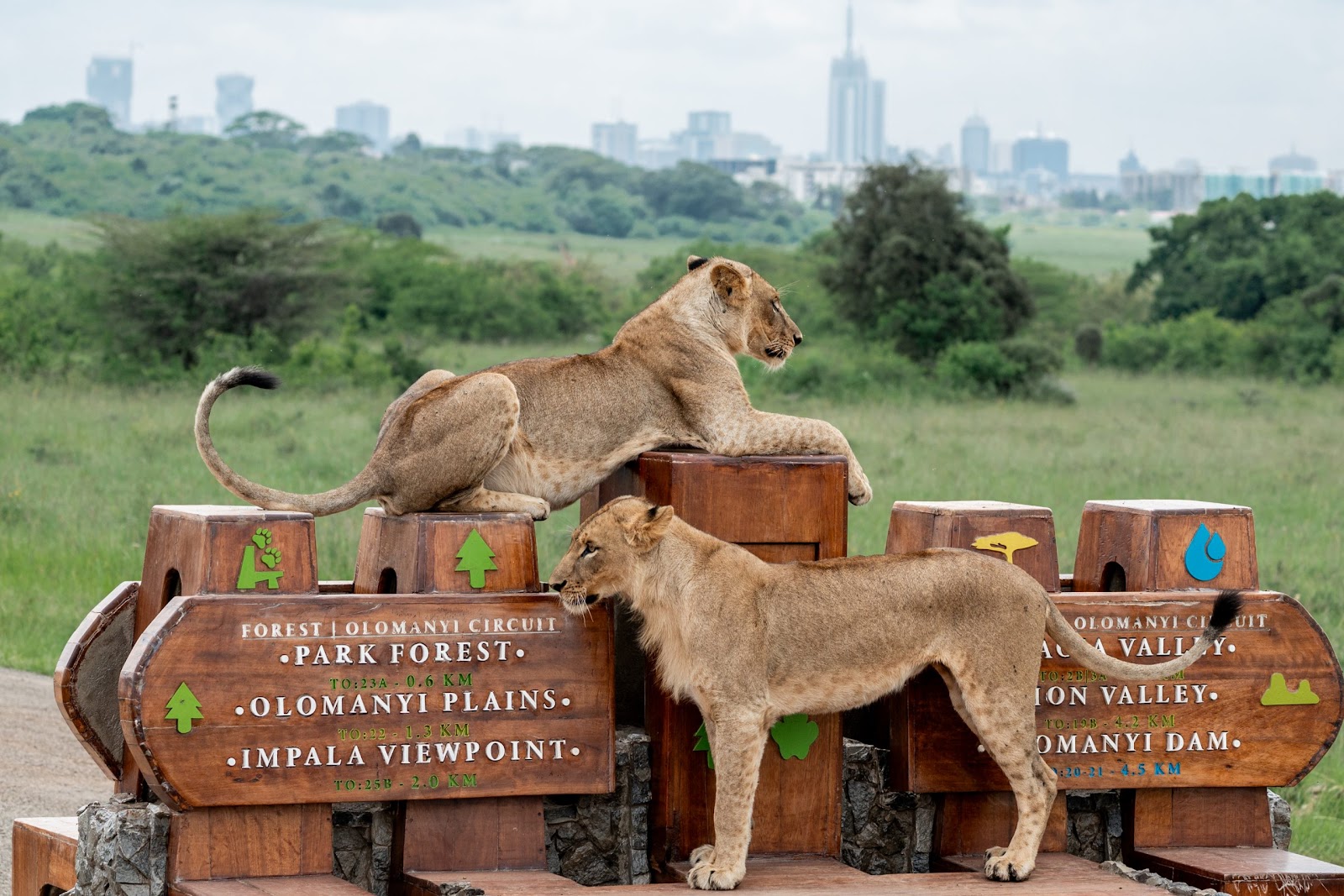
| Signature sighting | Rhinos, lions and giraffe with the city skyline behind | Black and white rhinos; the last northern white rhinos |
| Gate hours | 6am to 6pm | 7am to 7pm |
| Night drives | Limited; confirm with KWS before you plan around one | Offered as a bookable conservancy activity |
| Ideal visit | Half-day or full day | Two or three nights |
| Best for | Layovers, business trips, arrival or departure days | Rhino lovers, families, a first taste of Laikipia |
Nairobi National Park vs Ol Pejeta in one line: choose Nairobi when hours are short, and Ol Pejeta when you can give it at least one night.

Getting There: Nairobi National Park vs Ol Pejeta Access Times
Nairobi National Park is close enough to visit between meetings or flights, while Ol Pejeta needs a long drive or a flight and is best treated as an overnight trip.
Reaching Nairobi National Park
The main gate is on Lang’ata Road, south of the city centre. Kenya Wildlife Service gives figures of roughly 7 to 10 km depending on where you start. Jomo Kenyatta International Airport (JKIA) and Wilson Airport are both close by. The real variable is traffic. An early start from a hotel in Westlands or Upper Hill usually reaches the gate in under an hour. A late-morning start can take much longer.
Because the park is so close, you can be watching lions within an hour of leaving your hotel. That makes it the only realistic Big Five option for a layover. Our 12-hour layover in Nairobi itinerary shows how the timings work around a flight.
Reaching Ol Pejeta Conservancy
Ol Pejeta lies west of Nanyuki, between the Aberdares and Mount Kenya. The conservancy gives the road distance as about 220 km, or roughly four hours. The route heads north on Thika Road, past our office at Mountain Mall, then through central Kenya’s farmland to Nanyuki. Entry is through the Rongai and Serat gates.
If you would rather not spend a day on the road, scheduled light-aircraft flights run to Nanyuki airstrip, followed by a short transfer. A single-day return by road is possible, but it means about eight hours in the vehicle. Our Ol Pejeta day trip from Nairobi guide explains when that trade-off makes sense.
Nairobi National Park vs Ol Pejeta access verdict: Nairobi wins easily on speed, so it is the natural pick for a layover or a free morning.
Nairobi National Park vs Ol Pejeta for the Big Five
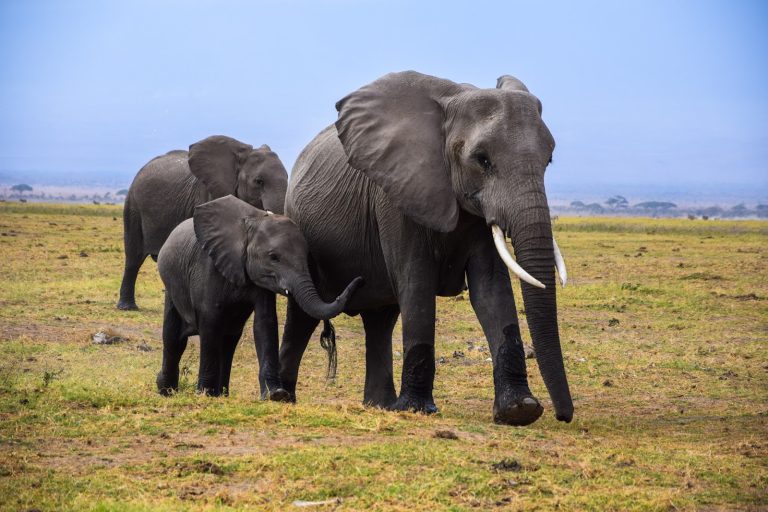
Ol Pejeta has all of the Big Five; Nairobi National Park has four, because it has no wild elephants.
Big Five in Nairobi National Park
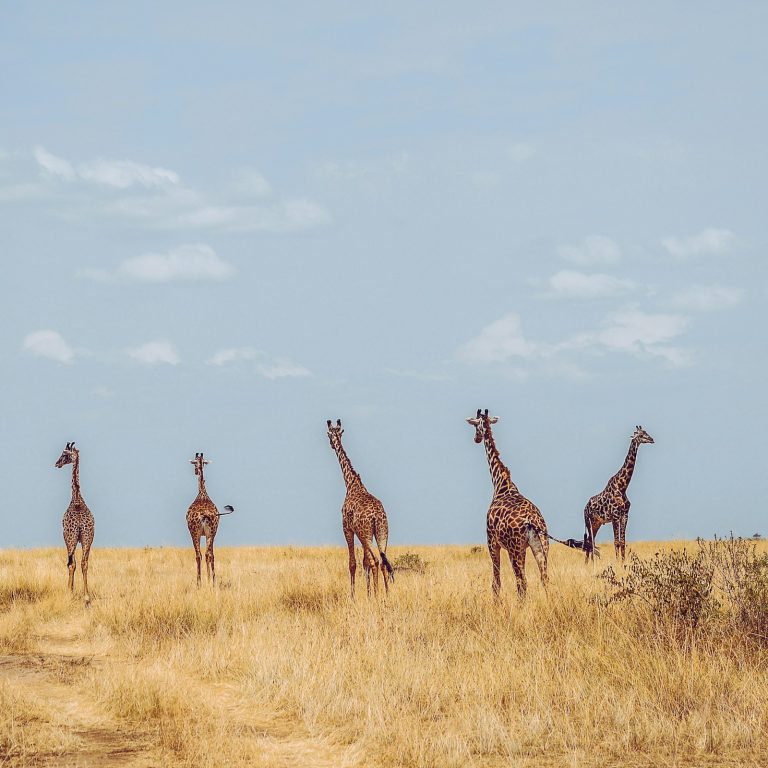
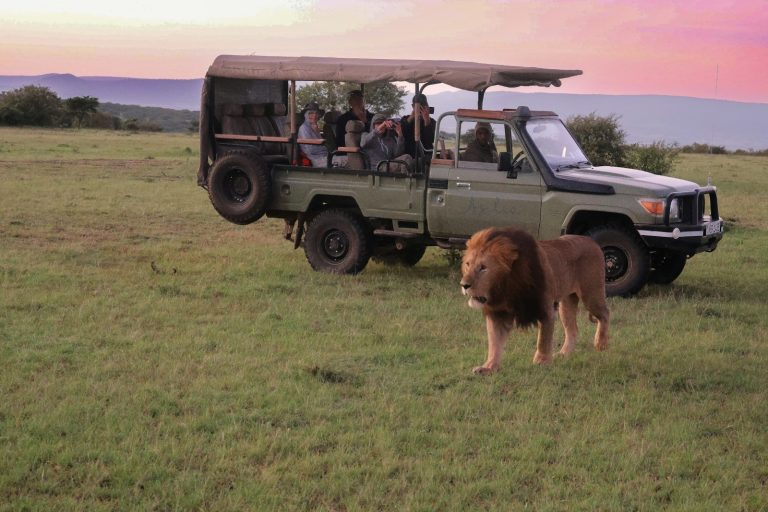
KWS lists four of the Big Five in the park: lion, leopard, buffalo and rhino. Lions are seen often, and KWS names three prides in the park. Rhinos are a real strength, since the park is one of Kenya’s most successful rhino sanctuaries. Buffalo are common. Leopards live here too, but they are shy, and a sighting is a bonus rather than an expectation.
The missing animal is the elephant. The park is too small and too enclosed by the city for a wild herd. The only elephants you will see are orphaned calves at the Sheldrick Wildlife Trust nursery, which sits on the park’s edge and has a short daily visiting hour that must be booked ahead.
Big Five in Ol Pejeta Conservancy
Ol Pejeta has lion, leopard, elephant, buffalo and rhino. Elephants move through the conservancy, and buffalo herds are common on the open plains. Lions are seen regularly, and the conservancy offers lion-tracking with its research team. Leopards are present but, as everywhere, elusive. With two or three days of game drives, your chances of seeing four or all five are good, though no honest operator can promise every species.
Nairobi National Park vs Ol Pejeta Big Five verdict: for a complete Big Five, Ol Pejeta wins. For four of the five in a single morning, nothing near Nairobi comes close. Our guide Will I see the Big Five in Kenya? explains realistic odds park by park.

Rhinos at Nairobi National Park vs Ol Pejeta: Two Conservation Stories
Both places are excellent for rhinos, but Ol Pejeta adds the last northern white rhinos and the largest black rhino sanctuary in East Africa.
Rhinos in Nairobi National Park
Nairobi National Park has long been a refuge for black rhinos, and it has supplied rhinos to restock other Kenyan parks. Rhinos are found in the open grassland and the thicker bush. Seeing one against the skyline is the photograph most visitors come for. Sightings are frequent, but rhinos move, so a good guide will check recent reports and work the right areas rather than drive at random.
Rhinos in Ol Pejeta Conservancy
Ol Pejeta protects black rhinos and southern white rhinos across a much larger area. It is also home to the last northern white rhinos, guarded around the clock in a special enclosure. Visits to them are a separate, bookable activity listed on the conservancy’s tariff. The northern white rhino is functionally extinct, and scientists are working on assisted reproduction to try to save it. Standing near them is a sobering, memorable experience.
If rhinos are the main reason for your trip, also read our comparisons of Ol Pejeta vs Lewa and Lake Nakuru vs Ol Pejeta for rhinos.
Nairobi National Park vs Ol Pejeta rhino verdict: both give you excellent rhino sightings, but only Ol Pejeta adds the northern white rhinos.

Activities: Nairobi National Park vs Ol Pejeta Beyond the Game Drive
Nairobi National Park is mostly about the game drive, while Ol Pejeta offers a wider menu of guided conservation activities.
What You Can Do in Nairobi National Park
- Game drives: the core activity, on a network of murram tracks with a 40 km/h speed limit and no off-road driving.
- Birdwatching: KWS records more than 400 bird species, so the park rewards birders.
- Picnic sites and the ivory burning site: marked stops where you can stretch your legs.
- Nature walks: available in designated areas; ask us what is currently open.
- Nearby add-ons: the Sheldrick Wildlife Trust elephant nursery and the Giraffe Centre in Karen. Our Giraffe Centre or elephant orphanage comparison helps you choose.
Night drives have been introduced in Nairobi National Park under KWS rules. They are limited and must be arranged in advance, and the details change, so confirm with KWS before you build a plan around one.
What You Can Do at Ol Pejeta
- Night game drives: a chance to look for nocturnal species such as hyenas, genets and bush babies.
- Lion tracking and dog tracking: join conservancy teams monitoring predators.
- Meet the northern white rhinos: a guided visit to their enclosure.
- Sweetwaters Chimpanzee Sanctuary: opened in 1993 for rescued chimpanzees, and the only place in Kenya to see them.
- Guided bush walks and bird walks: on foot with an armed ranger.
- The equator: the conservancy straddles it, which makes a fun photo stop.
Most of these activities carry their own fee and are best booked when we confirm your lodge. Popular slots, especially the northern white rhino visit, can fill in busy months.
Nairobi National Park vs Ol Pejeta activities verdict: Ol Pejeta offers far more variety, while Nairobi keeps things simple and quick.
Nairobi National Park vs Ol Pejeta: Get a Private Quote
Private vehicle, expert guide and a plan built around your flights. Tell us how much time you have, and we will send a clear written quote.
Best Time to Visit Nairobi National Park vs Ol Pejeta
Both are year-round destinations, with the easiest game viewing in the dry months from June to October and from January to February.
Seasons in Nairobi National Park
The park’s southern boundary along the Mbagathi River is unfenced. In the wet season, wildebeest and zebra disperse south towards the Athi-Kapiti plains. In the dry season they move back into the park, where permanent water draws them in. That makes the dry months especially rewarding. The long rains (roughly March to May) and short rains (roughly November to December) can make some tracks muddy, but the park stays open.
Seasons at Ol Pejeta
Ol Pejeta is good all year. The dry months bring animals to water and make driving easy. The green season brings fresh grass, young animals and fewer vehicles, and many lodges offer better rates. Both areas sit at altitude, so mornings and evenings are cool. Pack a warm layer for early drives, whichever you choose.
Nairobi National Park vs Ol Pejeta seasons verdict: the dry months suit both, and neither closes in the rains.
Expert tip from our Nairobi team
Whichever side of the Nairobi National Park vs Ol Pejeta choice you land on, timing matters. In Nairobi National Park, be at the gate when it opens at 6am. Predators are most active in the first hours, the light is soft, and city traffic is still light. At Ol Pejeta, split your time between early and late drives and rest at midday, when most animals do the same.
Nairobi National Park vs Ol Pejeta Park Fees and Costs
Entry to Ol Pejeta costs more per day than Nairobi National Park, and the bigger difference comes from travel time and accommodation.
At the time of writing, the Kenya Wildlife Service Nairobi National Park page lists the non-resident adult fee as USD 80. Ol Pejeta’s 2026 tariff guide lists a non-resident adult daily entry fee of USD 110, with activities such as night drives and lion tracking charged separately. Fees change, so always check the official sources. Our Kenya national parks entrance fees 2026 guide collects the current KWS rates in one place.
For a Nairobi half-day, the main costs are the park fee, a private vehicle and guide, and your time. For Ol Pejeta, add the drive or flight, at least one night’s accommodation, meals and activity fees. A lodge stay of two nights usually gives far better value per sighting than a long day trip. Our Kenya safari cost guide explains the other price drivers.
Nairobi National Park vs Ol Pejeta cost verdict: Nairobi costs less in money and time, while Ol Pejeta gives more depth for each day you spend.
How Many Days for Nairobi National Park vs Ol Pejeta?
Plan a half-day for Nairobi National Park and two or three nights for Ol Pejeta.
Nairobi National Park: Half-Day or Full Day
A morning game drive of four to five hours covers the main areas and gives you a strong chance of lions, rhinos, buffalo, giraffe, zebra and plenty of antelope. A full day lets you explore the quieter southern plains and add the elephant nursery or the Giraffe Centre. See our Nairobi National Park safari page for private half-day options.
Ol Pejeta: Two to Three Nights
One night works, but you lose much of the first and last day to travel. Two nights give you a full day of morning and afternoon drives, plus time for the chimpanzee sanctuary and a night drive. Three nights let you add tracking activities or a bush walk without rushing. Our Laikipia Plateau safari guide shows what else is nearby.
Nairobi National Park vs Ol Pejeta time verdict: hours suit Nairobi, and nights suit Ol Pejeta.
Nairobi National Park vs Ol Pejeta: Who Should Choose Which
Choose by the time you have, your interests and who you are travelling with.
Choose Nairobi National Park If You
- Have a layover, a business trip or a free morning before an evening flight.
- Want rhinos and lions without a long drive.
- Are travelling with young children or older relatives who prefer short outings.
- Want a first safari taste on arrival before heading to the Masai Mara or Amboseli.
- Love unusual photographs, such as giraffe against office towers.
Choose Ol Pejeta If You
- Can spare at least one night, ideally two or three.
- Want the full Big Five, including elephants.
- Care about rhino conservation and want to see the last northern white rhinos.
- Want night drives, tracking activities or a bush walk.
- Have children who would love the chimpanzee sanctuary.
Families should look at our Kenya family safari packages, and travel agents can find trade support on our Kenya DMC page for travel agents.
Combining Both With Other Kenyan Parks
You do not have to choose: Nairobi National Park fits neatly on an arrival or departure day, and Ol Pejeta fits naturally into a northern circuit.
A popular pattern is a morning in Nairobi National Park on your first or last day, then two nights at Ol Pejeta, before continuing to Samburu, Lake Nakuru or the Masai Mara. Our Kenya Highlights Safari links Samburu, Ol Pejeta, Lake Nakuru and the Mara in nine days. For a shorter conservancy-focused trip, the Ol Pejeta and Masai Mara safari pairs rhinos with big-cat country.
Nairobi National Park vs Ol Pejeta Sample Plans by Time Available
- Six to twelve hours: Nairobi National Park game drive, plus the elephant nursery if timings allow.
- Two days: Nairobi National Park on day one, then drive or fly to Ol Pejeta for an afternoon drive, with a morning drive before returning.
- Four days: half-day in Nairobi, then three nights at Ol Pejeta with a night drive and the chimpanzee sanctuary.
- Seven to ten days: Nairobi National Park, Ol Pejeta, Samburu and the Masai Mara on a private route.
For more ideas, browse our Kenya safaris from Nairobi or our full list of national parks in Kenya.
Nairobi National Park vs Ol Pejeta combination verdict: for most first-time visitors with a week or more, doing both is the strongest plan.
Nairobi National Park vs Ol Pejeta: Our Verdict
If you have hours, choose Nairobi National Park; if you have nights, choose Ol Pejeta; if you have a week, do both.
Nairobi National Park is a remarkable bonus on any Kenya trip. It gives you rhinos and lions within an hour of your hotel, and no other park near a capital offers the same mix of wildlife and skyline. Ol Pejeta is a destination in its own right. It gives you the full Big Five, a deeper conservation story and activities you cannot do in the city park. Neither wins in every way. The right Nairobi National Park vs Ol Pejeta answer depends on your time.
Before you travel, check the latest UK government travel advice for Kenya and the Ol Pejeta plan your visit page for current gate and booking details.
Nairobi National Park vs Ol Pejeta FAQs
Nairobi National Park vs Ol Pejeta: which is better for a short trip?
Nairobi National Park is better when you only have a few hours. It is close to the city and JKIA, and a morning drive often brings lions, rhinos and buffalo. Ol Pejeta is about four hours away by road, so it rewards at least one night and ideally two or three.
Nairobi National Park vs Ol Pejeta: which has elephants?
Only Ol Pejeta has wild elephants. Nairobi National Park has none, so it offers four of the Big Five: lion, leopard, buffalo and rhino. You can see orphaned elephant calves at the Sheldrick Wildlife Trust nursery on the edge of the park, which has a short daily visiting hour that must be booked ahead.
Nairobi National Park vs Ol Pejeta: where can you see all of the Big Five?
Only Ol Pejeta has all of the Big Five: lion, leopard, elephant, buffalo and rhino. Rhinos, elephants and buffalo are seen most often, and lions regularly. Leopards are shy everywhere, so treat them as a bonus. Two or three days of drives give you a good chance of seeing most of them.
Can you visit Ol Pejeta as a day trip from Nairobi?
Yes, but it is a long day. The drive is about 220 km each way, roughly four hours, so you spend around eight hours on the road for a few hours of game viewing. A flight to Nanyuki or an overnight stay at the conservancy gives you far more time with the wildlife.
Where are the northern white rhinos in Kenya?
The last northern white rhinos live at Ol Pejeta Conservancy in Laikipia, where they are guarded around the clock in a special enclosure. The species is functionally extinct, and scientists are working on assisted reproduction. You can book a guided visit to them as a separate conservancy activity, subject to availability.
Nairobi National Park vs Ol Pejeta: where can you do night drives?
Night drives have been introduced in Nairobi National Park under Kenya Wildlife Service rules, but they are limited and must be arranged in advance. Details can change, so confirm with KWS first. At Ol Pejeta, night game drives are a regular bookable activity, which makes it the more reliable choice after dark.
Nairobi National Park vs Ol Pejeta? Plan Either, or Both
Kenya-based experts. Real local knowledge. Transparent pricing.