

Lion, leopard and cheetah look like variations on the same animal to most first-time safari visitors, but their hunting strategies could barely be more different. Cheetahs are pure speed specialists, reaching 104 km/h and going from a standstill to 97 km/h in under three seconds, with a genuinely startling 70% hunting success rate against Thomson’s gazelle — more than double a lion’s 26%. Lions hunt the opposite way entirely: cooperative, nocturnal ambush by a pride working as a team. Leopards are solitary stalkers, creeping within five metres of prey before pouncing, then dragging the kill up a tree to keep it from lions and hyenas. Picture recognising, from a single sighting, exactly which hunting strategy you’re watching unfold. Sense of Adventure explains this on every game drive, not just points out the species.
Learn to Read a Hunt, Not Just Spot a Cat
Message us to build a big-cat-focused Kenya safari.
Three Cats, Three Completely Different Strategies
Cheetahs hunt by daylight specifically to avoid competition from nocturnal predators, closing to within 30-200 metres of prey before a high-speed charge that averages 37.9 seconds and covers roughly 173 metres — their 70% success rate against Thomson’s gazelle in the Serengeti-Mara ecosystem dramatically outperforms both lions (26%) and hyenas (33%), a direct consequence of pure speed over strength or numbers. Lions take the opposite approach: cooperative pride hunting, primarily at night, using coordinated ambush tactics that rely on teamwork rather than individual speed. Leopards are different again — solitary, stealth-based ambush hunters that stalk within about five metres of a target before pouncing, then drag kills weighing 10-40 kg up into trees specifically to protect the food from lions and hyenas that would otherwise steal it, hunting mostly at night but adapting to daylight hours in some regions.
Watching a cheetah hunt after our guide explained the numbers beforehand, a 70% success rate against maybe a quarter for lions, completely changed how we watched the chase. It actually caught the gazelle in under a minute, exactly as fast as we’d been told to expect.
— Sense of Adventure guest, Masai Mara safari
Kenya’s 3 Big Cats, Hunting Style by Hunting Style
Cheetah — Pure Speed, Daylight Hunter — 104 km/h top speed, 70% success rate vs gazelle
The fastest land animal on Earth, hunting by day specifically to avoid nocturnal competition, relying on acceleration and a high-percentage chase rather than ambush or teamwork. See our Masai Mara cheetah safari guide.
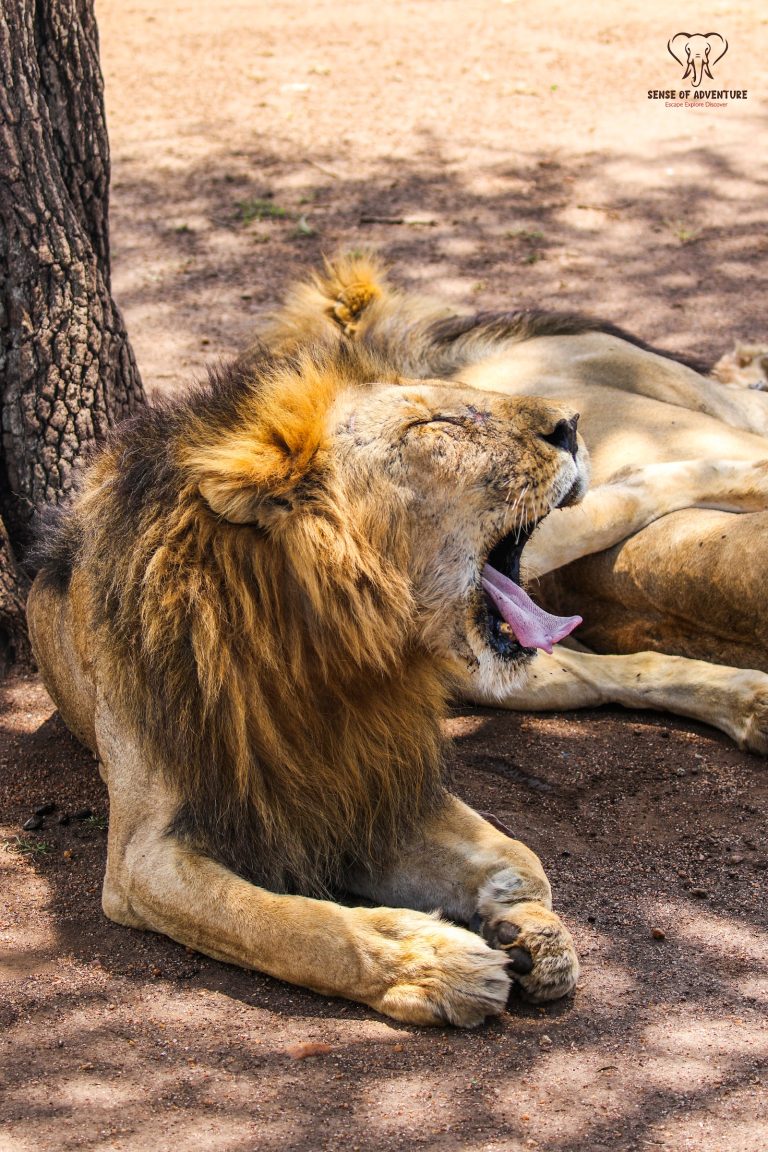
Lion — Cooperative, Nocturnal Ambush — pride hunting, roughly 26% success rate
Lions hunt as coordinated teams, mostly under cover of darkness, trading individual speed for numbers and tactical positioning — a fundamentally different strategy from either of Kenya’s other big cats.
Leopard — Solitary Stealth, Tree-Caching — stalks within 5m, drags kills into trees
The most solitary of the three, relying on camouflage and patience to close within striking distance before pouncing, then hauling prey into a tree to protect it from lions and hyenas. See our Masai Mara leopard sightings guide.
See All Three Hunting Styles on One Trip
Message us to build a Kenya itinerary timed for big cat activity.
Kenya Big Cat Hunting Facts
- Cheetah top speed: 104 km/h, with 0-97 km/h acceleration in under 3 seconds.
- Cheetah hunting success: 70% against Thomson’s gazelle in the Mara-Serengeti ecosystem, versus 26% for lions and 33% for hyenas.
- Average cheetah chase: 37.9 seconds, covering roughly 173 metres.
- Lion hunting style: cooperative pride ambush, primarily nocturnal, relying on teamwork over individual speed.
- Leopard hunting style: solitary stealth stalk to within about 5 metres before pouncing, mostly at night.
- Leopard tree-caching: kills are dragged into trees specifically to protect them from lions and hyenas, who frequently steal leopard kills on the ground.
Building a Big Cat-Focused Kenya Safari
Our Big Cats Photographic Safari is built specifically around lion, leopard and cheetah activity and timing. Read our cheetah and leopard guides for location-specific detail.
Three Hunting Styles, One Kenya Safari
Message us to plan a trip built around big cat behaviour and timing.
Frequently Asked Questions
Which is faster, a cheetah or a lion?
The cheetah is dramatically faster, reaching a top recorded speed of 104 km/h and accelerating from 0 to 97 km/h in under 3 seconds, while lions rely on cooperative ambush tactics rather than raw speed.
Which big cat has the highest hunting success rate in Kenya?
The cheetah has the highest hunting success rate of Kenya’s three big cats, succeeding in roughly 70% of hunts against Thomson’s gazelle, compared to about 26% for lions and 33% for hyenas.
Why do leopards drag their kills into trees?
Leopards cache their kills in trees specifically to protect the food from lions and hyenas, which frequently steal kills left on the ground — tree-caching gives leopards, as solitary hunters, a way to keep food they can’t otherwise defend.
Do lions hunt alone or in groups?
Lions hunt cooperatively as a pride, primarily at night, using coordinated ambush tactics that rely on teamwork and numbers rather than individual speed or stealth.
Are cheetahs active during the day or night?
Cheetahs hunt primarily during daylight hours, a deliberate strategy to avoid competition and kleptoparasitism from nocturnal predators like lions and hyenas.