A Masai Mara cheetah safari offers some of the most reliable cheetah sightings in Africa — the reserve’s short-grass plains are custom-built for the world’s fastest land animal. While lions dominate the headlines, it is the cheetah that gives the Mara its most cinematic moments: a female scanning from a termite mound, a sudden 100 km/h sprint, dust and gazelle scattering.
Unlike leopards, cheetahs hunt in daylight, so you actually watch the chase unfold from your vehicle. Sense of Adventure guides track the Mara’s known cheetah families season after season, which is why our guests so often come home with the photo everyone wants. This guide explains where and when to look, what it costs and how to plan the trip.
✅ Masai Mara Cheetah Safari Quick Answer
- Chances: very good — cheetahs are resident all year and hunt by day on open plains.
- Where: the open plains of the reserve and the neighbouring conservancies, where your guide knows the resident females and coalitions.
- Best time: any month; July–October adds migration prey, November–May adds green backdrops and fewer vehicles.
- How long: at least two full days of game drives; three or four improves your odds of a hunt.
- From: our Masai Mara & Lake Nakuru Camping Safari starts at USD 590 per person, and our Big Cats Photographic Safari at USD 2,600.
See Cheetahs on the Hunt in the Mara
Our guides know the resident cheetah families and the plains they favour. Tell us your dates and we’ll build your cheetah-focused game plan.
Why the Masai Mara Is Kenya’s Cheetah Capital
The Masai Mara’s 1,510 km² of open savannah holds one of East Africa’s healthiest cheetah populations, with researchers monitoring dozens of named individuals across the reserve and its conservancies. Cheetahs here made global fame through the Tano Bora — a coalition of five males that hunted together for years, overturning the textbook image of the solitary cheetah.
Because cheetahs hunt by day and favour open ground, the Mara offers sighting rates most parks cannot match: many guests see a cheetah within their first few game drives. Long-term monitoring by groups such as the Mara Cheetah Project has helped guides understand individual cats and their ranges.
The 5 Essential Cheetah Experiences in the Masai Mara
A Daylight Hunt — the fastest show on earth
Cheetahs hunt in the morning and late afternoon, exactly when you are out on a game drive. Guides position quietly downwind of a hunting female, and when she commits, the whole plain erupts — a 100 km/h sprint that is over in under twenty seconds. It is the single most requested sighting we deliver, and the Mara’s short grass gives you an unobstructed view from start to finish.
Cubs at Play — the Mara’s best family viewing
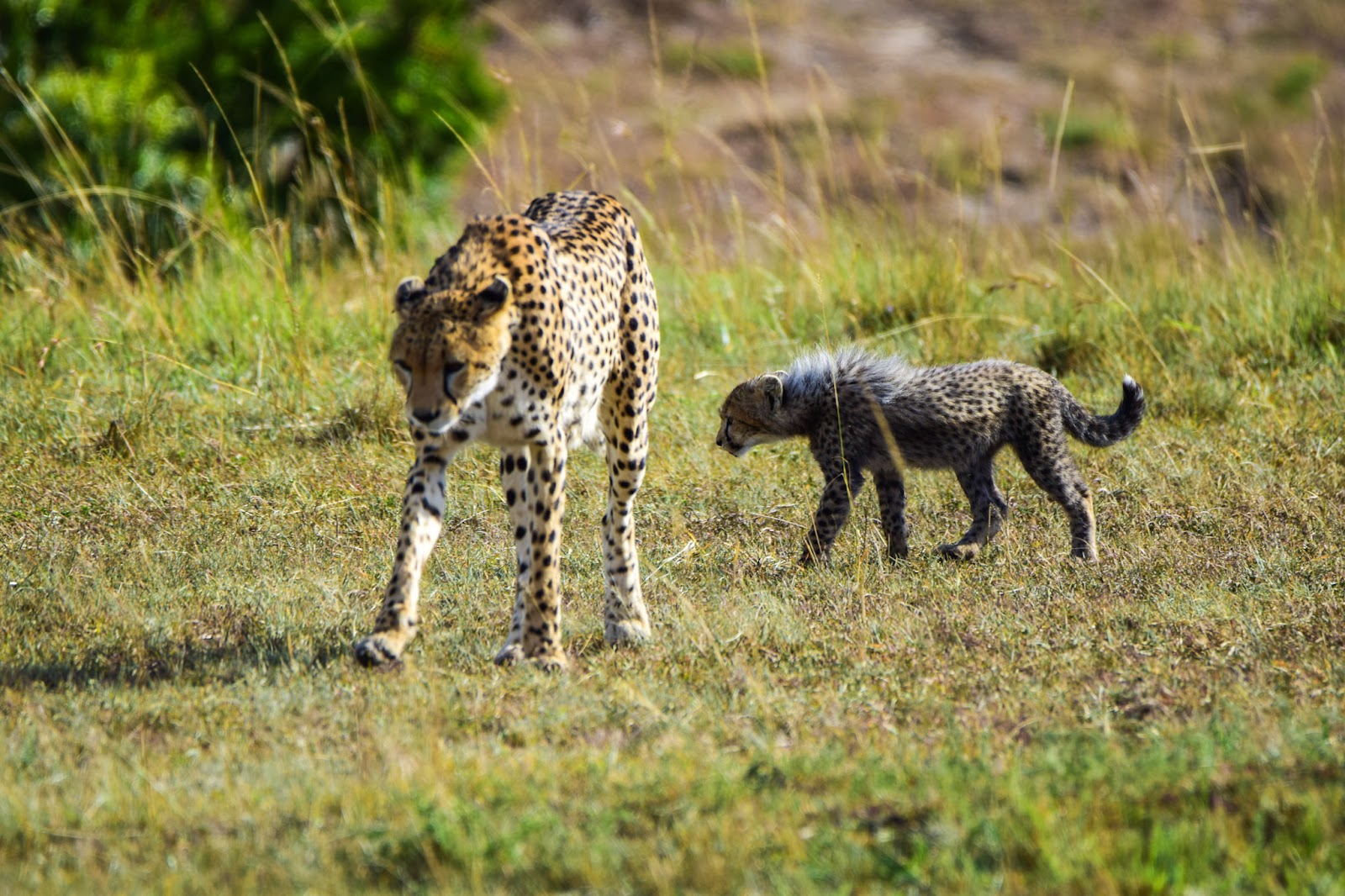
Cheetah mothers raise litters of three to five cubs alone, and the Mara’s plains make them unusually visible. Cubs wrestle, chase each other and practise stalks while mum scans for danger — hours of behaviour you can watch from one parked vehicle. Our guides keep a respectful distance that keeps the family relaxed, which is exactly what long, natural sightings need.
Coalition Males — brotherhoods that changed the science
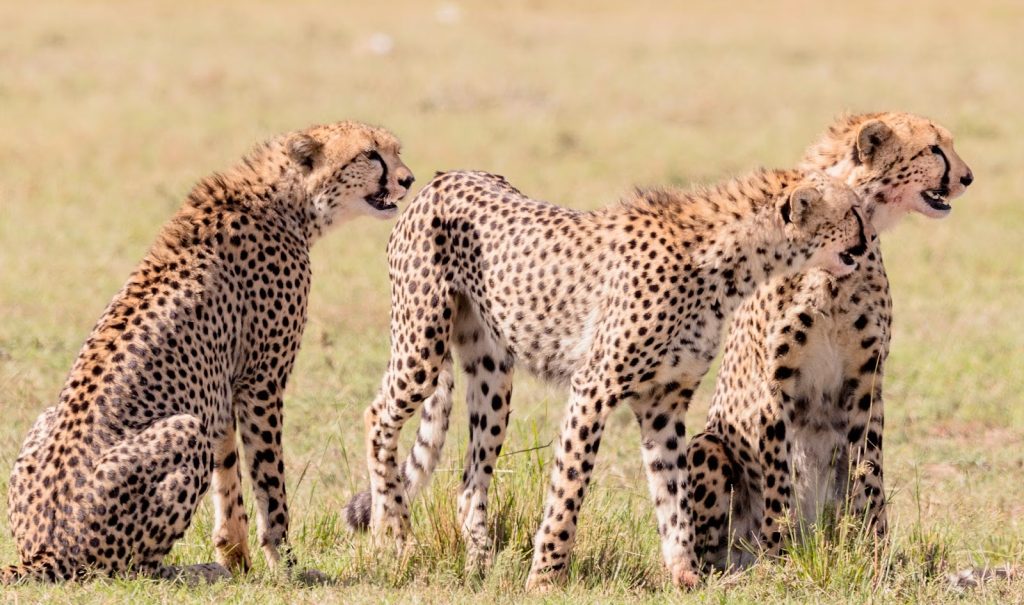
The famous Tano Bora (“Magnificent Five”) coalition proved male cheetahs can live and hunt in groups of up to five, taking prey as large as adult wildebeest. Coalitions still patrol the reserve today, scent-marking termite mounds and covering huge territories. Seeing several adult cheetahs move as one unit is a sighting most safari-goers never forget.
The Termite-Mound Lookout — the classic Mara photograph
Cheetahs use termite mounds, fallen trees and even patient safari vehicles’ shade as vantage points to scan for gazelle. The lookout pose — head high, spotted coat against golden grass — is the defining cheetah image, and it happens daily across the Mara. We time photographic stops for low morning light when the coats glow.
Green-Season Cheetah Photography — emerald grass, empty plains
From November to May the crowds thin and the plains turn green, making cheetah coats pop for photographers. Mothers with young cubs are commonly found near Rhino Ridge and the Talek plains in these months. Fewer vehicles means you often have a sighting entirely to yourself — a luxury in today’s Mara.
Where to See Cheetahs on a Masai Mara Cheetah Safari
Cheetahs favour wide, open grassland with good visibility and plenty of gazelle and impala. They tend to avoid the thick riverine bush where lions and leopards have the advantage, so your guide will focus on the open plains rather than the rivers.
Inside the national reserve
The central and eastern plains of the reserve, including the areas around the Talek River and Rhino Ridge, are well known for cheetah families. The Paradise Plains near the Mara River can also be productive, especially during the migration when prey is abundant. In the reserve, vehicles must stay on tracks, so a patient guide who reads the landscape is essential.
In the private conservancies
The conservancies bordering the reserve, such as Naboisho and Olare Motorogi, are excellent for cheetahs. Vehicle numbers at each sighting are strictly limited, and controlled off-road driving is usually allowed, which often means closer, calmer viewing. Read our guide to the reserve vs the conservancies to decide where to stay.
Ready for Your Cheetah Moment?
Join a small-group or private Mara safari timed for peak predator activity. We’ll put you in the right place when the sprint happens.
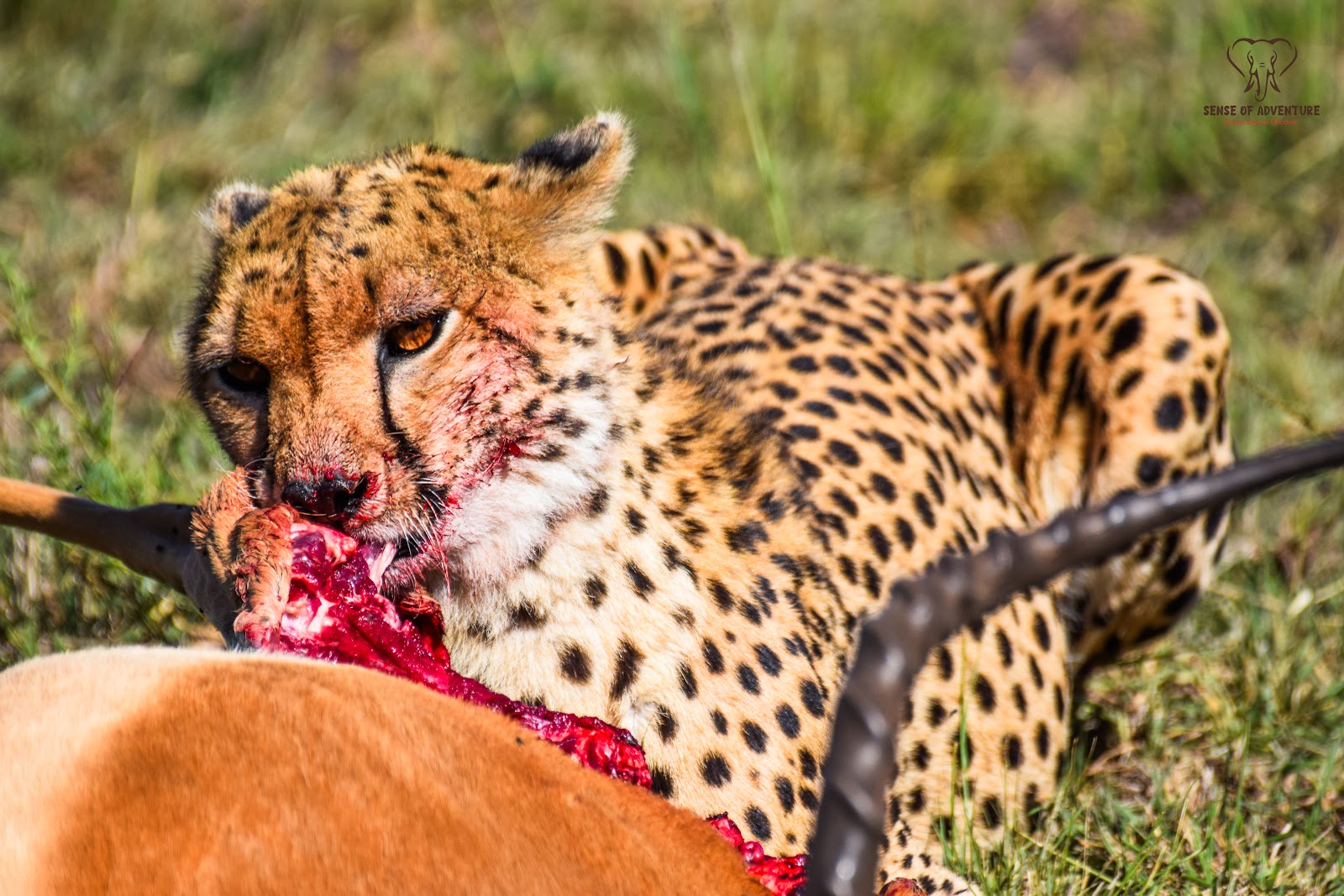
Masai Mara Cheetah Facts Worth Knowing
- Speed: a cheetah reaches 100 km/h in about 3 seconds — but can hold a sprint for barely 300 metres, which is why the stalk matters more than the chase.
- Population: the greater Mara ecosystem supports one of East Africa’s densest cheetah populations across its 1,510 km² reserve plus surrounding conservancies.
- Daylight hunters: unlike lions and leopards, cheetahs make most kills between 7-10 am and 4-6 pm — prime game-drive hours.
- Success rate: roughly every second hunt succeeds — about double a lion’s strike rate.
- Telling them apart: look for the black “tear marks” running eye to mouth; leopards have rosettes, cheetahs solid spots.
- Best months: cheetahs are resident year-round; July-October adds the migration’s gazelle bounty, November-May adds green backdrops and quiet plains.
Cheetah or Leopard? How to Tell Them Apart
| Feature | Cheetah | Leopard |
|---|---|---|
| Coat | Solid round black spots | Rosettes (rings of spots) |
| Face | Black tear lines from eye to mouth | No tear lines |
| Build | Slim, long-legged, small head | Stocky and muscular |
| Hunting time | Mostly daytime | Mostly dusk and night |
| Habitat | Open plains | Rivers, woodland and rocky outcrops |
| Trees | Uses low branches and mounds as lookouts | Climbs high and hauls kills into trees |
Best Time for a Masai Mara Cheetah Safari
Cheetahs do not migrate, so you can see them in every month. The season changes the backdrop, the prey and the number of vehicles around you.
July to October: migration season
Huge numbers of wildebeest, zebra and gazelle give cheetahs plenty of prey, and you can combine your cheetah viewing with river crossings. The grass can be long early in the season, and popular sightings in the reserve attract more vehicles, so a conservancy stay is worth considering for a Masai Mara cheetah safari at this time of year.
November to March: green and quiet
After the short rains the grass is short and green, visibility is good and many gazelle give birth, attracting hunting cheetahs. January to March is often dry and is one of our favourite times for cheetah photography.
April to May: long rains
The quietest and best-value months. Some tracks can be muddy and the grass grows tall, but you will often have sightings entirely to yourself.
How a Cheetah Safari Fits Your Mara Itinerary
A Masai Mara cheetah safari slots naturally into any Mara trip. Photographers should look at our dedicated Big Cats Photographic Safari (6 days), which builds whole mornings around predator behaviour. For first-timers, the classic 3-day Masai Mara safari covers the core cheetah country, while our Great Migration safaris (July-October) combine river crossings with predators in action. See also our guide to the lions of the Masai Mara to complete your big-cat checklist.
Masai Mara Cheetah Safari Costs and Packages
The cost of a Masai Mara cheetah safari depends on the number of days, your camp, the season and whether you drive or fly. Reserve and conservancy fees are set by the authorities and can change, and our quotes always use current rates. Here are some of our trips that suit cheetah lovers, with current starting prices:
- Masai Mara & Lake Nakuru Camping Safari (4 Days) — from USD 590 per person, our best-value option.
- 3-Day Masai Mara Safari — from USD 650 per person.
- Big Cats Photographic Safari – Masai Mara (6 Days) — from USD 2,600 per person, with extra time for cheetahs, lions and leopards.
Compare every option on our Masai Mara safari packages page. For your own vehicle and a flexible schedule built around predator activity, ask about a private Kenya safari.
Responsible Cheetah Viewing
Cheetahs are vulnerable to disturbance. A hunt interrupted by vehicles can cost a mother her meal, and cubs left hungry may not survive. Good guides keep a respectful distance, never block a cheetah’s line of sight to its prey and leave a sighting when it becomes crowded. A responsible Masai Mara cheetah safari always puts the animal first.
Please do not ask your guide to drive off-track in the reserve, get closer than the rules allow or make noise to attract attention. The Kenya Wildlife Service and the Mara authorities set rules to protect wildlife, and following them helps keep these cats relaxed around vehicles for future visitors.
A Typical Day on a Masai Mara Cheetah Safari
Your day usually starts before 6.30am with coffee and a short drive to the open plains, where your guide scans termite mounds and ridges for the distinctive silhouette of a cheetah on lookout. Once a cat is found, you settle in at a respectful distance and wait, because a hungry cheetah watching a herd of gazelle may hunt at any moment.
Many guests take a picnic breakfast so they do not have to leave a promising sighting. After lunch and a rest at camp, the afternoon drive returns to the plains for the second hunting window before sunset. On a Masai Mara cheetah safari, patience is everything: the guests who stay with one cat often see the chase.
Cheetah Photography Tips for the Mara
- Lens: a 100–400 mm or similar zoom covers both portraits and running shots.
- Shutter speed: use at least 1/2000 second to freeze a sprint, and continuous autofocus to track it.
- Support: a beanbag on the window or roof hatch steadies long lenses far better than a tripod.
- Patience: cheetahs can rest for hours before a hunt. Stay with a hungry-looking cat rather than chasing the next sighting.
- Light: early morning and late afternoon give warm light and are also when cheetahs are most active.
Plan Your Trip to Kenya
Most visitors need a Kenya eTA, applied for through the official eTA Kenya portal before travel. UK travellers should check the latest GOV.UK travel advice for Kenya, and you can find wider holiday ideas on Magical Kenya.
The Plains Are Waiting
Dates fill fast for migration season and the green-season photography window. Message us today and we’ll hold your cheetah-country camp.
Frequently Asked Questions
Are cheetahs easy to see in the Masai Mara?
Yes — the Masai Mara is one of the most reliable places in Africa for cheetah sightings. Its short-grass plains suit their daylight hunting style, and resident females and coalitions are tracked daily by guides. Most guests on a 3-day Mara safari see at least one cheetah, often more.
What was the Tano Bora cheetah coalition?
The Tano Bora (“Magnificent Five” in Maa) was a famous Masai Mara coalition of five male cheetahs that hunted together from around 2016, taking prey as large as adult wildebeest. They proved cheetahs can form large, stable male alliances and became the most photographed cheetahs on earth.
What time of day do cheetahs hunt in the Masai Mara?
Cheetahs in the Masai Mara hunt mainly in daylight — early morning between 7 and 10 am and again in the late afternoon. They avoid competing with night-hunting lions and hyenas, which is why morning and evening game drives give you the best chance of watching a full chase.
When is the best time for a cheetah safari in the Masai Mara?
Cheetahs live in the Masai Mara year-round, so every month works. July to October adds huge gazelle and wildebeest numbers during the migration, while the quieter green season from November to May offers beautiful backdrops, newborn cubs and far fewer vehicles at each sighting.
How fast can a Masai Mara cheetah run?
Cheetahs in the Masai Mara can sprint at over 100 km/h, reaching that speed from standstill in about three seconds. The sprint only lasts around 20-30 seconds, so a successful hunt depends on stalking within 50-100 metres of prey before launching the chase.
How many days do I need for a Masai Mara cheetah safari?
Plan at least two full days of game drives, which usually means three days in total from Nairobi. Three or four full days greatly improves your chances of watching a hunt rather than just a resting cat, because cheetahs may rest for hours before they chase. A photographic trip benefits from five or six days.
Can you see cheetah cubs on a Masai Mara cheetah safari?
Yes, cubs are seen in most months because cheetahs breed throughout the year. Young cubs stay hidden for their first weeks, then follow their mother for around 18 months while she teaches them to hunt. Mothers with cubs are among the most rewarding sightings, but keep your distance so the family stays relaxed.
Is the reserve or a conservancy better for cheetahs?
Both are excellent. The reserve covers a huge area of open plains and is ideal during the migration. Conservancies limit the number of vehicles at each sighting and usually allow controlled off-road driving, so viewing is often calmer and closer. Many guests split their stay between the two.