
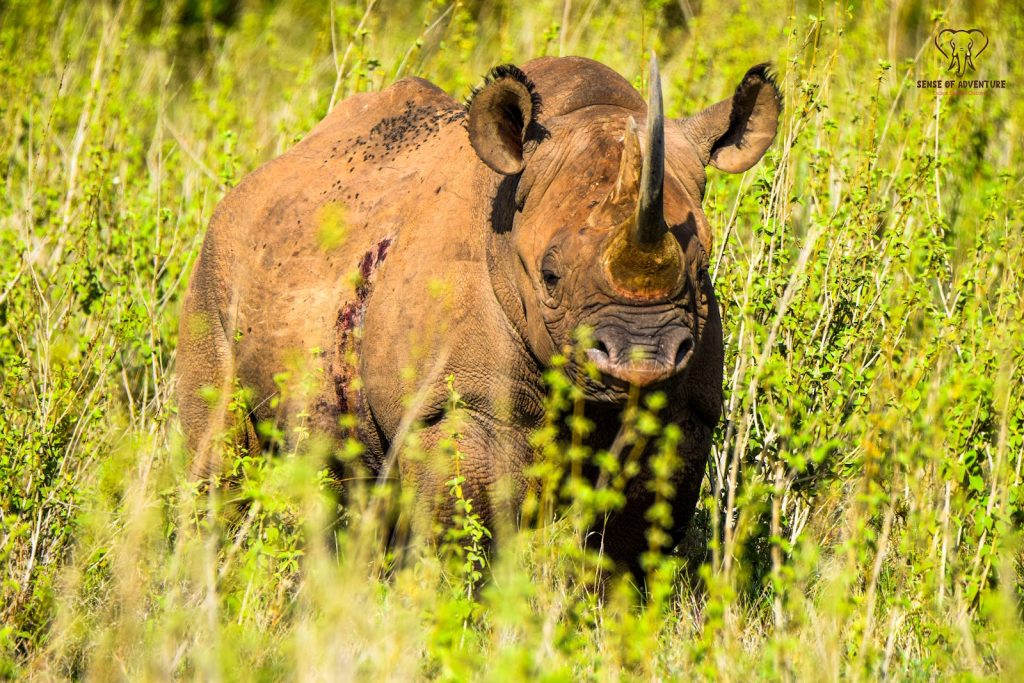
Masai Mara rhinos are the reserve’s quietest triumph and its most jealously guarded secret. Where lions and cheetahs perform daily for a hundred vehicles, the Mara’s small population of critically endangered black rhino keeps almost entirely out of sight — solitary, thicket-loving browsers moving through dense cover along the Oloololo escarpment and the Mara Triangle’s river valleys, protected by rangers who track every individual by name and radio collar. A generation ago poaching pushed this population to the brink of local extinction; today, patient conservation work has stabilised numbers and, on the right morning with the right guide, a rhino sighting here carries a weight no lion or leopard encounter can match. Sense of Adventure treats every rhino sighting in the Mara as the privilege it genuinely is, and this guide explains why the search itself is half the reward.
Search for the Mara’s Rarest Resident
Rhino tracking takes patience, local knowledge and a guide who reads thicket sign properly. Let’s go looking.
Why Masai Mara Rhinos Are So Hard to Find — and So Important
Black rhinos are browsers, not grazers, which means they favour precisely the terrain safari vehicles struggle to see into: dense croton thicket, riverine scrub and broken ground along the escarpment rather than open plains. The Mara’s rhino population collapsed catastrophically during the poaching crisis of the 1970s-80s, falling from many hundreds to a fraction of that number, concentrated today mainly in the better-protected Mara Triangle managed by the Mara Conservancy. Recovery has been slow and hard-won: intensive ranger patrols, radio-collar monitoring of known individuals, and community-conservancy partnerships that give rhinos secure, buffered range beyond the reserve’s core. Every calf born into this population is a headline event among conservationists, and every sighting a visitor gets is the direct result of decades of unglamorous, expensive protection work continuing in the background of every game drive.
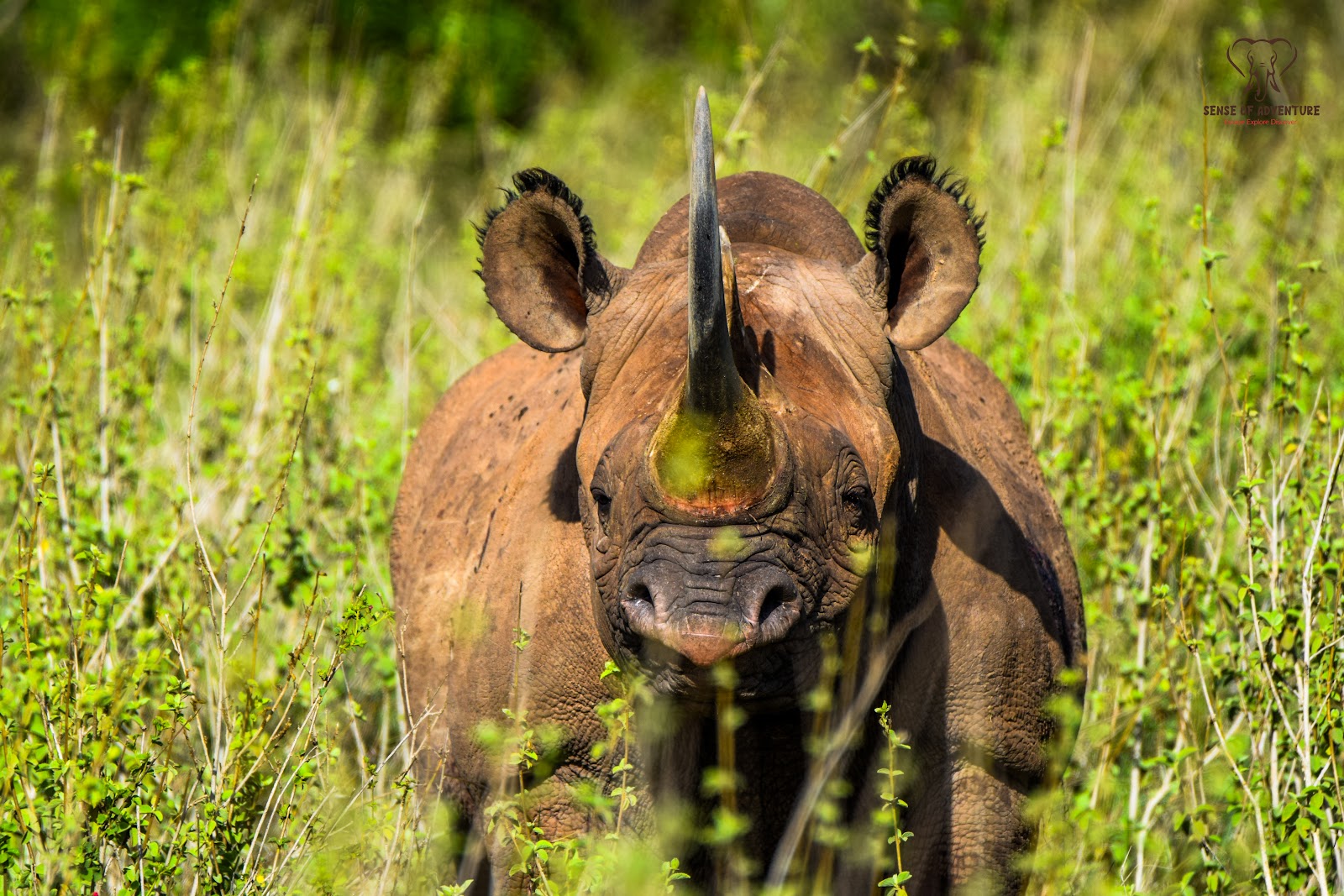
Our guide spotted fresh dung and browse marks on a croton bush and went quiet, radioing another vehicle for a second opinion before we crept forward. Twenty minutes later, a black rhino stepped out of cover forty metres ahead, stared at us for a full minute, then melted back into the thicket. My hands were shaking. Nothing else on the whole safari felt that earned.
— Sense of Adventure guest, Mara Triangle rhino search
The 7 Things Worth Knowing About Masai Mara Rhinos
The Mara Triangle Stronghold — where protection is tightest
The western Mara Triangle, managed separately by the Mara Conservancy with a lower vehicle cap and stricter off-road rules, holds the reserve’s best-protected rhino range. Its lower tourist density and dedicated anti-poaching unit make it the most realistic place to search, though sightings remain deliberately unpublicised to protect the animals rather than promoted for tourism.
Black Rhino vs White Rhino — a different animal, a different search
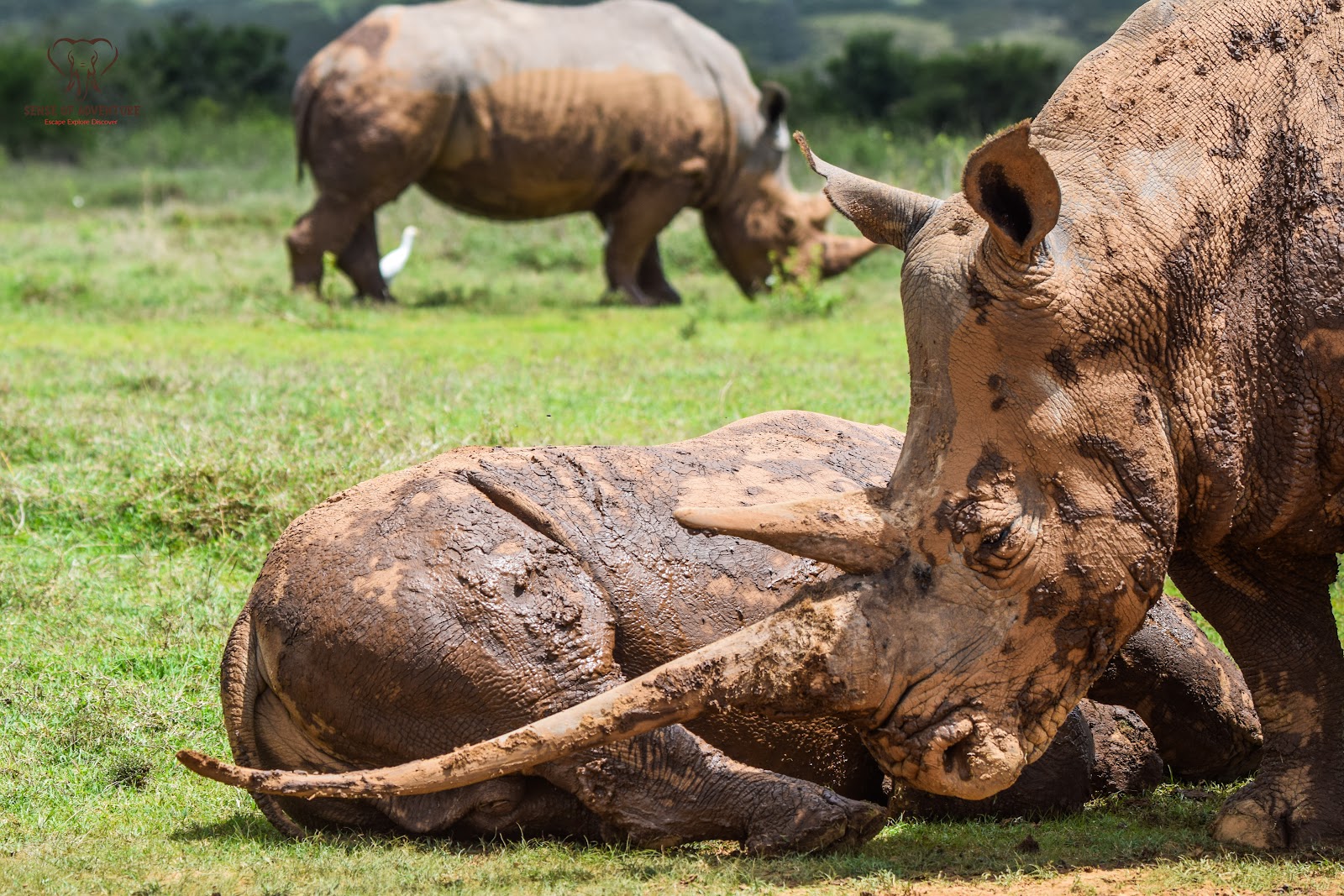
Only black rhino occur naturally in the Masai Mara ecosystem — solitary, browsing, hook-lipped and notably more alert and unpredictable than the grazing white rhino found at Lake Nakuru or Ol Pejeta. Black rhinos rely on cover and tend to charge investigate-then-flee rather than stand and graze in the open, which is precisely why sightings feel so different from a Nakuru rhino encounter.
Tracking by Sign, Not Sight — the guide skill that actually matters here
Finding a Mara rhino is rarely about scanning open ground — it is about reading fresh spoor, distinctive pile-dung middens used to mark territory, browsed croton and acacia at rhino height, and radio chatter between trusted guides and rangers. A good Mara guide treats a rhino search like detective work, piecing together hours-old evidence before ever expecting to see the animal itself.
Individually Known and Named — every rhino has a file
Unlike the reserve’s thousands of interchangeable wildebeest, each Mara rhino is individually known to rangers — named, aged, ear-notched or radio-collared, its territory and breeding history documented. Guides who work closely with conservancy rangers can sometimes identify which specific animal you have found, adding a personal layer most big-cat sightings simply cannot offer.
The Recovery, in Numbers — slow, real, still fragile
From a population reduced to a precarious handful by the worst of 1980s poaching, careful protection has allowed slow, genuine recovery — though numbers remain critically low compared to the reserve’s other iconic species, and every poaching incident anywhere in the ecosystem is taken as a serious, all-hands emergency by conservancy management.
Why a Miss Still Matters — reframing the search itself
Most Mara visitors who search for rhino do not find one, and good guides say so honestly before you start looking — but the search itself, through thicket few vehicles ever explore, regularly turns up leopard, buffalo and rare antelope sightings other guests miss entirely. Framed properly, a rhino search becomes one of the richest general wildlife mornings on the whole safari, headline sighting or not.
The Wider East African Picture — why the Mara’s handful matter so much
Kenya’s national black rhino population has itself rebuilt slowly from a similar historic collapse, spread thinly across fenced sanctuaries like Lake Nakuru and Ol Pejeta as well as open, unfenced ecosystems like the Mara. Unfenced populations such as the Mara’s are considered especially valuable to conservationists precisely because they preserve natural behaviour, dispersal and genetic exchange that fenced sanctuary animals cannot fully replicate — making every surviving Mara rhino disproportionately significant to the species’ long-term recovery across the region.
Add a Dedicated Rhino Morning
We build unhurried, thicket-focused drives with conservancy-connected guides who know where to start looking.
Masai Mara Rhino Facts
- Species present: only the black rhino (browser) occurs naturally in the Mara ecosystem — the white rhino (grazer) is not native here.
- Population: fewer than 50 individuals across the wider Mara ecosystem, making them the reserve’s rarest large mammal by far.
- Best zone: the Mara Triangle, under Mara Conservancy management, offers the tightest protection and best realistic search odds.
- Behaviour: solitary, thicket-loving browsers, active especially at dawn, dusk and through the night, resting in dense cover by day.
- Threat history: poaching in the 1970s-80s reduced the population from many hundreds to a small remnant that conservation work has since stabilised.
- Monitoring: known individuals are tracked via radio collar and ranger patrol, with sightings kept deliberately low-key to protect the animals.
- Etiquette: rhino sightings demand extra distance and quiet — a spooked rhino may flee into cover for days, ending any chance of a return visit.
Building a Rhino Search Into Your Mara Safari
A rhino-focused morning pairs naturally with the general game viewing on our 3-day Masai Mara safari, and conservancy-based stays give the best access to the Mara Triangle’s tighter protection zones — see our Mara conservancies guide. For the reserve’s other rare sightings, read our Masai Mara buffalo guide and the Lake Nakuru rhinos guide if you want a near-certain rhino sighting elsewhere on your circuit.
The Mara’s Quietest Success Story Is Out There
Not every safari finds one — but every search is worth taking. Message us to plan your rhino morning.
Frequently Asked Questions
Are there rhinos in the Masai Mara?
Yes, but in very small numbers — fewer than 50 black rhinos remain across the wider Masai Mara ecosystem, concentrated mainly in the better-protected Mara Triangle. They are solitary, thicket-dwelling browsers and among the hardest of the Mara’s iconic species to actually see.
Why are rhinos so rare in the Masai Mara compared to lions?
Masai Mara rhinos were devastated by poaching in the 1970s-80s and never recovered to anything like their historic numbers, unlike the reserve’s resilient lion and cheetah populations. Their solitary, thicket-loving habits also make sightings inherently harder than for social, open-plain predators.
What is the best place to see a rhino in the Masai Mara?
The Mara Triangle, managed by the Mara Conservancy with stricter protection and lower vehicle density, offers the best realistic chance of a black rhino sighting in the Masai Mara — though even there, sightings are never guaranteed and require patient, experienced guiding.
Are Masai Mara rhinos black rhino or white rhino?
Only black rhino occur naturally in the Masai Mara ecosystem. They are browsers with a hooked lip adapted to bushes and thicket, distinct from the grazing white rhino with its wide, square mouth found at parks like Lake Nakuru and Ol Pejeta Conservancy.
How do guides find rhinos in the Masai Mara?
Masai Mara guides track rhinos primarily through fresh sign — dung middens, browsed vegetation at rhino height, footprints and radio updates from rangers and other trusted guides — rather than scanning open ground, since black rhinos spend most daylight hours resting in dense cover.