
Lake Nakuru rhinos are the easiest big-ticket sighting in Kenyan conservation. This compact Rift Valley park was fenced in the 1980s precisely to become a rhino ark, and the bet paid off: today it protects one of East Africa’s most important populations of both species. White rhinos — bulk grazers with wide mouths — crop the lakeshore lawns in plain view, sometimes a dozen in a single sweep of binoculars; black rhinos, shyer browsers, work the euphorbia thickets and acacia lines. For visitors that means something rare: near-guaranteed rhino encounters inside a two-hour drive circuit, one hundred and sixty kilometres from Nairobi. Sense of Adventure includes Nakuru in most Rift itineraries for exactly this certainty.
Kenya’s Most Reliable Rhino Day
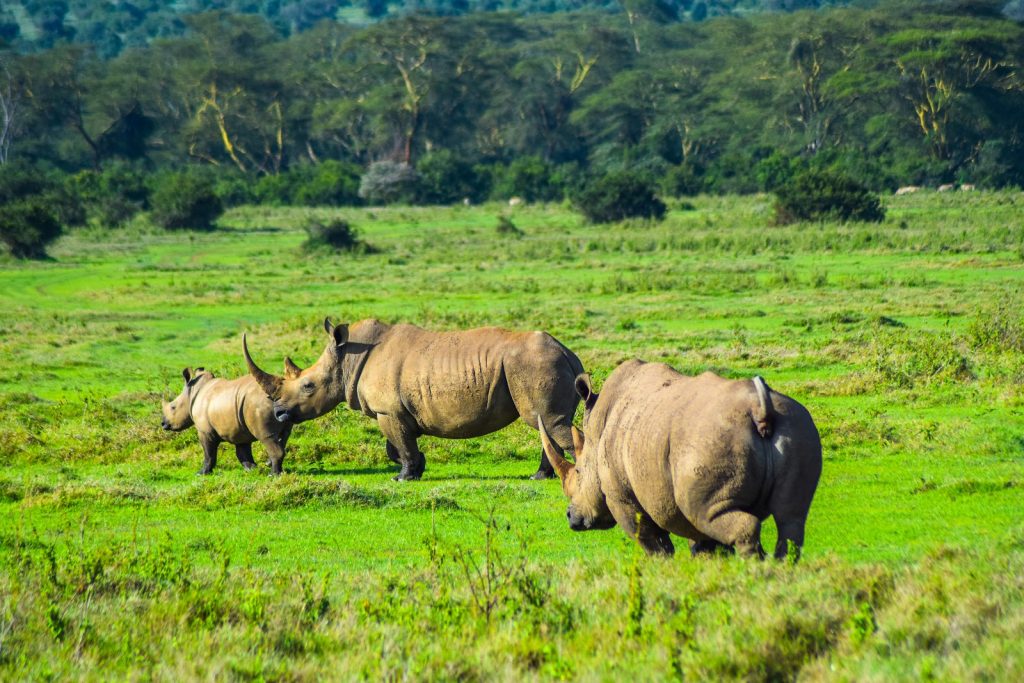
White rhinos on the lakeshore by mid-morning — we schedule Nakuru so the sighting feels inevitable.
Why Lake Nakuru Became Kenya’s Rhino Ark
By the mid-1980s poaching had gutted Kenya’s rhinos, and the response was radical: fence an entire national park. Lake Nakuru’s complete solar-wired perimeter — the first of its kind — turned 188 km² of lakeshore, grassland and forest into a guarded sanctuary, seeded with black rhinos from remnant populations and white rhinos originally derived from southern Africa. Both bred well. The park now ranks among East Africa’s premier rhino strongholds and supplies founder animals to newer sanctuaries across the country. Geography helps the visitor too: the alkaline lake pushes wildlife onto a narrow, drivable shoreline shelf, so rhino viewing here is concentrated, close and consistent in a way open ecosystems cannot match.
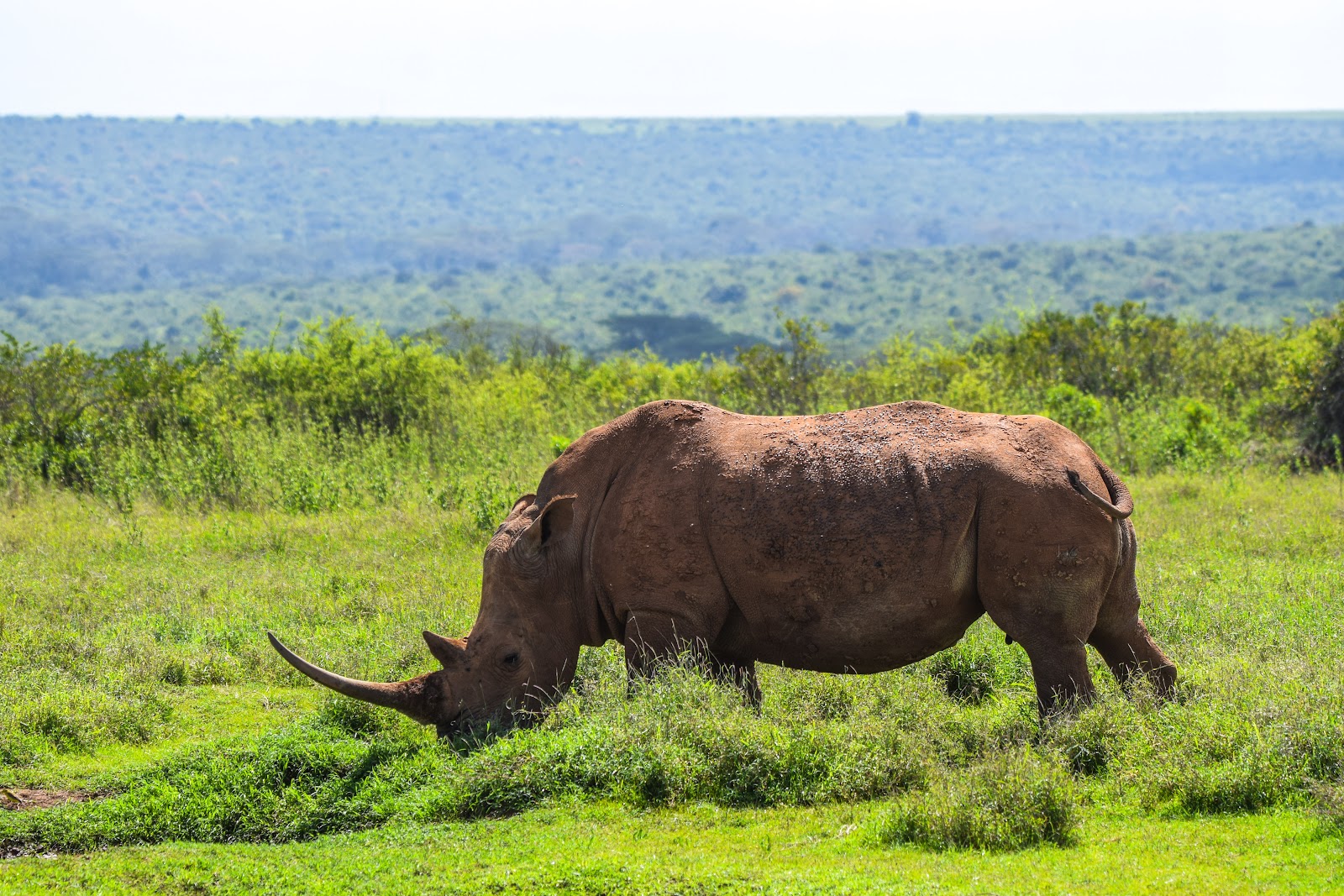
Eight white rhinos on the lake lawns before ten o’clock, including a calf that chased egrets for fun. On the way out, our guide picked a black rhino out of the bush at three hundred metres. Two species in one morning — nowhere else has done that for us.
— Sense of Adventure guest, Rift Valley circuit
The 5 Essential Rhino Experiences at Lake Nakuru
White Rhinos on the Lakeshore — the park’s signature scene
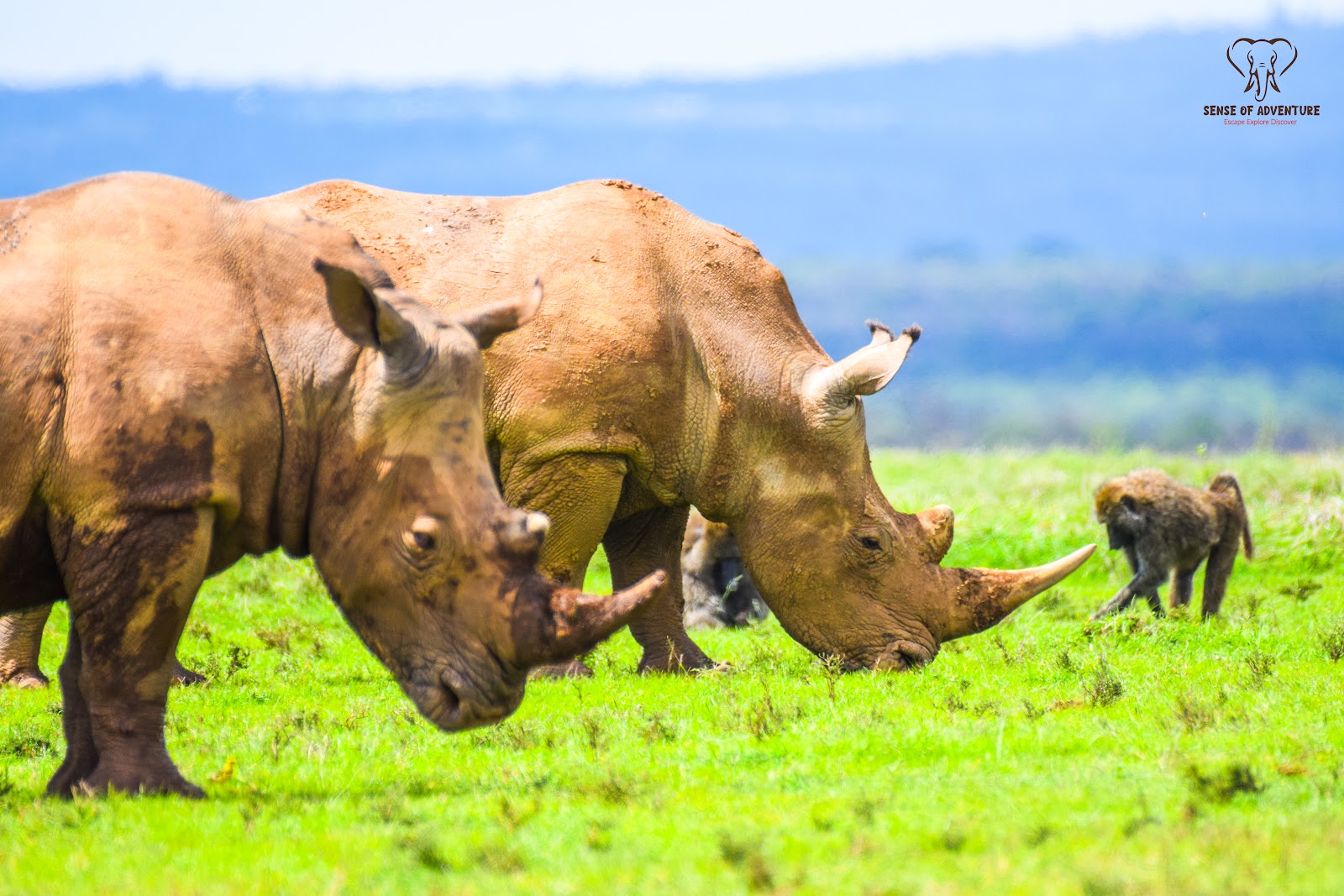
The green flats along the lake edge are white rhino headquarters: family groups grazing like giant lawnmowers, egrets riding their backs, flamingos shimmering behind. Sightings here are close, calm and long — the rhinos have known vehicles all their lives. Mid-morning light on grey hide and pink water is pure Nakuru.
Tracking Black Rhino in the Thickets — the connoisseur’s sighting
Black rhinos are browsers and loners, hooking their pointed lips into euphorbia and acacia deep in cover. Finding one takes guide craft — fresh dung, browse sign, a grey shoulder in the shadows — which makes the payoff sweeter. Dawn drives along the southern woodland edges give the best odds in the park.
The Baboon Cliff Overview — rhino country from above
From Baboon Cliff the whole sanctuary lays itself out: pink lake rim, green shoreline lawns dotted with grazing white rhinos, the fence line climbing the far ridges. It is the view that explains the park’s design in one glance — and a superb picnic stop with predictably criminal baboons. Guard everything edible.
Mother-and-Calf Watching — the sanctuary doing its job
Nakuru’s breeding success means calves are a regular joy — wobbly white rhino babies shadowing mothers on the flats, practising charges at hadada ibis. Every calf here is genuinely significant for the species. Watching one play, you are looking at the entire point of the fence, the rangers and the fees.
Rhinos Plus the Supporting Cast — tree lions, leopards and a million birds
The rhino certainty comes wrapped in a park famous for tree-climbing lions draped in yellow acacias, frequent leopard sightings, Rothschild’s giraffes and — water levels permitting — flamingo flocks that turn the shoreline pink. Few parks pack this much into a single unhurried day’s circuit.
Add Certainty to Your Safari
Pair Nakuru’s rhinos with the Mara’s cats in one Rift loop — our most-booked Kenyan combination.
Lake Nakuru Rhino Facts
- The fence: the park’s full 188 km² is enclosed — Kenya’s first completely fenced national park, built for rhino security.
- Two species: white rhinos graze open shoreline lawns; black rhinos browse thickets — different mouths, different menus, one park.
- Source population: Nakuru breeds so well it has supplied founder rhinos to sanctuaries across Kenya.
- Telling them apart: white = wide square lip, head carried low; black = hooked pointy lip, head high — colour is useless.
- Best zones: lakeshore flats for white rhino; southern acacia and euphorbia belts for black.
- Distance: about 160 km from Nairobi — 2.5-3 hours by road, doable as a long day trip.
Building Nakuru Into Your Rhino Trail
Time-short travellers can do the Lake Nakuru day safari from Nairobi; most guests fold the park into a Rift-and-Mara loop like our Ol Pejeta & Mara conservancy safari — Ol Pejeta adds the northern white rhinos to your trail. The full Lake Nakuru safari guide covers logistics, and the flamingos & rhinos guide pairs the park’s two icons.
Two Species, One Morning
Rhino certainty is rare in Africa — Nakuru delivers it 160 km from your Nairobi hotel. Book the day.
Frequently Asked Questions
Are there rhinos in Lake Nakuru National Park?
Yes — Lake Nakuru is Kenya’s premier rhino sanctuary, fully fenced since the late 1980s to protect significant breeding populations of both white and black rhinos. White rhinos graze openly along the lakeshore while black rhinos browse the park’s thickets.
Is Lake Nakuru the best place to see rhinos in Kenya?
For reliability, yes — Lake Nakuru’s compact fenced 188 km² concentrates rhinos along a drivable lakeshore, making sightings near-certain on a single day’s visit. Ol Pejeta Conservancy rivals it for numbers and adds the last northern white rhinos; many itineraries include both.
What is the difference between the white and black rhinos at Nakuru?
Lake Nakuru’s white rhinos are grazers with wide, square lips, feeding head-down on open lawns in groups; its black rhinos are solitary browsers with hooked, pointed lips, feeding on bushes in cover. Size and behaviour — not colour — are how you tell them apart.
Why is Lake Nakuru fenced?
Lake Nakuru was completely fenced — a first for Kenya — as an emergency response to the rhino poaching crisis of the 1970s-80s. The secure perimeter let Kenya concentrate and breed its surviving rhinos safely, and the park has since supplied founder animals to other sanctuaries.
Can you visit Lake Nakuru as a day trip from Nairobi?
Yes — Lake Nakuru lies about 160 km northwest of Nairobi, roughly 2.5-3 hours by road, making a long but comfortable day trip with 4-5 hours of game viewing. An overnight stay adds the golden dawn hours when black rhino sightings are likeliest.