
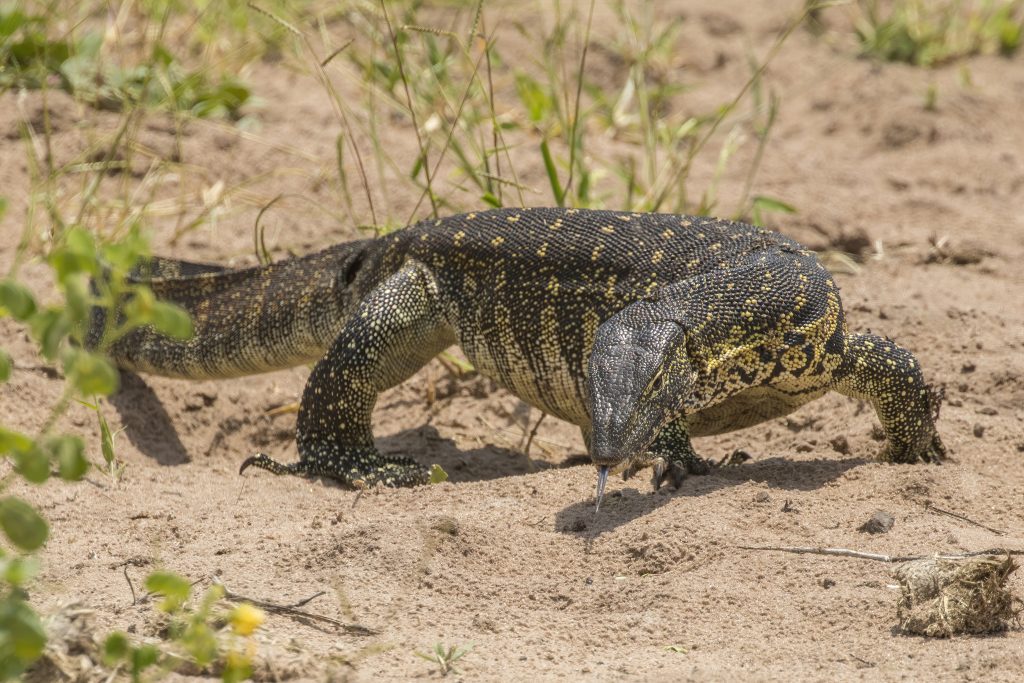
The Nile monitor is one of the largest lizards most safari visitors will ever see, capable of reaching up to 7 feet in length, and it turns up regularly along Kenya’s rivers, lakes and wetlands without ever making anyone’s must-see list. A genuine opportunist, it eats fish, frogs, small mammals, birds and carrion, and is a notorious raider of both bird and reptile eggs — including, on occasion, crocodile nests. Kenya hosts two other monitor species alongside it: the savannah monitor and the rock monitor, both adapted to drier terrain rather than the Nile monitor’s wetland habitat. Picture spotting one basking on a riverbank near a hippo pod, genuinely massive up close, and realising it’s been there the whole trip without anyone pointing it out. Sense of Adventure makes sure these overlooked species get mentioned, not just photographed by accident.
See Kenya’s Overlooked Reptiles
Message us for a wildlife-focused trip that covers the full ecosystem, not just headline species.
A Genuine Opportunist, Not Just a Riverbank Fixture
The Nile monitor is Kenya’s largest monitor lizard species, capable of reaching up to 7 feet, with males typically larger and heavier than females — it thrives across a genuinely wide range of habitat, from riversides and wetlands to savannah and forest edge, and its diet reflects that adaptability: fish, frogs, small mammals, birds and carrion, plus a notable habit of raiding both bird and reptile eggs, including crocodile nests when the opportunity arises. Kenya’s two other monitor species, the savannah monitor and the rock monitor, occupy drier terrain than the wetland-loving Nile monitor, filling a similar ecological role away from permanent water. Together, all three species are regularly seen but rarely remarked on during a standard game drive — genuinely large reptiles hiding in plain sight along nearly every river and lakeshore stop on a Kenya itinerary.
We’d walked past what we assumed was a log near the Mara River for two days before our guide pointed out it was actually a Nile monitor, genuinely close to six feet long. Once we knew to look, we spotted them constantly for the rest of the trip.
— Sense of Adventure guest, Masai Mara safari
Kenya’s 3 Monitor Lizard Species
Nile Monitor — Kenya’s Largest, Wetland-Loving Species — up to 7ft, found near rivers, lakes and wetlands
A genuine opportunist found throughout Kenya’s waterways, eating almost anything it can catch or scavenge, including eggs raided from bird, reptile and even crocodile nests. See our Mara River wildlife guide.
Savannah Monitor — Drier Terrain, Similar Role — adapted to Kenya’s drier bushland and savannah
Fills a similar ecological niche to the Nile monitor but away from permanent water, adapted to Kenya’s drier grassland and bushland habitat.
Rock Monitor — Kenya’s Third Species — associated with rocky, drier terrain
The least commonly discussed of Kenya’s three monitor species, occupying rocky and drier habitat alongside the savannah monitor.
A Trip That Notices the Full Ecosystem
Message us to build a wildlife-focused Kenya safari that goes beyond the headline species.
Kenya Monitor Lizard Facts
- Nile monitor size: can reach up to 7 feet in length, Kenya’s largest monitor lizard species.
- Nile monitor diet: genuinely omnivorous — fish, frogs, small mammals, birds, carrion and eggs, including crocodile nests.
- Nile monitor habitat: riversides, wetlands, savannah and forest edge, wherever water is reasonably close.
- Other Kenyan species: the savannah monitor and rock monitor, both adapted to drier terrain than the Nile monitor.
- Where to look: basking on riverbanks and lakeshores, often near hippo pods or crocodile habitat.
- Common misconception: frequently overlooked as “just a log” by visitors not specifically looking for reptiles.
Seeing Kenya’s Overlooked Wildlife
Read our Mara River wildlife guide for the waterway habitat Nile monitors share with hippos and crocodiles, and our snakes of Kenya guide for other reptile species on safari.
The Full Ecosystem, Not Just the Headline Species
Message us to plan a Kenya safari that covers the wildlife most visitors miss.
Frequently Asked Questions
How big does a Nile monitor lizard get?
The Nile monitor, Kenya’s largest monitor lizard species, can reach up to 7 feet in length, with males typically larger and heavier than females.
What do Nile monitor lizards eat?
Nile monitors are genuine omnivores, eating fish, frogs, small mammals, birds and carrion, and are known to raid eggs from bird, reptile and even crocodile nests.
How many monitor lizard species live in Kenya?
Kenya hosts three monitor lizard species: the wetland-loving Nile monitor, and the drier-adapted savannah monitor and rock monitor.
Where can you see Nile monitors on a Kenya safari?
Nile monitors are commonly seen basking along rivers, lakes and wetlands throughout Kenya, often near hippo pods or crocodile habitat such as the Mara River.
Are monitor lizards dangerous to humans?
Monitor lizards are generally not a significant threat to humans and typically avoid confrontation, though like any large wild animal they should be observed at a respectful distance rather than approached.