
Kenya is home to two genuinely distinct zebra species, not just one animal with regional variation — and most visitors never realise it. The Plains zebra is the familiar migration-herd animal seen across the Masai Mara, Amboseli and Nakuru, broad-striped and still reasonably common. Grevy’s zebra is a different species entirely: taller, narrower-striped, with conspicuously large rounded ears, and endangered — its population has collapsed from roughly 15,000 in the 1970s to fewer than 2,250 today, confined almost entirely to Samburu, Buffalo Springs, Shaba and the wider Laikipia conservancies. Picture spotting the difference for yourself on the same trip: broad stripes and migration herds in the Mara, then the world’s rarest zebra species in Samburu a few days later. Sense of Adventure routes trips to cover both.
See Both of Kenya’s Zebra Species on One Trip
Message us to combine the Mara’s Plains zebra herds with Samburu’s endangered Grevy’s zebra.
Two Species, Not One Animal With Regional Variation
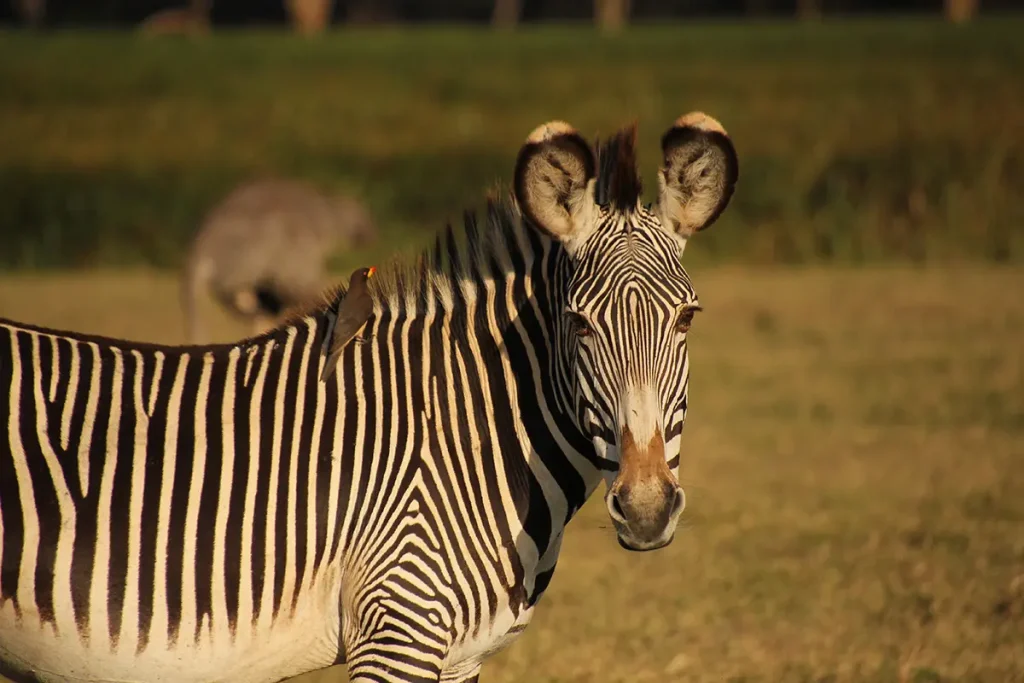
The Plains zebra is the common, familiar species seen throughout the Masai Mara, Amboseli, Lake Nakuru and most of Kenya’s standard safari circuit, moving in large herds and famously joining the wildebeest migration each year. Grevy’s zebra is a taxonomically separate, larger species — the tightest, narrowest stripes of any zebra, large rounded conical ears, a more slender snout and an erect mane distinguish it clearly from its plains-dwelling cousin. Its population has collapsed from an estimated 15,000 in the 1970s to fewer than 2,250 individuals today, classified as endangered, with less than half a percent of its historic range under formal protection — meaning the species now survives almost entirely within Buffalo Springs, Samburu and Shaba National Reserves and the private and community conservancies of the wider Laikipia Plateau. An invasive mesquite plant, introduced around 1997, has compounded the decline by displacing the native grasses Grevy’s zebra depend on.
We’d seen hundreds of zebra in the Mara and assumed we knew what a zebra looked like, then our Samburu guide pointed out a Grevy’s zebra and the difference was obvious once explained — those huge rounded ears and the much narrower stripes. He told us there are fewer of them left than black rhinos.
— Sense of Adventure guest, Samburu safari
Where to See Each Zebra Species in Kenya
Plains Zebra — The Masai Mara & Migration Herds — broad stripes, common, moves with the wildebeest migration
The species most visitors picture, seen in large herds across the Mara, Amboseli and Nakuru year-round, with numbers swelling further during the Great Migration between July and October.
Grevy’s Zebra — Samburu, Buffalo Springs & Shaba — endangered, narrow stripes, large rounded ears
Kenya’s core protected Grevy’s zebra populations live in these three adjoining reserves, part of the “Special Five” species that make Samburu genuinely distinct from Kenya’s southern circuit. See our Samburu Special Five guide and book our Kenya Luxury Big Five Safari.
Laikipia Conservancies — Grevy’s Zebra Outside the Reserves — private and community land supporting the wider population
Much of Grevy’s zebra remaining range sits on private and community conservancy land across the Laikipia Plateau rather than inside formal reserves — a reminder of how thin the species’ protected footprint actually is.
See the World’s Rarest Zebra in Person
Message us to add Samburu to your Kenya itinerary specifically for Grevy’s zebra.
Kenya Zebra Facts
- Grevy’s zebra decline: from roughly 15,000 in the 1970s to fewer than 2,250 individuals today.
- Grevy’s distinguishing features: the tightest stripes of any zebra species, large rounded conical ears, a slender snout and erect mane.
- Grevy’s core range: Buffalo Springs, Samburu and Shaba National Reserves, plus Laikipia Plateau conservancies.
- Grevy’s protection status: endangered, with less than 0.5% of its historic range formally protected.
- Plains zebra: common and widespread across the Mara, Amboseli and Nakuru, and part of the Great Migration herds.
- Hunting ban: Kenya banned hunting in 1977, helping slow (but not reverse) the Grevy’s zebra decline.
Planning a Zebra-Focused Kenya Safari
Combine both species in one trip via our Kenya Luxury Big Five Safari, which routes through both the Mara and Samburu. Read our Samburu Special Five guide for the other species unique to this region.
Kenya’s Common and Its Rarest Zebra, One Trip
Message us to build an itinerary covering both the Mara and Samburu.
Frequently Asked Questions
How many zebra species are there in Kenya?
Kenya has two genuinely distinct zebra species: the common Plains zebra, found throughout the Masai Mara, Amboseli and Nakuru, and the endangered Grevy’s zebra, confined mainly to Samburu, Buffalo Springs, Shaba and the Laikipia conservancies.
What is the difference between Grevy’s zebra and plains zebra?
Grevy’s zebra is larger, with much narrower, tighter stripes, large rounded conical ears and an erect mane, compared to the broader-striped, smaller-eared Plains zebra most safari visitors are familiar with.
Where can you see Grevy’s zebra in Kenya?
Grevy’s zebra is found primarily in Samburu National Reserve, Buffalo Springs National Reserve, Shaba National Reserve and the surrounding private and community conservancies of the Laikipia Plateau.
How endangered is the Grevy’s zebra?
Grevy’s zebra is classified as endangered, with the population having collapsed from roughly 15,000 in the 1970s to fewer than 2,250 individuals today, and less than 0.5% of its historic range under formal protection.
Can you see zebra in the Masai Mara?
Yes — the Masai Mara hosts large numbers of Plains zebra year-round, with populations swelling further during the Great Migration between July and October when herds move alongside the migrating wildebeest.