The Samburu Special Five is northern Kenya’s answer to the Big Five — and for seasoned safari-goers it is the more coveted checklist. These five dry-country specialists are found together only in the hot, semi-arid north: the pinstriped Grevy’s zebra, rarest of the world’s zebras; the reticulated giraffe wearing crisp geometric netting; the beisa oryx with its rapier horns; the gerenuk browsing on two legs like a gazelle impersonating a giraffe; and the blue-legged Somali ostrich.
None of them walk the Masai Mara. One game drive along Samburu’s Ewaso Nyiro river can deliver all five before lunch, which is precisely why Sense of Adventure sends every wildlife connoisseur north. This guide explains each animal, where and when to find the Samburu Special Five, how to get there, what it costs and how to fit Samburu into your Kenya route.
✅ Samburu Special Five Quick Answer
- The five: Grevy’s zebra, reticulated giraffe, beisa oryx, gerenuk and Somali ostrich.
- Where: Samburu, Buffalo Springs and Shaba national reserves on the Ewaso Nyiro river, about 350 km north of Nairobi.
- Best time: the dry months, June to October and January to February, when wildlife gathers near the river.
- Time needed: two nights minimum; three nights give a relaxed full day in the reserve.
- From: our 9-day Kenya Highlights Safari, which includes Samburu, starts at USD 2,350 per person sharing.
Collect the North’s Rarest Checklist
All five specials in a day is a realistic target with guides who know the river circuits. Come tick them with us.
Why the Samburu Special Five Live in the North
North of Mount Kenya the land drops into hot, semi-arid country — acacia scrub, red earth and the green artery of the Ewaso Nyiro river. These conditions favour species built for scarcity: the Grevy’s zebra can go several days without water; the oryx lets its body temperature rise in the heat of the day so it does not lose water by sweating; and the gerenuk gets almost all the moisture it needs from leaves.
Samburu National Reserve, with Buffalo Springs across the river and Shaba to the east, is the most accessible stage for the full set — its 165 km² of drive circuits cross the feeding grounds of all five. Some of the five also live in other dry parks (gerenuk in Tsavo and Amboseli, for example), but only the north offers all of the Samburu Special Five together.
The Samburu Special Five, One by One
Grevy’s Zebra — the endangered emperor
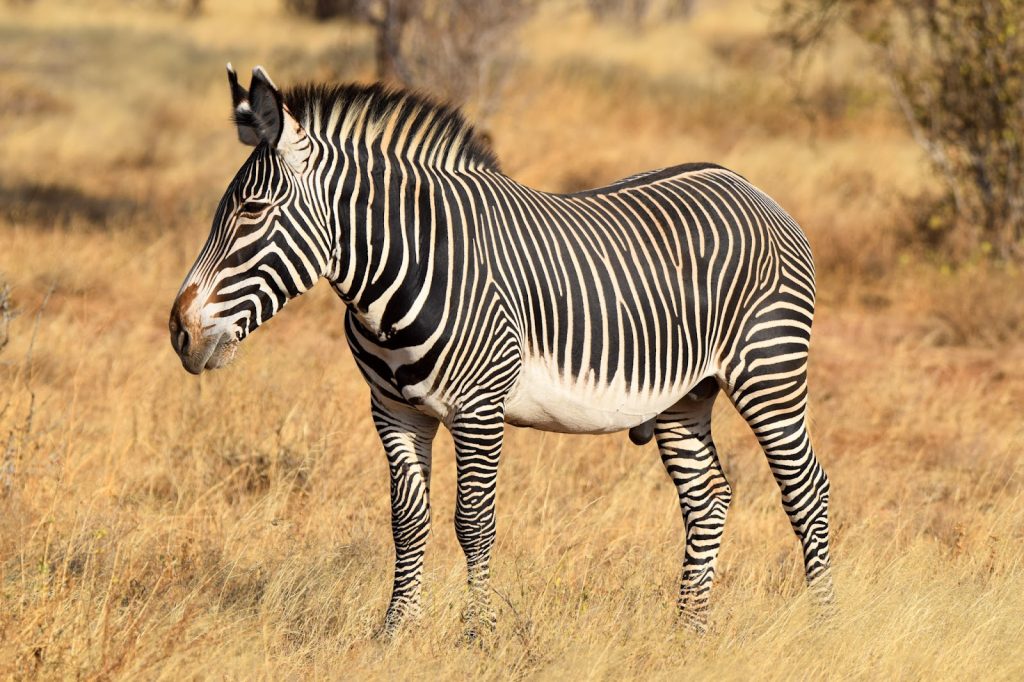
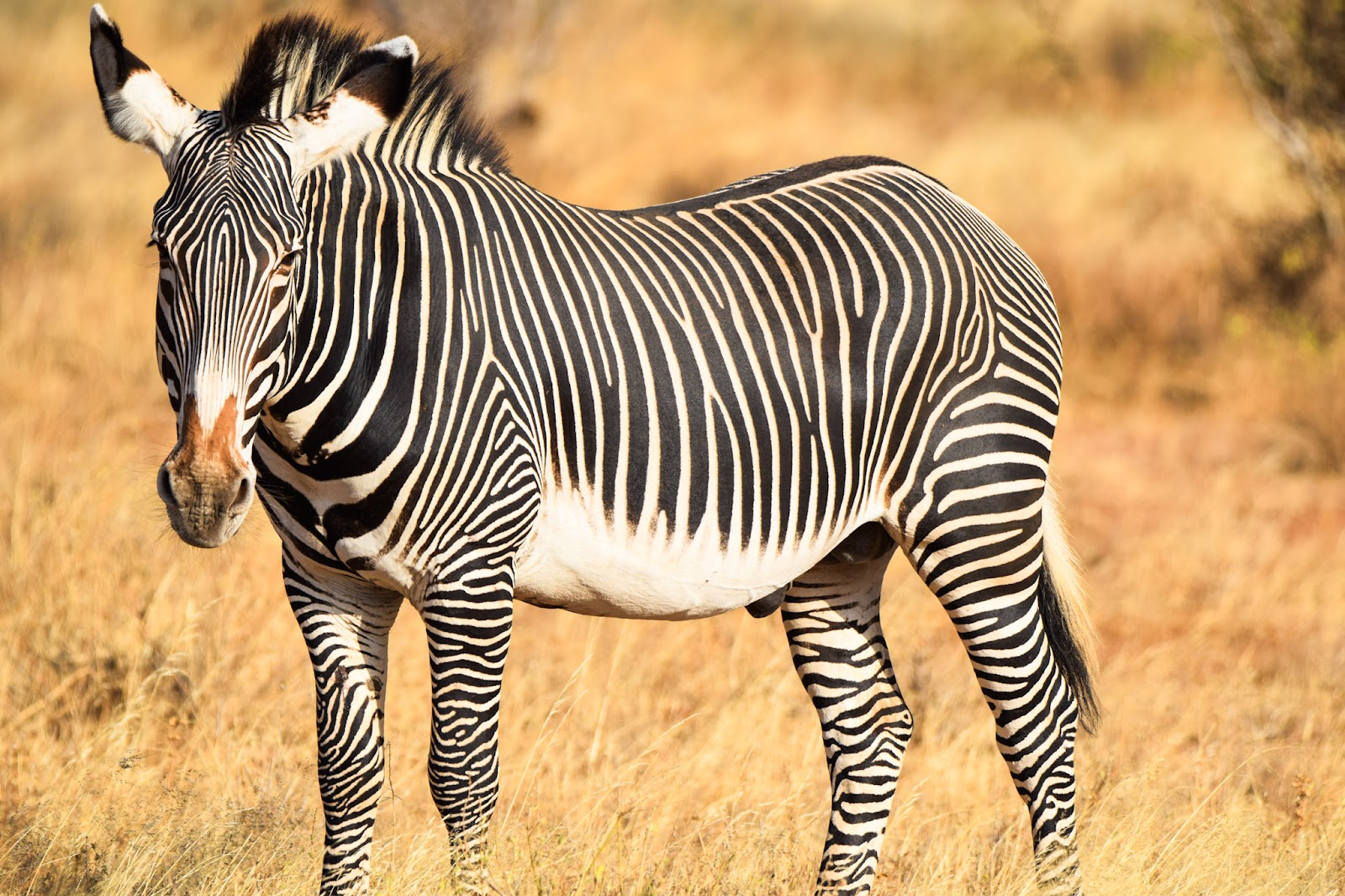
Larger than the common zebra, with pinstripe coats, white bellies and enormous round ears, Grevy’s zebra survives in only about 3,000 animals — most of them in northern Kenya. Named after the French president Jules Grévy, who was given one in 1882, it is listed as Endangered and is the rarest of the three zebra species. Samburu’s open flats hold herds year-round.
Reticulated Giraffe — the one wearing the net
Crisp white lines dividing rich chestnut patches — the reticulated giraffe looks drawn with a ruler, unmistakably different from the blotchy Masai giraffe of the south. Northern Kenya is its global stronghold. Samburu’s riverine acacias bring browsing herds close to the main river road every day.
Beisa Oryx — the desert swordsman
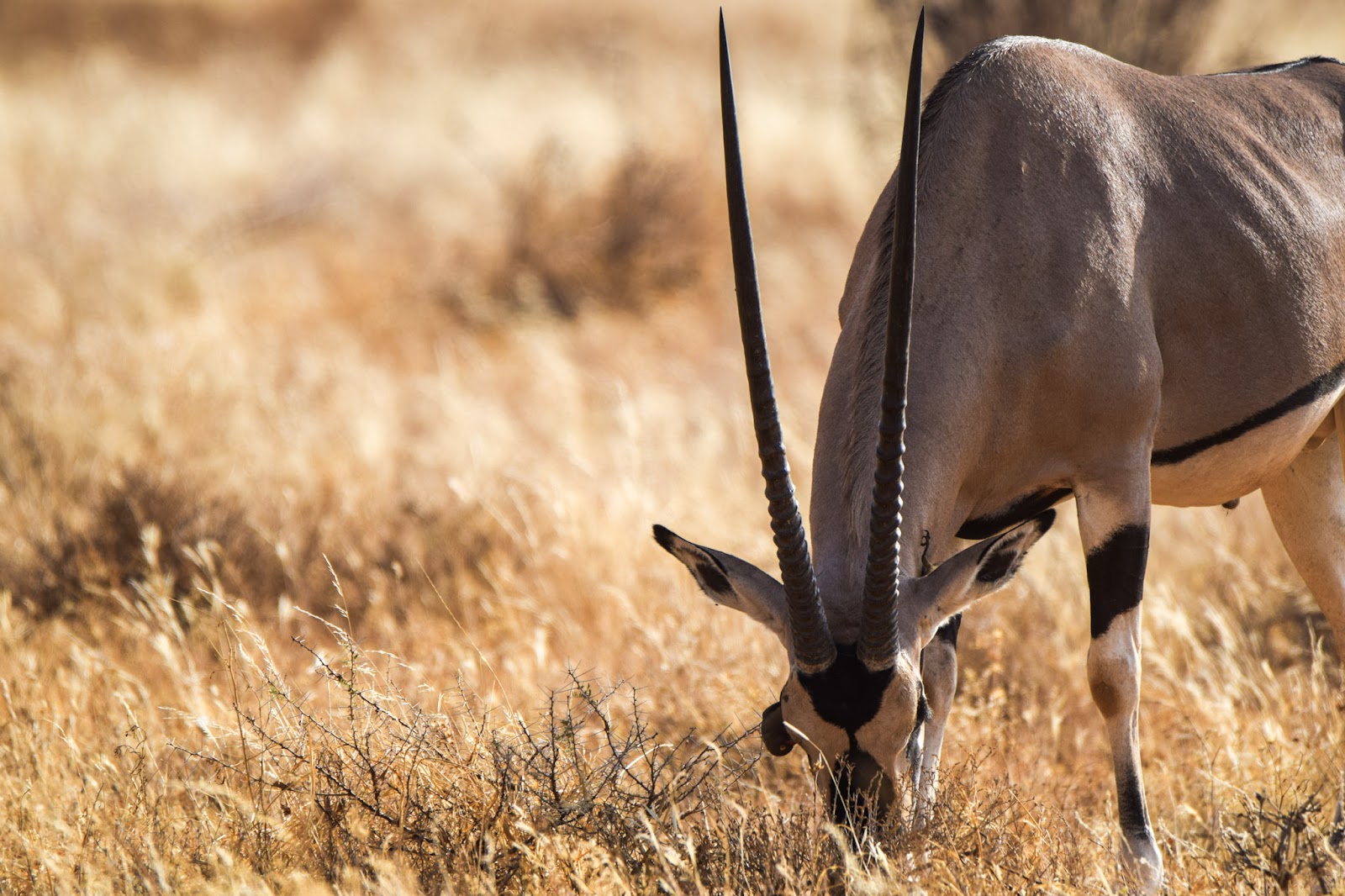
Grey flanks, a black-and-white face and long, straight horns on both sexes — the beisa oryx is the north’s heraldic antelope, built for heat few other grazers tolerate. Herds patrol the open plains away from the river, especially towards Buffalo Springs. Backlit at dawn, they are among the most photogenic animals in the reserve.
Gerenuk — the gazelle that thinks it’s a giraffe
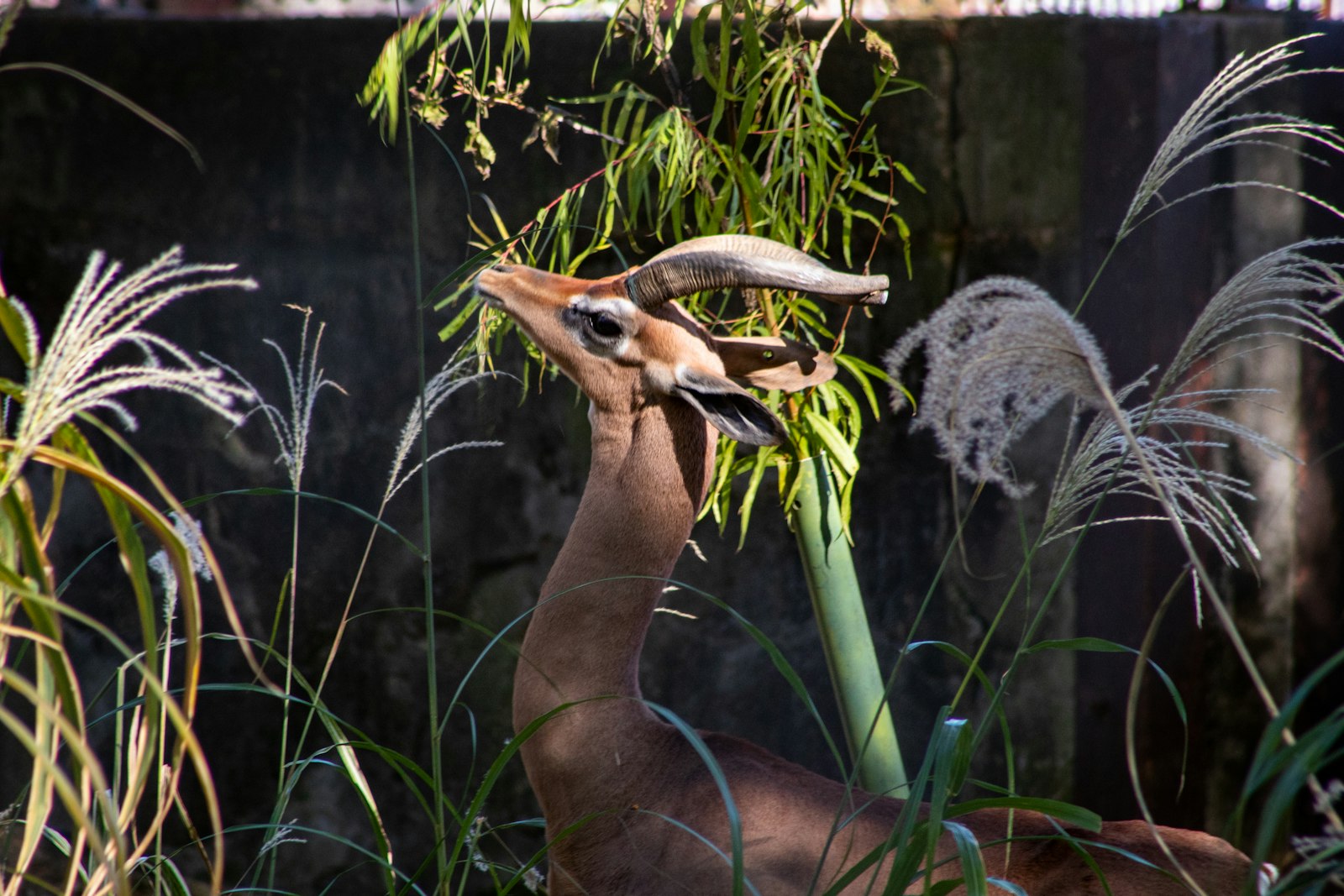
Swahili calls it swala twiga — the gazelle-giraffe — and one sighting explains why: the gerenuk stands upright on its hind legs to browse leaves up to about two metres high. It rarely needs to drink, getting its moisture from the leaves it eats. Samburu’s dry scrub circuits deliver the upright pose with delightful regularity.
Somali Ostrich — the blue-legged giant
The males give it away instantly: neck and thighs in blue-grey rather than the pink of the common ostrich of the south. Now recognised as a separate species, the Somali ostrich struts Samburu’s open country in scattered pairs and small groups. It completes the set — and spotting the colour difference makes every guest feel like a proper naturalist.
North Beats the Crowds Too
Samburu runs quieter than the southern circuit — rare animals, empty tracks. Ask about our Samburu itineraries.
Samburu Special Five Facts
- The set: Grevy’s zebra, reticulated giraffe, beisa oryx, gerenuk and Somali ostrich — none of them live in the Masai Mara.
- Rarity king: about 3,000 Grevy’s zebras remain in the wild, making it the rarest zebra.
- Water maths: gerenuk rarely drink; oryx and Grevy’s zebra can go days without water — desert engineering on display.
- Where: Samburu National Reserve plus Buffalo Springs and Shaba on the Ewaso Nyiro river.
- Best window: dry months (June to October, January to February) pull everything towards the river circuits.
- Bonus cast: Samburu adds elephants, leopards, lions and cheetahs around the specials.
Where to Find the Samburu Special Five
Each of the five prefers a slightly different habitat, so a good guide plans a route that links them. A typical morning moves from the river to the open plains and back through the scrub.
Along the Ewaso Nyiro river
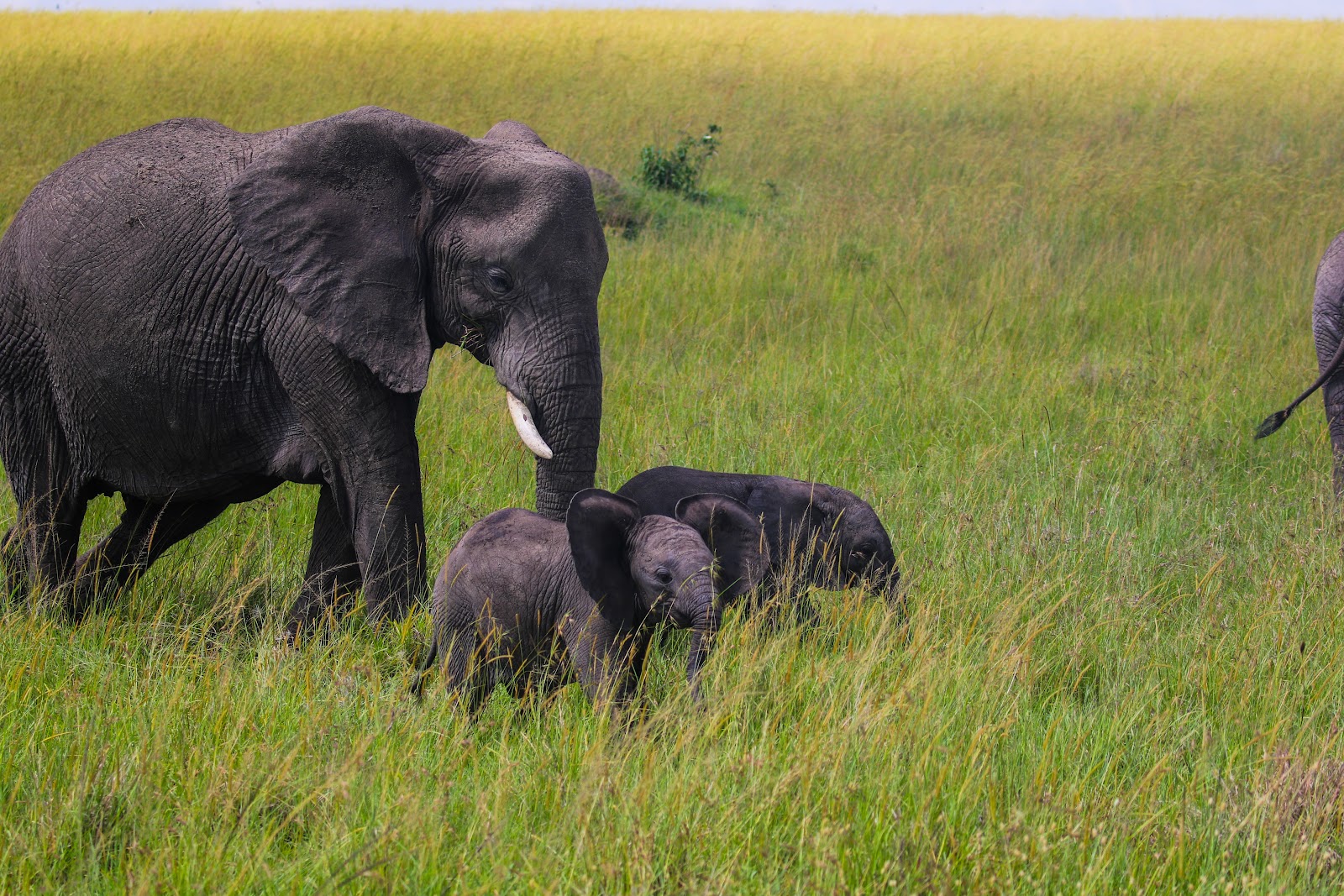
The riverine forest of doum palms and tall acacias is the best place for reticulated giraffes, which browse the treetops, and for elephants that come down to drink and bathe in the afternoon.
On the open plains
The flat, stony plains away from the river suit Grevy’s zebra, beisa oryx and Somali ostrich. Buffalo Springs, just across the river, has good open country for all three.
In the dry scrub
Gerenuk favour thick thornbush, where they browse alone or in small groups. Ask your guide to slow down along the scrub roads and look for the long neck rising above the bushes.
Best Time to See the Samburu Special Five
You can see the Samburu Special Five in any month, because all five are resident. The dry seasons, from June to October and January to February, are easiest: water is scarce away from the river, so animals concentrate along its banks and the grass is short.
The long rains from March to May and the short rains in November bring green scenery, newborn animals and fewer visitors, but some tracks become muddy and animals spread out. Early morning and late afternoon are the best times of day, as midday is very hot.
A Sample Day Tracking the Samburu Special Five
Every guide has a favourite route, but a classic day in search of the Samburu Special Five looks like this.
- 6:30 am: leave camp at first light and drive the scrub roads for gerenuk while it is still cool.
- 8:00 am: cross to the open plains for Grevy’s zebra, beisa oryx and Somali ostrich, all easiest to spot in the low morning light.
- 10:00 am: follow the river for reticulated giraffes browsing the acacias, then return to camp for brunch.
- 12:00 to 3:30 pm: rest through the hottest hours by the pool or on your veranda.
- 4:00 pm: an afternoon drive along the Ewaso Nyiro for elephants at the water, leopards in riverside trees and any of the five you missed.
Where to Stay to See the Samburu Special Five
Camps on the banks of the Ewaso Nyiro put you closest to the river wildlife and within easy reach of the plains. Options range from comfortable tented camps inside the reserves to exclusive lodges in community conservancies such as Kalama, where walks and night drives are possible. Read our review of Samburu Intrepids Camp for one riverside option, and ask us to match a camp to your budget and dates.
Reserve or conservancy?
Inside the national reserves, viewing is from the vehicle and the Samburu Special Five are found on the main circuits. In the conservancies you gain walking safaris, night drives and fewer vehicles, but you may drive a little further for some species. Many guests split their nights between the two.
How to Get to Samburu
Samburu is about 350 kilometres north of Nairobi, a drive of roughly five to six hours via Nanyuki and Isiolo. Many guests break the journey at Ol Pejeta Conservancy. Scheduled and charter flights from Wilson Airport reach the reserve’s airstrips in a little over an hour and save most of a day.
Samburu Special Five Safari Costs
Because Samburu is further from Nairobi than most parks, it is usually part of a longer route. Prices on our site include:
- Kenya Highlights Safari – Samburu, Ol Pejeta, Lake Nakuru & Masai Mara (9 Days) — from USD 2,350 per person sharing.
- 15 Day Kenya Safari & Beach — from USD 3,950 per person sharing.
- 14 Day Kenya Grand Slam Signature Safari — from USD 4,650 per person sharing.
Quotes include the private vehicle, driver-guide, accommodation, meals and park fees as listed. Flights, the eTA, insurance, tips and drinks are extra. Compare more routes on our Samburu safari page or choose a private Kenya safari built around the north.
Samburu Special Five vs the Big Five
The Big Five — lion, leopard, elephant, buffalo and rhino — were named for the animals hunters once found most dangerous. The Samburu Special Five are a naturalist’s list instead: five species adapted to dry northern country. Samburu itself has four of the Big Five, with elephants, lions, leopards and buffalo, but no resident rhinos.
Most of our guests combine the two lists. They see the Samburu Special Five in the north, add rhinos at Ol Pejeta or Lake Nakuru, and finish with big cats on the plains of the Masai Mara. Compare options on our Masai Mara safari packages page.
Protecting the Samburu Special Five
Several of the five are under pressure. Grevy’s zebra is listed as Endangered on the IUCN Red List after a steep decline caused by habitat loss, competition with livestock for grazing and water, and drought. Reticulated giraffe numbers also fell sharply in recent decades.
Community conservancies around Samburu now protect much of the wider range, and local people work as rangers, scouts and guides. Choosing camps that support these conservancies, and paying park and conservancy fees, helps keep the Samburu Special Five on the map. For official park information, see the Kenya Wildlife Service.
Photographing the Samburu Special Five
- Light: shoot in the first two hours after sunrise and the last two before sunset, when the red earth glows.
- Lens: a 100–400 mm zoom covers distant oryx and close giraffes alike.
- The gerenuk pose: wait patiently by a feeding gerenuk; it often rises onto its hind legs within minutes.
- Heat haze: midday shimmer softens images, so rest at camp and go out again later.
- Dust: carry a cloth or cover for your camera on the dry tracks.
What to Pack for Samburu
- Light, breathable clothing in neutral colours, plus a warm layer for early starts.
- A wide-brimmed hat, sunglasses and high-factor sunscreen.
- Binoculars, as several of the five are often seen at a distance.
- A dust scarf, a refillable water bottle and insect repellent.
Before you travel, check entry rules on the official Kenya eTA portal.
Adding Samburu to Your Kenya Route
Samburu anchors the northern leg of our 8-day Big Five circuit and pairs with culture on the 3-day Samburu Cultural & Wildlife Experience. Background reading: our Samburu safari guide, the Samburu culture guide and our best time to visit Samburu guide complete the picture.
Five Animals the Mara Cannot Show You
One flight or a day’s drive north, and the checklist begins. Message us to plan your Special Five day.
Frequently Asked Questions
What are the Samburu Special Five?
The Samburu Special Five are five species of northern Kenya’s dry country: Grevy’s zebra, reticulated giraffe, beisa oryx, gerenuk and Somali ostrich. None occur in the Masai Mara, and only the north offers all five together, making them the region’s signature safari checklist for keen wildlife watchers.
Can you see all the Samburu Special Five in one day?
Yes. A full day of game driving in Samburu National Reserve regularly produces all of the Samburu Special Five, because their habitats meet along the Ewaso Nyiro river and the plains beside it. Dry-season visits, from June to October and January to February, raise the odds further.
How rare is the Grevy’s zebra?
Grevy’s zebra is the rarest of the three zebra species, with about 3,000 animals left in the wild, most of them in northern Kenya. It is listed as Endangered. Samburu and the surrounding conservancies offer some of the most reliable sightings anywhere, often of small herds on the open flats.
What is the difference between a reticulated and Masai giraffe?
The reticulated giraffe of Samburu has sharp-edged chestnut patches divided by clean white lines, like netting, while the Masai giraffe of the south has ragged, leaf-shaped blotches. Many scientists now treat them as separate species, and northern Kenya is the reticulated giraffe’s global stronghold.
Why does the gerenuk stand on two legs?
The gerenuk stands upright on its hind legs to browse leaves up to about two metres high, a feeding zone other gazelles cannot reach. Its long neck and this posture earned it the Swahili name swala twiga, “the gazelle-giraffe”. Samburu is the classic place to watch it feeding.
How many days do I need to see the Samburu Special Five?
Two nights in Samburu is the minimum, giving one full day of game drives. Three nights are better, with time for a second chance at any missed species, a cultural visit and rest in the midday heat. Fly-in trips save the long drive from Nairobi.
Does Samburu have the Big Five?
Samburu has four of the Big Five: elephants, lions, leopards and buffalo. There are no resident rhinos in the reserve. Most guests see the Samburu Special Five in the north and add rhinos at Ol Pejeta or Lake Nakuru on the way to or from the Masai Mara.