

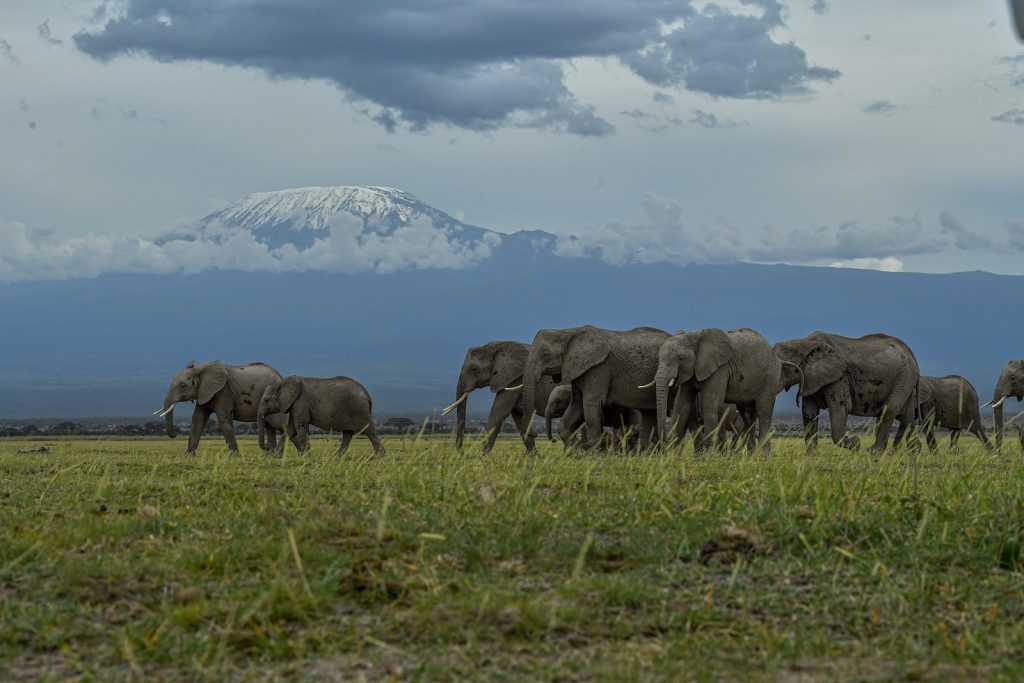
Mount Elgon National Park protects something almost nowhere else on Earth has: wild elephants that walk into pitch-dark caves and carve out the rock walls with their tusks to lick the salt inside. This ancient shield volcano straddling the Kenya-Uganda border holds the world’s largest intact volcanic caldera, roughly 8 km across, and the Kenyan side alone covers 169 km² of montane forest, bamboo and moorland rising toward a 4,321-metre summit. Picture a guide’s torch beam catching fresh tusk-scrape marks 200 metres inside Kitum Cave, then stepping back out into misty highland forest alive with over 300 bird species. Sense of Adventure treats Mount Elgon as one of Kenya’s most underrated add-ons for travellers who want genuine wilderness without another vehicle full of tourists.
Add Kenya’s Quietest Park to Your Trip
Cave-visiting elephants and near-empty trails — message us to build Mount Elgon into your itinerary.
Why Mount Elgon National Park Is Unlike Any Other Kenyan Park
Most Kenyan parks are about open plains and vehicle-based game viewing; Mount Elgon is the opposite — a forested volcanic massif you explore mostly on foot, built around one genuinely strange natural phenomenon. Elephants, along with buffalo, have been entering the mountain’s lava-tube caves for generations specifically to mine mineral salts from the rock, a behaviour recorded nowhere else in East Africa at this scale. Four main caves are explorable — Kitum, Making’eny, Chepnyalil and Kiptoro — each cut from ancient lava tubes, with Kitum the most famous and the deepest at roughly 200 metres. The Kenyan side of the mountain is considerably smaller than the Ugandan portion across the border, but it concentrates the most accessible caves and the clearest hiking trails, making a day trip or overnight camp genuinely worthwhile without needing to cross into Uganda at all.
We nearly skipped Mount Elgon thinking it was “just a mountain,” then our guide showed us actual fresh tusk gouges on the cave wall at Kitum, still damp from where an elephant had been mining salt days earlier. I have never felt closer to genuinely wild Africa than standing in that cave.
— Sense of Adventure guest, Western Kenya circuit
The 7 Things That Make Mount Elgon Worth the Detour
Kitum Cave’s Salt-Mining Elephants — a behaviour found almost nowhere else
Elephants and buffalo walk roughly 200 metres into total darkness inside Kitum Cave specifically to gouge mineral salts from the rock walls with their tusks — a learned behaviour passed down generations that has slowly enlarged the cave itself over centuries. Guides can point out fresh tusk-scrape marks on most visits.
Africa’s Largest Intact Caldera — an 8 km-wide volcanic crater
Mount Elgon holds the world’s largest intact volcanic caldera, roughly 8 km across — a genuinely rare geological feature that most visitors to East Africa never get to see, let alone walk the rim of.
Four Explorable Lava-Tube Caves — Kitum, Making’eny, Chepnyalil, Kiptoro
Beyond Kitum, three further caves — Making’eny (with its own waterfall at the entrance), Chepnyalil and Kiptoro — are all explorable with a guide, each carved from ancient lava tubes rather than water erosion, a distinct geological story from typical limestone caves elsewhere.
Genuine Montane Forest and Bamboo Zones — a completely different Kenyan ecosystem
The lower forests hold elephants, buffalo, bushbuck, duikers and giant forest hogs, giving way to dense bamboo stands and then open moorland higher up — a vertical ecosystem shift that a flat savanna park simply cannot offer.
Over 300 Bird Species — including the endangered Lammergeier
Birders come specifically for species like the endangered Lammergeier (bearded vulture), African Goshawk and Baglafecht Weaver, alongside a strong supporting cast typical of Kenyan highland forest.
Genuinely Uncrowded — wilderness without the vehicle convoys
Mount Elgon receives a fraction of the visitors that the Mara or Amboseli see in a single morning, which means trails, caves and campsites feel like genuine wilderness rather than a scheduled stop on a well-worn circuit.
A Western Kenya Circuit Add-On — pairs naturally with Kitale-area attractions
Mount Elgon sits near Kitale in Trans-Nzoia County, making it a natural pairing with Saiwa Swamp National Park (Kenya’s smallest park, home to the sitatunga antelope) for travellers building a western Kenya itinerary beyond the standard southern circuit.
Build a Genuine Off-the-Beaten-Path Circuit
Mount Elgon pairs naturally with western Kenya’s other quiet parks — ask us to plan the combination.
Mount Elgon National Park Facts
- Location: straddles the Kenya-Uganda border in Trans-Nzoia County, western Kenya, 140 km northeast of Lake Victoria.
- Size: the Kenyan portion covers 169 km²; the much larger Ugandan side adds a further 1,110 km².
- Summit: the mountain rises to 4,321 m, one of East Africa’s highest peaks.
- Caldera: roughly 8 km across, the largest intact volcanic caldera in Africa.
- Caves: four explorable lava-tube caves — Kitum, Making’eny, Chepnyalil, Kiptoro.
- Wildlife: elephants, buffalo, bushbuck, duikers, giant forest hogs and over 300 bird species.
Pairing Mount Elgon With the Rest of Western Kenya
Mount Elgon combines naturally with Saiwa Swamp National Park for a genuine western Kenya circuit beyond the standard southern parks. This is a custom/tailor-made itinerary rather than a fixed package — message us on WhatsApp and we’ll build the routing, permits and lodges around it specifically for your dates.
A Cave Full of Salt-Mining Elephants Awaits
This is the kind of place a guidebook mentions in one paragraph and a good guide brings to life. Message us to plan your visit.
Frequently Asked Questions
What is Mount Elgon National Park known for?
Mount Elgon National Park is known for its salt-mining elephants, which walk deep into lava-tube caves like Kitum to gouge mineral salts from the rock walls with their tusks — a behaviour rarely seen elsewhere in East Africa — alongside Africa’s largest intact volcanic caldera.
Can you go inside the caves at Mount Elgon?
Yes — Kitum, Making’eny, Chepnyalil and Kiptoro are all explorable with a park guide. Kitum is the most famous and reaches roughly 200 metres into the mountain, with visible tusk-scrape marks from salt-mining elephants.
How tall is Mount Elgon?
Mount Elgon rises to 4,321 metres (14,177 feet), making it one of East Africa’s highest mountains and home to the world’s largest intact volcanic caldera, roughly 8 km across.
Is Mount Elgon National Park crowded with tourists?
No — Mount Elgon receives far fewer visitors than Kenya’s major southern parks, making it a genuinely uncrowded destination for travellers wanting real wilderness rather than a busy, well-worn safari circuit.
Where is Mount Elgon National Park located?
Mount Elgon National Park is located in Trans-Nzoia County in western Kenya, straddling the border with Uganda, roughly 140 km northeast of Lake Victoria and near the town of Kitale.