Bomas of Kenya is Nairobi’s best introduction to the many cultures of Kenya. In one afternoon, you can walk through traditional homesteads built in the styles of different communities, then watch a lively performance of songs and dances from across the country in a huge circular auditorium. Located in Langata, close to Nairobi National Park and the Giraffe Centre, it is easy to fit into a short stay. For conference delegates, state guests, international schools and travellers on a budget who want to understand Kenya beyond its wildlife, Bomas of Kenya is a colourful, joyful and informative stop.
Want Kenyan Culture in One Afternoon?
Bomas of Kenya shows the homesteads, music and dance of many communities in a few hours.
What Is Bomas of Kenya?
The word “boma” means a homestead or an enclosure, usually a group of houses surrounded by a fence where a family lives and keeps its livestock. Bomas of Kenya was opened in 1971 by the government as a living museum where visitors could see how different communities traditionally lived, and where Kenya’s music and dance heritage could be preserved and performed.
The site has two main parts. The first is a collection of replica homesteads, each representing the traditional architecture of a particular community. The second is a large circular auditorium where a resident troupe of dancers and musicians performs every afternoon. Over the years, Bomas has also become a major venue for national events, conferences and gatherings.
6 Highlights of Bomas of Kenya
1. Traditional Homesteads
Walk through replica villages showing how different Kenyan communities built their homes, granaries and livestock pens.
2. The Afternoon Dance Show
A resident troupe performs songs and dances from across the country in a large circular auditorium.
3. Music and Instruments
Drums, horns, lyres and other traditional instruments bring each performance to life.
4. A National Venue
The auditorium has hosted major national conferences and events, making Bomas part of modern Kenyan history.
5. Easy to Reach
Bomas is in Langata, about 10 km from the city centre and close to the national park and Giraffe Centre.
6. Good Value
Entry is affordable, making it one of the best-value cultural experiences in Nairobi.
Book the Bomas of Kenya Tour
Hotel pick-up, entry tickets, guided homestead walk and the dance show. From $65 per person.
The Traditional Homesteads
Walking through the homesteads is like taking a tour of rural Kenya in an hour. Each village shows how a particular community designed its houses to suit its environment and way of life. You will see round huts with conical thatched roofs, rectangular houses with mud walls, raised granaries for storing grain and enclosures for cattle and goats.
The differences tell fascinating stories. Pastoralist communities, who moved with their herds, built simpler homes that could be repaired or rebuilt easily. Farming communities built more permanent houses and large granaries. In some homesteads, the layout reflects family structure, with separate houses for the head of the family, his wives and older children. A guide explains the meaning of these details, and you can step inside many of the houses.
For visitors heading on safari to the Masai Mara or Samburu, this is a useful preparation. You will recognise similar homes later and understand them better. Read more in our guide to Maasai culture in Kenya.
The Dance Performance
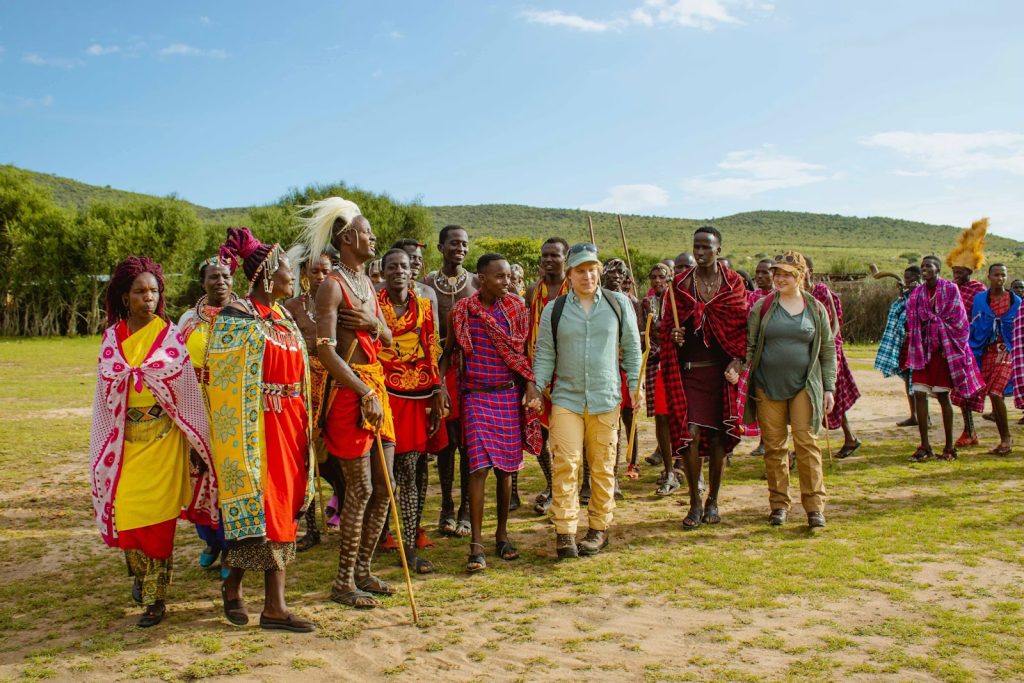
The highlight of any visit to Bomas of Kenya is the afternoon show. The resident dance troupe performs a programme of traditional songs and dances from different parts of the country. Performances may include energetic jumping dances, coastal dances with rhythmic drumming, harvest celebrations, wedding songs and dances that once marked rites of passage.
The costumes are colourful and detailed, with beadwork, feathers, skins and fabrics that reflect each community’s traditions. Musicians play drums, horns, rattles and stringed instruments. The atmosphere is warm and lively, and audience members are often invited to join in at the end, which children especially love.
The show is held in a large circular auditorium designed to resemble a giant traditional house. It seats thousands of people and has hosted national conferences, political events and celebrations, so you are sitting in a building with real historical significance.
Who Should Visit Bomas of Kenya?
Visitors with limited time
If you have only one afternoon free in Nairobi, Bomas of Kenya gives you a broad cultural overview in a few hours. It works well after a morning game drive or a visit to the Giraffe Centre.
Conference delegates and international attendees
Many conferences in Nairobi include a cultural evening or excursion. Bomas of Kenya is a natural choice because it represents the whole country rather than one community, and it is close to the main hotels and conference venues. We can arrange group tickets and transport for delegations of any size.
State guests and dignitaries
Bomas has a long history of welcoming official visitors and hosting state-related events. For dignitaries and their delegations, a private guided walk through the homesteads followed by the performance is a respectful and memorable introduction to Kenya’s diversity.
International schools
Bomas is one of Nairobi’s most popular school trip venues. Students learn about architecture, social organisation, music and dance, and the visit supports lessons in history, geography, art and citizenship. The performances are lively enough to keep younger children engaged, while older students can discuss how traditions change over time.
Budget travellers and families
Entry is affordable, and the site offers a full afternoon of interest. Families enjoy the open space, the homesteads and the show, and children love being invited to dance.
Planning Your Visit
Getting there
Bomas of Kenya is on Forest Edge Road in Langata, about 10 km from the city centre. The drive takes 20 to 40 minutes depending on traffic. It is close to the main gate of Nairobi National Park, the Giraffe Centre and the Karen area, so it is easy to combine with other sights.
Show times and tickets
The dance performance is held every afternoon, with slightly different times on weekdays and weekends. Tickets are priced for citizens, residents and non-residents, with lower rates for children. Arrive about an hour before the show to walk around the homesteads first. Times and prices change occasionally, so check in advance; our tour includes tickets and is timed to catch the show.
How long to stay
Plan on two to three hours: about an hour for the homesteads and around 90 minutes for the show.
Tips for visiting Bomas of Kenya
- Arrive about an hour before the show to tour the homesteads.
- Wear comfortable shoes for walking on dirt paths.
- Bring a hat; the homestead area has little shade.
- Ask before photographing performers up close.
- Bring small notes for tips or crafts.
- Be ready to join in when dancers invite the audience!
A Sample Afternoon Itinerary
- 12:30pm: pick-up from your hotel after lunch.
- 1:15pm: arrive at Bomas of Kenya and walk through the homesteads with a guide.
- 2:30pm: take your seats in the auditorium.
- 2:30pm–4:00pm: enjoy the traditional dance performance.
- 4:15pm: drive back to your hotel, or continue to a sundowner nearby.
Combining Bomas of Kenya with Other Sights
Bomas pairs naturally with the other attractions in Langata and Karen. A popular full day combines a morning game drive in Nairobi National Park, a late-morning visit to the Giraffe Centre and an afternoon at Bomas of Kenya. Read more about the Giraffe Centre and our Nairobi National Park day trip. If you prefer history, the Karen Blixen Museum is about 20 minutes away.
Understanding Kenya’s Cultural Diversity
Kenya is home to more than 40 ethnic communities, grouped broadly into Bantu, Nilotic and Cushitic language families. Each has its own history, language, customs and art. Bomas of Kenya cannot show every community, but it gives a strong sense of how varied Kenyan life has been, from fishing communities around Lake Victoria to pastoralists in the north and farmers in the highlands.
Today, most Kenyans live modern lives in towns and cities, but many traditions continue in music, food, ceremonies and family life. Visiting Bomas helps you appreciate this heritage and understand the country more deeply.
Respectful Visiting
The performers at Bomas of Kenya are professional artists who are proud to share their heritage. Show appreciation with applause, and ask before taking close-up photos. If you are invited to dance, join in good-humouredly. When you later visit communities on safari, remember that real villages are people’s homes, and always visit with a guide and permission. For more on visiting communities respectfully, see our guide to Samburu culture and village visits.
The History Inside the Auditorium
Beyond its cultural role, Bomas of Kenya has a special place in the country’s political history. Its large auditorium hosted the national constitutional conference in the early 2000s, where delegates from across the country debated a new constitution; the draft that emerged is still widely known as the “Bomas Draft”. In recent general elections, the venue has also served as the national tallying centre, where results from across the country are announced. For students of politics and visiting officials, sitting in the same hall where these events unfolded adds an extra layer of meaning to a Bomas of Kenya visit.
Food and Facilities
The site has a restaurant and snack outlets serving Kenyan and international food, along with clean toilets and ample parking. Craft stalls sell carvings, beadwork and textiles, often at fair prices. If you want to sample Kenyan dishes such as nyama choma, ugali and sukuma wiki, ask your guide about the best options on the day. Paths around the homesteads are mostly flat dirt tracks, so visitors with limited mobility may prefer to focus on the auditorium and the nearest homes; let us know in advance and we will plan accordingly.
The Instruments You Will Hear
Music is at the heart of every performance, and the instruments are as varied as the dances. Large wooden drums, often covered with cowhide, set the rhythm for many coastal and western dances. The nyatiti, an eight-stringed lyre from the Lake Victoria region, produces a hypnotic, ringing sound and is traditionally played by a seated musician who also sings. Horns made from kudu or cattle horn announce ceremonies, while rattles of seeds or metal tied to the dancers’ legs add a shimmering beat to every step. Some performances feature the orutu, a one-stringed fiddle, and flutes made from bamboo or wood.
Listening carefully, you will notice call-and-response singing, where a lead singer calls out a line and the group answers. This style is common across many African musical traditions and makes the performances feel interactive and communal. If you are interested in music, ask your guide to introduce you to the musicians after the show; many are happy to explain how their instruments are made and played.
Dress and Adornment
The costumes worn at Bomas are a lesson in themselves. Beadwork patterns and colours can show a person’s age group, marital status or clan. Feathers, animal skins and cowrie shells were once symbols of bravery, wealth or ritual importance. Today, many of these items are reproductions made for performance, and they help keep traditional crafts alive. The craft stalls on site sell modern beadwork inspired by these traditions, which makes a meaningful souvenir.
Is Bomas of Kenya Worth Visiting?
Yes. Bomas of Kenya offers something that safaris do not: a lively, accessible introduction to the people, music and homes of Kenya. It is affordable, close to the city and suitable for almost everyone, from busy delegates and visiting officials to school classes and families. Pair it with the Giraffe Centre or a game drive, and you have a well-rounded Nairobi day.
Bomas of Kenya: Quick Reference
- Location: Forest Edge Road, Langata, about 10 km from central Nairobi.
- Dance show: daily in the afternoon; times vary between weekdays and weekends.
- Time needed: about 2–3 hours.
- Best for: culture, music, families, schools and delegates.
- Combine with: Giraffe Centre, Nairobi National Park, Karen Blixen Museum.
- Tour price: from US$65 per person with transport and tickets.
Book Your Visit
Book on our Bomas of Kenya Tour page, or browse all our day trips from Nairobi. To read more about the centre itself, see Bomas of Kenya on Wikipedia.
Experience Kenya’s Cultures
Message us and we will time your Bomas of Kenya visit to catch the afternoon dance performance.
Frequently Asked Questions
What is Bomas of Kenya?
Bomas of Kenya is a cultural centre in Langata, Nairobi, with replica homesteads of Kenyan communities and daily traditional dance performances.
What time is the dance show at Bomas of Kenya?
The main performance is held every afternoon. Times differ slightly between weekdays and weekends, so check before you go or let us time your visit.
How long should I spend at Bomas of Kenya?
Allow 2 to 3 hours to walk around the homesteads and watch the full dance performance.
Is Bomas of Kenya good for children and schools?
Yes. It is one of Nairobi’s most popular school trip venues, and children enjoy the music, dancing and village homes.
Where is Bomas of Kenya?
Bomas of Kenya is in Langata, about 10 km southwest of Nairobi’s city centre, near Nairobi National Park and the Giraffe Centre.
Can I combine Bomas of Kenya with other sights?
Yes. It pairs well with the Giraffe Centre, the Karen Blixen Museum or a morning game drive in Nairobi National Park.