Understanding Maasai culture in Kenya starts with looking past the photograph. A Maasai warrior in full dress — red shuka, beaded jewellery from neck to ankle, ochre-tinted hair — is such a complete and self-assured visual statement that tourists reach for their cameras before anything else. But the Maasai deserve more than a photograph. They are one of Africa’s most culturally distinctive and resilient peoples — semi-nomadic pastoralists who have managed to maintain their core identity, social structure, and relationship with the land through colonial occupation, sedentarisation pressure, and the relentless advance of modernity, while adapting exactly as much as they have chosen to adapt.
Sense of Adventure takes guests into genuine Maasai cultural experiences — not the performance-tourism versions at camp gates, but real community encounters with depth and reciprocity. This guide explains who the Maasai are, what you will experience, and why it matters.
Meet the Maasai With Sense of Adventure
We arrange community-approved Maasai cultural visits that benefit the community directly and give guests genuine insight into one of Africa’s most extraordinary cultures.
Who the Maasai Are: A People Defined by Cattle
The Maasai are a Nilotic people who migrated south from the upper Nile region into East Africa between the 15th and 17th centuries, establishing dominance over the great grasslands of what is now southern Kenya and northern Tanzania. Their identity is inseparable from their cattle. In Maasai cosmology, God gave all the cattle on earth to the Maasai — which partly explains the Maasai’s historical confidence and their willingness to raid neighbouring peoples’ livestock, which was simply recovering what was rightfully theirs.
Cattle measure wealth, define marriage negotiations (bride price is paid in cattle), mark every significant ceremony, and provide the primary diet: milk, blood, and meat. The Maasai do not traditionally farm. They do not traditionally fish. The land is for cattle, and the Maasai move with their cattle across a landscape they understand in extraordinary ecological detail — the location of permanent water, the seasonal grass patterns, the signs of approaching rain. This intimate ecological knowledge has made the Maasai some of the most effective stewards of the savannah landscapes they inhabit.
Maasai Culture in Kenya: Daily Life, Homes and Food
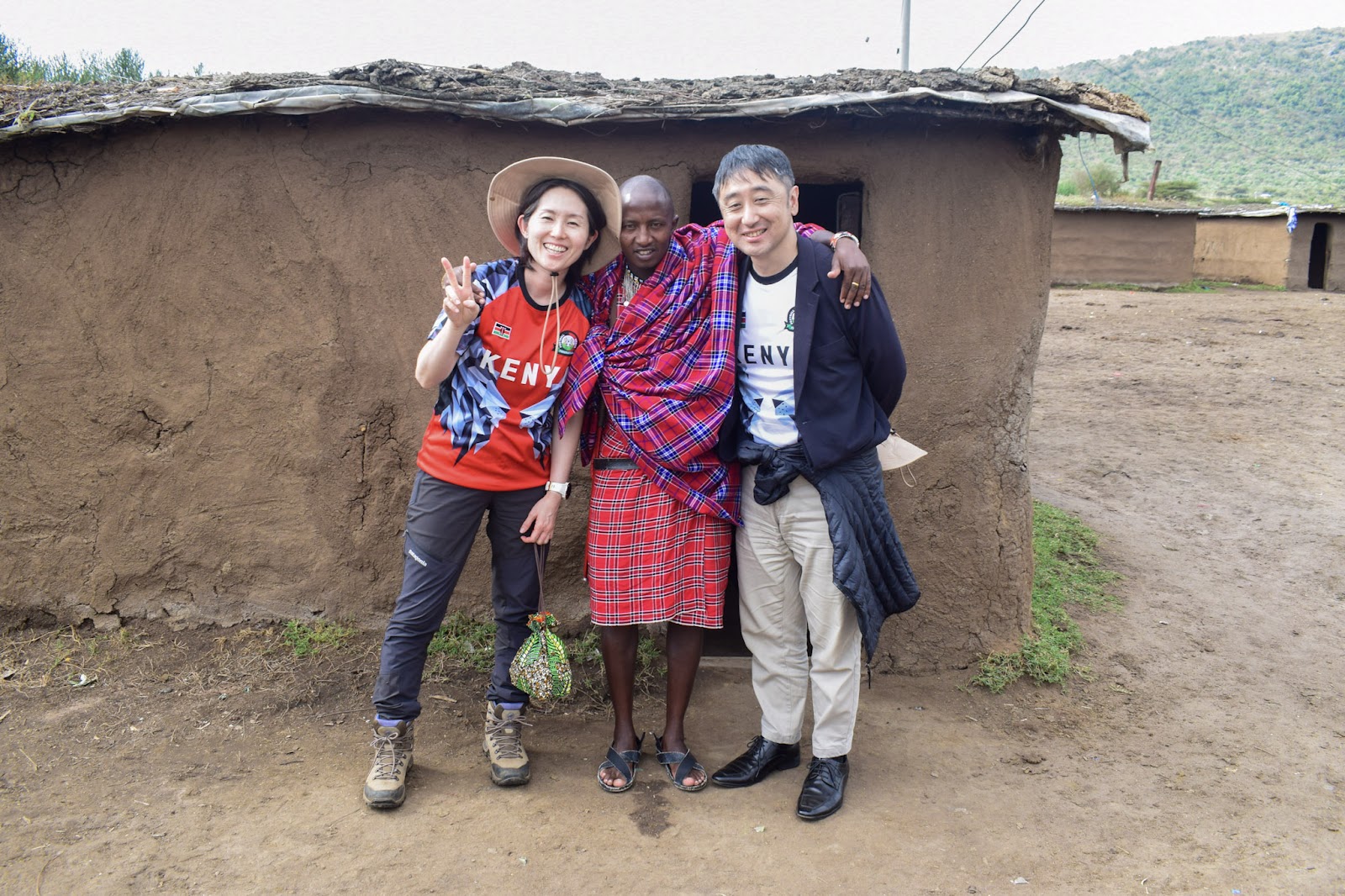
A traditional Maasai homestead, or enkang, is a circle of low houses surrounded by a thorn-branch fence that protects people and livestock from predators at night. The houses are built by women from a frame of wooden poles woven with sticks, then plastered with a mixture of mud, cow dung and ash. Inside, a small hearth fills the space with smoke that keeps insects away, and sleeping areas are separated by simple partitions.
Daily life follows the rhythm of the herd. Boys and young men take cattle, goats and sheep out to graze and water, while women milk the animals, collect firewood and water, build and repair houses, and raise children. Milk remains central to the diet, often drunk fresh or soured, and today most families also eat maize meal, beans and vegetables. Sweet, milky tea is offered to guests as a sign of welcome.
The red-checked or plain red shuka worn by many Maasai is practical as well as striking: it is warm on cold highland nights and easy to see across the plains. The Maasai speak Maa, and most also speak Swahili, with many younger people fluent in English.
The Maasai Age-Grade System: Society Structured by Generation
Maasai society is organised around age grades — a system that moves every male through a prescribed series of social roles from childhood to elder status. Understanding this system is essential to understanding who you are talking to when you meet Maasai people.
🏼 Maasai Age Grades — Male Life Stages
Layoni (Boys) — Pre-circumcision, responsible for herding cattle and learning the land.
Moran (Junior Warriors) — Following circumcision, young men enter the warrior class. They live in their own village (manyatta), grow their hair long and dye it with red ochre, carry a spear, and represent the community’s defence and raid capacity. The Moran’s obligation is physical courage and community protection.
Senior Warriors — Older Moran who have proven themselves begin the transition toward elder status, often taking wives during this period.
Elders (Junior & Senior) — Full elders are the community’s decision-makers, judges, and keepers of oral history and law. Senior elders — men who have grandchildren — represent the highest authority in Maasai society. Their word carries the weight of accumulated lifetime knowledge.
Maasai Culture in Kenya: Key Ceremonies
Movement between age grades is marked by major ceremonies that can bring together whole communities. Enkipaata prepares boys for initiation, Emuratare is the circumcision ceremony that turns them into warriors, and Eunoto marks the passage of warriors towards elderhood, when their long ochred hair is shaved off by their mothers. These three rites were inscribed by UNESCO on its list of intangible cultural heritage in need of urgent safeguarding in 2018. They are private community events, so visitors should only attend if formally invited.
Five Genuine Maasai Cultural Experiences
Maasai Village Visit — Inside the Enkang
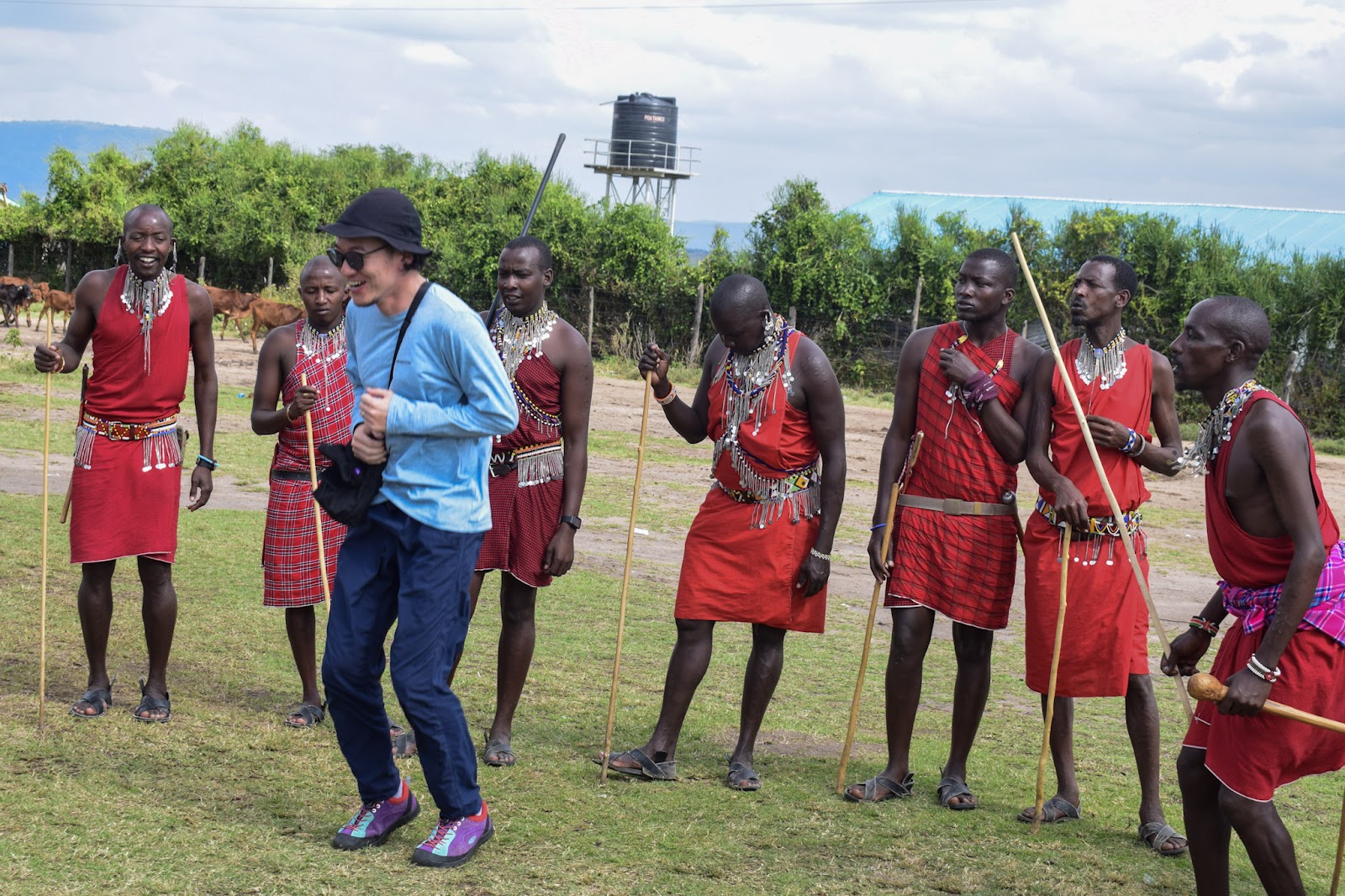
A properly arranged Maasai village visit — organised through community consent and with direct financial benefit flowing to the hosts — takes you inside the enkang (homestead): the mud-and-dung houses, the cattle pen in the centre, the community fire where elders meet. You drink tea with the women, watch the Moran demonstrate their jumping dance, and hear the elders explain the community’s relationship with the land and wildlife that surrounds them. Sense of Adventure works only with community-endorsed village visits where the fee goes directly to the hosting families.
Adumu — The Jumping Dance
The adumu — the Moran’s competitive jumping ceremony — is one of the most recognisable cultural expressions in Africa. Young warriors take turns jumping as high as they can from a standing position, their voices chanting in a low competitive chorus, the community watching and judging. It is not a performance for tourists (though tourists witness it) — it is a genuine expression of the Moran’s physical culture and competitive pride. Watching a group of twenty warriors in full dress compete in the adumu at dusk is visually and emotionally electric.
Beadwork — The Language of Identity
Maasai beadwork is not decoration — it is communication. The colours, patterns, and combinations of beads on a person’s body tell you their age grade, marital status, number of children, and regional clan identity. Women spend years creating beaded collars, earrings, bracelets, and wedding headdresses, and the finest pieces are objects of serious aesthetic achievement. Sense of Adventure arranges visits where Maasai women explain the language of their beadwork and where purchases support the artisans directly.
Bush Walk With a Maasai Guide — Ecological Knowledge Transfer
A bush walk guided by a Maasai warrior or elder is a completely different experience from a standard guide-led walk. The Maasai read the land in a way that comes from lifetimes of direct dependence on it — identifying medicinal plants by smell, reading animal tracks by the pressure and dust pattern, knowing the seasonal water sources that no map records. Walking the Mara ecosystem with a Maasai guide produces a depth of ecological understanding that no game drive can replicate.
Community Conservation Visit — The Economics of Coexistence
The Maasai’s relationship with wildlife has been complicated by decades of conservation policies that removed them from their land. The community conservancy model — where Maasai communities lease their land to tourism while retaining ownership and receiving income — is redefining this relationship across southern Kenya. Visits to community conservancies like Ol Kinyei and Mara North give guests direct experience of how conservation economics works in practice: families whose income now depends on wildlife have become its most effective protectors.
Modern Maasai Life: Change and Continuity
Maasai culture in Kenya is not frozen in time. Many Maasai children now go to school, and graduates work as teachers, doctors, lawyers, safari guides and conservancy rangers. Mobile phones and M-Pesa are part of daily life, even in remote homesteads, and families often combine herding with small businesses, beadwork cooperatives or tourism jobs.
The community also faces real pressures. Former group ranches have been subdivided into private plots, fences are spreading, and repeated droughts have killed large numbers of livestock in recent years. Community conservancies, where families lease land for wildlife tourism, are one of the ways the Maasai are protecting both their grazing lands and the wildlife that shares them. When you visit a conservancy camp, part of your fee goes directly to these landowners.
Etiquette: How to Visit a Maasai Community Respectfully
- Greet people warmly; your guide will teach you the Maa greeting “Sopa” and the right reply
- Always ask before taking photographs of individuals, and accept a polite no
- Dress modestly, with shoulders and knees covered, especially when meeting elders
- Follow your host’s lead on where to walk and sit, and avoid stepping into the cattle enclosure uninvited
- Do not hand out sweets, pens or money to children; support the community fund or school instead
- Buy beadwork directly from the women who made it, and accept that prices support whole families
- Ask questions with genuine curiosity; most hosts are happy to talk about their lives
These simple habits make any encounter with Maasai culture in Kenya more comfortable for everyone and help keep cultural tourism respectful and fair.
What to Wear and Bring on a Cultural Visit
Experiencing Maasai culture in Kenya rarely needs special kit, but a few things help. Wear comfortable closed shoes, as homesteads are dusty and you will walk among livestock. Light, modest clothing in neutral colours works well, with a fleece for cool mornings in the highlands. Bring a hat, sunscreen and water. Carry some Kenyan shillings in small notes if you would like to buy beadwork, as card machines are rare in rural communities. A small notebook is useful for writing down Maa words and the names of your hosts, which makes the visit far more personal.
Where to Have Genuine Maasai Cultural Experiences
The most authentic Maasai cultural experiences are available in the community conservancies surrounding the Masai Mara — Ol Kinyei, Mara North, Naboisho — where the communities that own the land live in traditional homesteads adjacent to the wildlife. The Amboseli area also has excellent Maasai cultural visits, with the mountain as a backdrop to the community interaction. Sense of Adventure arranges Maasai visits as part of every Mara and Amboseli safari, adding cultural depth to the wildlife experience. Our Kenya safari planning guide explains how to combine cultural visits with your game drive schedule.
If you only have time near Nairobi, communities in Kajiado County, south of the city, also host day visits. For a wider overview of Kenya’s peoples and regions, the official Magical Kenya tourism site is a helpful starting point.
Maasai Cultural Tours and Prices
These Sense of Adventure trips let you experience Maasai culture in Kenya, alongside related Maa-speaking communities:
- Maasai Village Cultural Day Tour, from USD 120, a day visit from Nairobi.
- Maasai Cultural & Wildlife Safari – Masai Mara (4 Days), from USD 1,100, combining game drives with community time.
- Northern Kenya Cultural Safari – Samburu & Laikipia (5 Days), meeting the Samburu, close Maa-speaking cousins of the Maasai.
- Bomas of Kenya Cultural Tour & Dance Show, a Nairobi introduction to many Kenyan cultures.
Cultural visits can also be added to any of our Masai Mara safari packages or luxury Kenya safari itineraries. Prices depend on season and group size, so ask us for a current quote.
Meet the People Who Have Lived With This Wildlife for Centuries
Sense of Adventure arranges community-endorsed Maasai cultural visits as part of every Kenya safari. Contact us to include one in your itinerary.
Frequently Asked Questions — Maasai Culture Kenya
Are Maasai village visits ethical?
Maasai village visits can be either genuinely enriching and ethical, or extractive and performative — the difference lies entirely in how they are arranged. Ethical visits are organised through community consent, with fees going directly to the hosting community, time spent in genuine interaction rather than staged performance, and cultural exchange that treats the hosts with respect rather than as exhibits. Sense of Adventure works exclusively with community-endorsed visits and will never take guests to a “cultural village” at a camp gate.
Do the Maasai still hunt lions?
Traditional Maasai lion hunting (olamayio) — a coming-of-age ceremony for young warriors — has been largely discontinued in Kenya under both legal pressure and changing community attitudes, particularly as communities derive income from live wildlife through tourism. Some ceremonial aspects of warrior culture persist, but the practice of killing lions as a rite of passage has effectively ended in most Kenyan Maasai communities. Several Maasai communities are now among the most active lion conservation advocates in East Africa.
What is the best way to photograph Maasai people respectfully?
Always ask permission before photographing individuals — directly, through your guide, or through the community host. Many Maasai will request a small payment for photography, which is entirely reasonable. Do not photograph ceremonies without explicit consent. The best photographs come from time spent in genuine interaction, not from opportunistic shots taken quickly. Sense of Adventure briefs all guests on photography etiquette before any cultural visit.
Do Maasai women have the same age-grade system as men?
Women move through life stages defined primarily by marriage, childbirth, and elder status, rather than the formal age-grade cohorts of men. A woman’s social standing is significantly influenced by the age grade of her husband and by the number and achievement of her children. Maasai women have significant economic agency through cattle ownership and bead trade, and elder women hold considerable informal authority within the community.
What language do the Maasai speak?
The Maasai speak Maa, a Nilotic language shared with related peoples such as the Samburu. Most Maasai in Kenya also speak Swahili, the national language, and many younger people speak good English. On a cultural visit, your hosts or guide will usually translate, and learning a simple greeting such as “Sopa” is always appreciated.
Can I visit a Maasai village on a day trip from Nairobi?
Yes. Maasai communities in Kajiado County, south of Nairobi, host day visits that include a homestead tour, songs, the jumping dance and a beadwork market. Our Maasai Village Cultural Day Tour starts from USD 120. For a deeper experience, combine a cultural visit with a Masai Mara or Amboseli safari.