Seeing the Big Five in 24 hours is possible in Kenya, but only with the right plan and some luck. Nairobi National Park has lion, leopard, buffalo and rhino, but no wild elephants. For all five animals in the wild, an overnight at Ol Pejeta Conservancy gives the best odds. Leopard is the hardest to find.
Sense of Adventure is a TRA-licensed private safari company based at Mountain Mall on Thika Road, Nairobi. We plan short safaris for travellers on layovers, business trips and tight schedules. This guide gives you the honest version: what is realistic in 24 hours, the two best routes, a timed plan, costs to budget for and when a longer safari makes more sense.
Big Five in 24 hours: the quick answer
- Nairobi route: four of the five in Nairobi National Park, plus orphaned elephants at the Sheldrick nursery. Good for a layover, but the elephants are not wild.
- Ol Pejeta route: all five live wild in one conservancy, about four hours’ drive from Nairobi. Best for a true wild Big Five.
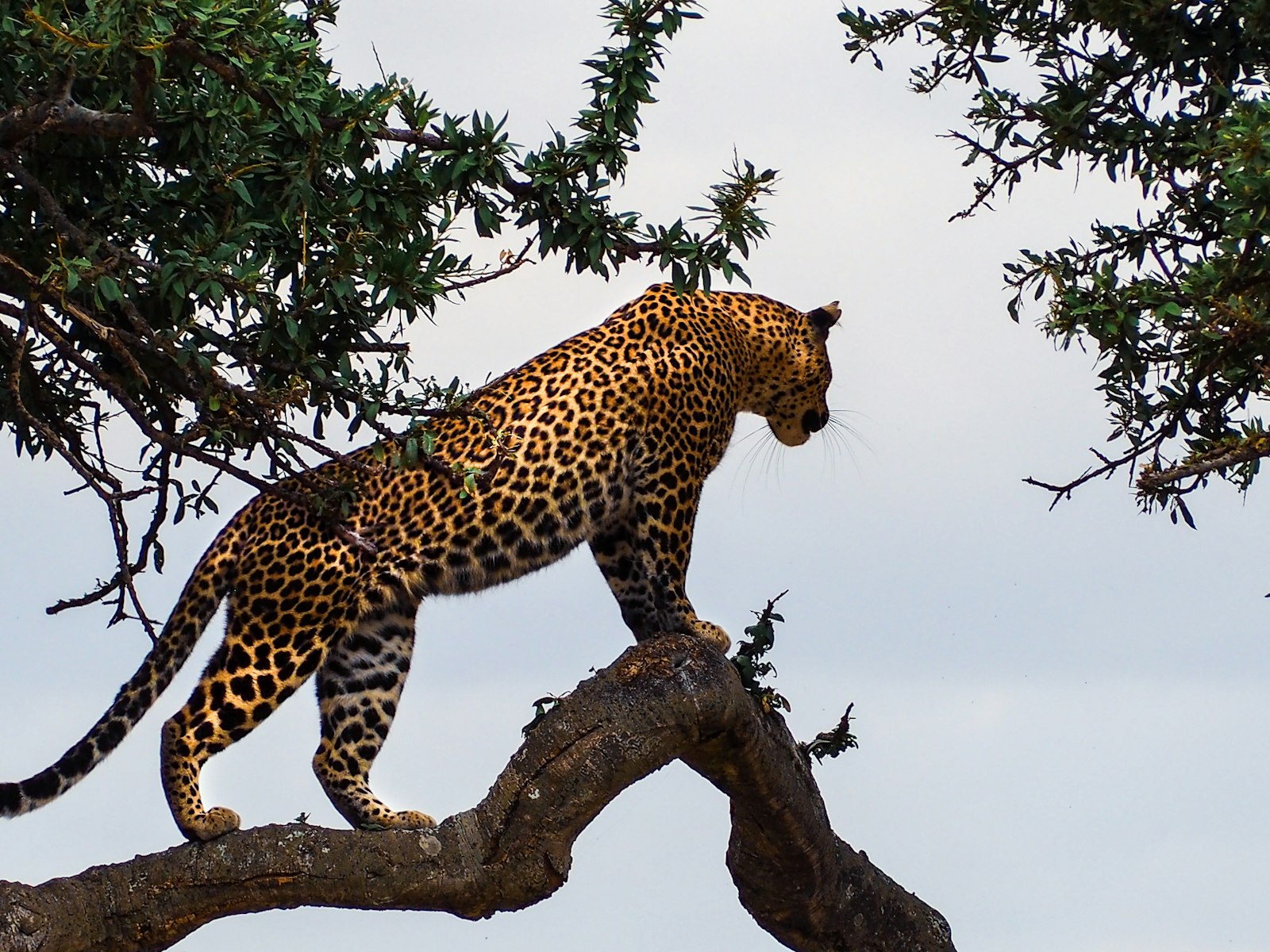
- The bottleneck: leopard, which is shy and mostly active at night.
- Honest odds: good for four animals, uncertain for all five in one day.
Only one day in Kenya? Send us your arrival and departure times and we will plan the best Big Five attempt for them.
Plan my one-day Big FiveCan You See the Big Five in 24 Hours?
Yes, you can try, but seeing all five wild animals in 24 hours is never guaranteed anywhere in Africa.
The Big Five are lion, leopard, elephant, buffalo and rhino, a term first used by hunters. Very few places hold all five, and fewer still are close to an international airport. Kenya is unusual because a national park sits on the edge of the capital, and a conservancy with all five is a half-day drive away.
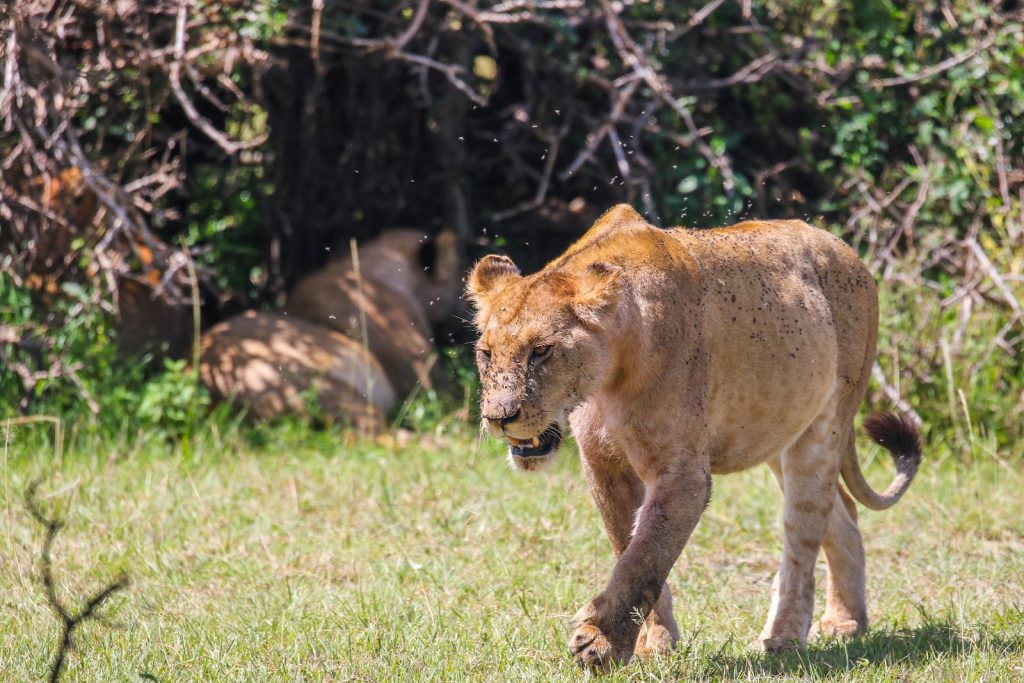
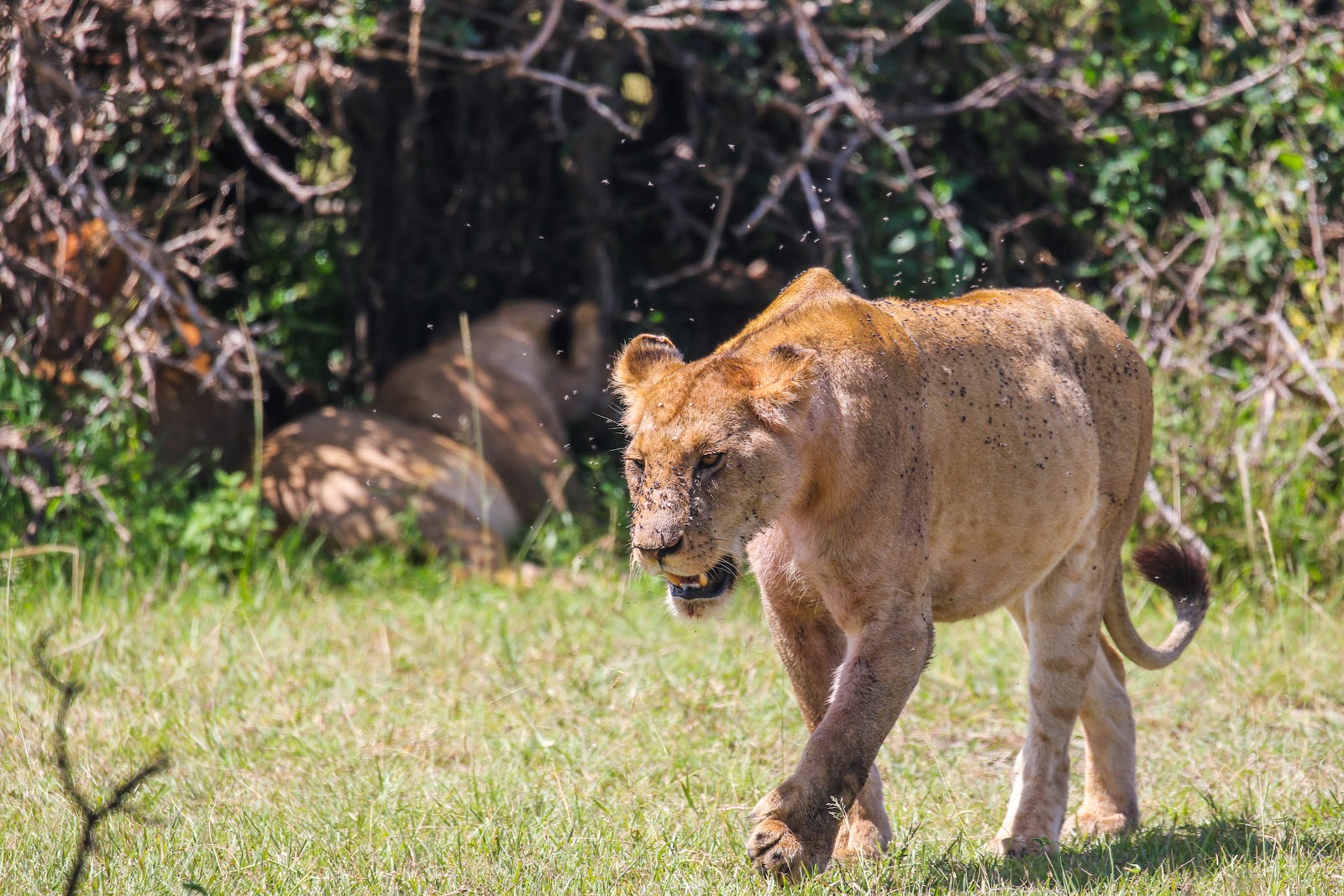
Buffalo and rhino are usually the easiest to find in both places. Lions are seen on most drives. Elephants are easy at Ol Pejeta but absent in the wild in Nairobi National Park. Leopards decide whether your 24 hours succeed, because they rest in thick cover by day and move mostly after dark.
Two Routes for the Big Five in 24 Hours
Choose the Nairobi route for a layover, or the Ol Pejeta route if you want all five animals living wild.
| Factor | Nairobi route | Ol Pejeta route |
|---|---|---|
| Where | Nairobi National Park and the Sheldrick nursery | Ol Pejeta Conservancy, Laikipia |
| Distance from Nairobi | About 7 km from the city centre | About four hours by road; flights to Nanyuki are shorter |
| Wild species | Lion, leopard, buffalo, rhino | Lion, leopard, elephant, buffalo, rhino |
| Elephant | Orphans at the nursery, 11am to noon | Wild herds |
| Overnight needed? | No; fits a long layover | Yes, for a realistic attempt |
| Best for | Layovers and business travellers | Travellers with one night to spare |
Both routes are private with us, so the day runs on your timing rather than a group’s. Our Nairobi National Park vs Ol Pejeta comparison goes deeper into the differences.
The Nairobi Route: Four Wild Species and Orphaned Elephants
Nairobi National Park gives you four of the Big Five on a morning drive, and the elephant nursery inside the park adds elephants at 11am.
Nairobi National Park
The park covers about 117 square kilometres, with the city skyline on one side and open plains running south. It is one of Kenya’s most important rhino sanctuaries, with both black and white rhinos. Lions, buffalo and leopards live here too, alongside giraffe, zebra and many antelope, which makes the park ideal when you have only 24 hours. It is managed by the Kenya Wildlife Service, and fees are paid online in advance.
The Sheldrick Elephant Nursery
The Sheldrick Wildlife Trust nursery sits inside the park and opens to the public for one hour, from 11am to noon, every day except 25 December. According to the Trust’s visit page, entry is by advance booking only, the entry donation is paid in cash on the day, and Nairobi National Park fees are also required. The elephants are orphans being raised for release, not a wild herd.

Is the Nairobi Route a Real Big Five?
Strictly, no. You can see four wild species in 24 hours in Nairobi, plus orphaned elephants in care. Many travellers are happy with that, because the nursery is moving and supports conservation. If seeing every animal in the wild matters to you, choose the Ol Pejeta route.
Read our guides to the Nairobi National Park game drive, the park’s rhinos and its lions, and our comparison of the Giraffe Centre or elephant orphanage.
The Ol Pejeta Route: All Five in the Wild in 24 Hours
Ol Pejeta Conservancy holds all five species in the wild, so an afternoon drive, a night and a dawn drive give you a genuine chance within 24 hours.
Ol Pejeta lies on the Laikipia plateau near Nanyuki, with Mount Kenya on the horizon. It protects black and southern white rhinos, elephants, buffalo, lions and leopards, and it is also home to the last northern white rhinos, guarded in their own enclosure. As a private conservancy it allows night drives, which raise your chances of a leopard within 24 hours. Check activities and fees on the Ol Pejeta Conservancy website.
Using 24 Hours at Ol Pejeta Wisely
A day trip from Nairobi to Ol Pejeta means about eight hours on the road and only a few hours in the conservancy, mostly in the middle of the day when animals rest. An overnight gives you the late afternoon, an optional night drive and the early morning, the three best windows of the 24 hours. Our Ol Pejeta day trip guide explains the trade-offs, and our Ol Pejeta Conservancy camps guide helps you choose a bed.

Nairobi or Ol Pejeta for your day?
Tell us how many hours you really have, including flights. We will tell you honestly which route fits, and whether one night at Ol Pejeta is worth it.
A Timed 24 Hours Plan for Each Route
Timing is everything: start at first light, protect the 11am nursery slot in Nairobi, and use dusk and dawn at Ol Pejeta.
Nairobi Route Timeline for 24 Hours
| Time | Activity |
|---|---|
| 06:00 | Pick-up from your hotel or the airport in a private vehicle |
| 06:30 to 10:15 | Game drive for rhino, lion, buffalo and leopard |
| 10:30 | Arrive at the Sheldrick nursery, as the Trust asks |
| 11:00 to 12:00 | Watch the orphaned elephants feed and play |
| 12:30 to 15:00 | Second drive through leopard areas, or lunch and the Giraffe Centre |
| Evening | Back to the airport or hotel |
Ol Pejeta Route Timeline
| Time | Activity |
|---|---|
| Day 1, 07:00 | Leave Nairobi by road, or take a morning flight to Nanyuki |
| Day 1, 14:00 to 18:30 | Afternoon drive for elephant, buffalo, rhino and lion |
| Day 1, evening | Optional night drive for leopard, where offered |
| Day 2, 06:15 to 10:00 | Dawn drive to fill any gaps |
| Day 2, afternoon | Return to Nairobi or continue your safari |
Expert tip from our Nairobi team
With only 24 hours, do not chase a checklist so hard that you rush past great sightings. A relaxed hour with a rhino mother and calf is worth more than a two-second glimpse of a leopard’s tail. Tell your guide which animals matter most to you, then let them read the morning.
Your Odds for Each Animal
In 24 hours, rhino and buffalo are the most dependable, lion is likely, elephant depends on the route, and leopard is down to luck.
| Animal | Nairobi National Park | Ol Pejeta | Tip |
|---|---|---|---|
| Rhino | Good | Very good | Scan open grassland early |
| Buffalo | Very good | Very good | Often near water and swamps |
| Lion | Good | Good | Ask rangers and guides for recent movements |
| Elephant | Orphans only, at the nursery | Very good | Herds visit rivers and dams |
| Leopard | Low | Low to fair, better on night drives | Watch trees and rocky valleys at dusk and dawn |
These are general patterns, not promises, because wildlife moves daily. For park-by-park odds over a longer trip, see will you see the Big Five in Kenya and our list of the best parks to see the Big Five.
Costs, Fees and Booking for 24 Hours on Safari
What you spend in 24 hours depends on the route, group size and whether you stay overnight, and park fees are paid separately to each authority.
- Nairobi National Park: KWS fees, paid online in advance; see our Nairobi National Park entrance fees guide.
- Sheldrick nursery: a cash entry donation on the day, with advance booking required.
- Ol Pejeta: conservancy fees per person per day, plus activities such as night drives.
- Transport: a private vehicle and guide, and a flight to Nanyuki if time is short.
- Accommodation: one night at an Ol Pejeta camp or lodge on that route.
KWS revised its fees in October 2025 and the change has been challenged in court, so we confirm every fee when we quote. Our Kenya national parks entrance fees 2026 guide explains the system. For ready-made options, see our Nairobi layover tour and Ol Pejeta day safari.
Lock in the 11am nursery slot
The nursery takes bookings only in advance, and Ol Pejeta camps fill early. Send your date and we will check both and send a written quote with every fee listed.
Layovers, Entry Rules and Best Time
A layover of about ten hours or more makes the Nairobi route workable, as long as you meet Kenya’s entry rules and allow time for traffic. You do not need the full 24 hours.
To leave the airport you need to clear immigration, so check Kenya’s electronic travel authorisation rules and the UK government’s Kenya travel advice before you fly. Allow at least three hours before an international departure. Our 12-hour layover in Nairobi and Nairobi layover safari guides cover timings in detail.
Best Months to Try
The dry months, roughly late December to March and June to October, give your 24 hours the best odds, because animals gather near water and grass is shorter. The rains of April, May and November bring lush scenery but thicker cover. See our best time to visit Nairobi National Park guide.

When a Longer Safari Makes More Sense
If you can spare three to five days instead of 24 hours, your Big Five odds rise sharply and the safari becomes far more relaxed.
Two nights at Ol Pejeta followed by two or three in the Masai Mara gives you strong chances for all five, with the Mara’s big cats as a bonus. Our Big Five safari itinerary guide sets out the options, and our Ol Pejeta and Masai Mara Luxury Conservancy Safari is a bookable example. We tailor every route as a private Kenya safari, and our Kenya safari from Nairobi page shows short options from the capital.
Big Five in 24 Hours FAQs
Can you see the Big Five in one day in Kenya?
You can try, but it is not guaranteed. Nairobi National Park has lion, leopard, buffalo and rhino, and the Sheldrick nursery inside the park shows orphaned elephants at 11am. For all five animals in the wild, stay one night at Ol Pejeta Conservancy. Leopard is the hardest animal to find on either route.
Does Nairobi National Park have elephants?
Nairobi National Park has no wild elephant population. The Sheldrick Wildlife Trust nursery inside the park cares for orphaned elephants and opens to the public from 11am to noon daily, except 25 December. Visits must be booked in advance, and Nairobi National Park entry fees are required as well as the nursery donation.
Where can you see all of the Big Five in the wild near Nairobi?
Ol Pejeta Conservancy in Laikipia is the closest reliable place with all five species living wild, about four hours from Nairobi by road or a short flight to Nanyuki. Lewa Wildlife Conservancy also holds all five. An overnight stay with afternoon, night and dawn drives gives the best chance.
Why is the leopard so hard to see?
Leopards are solitary, well camouflaged and mostly active at night. By day they rest in trees, thickets and rocky valleys, so they are easy to miss. Early mornings, late afternoons and night drives in private conservancies offer the best odds. Even experienced guides cannot promise a leopard sighting in a single day.
Is a Nairobi layover long enough for a safari?
A layover of about ten hours or more usually allows a Nairobi National Park drive, and a longer one can include the 11am elephant nursery visit. You must clear immigration and meet Kenya’s entry rules. Allow time for city traffic and be back at the airport at least three hours before an international flight.
How many days do you need to see the Big Five in Kenya?
Three to five days gives good odds for all five. A popular plan is two nights at Ol Pejeta for rhino, elephant and buffalo, then two or three nights in the Masai Mara for lion and leopard. One day can work with luck, but a longer trip is far more relaxed and rewarding.
Make your 24 hours count
Whether you have one layover or one spare night, we will build an honest Big Five plan around your flights. Sense of Adventure is a TRA-licensed private safari company in Nairobi.
Kenya-based experts. Real local knowledge. Transparent pricing.
Email: info@senseofadventure.co.ke