Birds of Masai Mara plains deserve far more binocular time than they get. While everyone scans for lions, more than 500 recorded species go about their business overhead and underfoot: lilac-breasted rollers flashing turquoise from acacia perches, secretary birds striding down snakes, martial eagles — powerful enough to take a small antelope — watching from dead trees.
The reserve packs grassland, riverine forest, marsh and thicket birds into one game drive, which is why serious listers rate the Mara among Africa’s great birding destinations. Sense of Adventure guides carry bird books and genuine enthusiasm; tell us birds matter and the safari changes gear. This guide covers the star species, the best habitats and months, what to pack and how to plan a trip around the birds of Masai Mara.
✅ Birds of Masai Mara Quick Answer
- How many: more than 500 species recorded, including nearly 60 birds of prey.
- Star birds: lilac-breasted roller, secretary bird, martial eagle, ostrich, kori bustard and six vulture species.
- Best time: November to April, when over 200 migrant species arrive; resident birds show well all year.
- Where: open plains, the Mara and Talek river forests, marshes and acacia woodland.
- From: our Masai Mara & Lake Nakuru Camping Safari starts at USD 590 per person and our 3-Day Masai Mara Safari at USD 650.
Bring Your Binoculars to the Mara
Birding-focused game drives with guides who actually know their larks from their longclaws. Tell us your target list.
Why the Birds of Masai Mara Make It a World-Class Birding Destination
The Mara’s bird list tops 500 species because the reserve stacks habitats: open short-grass plains for bustards, coursers and larks; the Mara and Talek river forests for turacos, kingfishers and owls; marshes for storks, crakes and jacanas; and scattered acacia woodland for rollers, shrikes and barbets.
Raptors headline — from bateleurs rocking low over the grass to martial eagles and six vulture species that can assemble on a single carcass within minutes. Between November and April, over 200 Palearctic and intra-African migrants join the residents, pushing daily lists past 100 species without leaving the vehicle.

The 5 Essential Bird Sightings of the Masai Mara
Lilac-Breasted Roller — the safari’s most photographed bird
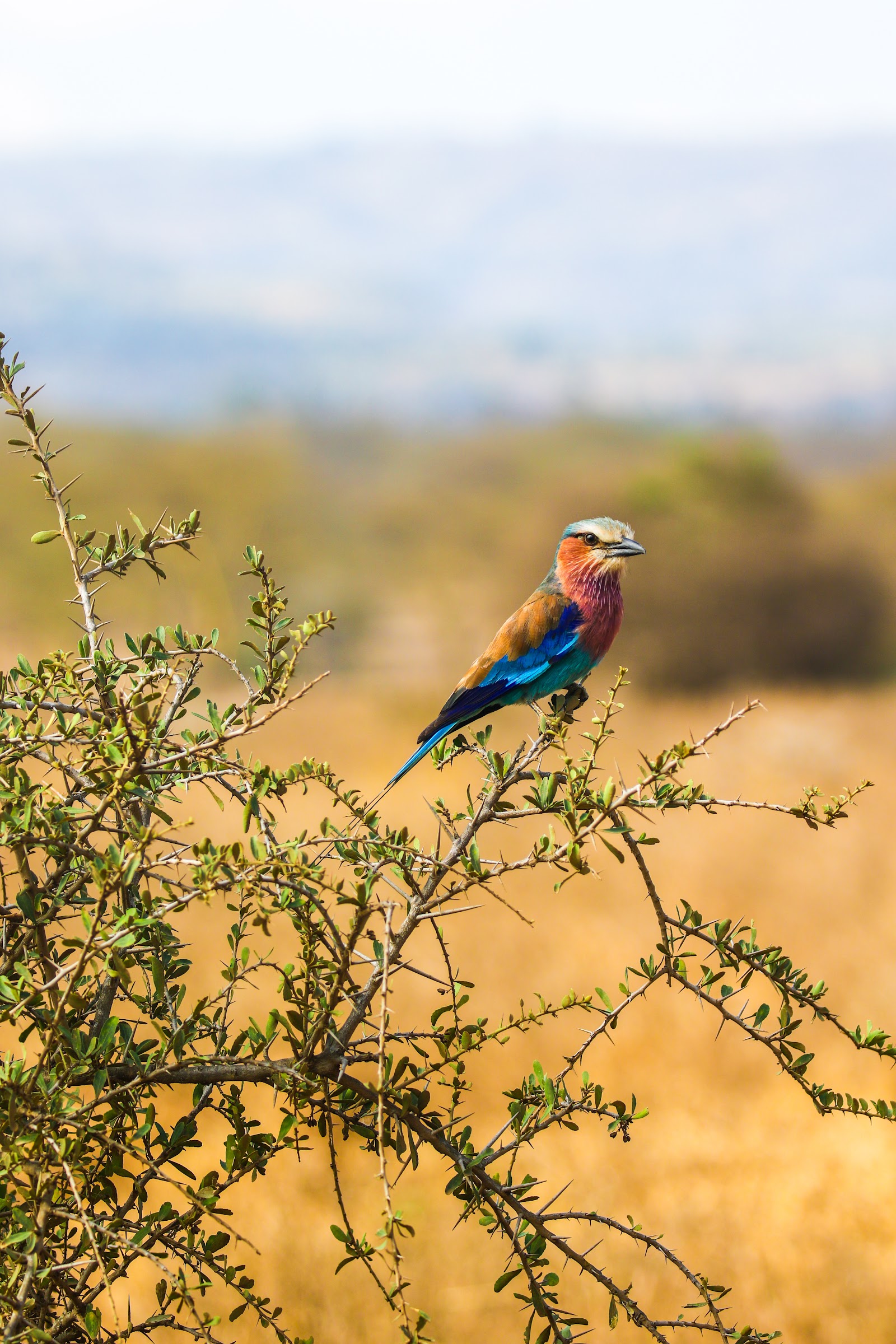
Kenya’s unofficial avian icon wears eight colours and poses obligingly on open perches, then somersaults through the air in rolling display flights that explain the name. Every game drive produces several. Getting the perfect wings-open turquoise flash takes patience and a fast shutter — a challenge guests happily lose entire mornings to.
Secretary Bird on Patrol — the snake-stomping eagle on stilts
Standing about 1.3 metres tall with quill-pen crest feathers, the secretary bird strides the plains at a businesslike pace, stamping snakes and grasshoppers to death with karate-kick precision. The Mara’s open grassland is prime territory, and pairs are seen daily. Watching one dispatch a snake ranks with any predator sighting for pure drama.
The Vulture Committee — six species, one carcass, no manners
Within minutes of a kill, the sky spirals with vultures — lappet-faced, white-backed, Rüppell’s, hooded, white-headed and Egyptian can all attend the same carcass, each with its role in the dismantling order. It is raw, riotous and ecologically vital. The Mara is one of the last strongholds for several of these declining species.
Martial Eagle Hunting — Africa’s most powerful eagle
With a two-metre-plus wingspan and talons that can take young impala, the martial eagle is the raptor every birder wants. Scan tall dead trees and you will find one surveying the plains like it owns them — because functionally it does. Our guides know the regular perch trees along the drive circuits.
Ostrich Courtship Displays — the world’s biggest bird, showing off
Masai ostrich males blush pink-red in breeding season and perform extravagant kneeling, wing-waving dances for females. Standing 2.5 metres and sprinting at 70 km/h, they are dinosaurs in all but name. Chicks trailing parents across the plains in single file are a guaranteed vehicle-wide “aww”.
Build a Birding Day Into Your Safari
Dedicated birding drives, riverine forest walks at the bridge, and a guide with a laser pointer for the canopy. Just ask.

Masai Mara Birding Facts
- The list: over 500 species recorded — roughly half of Kenya’s total bird list in one reserve.
- Raptor central: nearly 60 raptor species, from pygmy falcons to martial eagles and six vultures.
- Best months: November-April adds 200+ migrants; resident specials perform year-round.
- Big birds: ostrich (2.5 m), kori bustard (one of the heaviest flying birds) and secretary bird (about 1.3 m) all stalk the same plains.
- Daily century: a focused green-season day regularly logs 100+ species without leaving the vehicle.
- Conservation: the Mara is a critical refuge for Africa’s crashing vulture populations — sightings here genuinely matter.
Birds of Masai Mara by Habitat
The quickest way to build a long list is to visit several habitats. Your guide will plan routes that move between them during a day.
Open plains and grassland
The short-grass plains are home to ostriches, kori and white-bellied bustards, secretary birds, crowned lapwings, larks, pipits and longclaws. In the green season, look for harriers quartering low over the grass and huge flocks of migrant swallows.
Rivers and riverine forest
The forests along the Mara and Talek rivers hold some of the most colourful birds of Masai Mara: Schalow’s turacos, kingfishers, barbets, bee-eaters and the African fish eagle. Hamerkops and herons fish the shallows. See our guide to Mara River wildlife for more on the river.
Marshes and wetlands
Seasonal marshes attract saddle-billed and yellow-billed storks, crowned cranes, jacanas, crakes and many waders. Water levels change with the rains, so ask your guide which wetlands are holding birds during your stay.
Acacia woodland and thicket
Scattered acacias are good for lilac-breasted rollers, shrikes, starlings, weavers and hornbills. Weaver colonies are busy in the rains, when males build and display at their nests.
Best Time to See the Birds of Masai Mara
The birds of Masai Mara can be enjoyed in every month, but numbers and variety change with the seasons:
- November to April: the peak for birders. More than 200 migrant species arrive from Europe, Asia and other parts of Africa, and many residents breed in bright plumage.
- May to June: green, quiet and lush, with fewer vehicles and good water birds after the long rains.
- July to October: the migration season. Vultures and marabou storks gather at carcasses, and raptors are easy to see in the dry, open conditions.
Early morning is the best time of day, when birds are most active and calling. Read our guide to the Masai Mara green season for the months when migrant birds peak.
10 Common Birds of Masai Mara to Tick Off
These ten birds of Masai Mara turn up on most game drives, so they make a good starter list for first-time visitors and children:
- Lilac-breasted roller: turquoise, lilac and rust, perched on bare branches.
- Superb starling: glossy blue-green with an orange belly, often at camp.
- Ostrich: the world’s largest bird, striding across the plains.
- Secretary bird: long legs, crest feathers and a slow, steady walk.
- Grey crowned crane: golden crown and a graceful courtship dance.
- Kori bustard: a huge, heavy bird that prefers walking to flying.
- White-backed vulture: the vulture you are most likely to see at a carcass.
- Marabou stork: bald-headed and tall, often beside the vultures.
- Crowned lapwing: loud and bold, defending its nest on the open ground.
- Helmeted guineafowl: noisy flocks scurrying across the tracks.
A Birding Day With the Birds of Masai Mara
A birding day starts at first light, when the plains are full of song. Your guide will drive slowly along the edge of the grassland and woodland, stopping often to scan with binoculars. Raptors start to soar once the ground warms up, usually by mid-morning, so that is the time to look up for bateleurs, tawny eagles and vultures.
Midday is a good time to visit a river or a marsh, where water birds stay active in the heat. In the late afternoon, return to the woodland for rollers, hornbills and shrikes, and finish near camp listening for owls and nightjars as the light fades. Big game appears all day, so non-birders in your group still enjoy the drive.
Bird Photography and Etiquette Tips
- Switch off the engine: vibration blurs long-lens shots and disturbs birds.
- Use a fast shutter speed: 1/2000 second or faster freezes wings in flight.
- Do not use call playback near nests: it stresses breeding birds.
- Keep your distance: if a bird changes its behaviour, you are too close.
Protecting the Birds of Masai Mara
Several of the birds of Masai Mara are under serious threat. Most African vulture species have declined sharply, and some, such as the white-backed, Rüppell’s and hooded vultures, are now listed as Critically Endangered on the IUCN Red List. The main causes include poisoning and habitat loss.
Large protected areas like the Mara and its community conservancies give these birds safe places to feed and nest. As a visitor, your park and conservancy fees help pay for that protection. Stay on the tracks, keep a respectful distance from nests and follow the guidance of the Kenya Wildlife Service.
What to Pack for Birding in the Mara
- Binoculars: 8×42 or 10×42 are ideal; bring a pair for each traveller if you can.
- A field guide or app: a guide to the birds of East Africa helps you learn the common species quickly.
- A long lens: 300–600 mm for bird photography, with a beanbag for support on the vehicle window.
- A notebook: to keep your daily list, or ask your guide to keep one for you.
- Neutral clothing and a hat: dull colours help you blend in, and the sun is strong.
Birds of Masai Mara Safari Costs and Packages
You do not need a special package to enjoy the birds of Masai Mara; tell us you are a birder and we will plan the game drives around your list. Popular trips with current starting prices include:
- Masai Mara & Lake Nakuru Camping Safari (4 days) — from USD 590 per person, adding Lake Nakuru’s water birds.
- 3-Day Masai Mara Safari — from USD 650 per person.
- Big Cats Photographic Safari (6 days) — from USD 2,600 per person, with long days in the field.
Compare every trip on our Masai Mara safari packages page. Serious birders usually prefer a private Kenya safari, so the vehicle can stop for every lark and cisticola without testing anyone’s patience.
Getting There and Adding More Birding Sites
The Mara is about five to six hours by road from Nairobi, with a stop at the Great Rift Valley viewpoint, or about an hour by light aircraft from Wilson Airport. The drive is a bonus for birders, because roadside stops in the Rift Valley add species you will not see among the birds of Masai Mara.
Many birders combine the Mara with Lake Nakuru for flamingos, pelicans and other water birds, or with Lake Naivasha for fish eagles and kingfishers. Seeing the birds of Masai Mara alongside these lakes can push a week’s list well past 300 species. Read our Kenya safari from Nairobi page for route ideas, and remember that the birds of Masai Mara are at their richest when you give them time.
Pairing Birds With the Big Game
Birding slots into any Mara trip — mention it and we’ll adjust the drives. Dedicated birders should read our Kenya birdwatching safari guide for a full national circuit, combine the Mara with the flamingo lakes via our Lake Nakuru guide, or build a photographic trip around birds and cats on the 6-day Photographic Safari.
A sunrise hot air balloon safari gives a completely different view, with vultures and storks sometimes riding the same morning air. For trip ideas across Kenya, visit Magical Kenya.
500 Species Are Waiting
Rollers at eye level, eagles overhead. Tell us your must-see birds and we’ll plan the drives around them.
Frequently Asked Questions
How many bird species are in the Masai Mara?
The Masai Mara has recorded over 500 bird species — about half of Kenya’s national list — thanks to its mix of open plains, riverine forest, marshes and acacia woodland. A focused birding day in the green season can log more than 100 species from the vehicle.
What is the most famous bird in the Masai Mara?
The lilac-breasted roller is the Masai Mara’s most photographed bird — an eight-coloured stunner that perches openly on acacias and performs rolling display flights. Among large birds, the secretary bird and martial eagle are the reserve’s star attractions.
When is the best time for birdwatching in the Masai Mara?
The best birding in the Masai Mara runs November to April, when over 200 Eurasian and intra-African migrant species join the residents and many birds breed in colourful plumage. Resident specials like secretary birds, ostriches and raptors show well in every month.
Are there eagles in the Masai Mara?
Yes — the Masai Mara hosts nearly 60 raptor species including the martial eagle (Africa’s most powerful), bateleur, tawny eagle, long-crested eagle and African fish eagle along the rivers. Tall dead trees on the open plains are reliable places to scan for perched eagles.
Can I do a birding-only safari in the Masai Mara?
Absolutely. A birds-of-Masai-Mara focused safari simply re-times the game drives — slower routes through varied habitats, riverine forest stops and marsh edges. Big cats still appear along the way; you just stop for the rollers too. We match birding guests with our keenest birding guides.
Which birds of Masai Mara are hardest to find?
Owls, nightjars and forest birds such as Schalow’s turaco take the most effort, because they hide by day or stay in thick cover along the rivers. Rare raptors and some migrant waders are also hit and miss. A knowledgeable guide, an early start and a slow route give you the best chance.
Are the birds of Masai Mara good for beginners?
Yes. Many birds of Masai Mara are large, colourful and easy to see from the vehicle, such as ostriches, rollers, secretary birds and vultures. Beginners often see 50 or more species in a couple of days without trying hard. Bring binoculars and ask your guide to point out the common birds first.
Do I need a special guide for the birds of Masai Mara?
Not for general birding, as most experienced Mara guides know the common birds well. If you are a keen lister chasing specific species, tell us when you book and we will match you with one of our most bird-focused guides and plan routes through the right habitats.