A Kenya birdwatching safari puts you in one of the world’s great birding countries. With over 1,100 bird species recorded — roughly a tenth of all the world’s bird species in a country about the size of France — Kenya offers birdwatching that rivals any destination on earth.
Whether you are a life-lister building a global tally, a photographer chasing the perfect image of a carmine bee-eater in flight, or simply a safari traveller who has discovered the reward of looking up, Kenya will exceed every expectation.
What makes Kenya so compelling for birdwatching is the diversity of habitats — from the alkaline Rift Valley lakes and their flamingos to the montane forests of Mount Kenya, the semi-arid north with its dry-country specialists, the Indian Ocean coast and its coastal forest rarities, and the open savannah of the Masai Mara, rich in raptors and ground birds. Birding Kenya means birding several distinct ecosystems on a single trip.
✅ Kenya Birdwatching Safari: The Quick Answer
- Species: more than 1,100 recorded, with 400–500+ realistic on a two-week trip with a specialist guide.
- Top sites: Lake Nakuru, Lake Naivasha, Lake Baringo and Bogoria, Kakamega Forest, Samburu, the Masai Mara and Arabuko-Sokoke Forest.
- Best time: November to March, when Palearctic migrants from Europe and Asia join the resident birds and many species are in breeding plumage.
- Time needed: 8–14 days for a dedicated birding trip; a few extra early walks can be added to any standard safari.
- Cost from: our 8-day Kenya Birding Tour starts from USD 2,050 per person (season, lodges and group size affect the final price).
🌎 Ready to Start Planning?
Our Kenya safari experts are on WhatsApp right now — ask us anything about dates, destinations, or costs.
💬 WhatsApp Us Now or call +254 799 160 081
Why Choose a Kenya Birdwatching Safari?
Kenya sits on the equator, straddles the Great Rift Valley and climbs from sea level to over 5,000 metres on Mount Kenya. That range of altitude and rainfall creates an unusual number of habitats packed close together, and each one has its own set of birds.
A Kenya birdwatching safari is also easy to combine with classic big-game viewing. Many of the best birding sites are national parks where you will also see elephants, lions and giraffes. That makes Kenya ideal for mixed groups where one person is a keen birder and the others want the Big Five.
The country is also well set up for birders. Experienced local bird guides know calls, habitats and seasonal movements, and many lodges keep bird lists and have hides or feeders. Nature Kenya, the country’s long-established natural history society, supports conservation at many of the key Important Bird Areas.
Kenya Birdwatching Safari: Top Destinations
Lake Nakuru National Park: One of Africa’s best-known birdwatching sites. Lake Nakuru hosts concentrations of flamingos (both lesser and greater), great white pelicans, and a wide variety of waterbirds along the alkaline shoreline. More than 450 species have been recorded in the park and its surroundings.
The yellow fever acacia woodland around the lake adds woodland species, and African fish eagles are common. A full day at Nakuru can yield 100+ species for an attentive birder. Flamingo numbers vary from year to year with water levels, so check recent reports before you travel.
Lake Naivasha: Lake Naivasha’s papyrus fringes, open water and surrounding woodland support over 400 species, including the African fish eagle, great crested grebe, African jacana (walking on floating vegetation) and long-tailed widowbird.
The boat trip on the lake is as much a birding experience as a hippo encounter — the lakeside vegetation is alive with herons, kingfishers and bee-eaters.
Masai Mara National Reserve: Over 500 species have been recorded in the Mara ecosystem, including the grey crowned crane, kori bustard (one of the heaviest flying birds), secretary bird, martial eagle, bateleur and many other raptors.
The Mara River is excellent for riverine species, and the open plains are superb for ground birds such as ostriches and lapwings. Dedicated birding drives in the Mara, separate from the standard game-drive schedule, can be arranged through our team.
Samburu National Reserve: Northern Kenya’s dry-country birdlife is among the most exciting in East Africa. Samburu holds Somali-Maasai specialities including the Somali ostrich, vulturine guineafowl, Somali bee-eater, golden-breasted starling and D’Arnaud’s barbet.
The Ewaso Nyiro River adds waterbird diversity, and Samburu often produces 150+ species in three days for a motivated birder.
Coastal forests on a Kenya birdwatching safari
Arabuko-Sokoke Forest (Kenyan coast): The largest remaining coastal forest in East Africa — around 41,000 hectares of dry coastal forest near Malindi and Watamu — is one of Kenya’s most important birding sites. It is home to several globally threatened species with tiny ranges, including Clarke’s weaver, the Sokoke pipit, the Sokoke scops owl and the Amani sunbird.
A dedicated birding visit to this forest, combined with a Watamu or Malindi coastal stay, is an essential addition for any serious birder. Mida Creek, close by, adds waders and crab plovers on the tidal flats.
📅 Get a Free Custom Itinerary
Tell us your travel dates and we will send you a fully personalised safari proposal — no obligation, no pressure.
Highland and Rift Valley sites for a Kenya birdwatching safari
Mount Kenya and the Aberdares: The montane forests and moorlands of Mount Kenya and the Aberdare Range hold highland species that you will not find in the lowland parks, including Jackson’s francolin, Hartlaub’s turaco, Mackinder’s eagle-owl, scarlet-tufted sunbirds on the moorland and many forest specialists.
A birding walk through the lower forest zone on the Sirimon or Naro Moru side can produce 60–80 species in a morning.
Lake Bogoria and Lake Baringo: Lake Bogoria, north of Nakuru, can host very large flamingo gatherings set against geothermal hot springs and steam vents. Freshwater Lake Baringo, further north, is one of Kenya’s premier birding sites, with over 470 species recorded and a wonderful mix of waterbirds, raptors and bee-eaters reachable by boat.
Baringo is also famous for its cliffs, where local guides regularly show visitors owls and nightjars at their daytime roosts. The Baringo-Bogoria combination is a destination that serious listers travel to Kenya specifically to visit. See our Lake Bogoria guide for more.
Kakamega Forest: In western Kenya, Kakamega is the country’s only remnant of the great Guineo-Congolian rainforest. It holds species more typical of Central Africa, such as the great blue turaco and many forest greenbuls, and is a highlight of any longer Kenya birdwatching safari.
Best Time for a Kenya Birdwatching Safari
Kenya is good for birds all year, but the best time for a Kenya birdwatching safari is roughly November to March. During these months, Palearctic migrants from Europe and Asia — warblers, wheatears, raptors, waders and swallows — join the resident species, and many residents breed and wear their brightest plumage.
The short rains in November and December bring fresh growth and insects, which can make the bush very lively. The long rains of April and May are wet for travel but still productive for birds, with lower lodge rates and fewer visitors.
The dry season from June to October is excellent for combining birds with mammals, because wildlife gathers around water and the grass is shorter. For a month-by-month view of rainfall, see our Kenya weather by month guide.
Migration hotspots
Ngulia in Tsavo West is known for the night-time movement of migrant birds late in the year, which has been studied by ringing teams for decades. On the coast, Mida Creek and the Sabaki River mouth near Malindi attract large numbers of waders, terns and gulls during the northern winter.
Designing Your Kenya Birdwatching Safari Route
A dedicated Kenya birding itinerary is quite different from a standard wildlife safari, though the two combine well. Birding drives start earlier for the dawn chorus, include more time on foot in suitable habitats, and focus on places that standard game drives often skip, such as forest edges, wetland margins and rocky hillsides.
Our recommended 10-night Kenya birding circuit: Nairobi (1 night, Nairobi National Park birding) → Lake Nakuru (2 nights, flamingos and woodland) → Lake Naivasha (1 night, boat trip) → Lake Baringo (2 nights, freshwater specialists) → Samburu (2 nights, dry-country specialities) → Masai Mara (2 nights, savannah and Mara River).
This circuit is designed to cover maximum habitat diversity and can realistically produce 400–500+ species for an attentive observer.
We work with specialist birding guides who know Kenya’s birds across every habitat type. Tell us your target species, your existing life list and your travel dates, and we will design a birding safari that maximises your Kenya list while also delivering the broader safari experience that Kenya does so well.
A ready-made Kenya birdwatching safari
If you would rather start from a set route, our Kenya Birding Tour – Rift Valley Lakes, Kakamega & Masai Mara (8 Days) takes you from flamingo lakes to rainforest and savannah, from USD 2,050 per person. We can add Samburu, Baringo or the coast to suit your targets.
Birding works especially well in a private vehicle, because you can stop for every flash of colour without frustrating other guests. See our private Kenya safari options, or browse Kenya safaris from Nairobi if you want a shorter trip with birding time built in.
Birds to Look Out For on a Kenya Birdwatching Safari
Every Kenya birdwatching safari is different, but these are some of the birds that visitors most often remember:
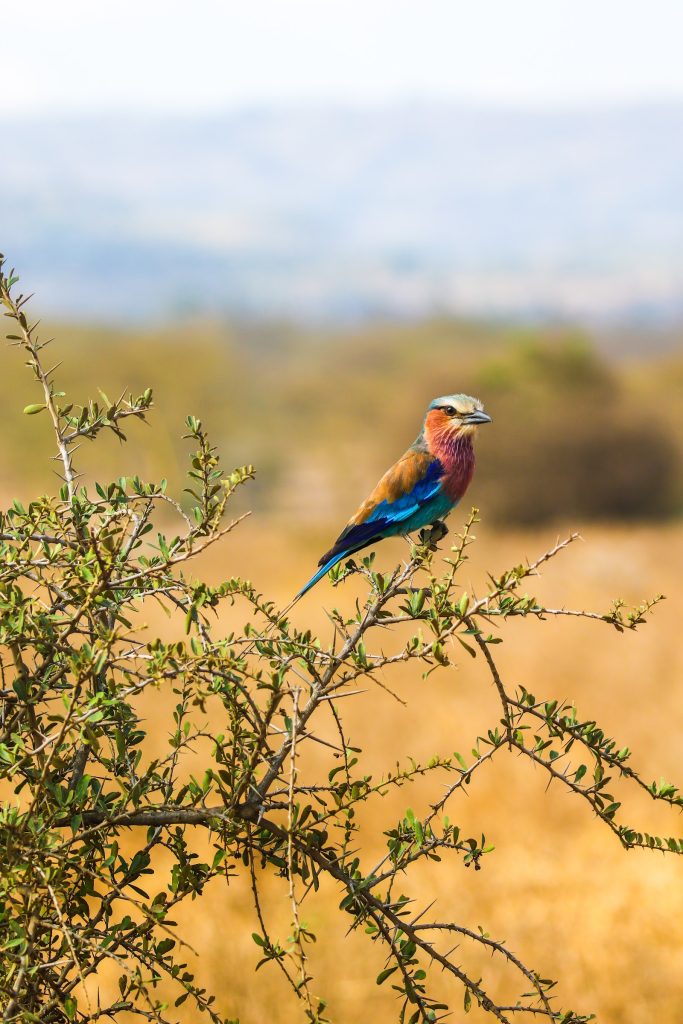
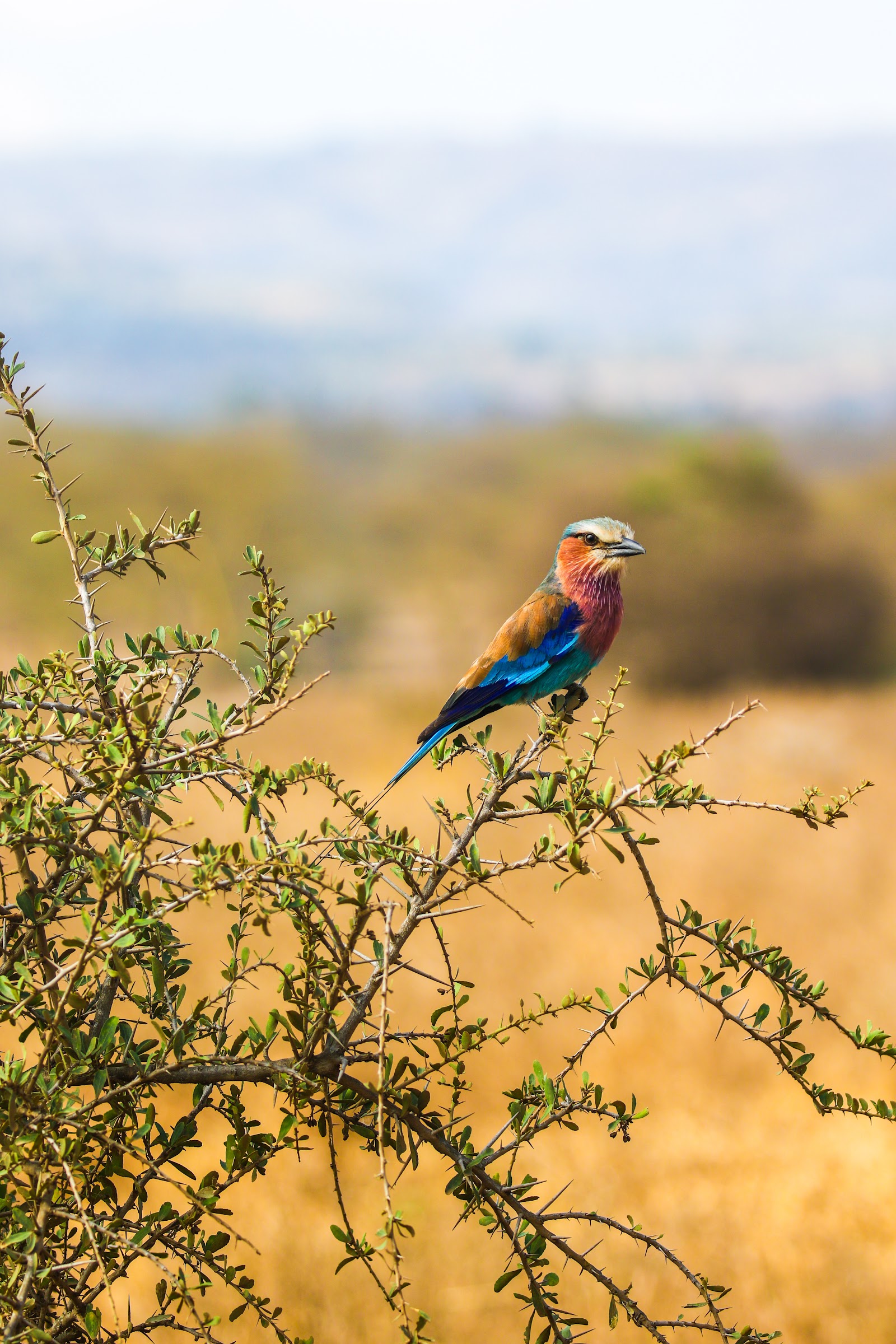
- Lilac-breasted roller: a dazzling savannah bird that perches in the open and is easy to photograph.
- Grey crowned crane: elegant and golden-crested, often seen in pairs in the Mara and on wetland edges.
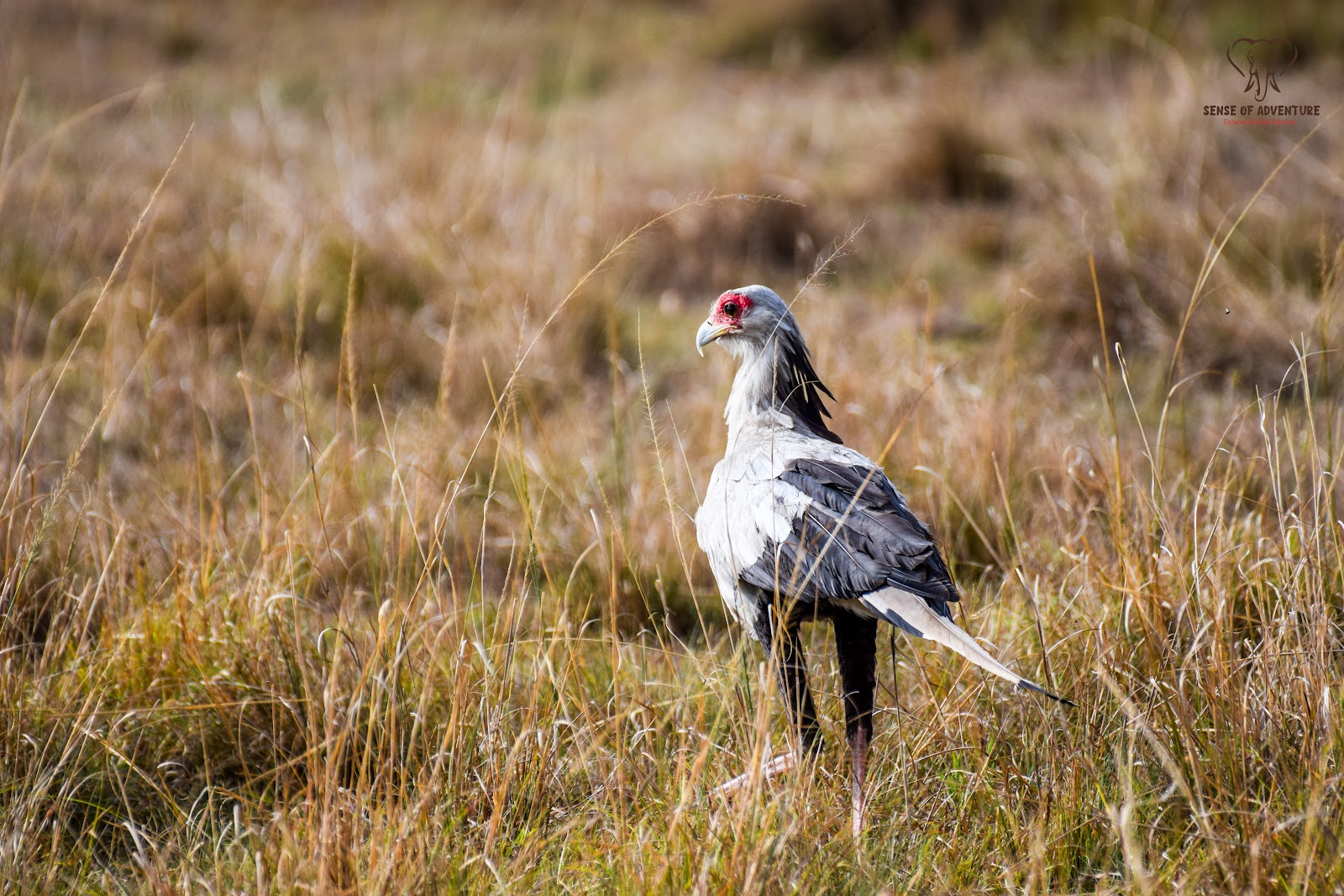
- Secretary bird: a long-legged raptor that hunts snakes and insects on foot across open grassland.
- African fish eagle: its ringing call is the sound of Kenya’s lakes and rivers.
- Superb starling: common, bold and gloriously iridescent around camps and lodges.
- Vulturine guineafowl: cobalt blue and striking, a speciality of the dry north.
- Lesser and greater flamingos: the pink spectacle of the Rift Valley soda lakes.
- Hartlaub’s turaco: a flash of crimson wings in the highland forests.
What to Bring on a Kenya Birdwatching Safari
- Binoculars: a good pair (8×42 or 10×42) for each person makes the biggest difference of all.
- A field guide or app: a regional East Africa field guide or a reliable bird app helps with identification.
- Camera and zoom lens: 300–600 mm is ideal for birds; a bean bag helps on vehicle windows.
- Neutral clothing: greens, browns and khaki are best for forest walks; avoid bright white.
- Light waterproof jacket: useful for forests and the rainy months.
- Insect repellent and sun protection: early mornings by lakes and rivers can bring mosquitoes.
If you fly between parks on light aircraft, check the luggage allowance before you pack heavy camera gear, and keep valuable lenses in your hand luggage.
How Much Does a Kenya Birdwatching Safari Cost?
The cost of a Kenya birdwatching safari depends mainly on the number of days, whether you have a private vehicle and specialist guide, the standard of lodges and the season. As a guide, our 8-day Kenya Birding Tour starts from USD 2,050 per person.
Longer routes that add Samburu, Baringo, Kakamega or the coast cost more, mainly because of extra nights and driving time. Travelling in the green season or sharing a vehicle with a small group lowers the price per person. Tips, drinks and international flights are usually extra.
Short on time? A five-day birding taster
If you only have five days, a short Kenya birdwatching safari can still be very rewarding: one morning in Nairobi National Park, two nights at Lake Naivasha with a boat trip and a walk on Crescent Island, and two nights at Lake Nakuru for flamingos, pelicans and woodland birds. Even this compact route can produce well over 200 species in the right season.
Birding Etiquette and Conservation
Good birding is quiet birding. Keep your voice low, follow your guide’s lead and do not play bird calls repeatedly to attract birds, especially during the breeding season. Never approach nests, and stay on paths and tracks in parks and reserves.
Choosing local guides, community-run sites and conservation-minded lodges helps protect the habitats that make a Kenya birdwatching safari possible. Park rules and fees are set by the Kenya Wildlife Service, and you can learn more about the country’s Important Bird Areas from BirdLife International.
Kenya Birdwatching Safari: Frequently Asked Questions
How many bird species can I see on a Kenya birdwatching safari?
On a standard week-long safari you can easily see 150–250 species if you pay attention. On a dedicated two-week Kenya birdwatching safari with a specialist guide covering lakes, forests, dry country and savannah, 400–500 or more is a realistic target, especially between November and March.
When is the best time for birdwatching in Kenya?
November to March is the best time, because European and Asian migrants are present and many resident birds are breeding in bright plumage. Birding is good all year, though. The dry months from June to October are ideal if you also want excellent big-game viewing on the same trip.
Can I combine birdwatching with a normal safari?
Yes. Many of Kenya’s best birding areas, including Lake Nakuru, Lake Naivasha, Samburu and the Masai Mara, are also excellent for mammals. Ask for a private vehicle and a guide with good bird knowledge, and add a few early walks or a boat trip to turn a classic safari into a rewarding birding trip.
Do I need a specialist bird guide in Kenya?
For casual birding, a good safari guide will show you many species. For serious listing, a specialist bird guide is well worth it: they know calls, rare species and exact sites, and can find forest and night birds that general guides may miss. We can arrange specialist guides on request.
Is Kenya good for bird photography?
Kenya is excellent for bird photography. Many savannah birds are used to vehicles and perch in the open, the light is strong and the colours are vivid. A private vehicle with a pop-up roof, a long lens and a bean bag will help you make the most of early morning and late afternoon light.
Ready to start your own Kenya birdwatching safari? Tell us your dates, target species and budget and we will suggest the best route. You can also read more about the country at Magical Kenya, the official tourism board website.
🏑 Book Your Safari With Sense of Adventure
Kenya-based experts. Real local knowledge. Transparent pricing. We have been doing this for years — let us show you why our guests keep coming back.
💬 WhatsApp Us — Plan Your Safari Today
Call or WhatsApp: +254 799 160 081