
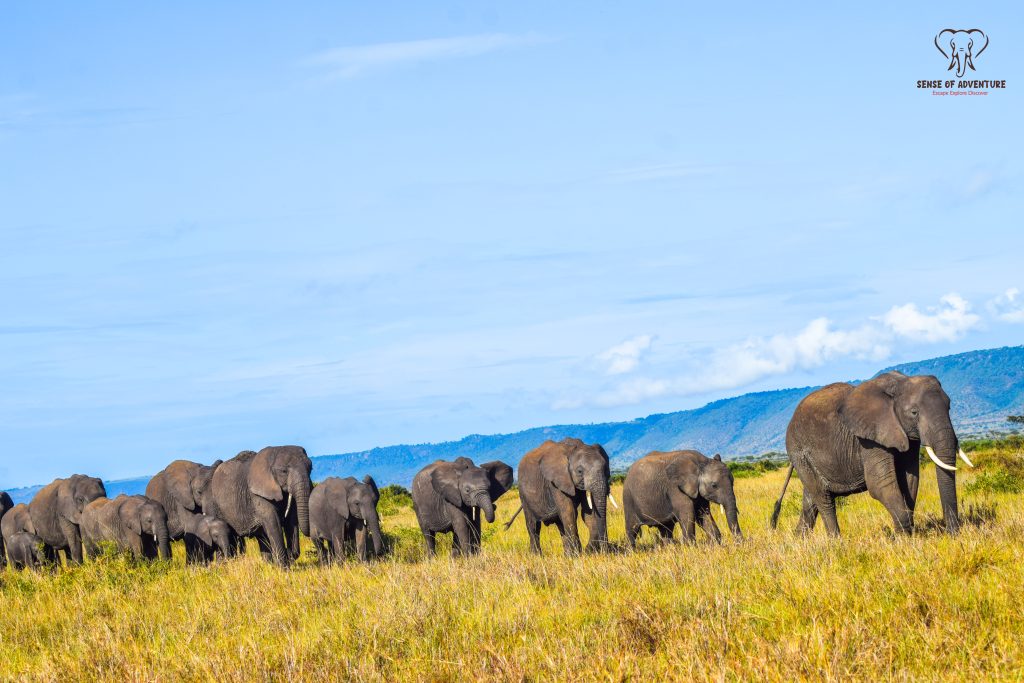
Every elephant herd you see in Kenya is run by an elder female, not the biggest bull in the group — a matriarch who leads her family unit to food and water using a lifetime of accumulated memory, and coordinates the group’s defence when a threat appears. Family units of adult cows, their daughters and their young sons typically number somewhere between 6 and 29 individuals depending on rainfall and location, while young bulls gradually peel away from the group between ages 10 and 19 to live independently or in loose bachelor herds. Elephants communicate over vast distances using infrasonic rumbles too low for human hearing, and carry the longest pregnancy of any mammal on Earth at roughly 22 months. Picture watching a matriarch make a real-time decision about which direction to move her family, informed by a route she may have walked for 40 years. Sense of Adventure explains this structure on every elephant sighting, not just points at the animals.
Understand the Herd, Not Just Photograph It
Message us to build an elephant-focused Kenya safari with real behavioural context.
Why the Matriarch Runs the Herd
Elephant family units are led by a matriarch, typically the oldest and most experienced female, whose accumulated memory of water sources, safe migration routes and past threats makes her decisions critical to the group’s survival — she guides the family cooperatively with other adult females, who together defend calves against predators. Family units themselves range from roughly 6 to 29 individuals on average depending on rainfall patterns and the specific ecosystem, made up of related adult cows, their daughters and their prepubertal sons. Young bulls begin separating from the family gradually between 10 and 19 years old, eventually living alone or forming loose bachelor groups, though older bulls remain critical to herd survival for their navigational knowledge. Elephants communicate using sophisticated infrasonic rumbles that travel for kilometres below the range of human hearing, used for mate attraction and warning off rivals, and demonstrate cognitive abilities researchers describe as including grief, tool use, self-awareness and genuine long-term memory.
Our guide pointed out the oldest female in an Amboseli herd and explained she was almost certainly the matriarch, making every decision about where the group moved next. Watching her actually lead the herd toward water a few minutes later, exactly as predicted, made the whole sighting feel completely different from just watching elephants graze.
— Sense of Adventure guest, Amboseli safari
How an Elephant Family Actually Works
The Matriarch — Decades of Memory, Real Authority — the eldest female leads based on accumulated experience
The matriarch’s knowledge of water sources, migration routes and past threats, built over decades, makes her the family’s effective decision-maker — a role earned through experience rather than size or strength.
The Family Unit — Cows, Daughters and Young Sons — typically 6-29 individuals, tighter in dry seasons
Related females and their offspring form the core social unit, cooperating to raise and defend calves collectively — group size shifts seasonally with rainfall and food availability.
Bulls — Leaving Between 10 and 19 — independent life or loose bachelor groups
Male elephants gradually separate from their birth family as they mature, eventually living solo or in shifting bachelor groups, though older bulls retain real value for the wider population’s navigational knowledge.
Communication — Infrasound Below Human Hearing — rumbles that travel for kilometres
Elephants use low-frequency infrasonic calls, inaudible to humans, to communicate across distances no visual or normal vocal signal could cover — a key part of how separated family groups stay coordinated.
See Real Elephant Family Behaviour
Message us to build a trip focused on Amboseli or Tsavo’s well-studied elephant families.
Kenya Elephant Social Facts
- Matriarch role: the eldest, most experienced female leads the family unit based on accumulated memory.
- Family unit size: typically 6-29 individuals, varying with rainfall and ecosystem.
- Bull dispersal age: young males leave the family between roughly 10 and 19 years old.
- Gestation period: approximately 22 months, the longest pregnancy of any mammal.
- Birth interval: females typically give birth every 3.9-4.7 years.
- Communication: infrasonic rumbles below human hearing range, used across kilometres of distance.
- Lifespan: up to 70-75 years in the wild, allowing matriarchs to accumulate decades of navigational knowledge.
Building an Elephant-Focused Kenya Safari
Amboseli’s elephant families have been individually studied and named for over 50 years — read our Amboseli elephants guide. Combine with Tsavo’s larger, wilder herds via our Masai Mara elephants guide or book our Tsavo East & West Safari.
Watch the Herd Make Real Decisions
Message us to plan a trip built around elephant family behaviour, not just sightings.
Frequently Asked Questions
Who leads an elephant herd?
An elephant family unit is led by a matriarch, typically the eldest and most experienced female, whose accumulated memory of water sources, migration routes and past threats makes her the group’s effective decision-maker.
How big is a typical elephant family in Kenya?
Elephant family units typically range from 6 to 29 individuals, made up of related adult cows, their daughters and young sons, with size varying based on rainfall patterns and the specific ecosystem.
When do male elephants leave their family?
Young bull elephants gradually separate from their natal family between roughly 10 and 19 years old, going on to live independently or in loose bachelor groups with other males.
How long is an elephant pregnancy?
Elephant gestation lasts approximately 22 months, the longest pregnancy of any mammal, with birth intervals typically spanning 3.9 to 4.7 years between calves.
How do elephants communicate over long distances?
Elephants use infrasonic rumbles — low-frequency calls below the range of human hearing — that can travel for kilometres, helping separated family members and rival males communicate across distances no visual signal could cover.