Giraffe species in Kenya come in three very different-looking types, and Kenya is one of the few countries where you can see all of them on a single safari. The Masai giraffe, with jagged, star-shaped patches, roams the Masai Mara, Amboseli, Tsavo and Nairobi National Park. The reticulated giraffe, with neat liver-red blocks outlined in bright white, lives in Samburu, Meru and the Laikipia conservancies. Rothschild’s giraffe, now usually treated as the Nubian giraffe, wears plain white “stockings” below the knee and is easiest to see at Lake Nakuru and the Giraffe Centre in Nairobi. Sense of Adventure can route your safari so you name all three yourself.
✅ Giraffe Species in Kenya: Quick Answer
- How many? Three giraffe species in Kenya, or types: Masai, reticulated and Rothschild’s (Nubian) giraffe.
- Species or subspecies? Still debated. The IUCN Red List treats them as subspecies of one giraffe; genetic studies support four species.
- Masai giraffe: Masai Mara, Amboseli, Tsavo and Nairobi National Park.
- Reticulated giraffe: Samburu, Buffalo Springs, Meru and Laikipia.
- Rothschild’s giraffe: Lake Nakuru, the Giraffe Centre in Nairobi and a few smaller sanctuaries.
- All three on one trip: our 9-day Kenya Highlights Safari covers Samburu, Ol Pejeta, Lake Nakuru and the Mara.
Want all three giraffe species in Kenya on one trip? We will plan the route around them.
Plan My Giraffe RouteGiraffe Species in Kenya: One Species or Four?
For most of the last century, scientists treated every giraffe in Africa as one species, Giraffa camelopardalis, split into several subspecies by coat pattern and range. The IUCN Red List still assesses giraffes this way, listing each type as a subspecies with its own conservation status.
Since 2016, genetic studies led by the Giraffe Conservation Foundation (GCF) and partner scientists have argued for four separate species: the northern, southern, reticulated and Masai giraffe. Under that view, Kenya holds three of the four. The same research found that Rothschild’s giraffe is genetically the same as the Nubian giraffe, so many experts now use the name Nubian giraffe for both.
What the debate means for giraffe species in Kenya
On safari, the name on the label changes nothing about what you see. Guides, park signs and older books may say “three subspecies”, while newer sources say “three species”. Both describe the same three animals. In this guide we call them the giraffe species in Kenya, as most travellers do, but we explain the science honestly so you are not confused when sources disagree.
Three Coat Patterns, Three Different Corners of Kenya
The reticulated giraffe carries large, neat, polygon-shaped patches in a rich liver-red or orange-brown, divided by thin, bright white lines like a net. The pattern runs well down the legs. It is the giraffe of Kenya’s dry north and east: Samburu, Buffalo Springs, Shaba, Meru and the Laikipia plateau.
Rothschild’s giraffe has larger, paler, less sharply edged patches with creamy lines between them, and no markings at all below the knee, which gives it the look of white stockings. Males often show a prominent bony bump on the forehead and extra bumps behind the ears, which is why they are sometimes described as having five “horns”. In Kenya it lives mainly in fenced parks and sanctuaries, with Lake Nakuru National Park the easiest place to see it in the wild.
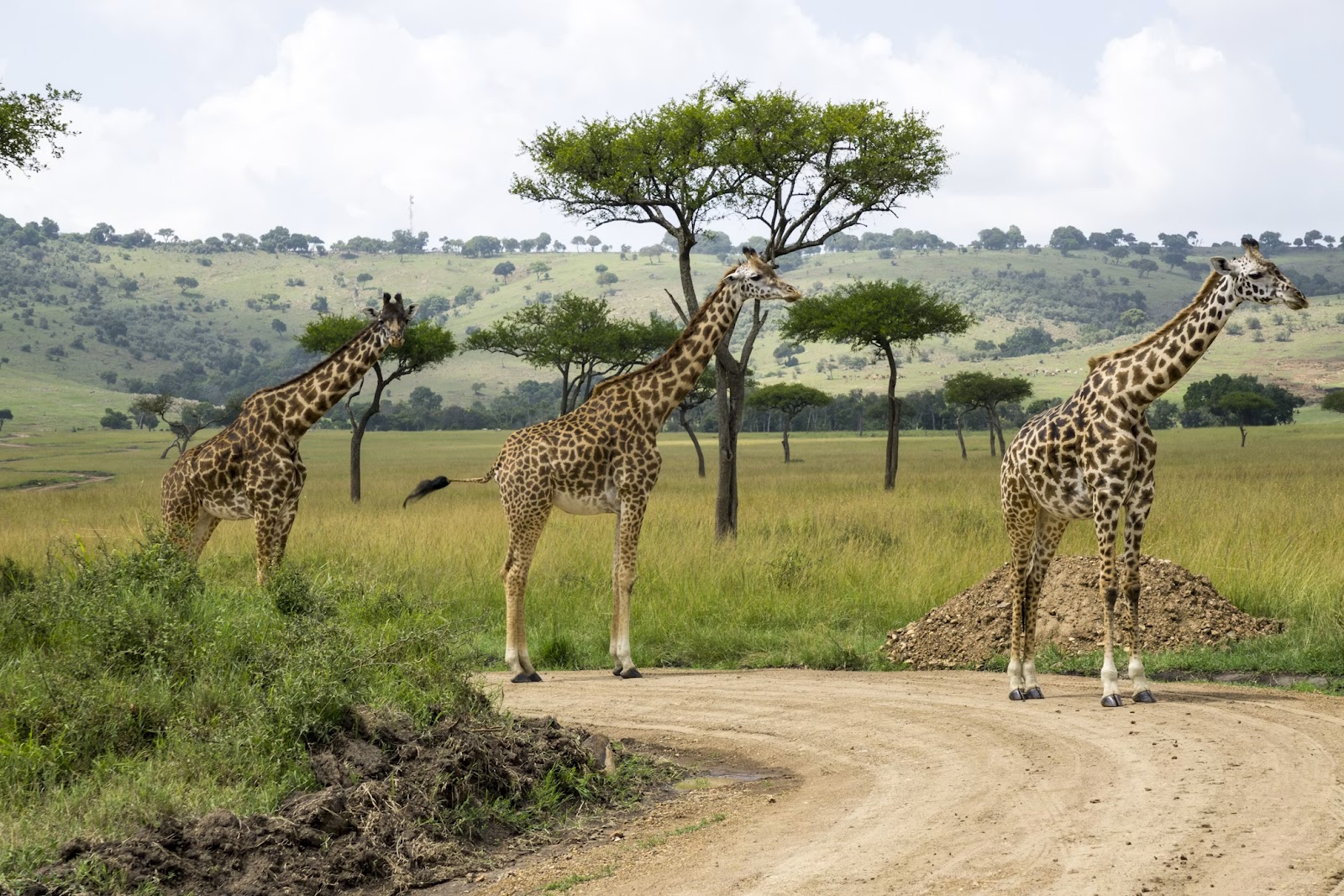
The Masai giraffe has dark, irregular, jagged patches shaped like stars or vine leaves, and the spots continue right down to the hooves. It is the giraffe most safari visitors already know, common across the southern circuit from the Mara to Amboseli and Tsavo. Bulls can reach about 5.5 metres, making it one of the tallest giraffes of all.
Kenya’s 3 Giraffe Types and Where to Find Them
Reticulated Giraffe — Samburu, Meru & Laikipia — neat liver-red blocks with bright white lines
Listed as Endangered by the IUCN after a steep fall in numbers, though recent surveys suggest a partial recovery. Most reliably seen in Samburu and Buffalo Springs, where it is one of the Special Five, and in Meru and the Laikipia conservancies. See our Samburu Special Five guide.
Rothschild’s (Nubian) Giraffe — Lake Nakuru & the Giraffe Centre — pale patches and white “stockings”
The rarest of the three giraffe species in Kenya. The Nubian giraffe, which now includes Rothschild’s, is listed as Critically Endangered, with the largest wild population in Uganda. In Kenya, Lake Nakuru is the main place to see it on a game drive. See our Giraffe Centre Nairobi guide.
Maasai Giraffe — Masai Mara, Amboseli & Tsavo — jagged star-shaped patches, the most familiar type
The giraffe most safari visitors already picture, common across Kenya’s southern circuit and listed as Endangered since 2019. Read more in our Masai Mara giraffes guide.
How to Identify Giraffe Species in Kenya in the Field
Telling the giraffe species in Kenya apart is easier than it sounds. Look at three things: the shape of the patches, the colour of the lines between them, and the lower legs.
Reticulated giraffe ID tips
Look for clean, almost geometric blocks with crisp, bright white lines, as if someone drew a net over a red-brown animal. The effect is bold even from a distance.
Rothschild’s giraffe ID tips
Check the legs first. If they are plain white below the knee, you are almost certainly looking at a Rothschild’s giraffe. The patches are paler and blurrier at the edges than a reticulated giraffe’s.
Masai giraffe ID tips
Look for ragged, star or leaf-shaped dark patches with irregular edges, spotted all the way down to the hooves. In the Mara, Amboseli and Nairobi National Park, every giraffe you meet will be this type.
Giraffe Species in Kenya Compared
This table sums up how to tell the giraffe species in Kenya apart and where you are most likely to see it.
| Giraffe | Coat pattern | Best places in Kenya | IUCN status |
|---|---|---|---|
| Masai | Jagged star or leaf shapes; spotted to the hooves | Masai Mara, Amboseli, Tsavo, Nairobi National Park | Endangered |
| Reticulated | Neat liver-red blocks, thin bright white lines | Samburu, Buffalo Springs, Meru, Laikipia | Endangered |
| Rothschild’s (Nubian) | Pale, blurry patches; plain white lower legs | Lake Nakuru, Giraffe Centre, Ruma National Park | Critically Endangered (as Nubian) |
Status follows the IUCN Red List’s subspecies assessments. Under the four-species view, the Masai and reticulated giraffes are species in their own right, and Rothschild’s giraffe belongs to the northern giraffe.
Samburu, Nakuru or Both?
Tell us how many days you have, and we will tell you honestly how many giraffe species in Kenya you can fit in: the reticulated giraffes of the north, the Rothschild’s giraffes of Nakuru, or both.
Where to See Giraffe Species in Kenya
Masai giraffe: the southern circuit
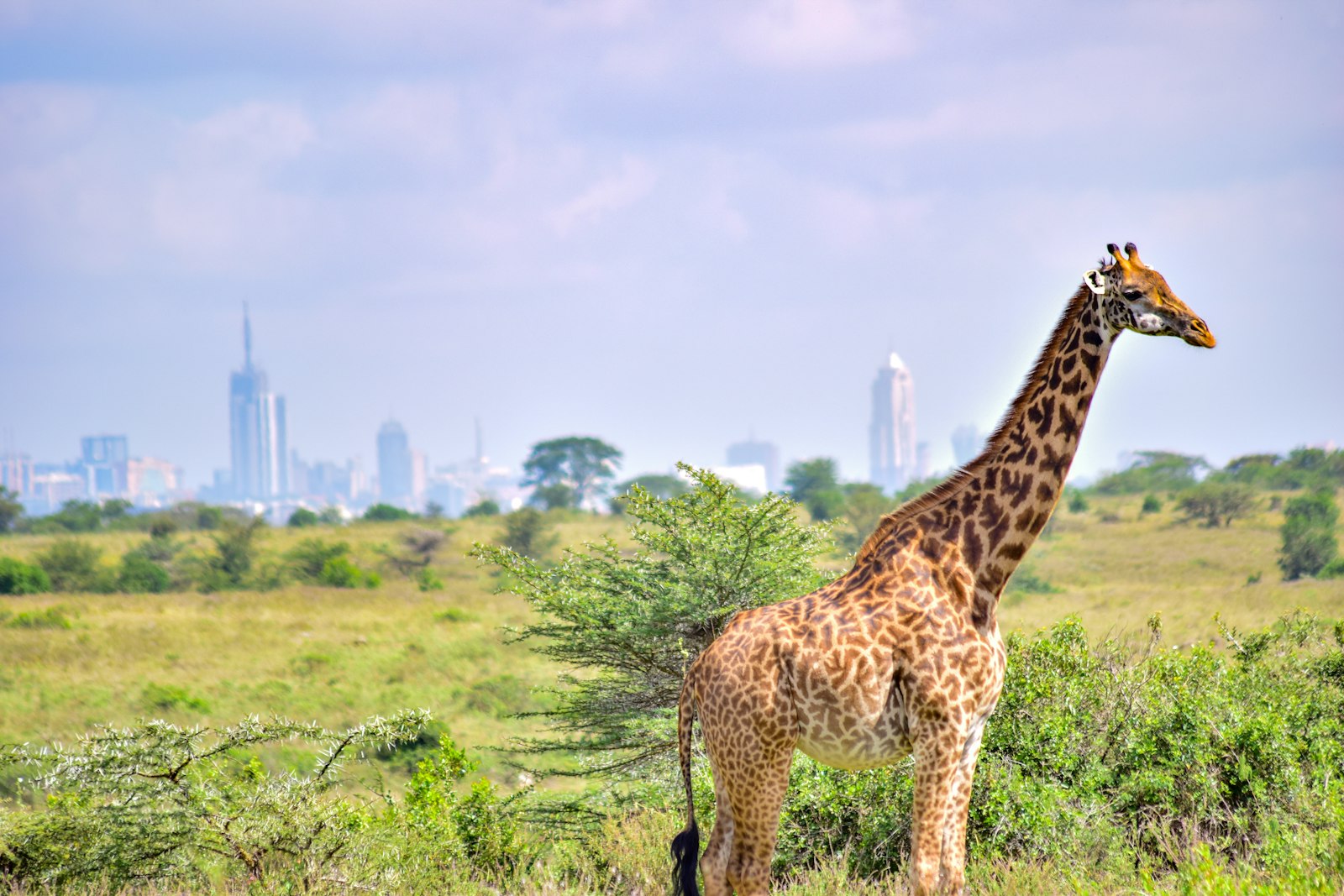
Of the giraffe species in Kenya, the Masai giraffe is the one you will meet on almost every drive in the Masai Mara, especially in acacia woodland and along the bushy edges of the plains. Amboseli adds giraffes against Kilimanjaro, and Tsavo East and West have them in big, open country. Nairobi National Park is the easiest of all: giraffes often browse within sight of the city skyline, a short drive from your hotel.
Reticulated giraffe: the dry north
Samburu and Buffalo Springs, on either side of the Ewaso Nyiro River, are the classic places, and the giraffes there stand out beautifully against red earth and doum palms. Meru National Park and the Laikipia conservancies, including Ol Pejeta and Lewa, also hold reticulated giraffes. Our Samburu safari 2027 guide covers the reserve in detail.
Rothschild’s giraffe: Nakuru and Nairobi
Lake Nakuru National Park holds a well-known herd that was moved there decades ago, and it is the best place to see Rothschild’s giraffes in the wild, often alongside rhinos. Ruma National Park in the far west and a few private sanctuaries also hold small herds. In Nairobi, the Giraffe Centre lets you feed them at eye level, and Giraffe Manor is famous for giraffes at the breakfast window.
Best Time to See Giraffe Species in Kenya
Giraffes do not migrate, so all three giraffe species in Kenya can be seen in every month. What changes is the setting and how easy it is to spot them.
- June to October: the main dry season. Short grass, thinner bush and animals near water make giraffes easy to find, and the Great Migration fills the Mara from about July.
- December to March: mostly dry and warm, with good visibility in Samburu and the Mara and fewer vehicles than in peak season.
- April, May and November: the rains turn the parks green. Roads can be muddy, but the scenery is lovely and calves are often seen.
Early morning and late afternoon give the best light and the most active browsing. For month-by-month detail, see our Kenya weather by month guide.
How to Get There From Nairobi
Nairobi is the natural starting point for all three giraffe species in Kenya. Nairobi National Park and the Giraffe Centre are both within easy reach of the city, so you can see Masai and Rothschild’s giraffes on your first day.
Lake Nakuru is about three hours by road, across the Rift Valley, and works as a long day trip or an overnight stop. Samburu is a long day’s drive north through Nanyuki and Isiolo, or a short flight from Wilson Airport. The Masai Mara is about five to six hours by road or roughly an hour by light aircraft. A common loop runs Samburu, Laikipia, Lake Nakuru and then the Mara, which covers all three giraffes without backtracking.
What a Giraffe-Focused Safari Costs
You do not need a special trip to see giraffes, but the route decides how many giraffe species in Kenya you meet. These are starting prices per person from trips on our site; your written quote confirms the price for your dates.
- Nairobi National Park Day Safari: Masai giraffes near the city, from USD 150.
- Lake Nakuru Day Safari: Rothschild’s giraffes and rhinos, from USD 180.
- Masai Mara & Lake Nakuru Camping Safari (4 days): Masai and Rothschild’s giraffes, from USD 590.
- Samburu Cultural & Wildlife Experience (3 days): reticulated giraffes, from USD 850.
- Kenya Highlights Safari (9 days): Samburu, Ol Pejeta, Lake Nakuru and the Mara, so all three giraffes, from USD 2,350.
Park fees are part of every quote. The Masai Mara, run by Narok County, charges non-resident adults USD 100 per day from January to June and USD 200 per day from July to December.
Price Your Three-Giraffe Safari
Send your dates and group size, and we will reply with a written quote for Lake Nakuru, Samburu and the Mara, with park fees itemised. Dry-season camps book up first, so earlier quotes give you more choice.
Quote My Giraffe SafariWhy Giraffe Species in Kenya Need Protecting
It is easy to assume giraffes are safe because you see so many on safari. In fact, numbers across Africa fell sharply in the late twentieth century, and two of the three giraffe species in Kenya are listed as Endangered, with the Nubian giraffe Critically Endangered. The main threats are habitat loss, fencing and farmland, illegal hunting for meat and, in northern Kenya, severe drought.
Protected areas, community conservancies and translocations have helped. Lake Nakuru’s herd is the result of animals being moved to safety, and the Giraffe Centre, run by the African Fund for Endangered Wildlife (AFEW) Kenya, has played a long part in the Rothschild’s story. The Giraffe Conservation Foundation tracks numbers across Africa, and the IUCN Red List publishes the status of each giraffe type.
Giraffe Species in Kenya: Key Facts
- Taxonomy: the IUCN Red List treats the giraffe species in Kenya as subspecies; genetic studies led by GCF propose four giraffe species across Africa.
- Reticulated giraffe range: Samburu, Buffalo Springs, Shaba, Meru and the Laikipia plateau; listed as Endangered.
- Rothschild’s giraffe: genetically the same as the Nubian giraffe, which is listed as Critically Endangered; Kenya’s key wild herd is at Lake Nakuru.
- Rothschild’s features: plain white lower legs and, in males, extra bony bumps that can look like five “horns”.
- Masai giraffe: the most widespread of the three in Kenya, found in the Mara, Amboseli, Tsavo and Nairobi National Park; listed as Endangered since 2019.
- Sleep: wild giraffes sleep very little, in short naps that add up to well under two hours a day.
Building a Giraffe-Species Kenya Safari
The easiest way to see all the giraffe species in Kenya is to start with the Giraffe Centre in Nairobi for the Rothschild’s conservation story, then head to Lake Nakuru to see the wild herd. Add Samburu or Laikipia for reticulated giraffes and finish in the Mara with Masai giraffes. Our Kenya Highlights Safari follows exactly this pattern.
The Kenya Luxury Big Five Safari (8 days, from USD 4,800) covers the Mara, Amboseli and Samburu, so it gives you Masai and reticulated giraffes; add a morning at the Giraffe Centre for the third. Compare the Rift Valley and northern options in Samburu vs Lake Nakuru, see every Mara option on our Masai Mara safari packages page, or start from a Kenya safari from Nairobi. Check entry rules on the official Kenya eTA portal before you fly.
Tick Off Kenya’s Three Giraffes
From white stockings at Lake Nakuru to net-patterned giants in Samburu and star-patched towers in the Mara, we will build a private route that shows you all the giraffe species in Kenya.
Frequently Asked Questions
How many giraffe species are there in Kenya?
Kenya has three types of giraffe: the Masai, reticulated and Rothschild’s (Nubian) giraffe. The IUCN Red List treats them as subspecies of one species, while genetic studies led by the Giraffe Conservation Foundation support four giraffe species in Africa, three of which occur in Kenya. Either way, you can see all three on one well-planned safari.
Is Rothschild’s giraffe the same as the Nubian giraffe?
Genetic research found that Rothschild’s giraffe is the same as the Nubian giraffe, so the IUCN now includes it within the Nubian giraffe, which is listed as Critically Endangered. Many guides and signs in Kenya still use the name Rothschild’s, so you will hear both. They describe the same white-stockinged giraffe you see at Lake Nakuru.
Where can you see reticulated giraffes in Kenya?
Reticulated giraffes are easiest to see in Samburu and Buffalo Springs National Reserves, where they are one of the Special Five, and in Meru National Park and Laikipia conservancies such as Ol Pejeta and Lewa. Look for neat liver-red blocks outlined by thin, bright white lines. Dry-season months make them easier to find.
Which giraffe species in Kenya is easiest to see?
The Masai giraffe is the easiest, because it lives across the southern circuit most visitors follow: the Masai Mara, Amboseli, Tsavo and Nairobi National Park. Most game drives meet several. Reticulated giraffes need a trip north to Samburu or Laikipia, and wild Rothschild’s giraffes are best seen at Lake Nakuru.
Can you see all three giraffes on one safari?
Yes. A route that includes Nairobi or Lake Nakuru, Samburu or Laikipia, and the Masai Mara covers all three. Our 9-day Kenya Highlights Safari, from USD 2,350 per person, visits Samburu, Ol Pejeta, Lake Nakuru and the Mara. With less time, combine Nairobi’s Giraffe Centre with a northern stay and the Mara.
How do you tell the giraffe species in Kenya apart?
Look at the lower legs and the patches. Plain white legs below the knee mean Rothschild’s giraffe. Crisp, geometric red-brown blocks with bright white lines mean reticulated giraffe. Ragged, star-shaped dark patches running down to the hooves mean Masai giraffe. Your guide will help you practise until you can name them yourself.
When is the best time to see giraffes in Kenya?
Giraffes live in the same areas all year, so any month works. The dry seasons, from June to October and from December to March, are easiest, because short grass and thinner bush improve visibility. The green seasons of April, May and November bring fewer visitors, lovely scenery and often young calves.