
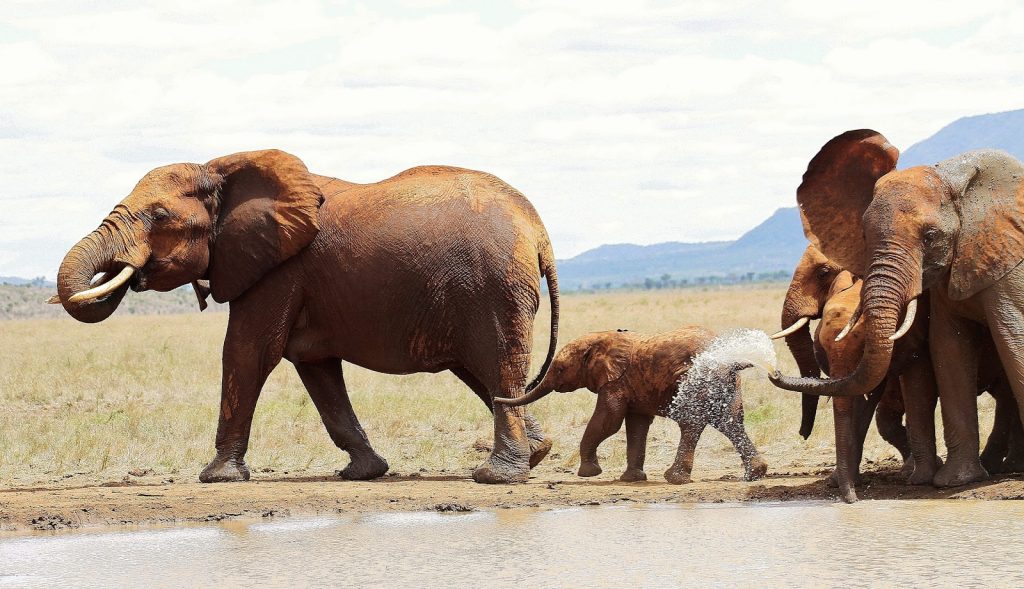
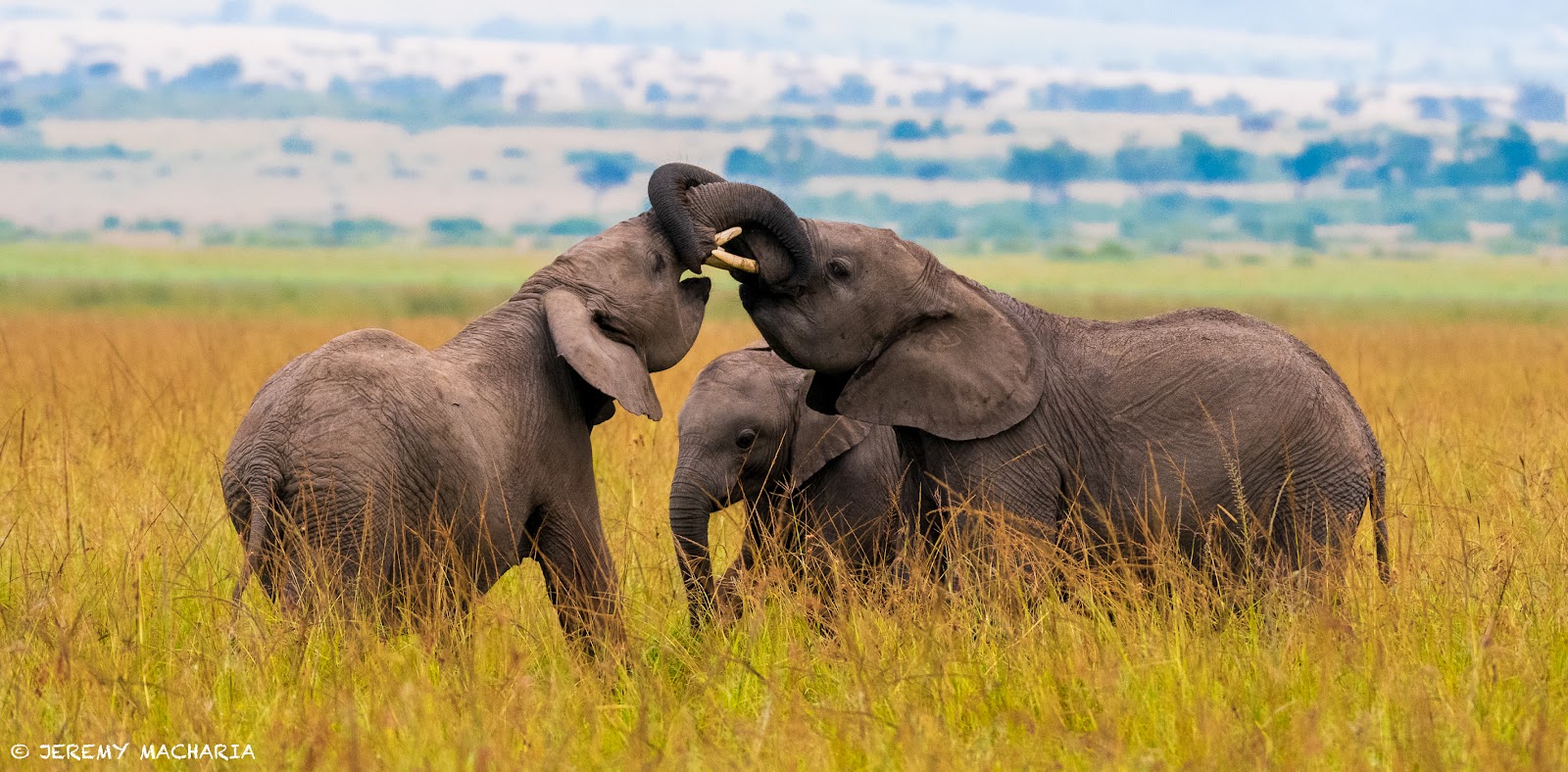
Red elephants of Tsavo stop first-time visitors mid-sentence: an entire herd the colour of rust, moving through silver commiphora scrub like something from a dream. The secret is in the soil — Tsavo’s volcanic earth is loaded with iron oxide, and elephants here dust and wallow constantly, painting themselves in terracotta from trunk to tail. Against that red skin, white tusks blaze. With around 15,000 elephants across the two Tsavo parks — Kenya’s largest elephant population — sightings are not just likely but frequently spectacular, especially at the dry-season waterholes. Sense of Adventure runs Tsavo year-round and knows exactly which water draws the painted herds each month.
Meet Kenya’s Painted Giants
Waterhole hides, red herds and Africa’s biggest wilderness — tell us your dates and we’ll plan your Tsavo elephant days.
Why Tsavo’s Elephants Turn Red
No elephant is born red. Tsavo’s signature colour comes from behaviour meeting geology: the parks’ soils are rich in iron oxide, and elephants dust-bathe and mud-wallow many times a day to cool off and armour their skin against sun and insects. Each session adds another terracotta layer until the entire 6,000-kg animal matches the landscape. The effect intensifies in the dry seasons, when dust replaces mud and the herds concentrate around permanent water — the Galana and Tsavo rivers, Aruba dam and the famous lodge waterholes — making June-October and January-February the prime months for the full red-elephant spectacle across this 22,000 km² wilderness.
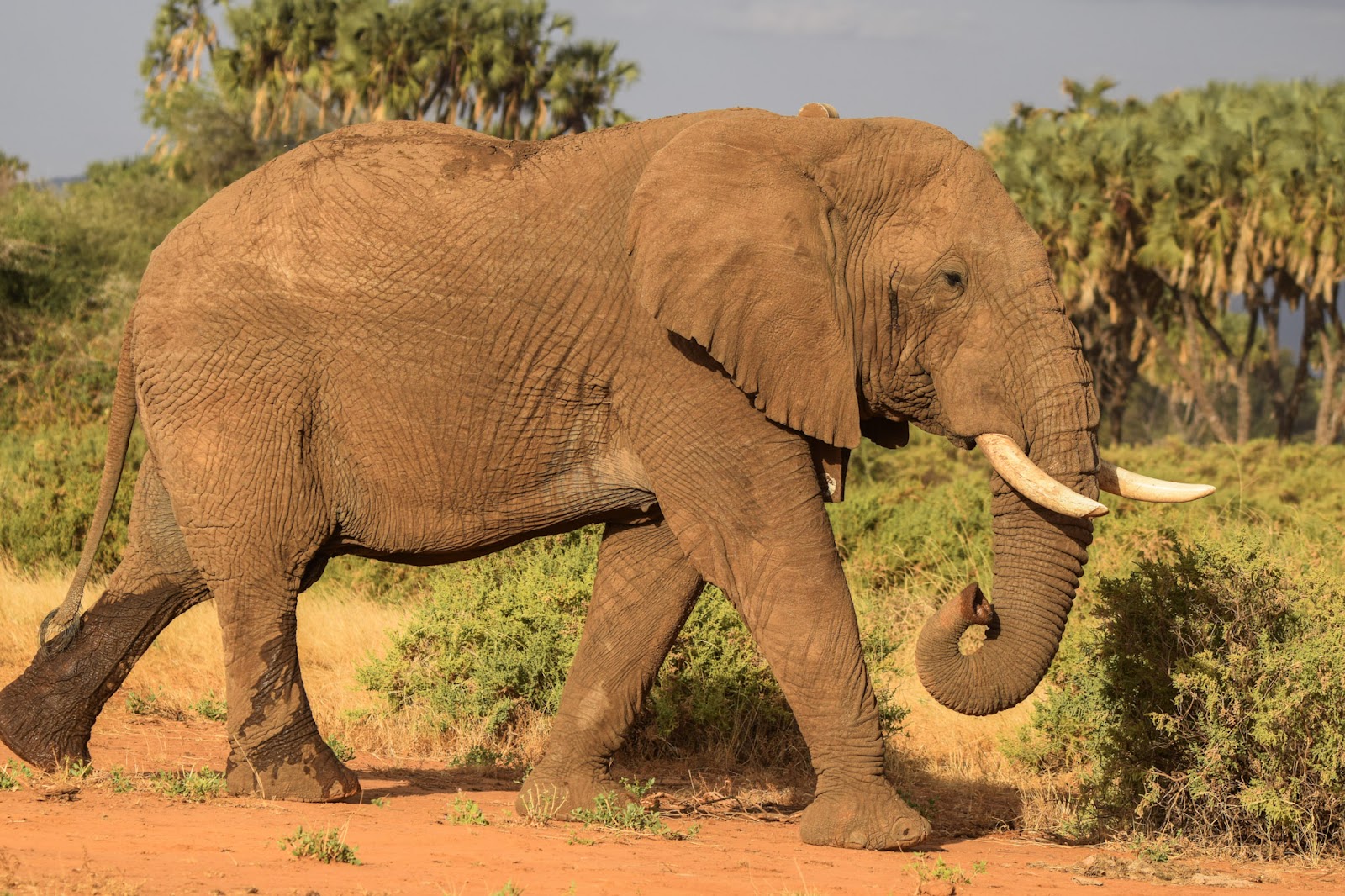
We watched maybe sixty elephants come to the waterhole in one afternoon, every one of them brick-red with white tusks shining. It looked colour-graded, like a film. My photos needed zero editing — Tsavo did it all.
— Sense of Adventure guest, Tsavo East safari
The 5 Essential Red-Elephant Experiences in Tsavo
The Waterhole Vigil — let the elephants come to you
Tsavo’s classic viewing is stationary: park at a dry-season waterhole or settle onto a lodge deck and let herd after herd arrive, drink 150 litres apiece, wallow and repaint themselves red before your eyes. Aruba dam in Tsavo East and the illuminated lodge waterholes of Tsavo West deliver this daily from June to October.
Red Herds on the Move — the classic crossing shot
Catch a breeding herd strung across an open red-soil flat — dust rising, calves hurrying, tusks catching the light — and you have Tsavo’s defining photograph. The Galana river circuits and the Dika plains produce these processions reliably in the dry months. Position ahead of the line, switch off and let them flow past.
The Mud-to-Dust Repaint — watching the colour go on
The red coat is applied in two steps — a wallow, then a dust shower flung by the trunkful — and watching the transformation from grey to rust in twenty minutes is the park’s best behaviour show. Late morning at any busy waterhole catches the full production line, calves imitating with more enthusiasm than skill.
Big Bulls of the Galana — tuskers in the riverine shade
Tsavo East’s northern reaches and the doum-palm lines of the Galana river shelter some genuinely big bulls — survivors of an ecosystem that has fought hard against poaching to protect them. Meeting one alone among the palms, red against green, is a privilege our guides work the river roads to deliver.
Elephants Against the Hills — Tsavo West’s volcanic backdrops
Tsavo West stacks its red elephants against black lava flows, green hills and the Chyulu range — a wilder, more dramatic stage than the open east. The Rhino Valley and Ngulia circuits pair herds with scenery no other Kenyan park can copy. Photographers should budget a full day for this side alone.
Tsavo Is Closer Than You Think
The SGR train and the Mombasa highway put Tsavo hours from Nairobi or the coast. Ask about our routings.
Red Elephant Facts Worth Knowing
- The colour: iron-oxide-rich soil plus constant dusting and wallowing — sunscreen, insect armour and air-conditioning in one.
- The population: around 15,000 elephants roam the combined 22,000 km² of Tsavo East and West — Kenya’s largest herd.
- Thirst: an adult drinks up to 150 litres a day, which is why dry-season waterholes concentrate the herds so reliably.
- Best months: June-October and January-February for waterhole gatherings; green months scatter herds but add newborns.
- Where: Aruba dam, the Galana river and lodge waterholes in the East; Rhino Valley and Ngulia circuits in the West.
- History: Tsavo’s herds recovered from devastating 1970s-80s poaching — every big tusker here is a conservation victory.
Planning Your Tsavo Elephant Safari
Our 3-day Tsavo East & West safari covers both parks’ elephant country, and the wider Tsavo safari guide handles logistics. Compare Kenya’s elephant capitals in our Amboseli elephants guide, or combine Tsavo with the coast — the park sits right on the Nairobi-Mombasa route, perfect before a Diani Beach finish.
The Red Herds Are Drinking Right Now
Dry-season waterholes are performing daily. Message us and be there this week.
Frequently Asked Questions
Why are the elephants of Tsavo red?
The red elephants of Tsavo get their colour from the park’s iron-oxide-rich volcanic soil. Elephants dust-bathe and wallow many times daily for sun protection and insect control, coating their grey skin in layer after layer of rust-red earth until the whole herd matches the landscape.
Where is the best place to see the red elephants of Tsavo?
The most reliable red elephant viewing is at Tsavo’s dry-season water: Aruba dam and the Galana river in Tsavo East, and the Rhino Valley circuits and floodlit lodge waterholes in Tsavo West. From June to October herds visit these points daily.
How many elephants live in Tsavo?
The Tsavo ecosystem holds roughly 15,000 elephants — the largest population in Kenya — spread across the combined 22,000 km² of Tsavo East and Tsavo West National Parks. Herds concentrate spectacularly around permanent water in the dry seasons.
When is the best time to see Tsavo’s red elephants?
The best months for the red elephants of Tsavo are the dry seasons — June to October and January to February — when dust replaces mud (deepening the red) and herds gather at waterholes. Green-season visits scatter the herds but add lush backdrops and newborn calves.
Are Tsavo’s red elephants a different species?
No — Tsavo’s red elephants are ordinary African savannah elephants wearing red soil. Wash the dust off and they are as grey as any other herd. The colour is purely cosmetic, refreshed daily through dust baths, and calves learn the habit within weeks of birth.