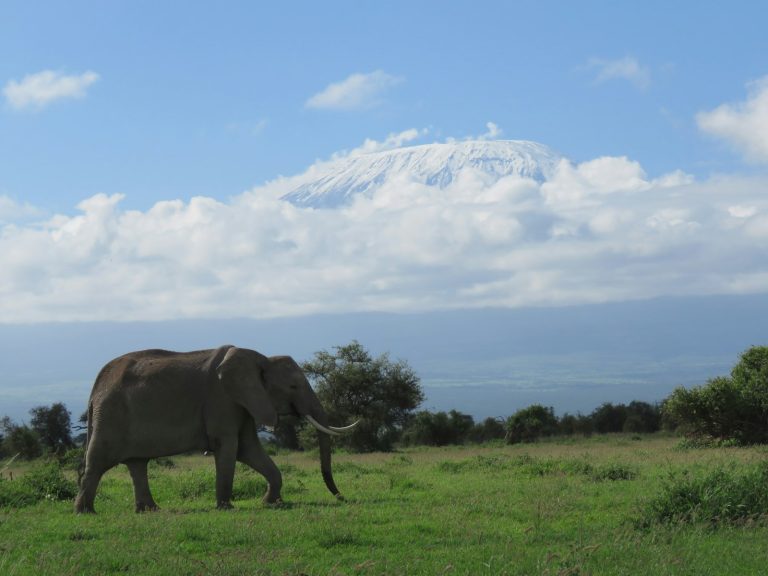
This Tsavo safari guide takes you into Kenya’s largest and wildest protected area — a vast, untamed landscape split into Tsavo East and Tsavo West. Famous for its dust-red elephants, raw open plains and dramatic volcanic scenery, Tsavo offers a more rugged, uncrowded safari than the busier parks, just inland from Kenya’s coast. From the man-eaters of legend to the crystal-clear Mzima Springs, this is big-game country on an epic scale. Below we cover the best things to do, the wildlife, park fees, the ideal time to visit, where to stay and how to plan your Tsavo adventure.
✅ Tsavo Safari Guide: The Quick Answer
- Best for: red elephants, wide open wilderness, Mzima Springs and an uncrowded safari close to the coast.
- Best time: June to October and January to February, when the bush is thinner and animals gather at water.
- How long: two nights for one park; three nights to see both Tsavo East and Tsavo West.
- Park fee: USD 80 per non-resident adult per day for each park (KWS rates in force since October 2025).
- Getting there: about 4 hours from Nairobi to Tsavo West, or 2 to 3 hours from Mombasa to Tsavo East.
Why Visit Tsavo
Together, Tsavo East and Tsavo West form one of the largest wildlife sanctuaries on earth — a wilderness so vast you can drive for hours seeing almost no other vehicles. This is where you come for a wild, authentic safari far from the crowds.
Tsavo East is known for its red-dust elephants, the endless Galana River plains and the 290-kilometre Yatta Plateau, often described as the world’s longest lava flow. Tsavo West is more rugged and scenic, with the spring-fed oasis of Mzima Springs, volcanic hills and excellent black rhino protection.
The two parks are divided by the Nairobi–Mombasa highway and railway, which run through the middle of the ecosystem. Both are managed by the Kenya Wildlife Service and charge separate entry fees. Because of their size, game viewing here is about space and patience rather than crowded sightings, which many returning travellers prefer.
Tsavo East vs Tsavo West: Which to Choose?
| Tsavo East | Tsavo West | |
|---|---|---|
| Landscape | Flat, open plains and the Galana River | Volcanic hills, lava flows and springs |
| Signature sights | Red elephants, Lugard Falls, Aruba Dam, Yatta Plateau | Mzima Springs, Shetani lava flow, Ngulia Rhino Sanctuary |
| Game viewing | Easier to spot animals on open ground | Thicker bush, more scenic drives |
| Best access | Voi and Bachuma gates, close to Mombasa | Mtito Andei gate, closer to Nairobi |
Our Tsavo safari guide advice for most first-time visitors is to see both. If you only have time for one, choose Tsavo East for easy elephant viewing from the coast, or Tsavo West for scenery and a chance of rhino. Our Tsavo East vs Tsavo West comparison goes into more detail.
7 Best Things to Do: Tsavo Safari Guide Highlights
1. Meet the Famous Red Elephants
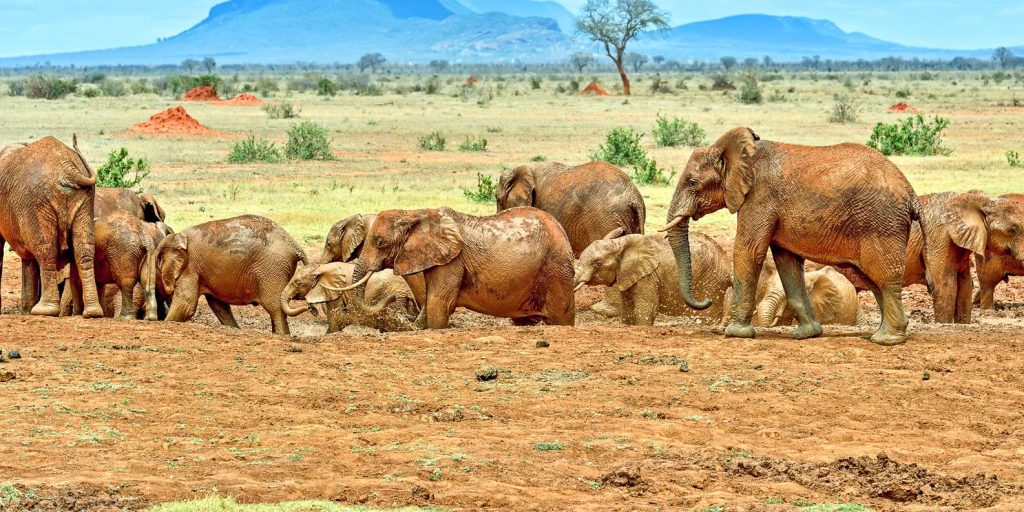
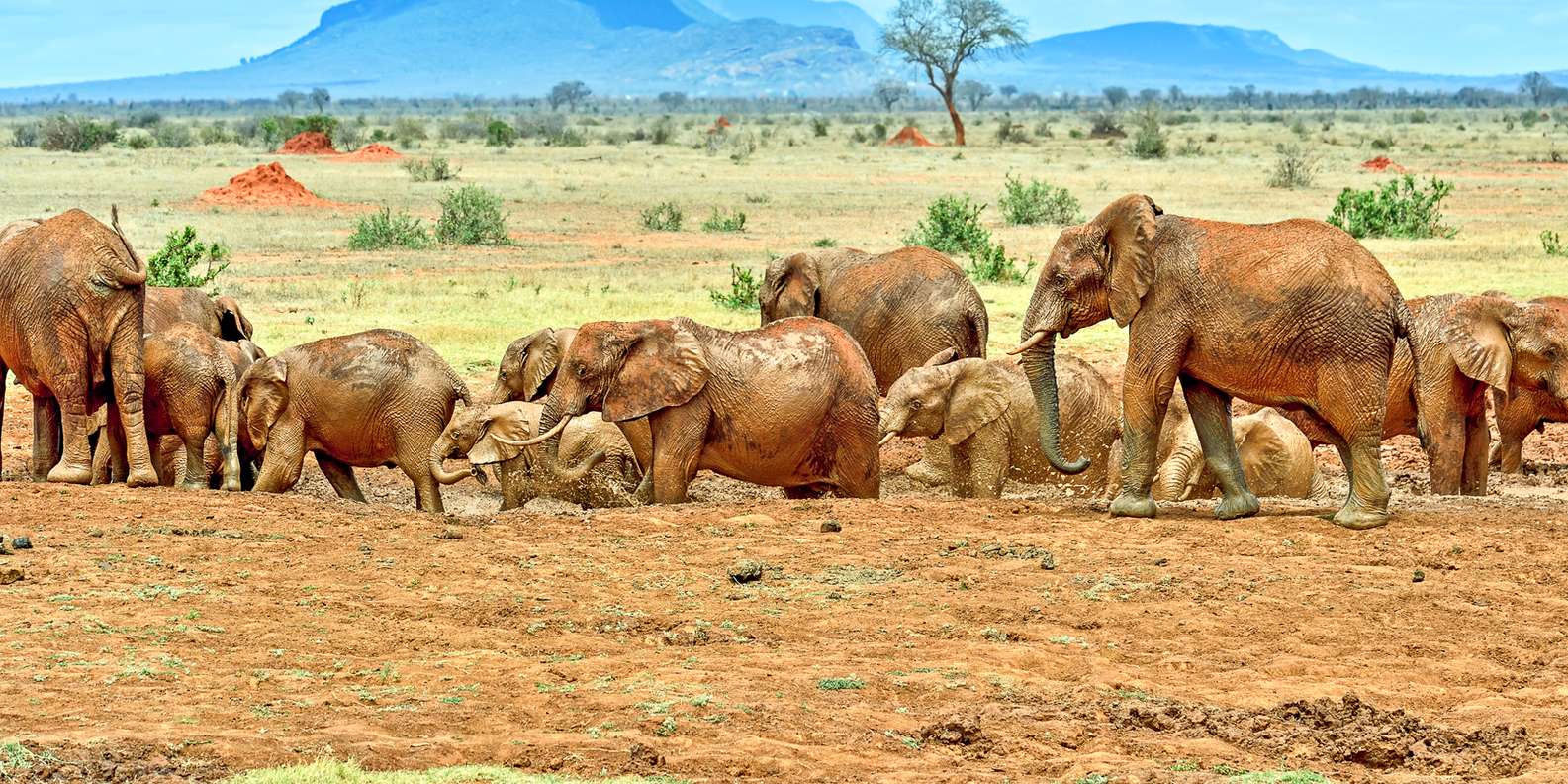
Tsavo’s elephants are legendary for their red colour — the result of dusting themselves in the park’s rust-coloured soil. Seeing a herd of these crimson giants against the open plains is the signature Tsavo experience.
2. Visit Mzima Springs
In Tsavo West, crystal-clear water bubbles up from beneath the lava to form Mzima Springs, home to hippos and crocodiles. An underwater viewing chamber lets you watch the aquatic life up close.
3. Explore the Vast Plains and Yatta Plateau
Tsavo East’s open savannah and the immense Yatta Plateau create some of Kenya’s most dramatic safari scenery — ideal for unhurried game drives and big skies.
4. Search for the Big Five
Tsavo is home to lion, leopard, elephant, buffalo and rhino, along with cheetah, giraffe and the fringe-eared oryx. The famous Tsavo lions add a thrill of history to every sighting.
5. Combine Bush and Beach
Tsavo’s location between Nairobi and the coast makes it the perfect safari add-on to a Diani or Mombasa beach holiday — the ultimate bush-and-beach combination.
6. Look for Rhinos at Ngulia Rhino Sanctuary
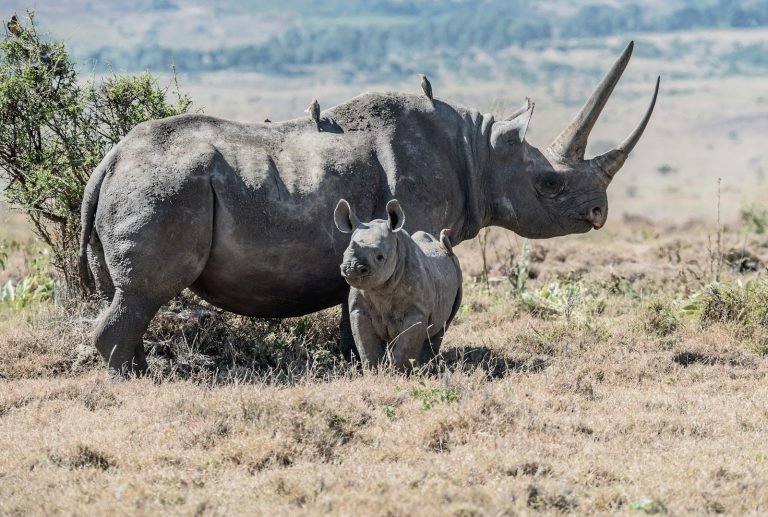
Inside Tsavo West, the fenced Ngulia Rhino Sanctuary protects black rhinos at the foot of the Ngulia Hills. The rhinos are shy and the bush is thick, so sightings are never certain, but a patient drive at dawn or dusk with an experienced Tsavo safari guide gives you a real chance.
7. Walk the Shetani Lava Flow and Visit Lugard Falls
The black Shetani lava flow in Tsavo West is a reminder of the area’s volcanic past, and you can explore its edge with your guide. In Tsavo East, Lugard Falls is a series of rapids where the Galana River squeezes through water-sculpted rock, with crocodiles often basking downstream.
Ready to experience Tsavo? Plan your trip with our safari experts.
💬 Book on WhatsAppView Safari Packages →Wildlife to See
Tsavo’s huge wilderness supports an outstanding range of wildlife. Use this Tsavo safari guide checklist and look for:
- Red elephants — Tsavo’s iconic dust-coloured herds
- Lion, leopard & cheetah — including the legendary Tsavo lions
- Black rhino — protected in Tsavo West’s sanctuary
- Buffalo, giraffe & hippo — plus crocodiles at Mzima Springs
- Fringe-eared oryx & gerenuk — dry-country specials, with 500+ birds
The Tsavo lions: fact and legend
Tsavo’s lions became world-famous in 1898, when two males killed railway workers building the Kenya–Uganda Railway bridge over the Tsavo River. Many Tsavo males today have short or almost no manes, which scientists link to the hot, dry climate. They are wary and spread over a huge area, so sightings are less frequent than in the Masai Mara, but finding one in this wild setting is a special moment. Ask your Tsavo safari guide about recent sightings before you set out.

Best Time to Visit Tsavo
The best time for a Tsavo safari is the dry season — June to October and January to February — when vegetation thins, wildlife gathers around rivers and waterholes, and the red elephants are easiest to find. The green season (November and March–May) brings lush scenery and superb birding, though the bush is thicker and animals more dispersed.
Tsavo is low and hot, especially in Tsavo East, so midday game drives can be tiring. Your Tsavo safari guide will plan the main drives for early morning and late afternoon, and use the middle of the day to rest at your lodge, many of which overlook waterholes where elephants come to drink. Migrant birds from Europe arrive from about October, adding to the park’s rich birdlife.
Tsavo Park Fees and Costs
As this Tsavo safari guide explains, Tsavo East and Tsavo West are separate parks with separate fees. Since October 2025, Kenya Wildlife Service charges non-resident adults USD 80 per day for each park, slightly less than Premium Parks such as Amboseli and Lake Nakuru. Payments are cashless through eCitizen. Check current rates on the Kenya Wildlife Service website or in our Tsavo entrance fees guide.
Tsavo safari guide to package prices
Tsavo is one of the best-value safari areas in Kenya, particularly from the coast. Our Tsavo East Day Safari from Mombasa & Diani starts from USD 230 per person. For more time in the bush, look at the 2-Day Tsavo & Taita Hills Safari from Mombasa, the Tsavo East & West Safari (3 days) or the Tsavo & Amboseli Safari from Mombasa (4 days). Prices depend on season, lodge and group size, so ask us for a written quote.
How to Get to Tsavo
From Nairobi, the Nairobi–Mombasa highway reaches Tsavo West’s Mtito Andei gate in about 4 hours, and continues to Tsavo East’s Voi gate. The Madaraka Express train also stops at Voi and Mtito Andei, a relaxed way to travel if your driver meets you at the station.
From the coast, Tsavo East is only 2 to 3 hours from Mombasa or Diani by road, which is why it is the most popular safari for beach holidaymakers. Kimana gate links Tsavo West with Amboseli for travellers combining the two parks. A good Tsavo safari guide will time the journey so you arrive in time for an afternoon game drive.
How Many Days Does This Tsavo Safari Guide Recommend?
One day is possible from the coast, but you spend much of it driving. Two nights lets you settle into one park, with a full day of game drives and sunset at a waterhole. Three nights is ideal to see both Tsavo East and Tsavo West, including Mzima Springs and the red elephants of the Galana plains.
Sample 3-day Tsavo itinerary
Day 1: Your Tsavo safari guide collects you in Mombasa or Diani and drives to Tsavo East, with a game drive towards Aruba Dam and the Galana River. Overnight near Voi.
Day 2: Morning drive past Lugard Falls and the Yatta Plateau, then cross to Tsavo West for an afternoon drive and an evening watching the waterhole from your lodge.
Day 3: Visit Mzima Springs early, walk the edge of the Shetani lava flow, then return to the coast or continue to Amboseli.
Where to Stay in Tsavo
Accommodation ranges from classic lodges inside the parks to tented camps on the boundaries and in neighbouring sanctuaries such as Taita Hills. Many lodges, including Kilaguni Serena in Tsavo West, sit above floodlit waterholes so you can watch elephants and buffalo without leaving the terrace. Tented camps along the Galana River offer a more intimate feel in Tsavo East. Your Tsavo safari guide can recommend the right lodge for your route and budget.

Tsavo Safari Guide: Practical Tips
- Beat the heat: bring a wide-brimmed hat, sunglasses, high-factor sunscreen and plenty of water.
- Cover up for tsetse flies: wear neutral colours and avoid dark blue and black, which attract them in some areas.
- Bring binoculars: Tsavo’s distances are huge, and good optics help with lions and lesser kudu in the bush.
- Visit the elephant orphans: the Sheldrick Wildlife Trust runs reintegration units in Tsavo, where rescued elephants return to the wild.
- Plan for malaria: Tsavo is a malaria area, so speak to a travel clinic before you go.
- Check entry rules: most visitors need an Electronic Travel Authorisation from the official eTA Kenya portal; also read your government’s advice, such as the UK travel advice for Kenya.
How Tsavo Fits Into a Kenya Safari
Tsavo works brilliantly as a standalone wilderness safari or as a bush-and-beach add-on. See our dedicated Tsavo East & West Safari, or fold Tsavo into a longer adventure like our 18-Day Kenya Safari Itinerary. Because it sits between Nairobi and the coast, Tsavo is the natural safari stop before a Diani beach finale.
Families love our Family Safari & Beach – Tsavo, Amboseli & Diani, and our full Tsavo West National Park guide covers gates, rules and lodges in depth. If you want your own vehicle and guide, see how a private Kenya safari works, or browse every Kenya safari from Nairobi. Comparing parks? Read Tsavo vs Amboseli.
Tsavo Belongs on Your Kenya Safari
For a wild, uncrowded safari on a truly epic scale — red elephants, big skies and the legendary Tsavo lions — a Tsavo safari is one of Kenya’s great adventures. Use this Tsavo safari guide as your starting point, then talk to our team and we’ll build it into your perfect trip.
Ready to experience Tsavo? Plan your trip with our safari experts.
💬 Book on WhatsAppView Safari Packages →Related Safari Guides
Frequently Asked Questions
How far is Tsavo from Nairobi?
Tsavo West’s Mtito Andei gate is about 230 kilometres from Nairobi, roughly a 4-hour drive along the Nairobi–Mombasa highway, and Tsavo East’s Voi gate is further along the same road. Tsavo sits conveniently between Nairobi and the coast, making it easy to combine with a Diani or Mombasa beach holiday.
Why are Tsavo’s elephants red?
Tsavo’s elephants appear red because they dust and wallow in the park’s distinctive rust-coloured soil, which coats their skin. They are not a separate species — just famously well camouflaged in Tsavo’s red earth. Washed clean by rain, they look grey like any other elephant.
What is the difference between Tsavo East and Tsavo West?
Tsavo East is larger, flatter and known for red elephants and vast open plains, while Tsavo West is more rugged and scenic, with Mzima Springs, volcanic hills and a black rhino sanctuary. Many safaris combine both, entering one park and leaving through the other.
What is the best time to visit Tsavo?
The dry months of June to October and January to February are best, when thinner vegetation and concentrated wildlife make game viewing — and finding the red elephants — easier. The green season is beautiful and good for birds, but animals are more spread out.
How many days do you need in Tsavo?
Three days lets you experience both Tsavo East and Tsavo West, including the red elephants and Mzima Springs. Tsavo also works well as a two-night safari add-on to a coastal beach holiday, and a day trip from Mombasa is possible if time is short.
How much is the Tsavo park fee?
Since October 2025, Kenya Wildlife Service charges non-resident adults USD 80 per day for Tsavo East and the same for Tsavo West, as they are separate parks. Payment is cashless through eCitizen, and we include all fees in every written quote.