
Kenya’s smaller cats do things the Big Five never will — the serval has the longest legs relative to body size of any cat species on Earth, using them to leap over 2 metres straight up and land directly on prey hidden in tall grass, succeeding on roughly half of every hunting attempt according to a Ngorongoro study, with one tracked mother reaching a 62% success rate. The caracal goes further still, its powerful hind legs launching it more than 3 metres into the air to snatch birds directly out of flight, adjusting direction mid-leap to intercept a moving target. Both are genuinely elusive and rarely feature on a standard safari itinerary, overshadowed entirely by lions and leopards. Picture a guide spotting a serval’s ears rotating independently above the grass line, tracking sound long before any visual sighting. Sense of Adventure points these species out specifically, not just the headline predators.
See Kenya’s Overlooked Small Cats
Message us to build a trip focused on Kenya’s full predator range, not just the Big Five.
Two Specialists With Genuinely Different Hunting Styles
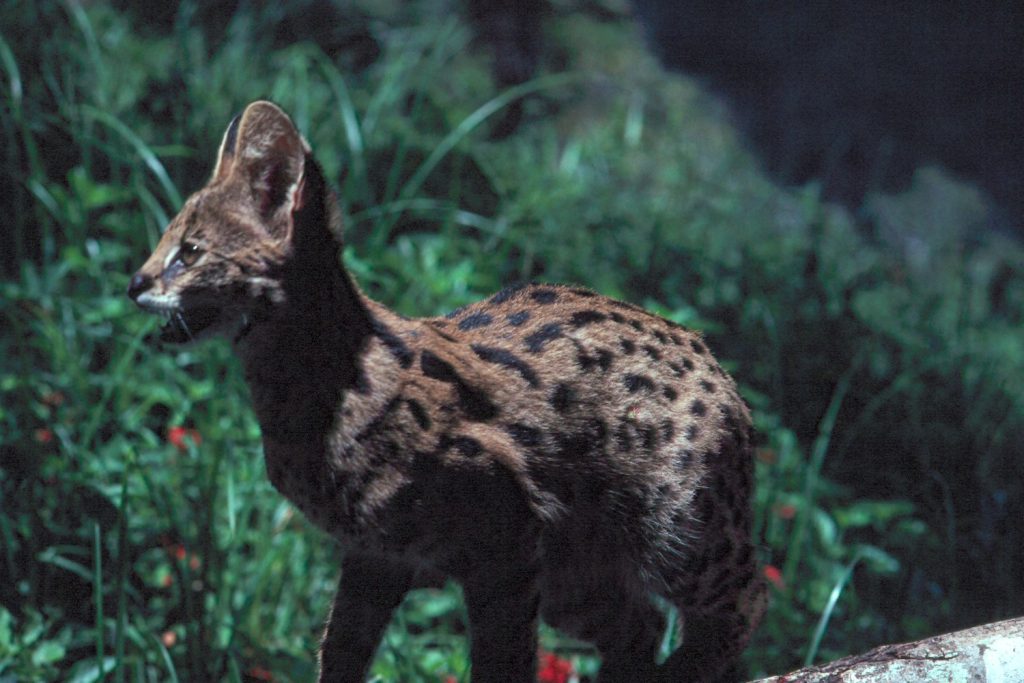
The serval, standing 54-62cm at the shoulder and weighing 9-18kg, carries the longest legs relative to body size of any cat species, an adaptation built specifically for hunting in tall grass — it leaps over 2 metres into the air to land directly on rodents and birds it has located purely by sound, using large, independently rotating ears, and succeeds on roughly half of all hunting attempts according to research from the Ngorongoro ecosystem. Kenya also hosts a notable proportion of the world’s melanistic (all-black) servals, a genuine rarity most visitors have never heard of. The caracal is smaller still at 40-50cm shoulder height and 7-19kg, instantly recognisable by 4.5cm black ear tufts and bold black facial stripes, and is capable of leaping more than 3 metres into the air with enough control to adjust direction mid-flight, allowing it to snatch birds directly out of the sky — a level of aerial hunting precision that puts it in a different category from almost any other cat.
Our guide heard a serval before either of us saw anything, just from the way it froze and turned its ears — a few seconds later it leapt straight up out of the grass and came down on something we never even spotted. That single hunting sequence stuck with us more than most of the bigger sightings.
— Sense of Adventure guest, Masai Mara safari
Kenya’s 2 Standout Small Cats
Serval — The Longest Legs of Any Cat — leaps over 2m, ~50-62% hunting success rate
Built specifically for tall-grass hunting, using oversized, independently rotating ears to locate prey by sound before a single leap ends the hunt. See our Lake Nakuru predators guide for a park where servals are regularly reported.
Caracal — Bird-Catching Precision in Mid-Air — 3m+ vertical leap, adjusts direction to intercept prey
Named for its distinctive black ear tufts, the caracal’s hunting technique — leaping to intercept birds directly in flight — is unmatched by almost any other cat species on the continent.
Add Small Cats to Your Kenya Safari
Message us to build a trip with guides who specifically watch for serval and caracal activity.
Kenya Small Cat Facts
- Serval size: 54-62cm at the shoulder, 9-18kg, with the longest legs relative to body size of any cat.
- Serval hunting success: roughly 50% of attempts succeed, with one tracked mother reaching 62% in a Ngorongoro study.
- Serval rarity note: Kenya hosts a notable share of the world’s melanistic (all-black) serval sightings.
- Caracal size: 40-50cm at the shoulder, 7-19kg, distinguished by 4.5cm black ear tufts.
- Caracal hunting skill: can leap over 3m into the air and adjust direction mid-flight to catch birds on the wing.
- Key difference: servals have longer legs, a spotted coat and no ear tufts; caracals have prominent ear tufts and a plainer coat.
Building a Predator-Diversity Kenya Safari
Combine small cat spotting with wider predator viewing via our Big Cats Photographic Safari, and read our Kenya’s Big Cats Compared guide for how lion, leopard and cheetah hunting styles differ from these smaller specialists.
The Predators Most Itineraries Skip
Message us to plan a trip that looks beyond the Big Five for genuinely rare sightings.
Frequently Asked Questions
What is the difference between a serval and a caracal?
Servals have longer legs, a spotted golden coat and no ear tufts, while caracals are smaller with distinctive 4.5cm black ear tufts and a plainer coat — servals also hunt primarily by leaping onto ground prey, while caracals specialise in catching birds mid-flight.
How high can a serval jump?
A serval can leap more than 2 metres straight up to land directly on prey hidden in tall grass, a hunting technique that succeeds on roughly 50-62% of attempts according to research from the Ngorongoro ecosystem.
Can a caracal really catch birds in the air?
Yes — caracals can leap more than 3 metres into the air and adjust direction mid-leap, allowing them to intercept and catch birds directly in flight, a level of aerial hunting precision rare among cat species.
Are black servals real?
Yes — melanistic (all-black) servals are a genuine, documented rarity, and Kenya hosts a notable share of the world’s recorded sightings of this dark colour variant.
Why don’t most safari visitors see servals or caracals?
Both species are naturally elusive, mostly active at dawn, dusk and night, and are easily overlooked by visitors focused on the Big Five — spotting one usually requires a guide specifically watching and listening for smaller predator activity.