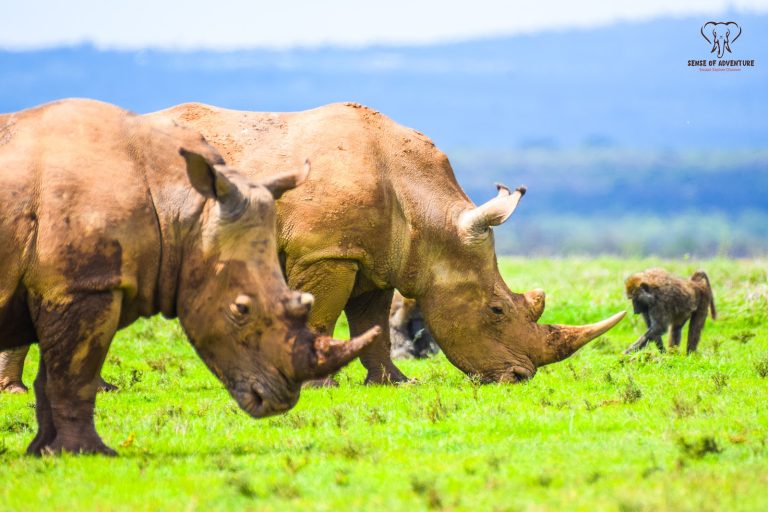
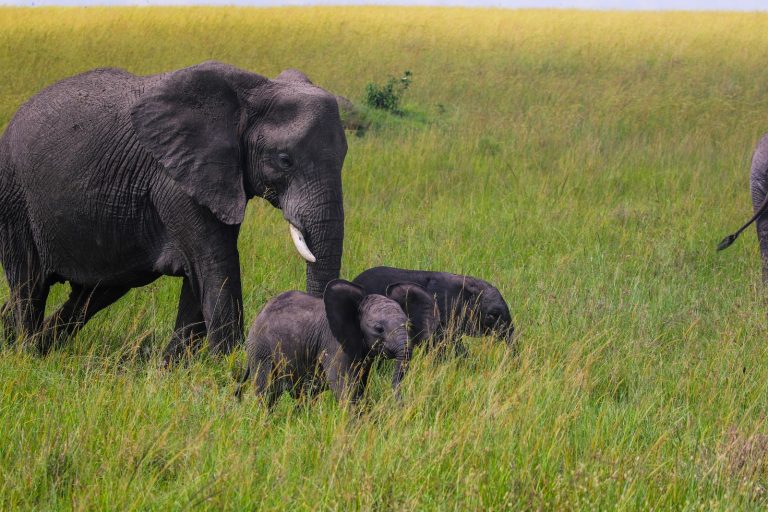
Lake Nakuru lions have a habit that catches every visitor off guard: they climb trees. Drive the yellow-barked acacia groves along the park’s southern circuits and you may find an entire pride draped through the branches like heavy fruit — a behaviour common in only a handful of places in Africa. Add one of Kenya’s better leopard-sighting records, big spotted hyena clans and jackals working the shoreline flats, and this compact rhino sanctuary quietly doubles as a predator park.
Nakuru’s fence keeps its cats resident and its prey abundant, which makes sightings unusually dependable. Sense of Adventure treats the park as a full safari stop, never just a flamingo photo-op — the cats are why. This guide explains where to look for Lake Nakuru lions and leopards, the best time to go, costs, how to get there and how to plan your predator day.
✅ Lake Nakuru Lions Quick Answer
- Lions: resident prides live in the fenced park, and some regularly rest in acacia trees.
- Leopards: seen fairly often for a small park, mainly in the southern woodland and euphorbia forest.
- Other predators: spotted hyenas, black-backed jackals, servals and African wildcats.
- Best time: the dry months of June to October and January to February; dawn and late afternoon for most cats.
- From: our Lake Nakuru Day Safari from Nairobi starts at USD 180 per person.
Find the Lions in the Trees
Our Nakuru circuits sweep the acacia groves where the prides lounge. Come see the park’s worst-kept secret.
Why Lake Nakuru Lions Climb Trees
Tree-climbing lions are famous in Uganda’s Ishasha and Tanzania’s Lake Manyara — and Nakuru belongs on that short list. The park’s yellow-fever acacias offer low, ladder-like branching that even a 180-kg cat can manage, and the payoff is real: breezes above the biting flies, a cooler siesta, and a raised view over the flats where buffalo and zebra graze.
The behaviour spreads culturally — cubs copy mothers — so certain Nakuru prides climb habitually while others never bother. Leopards, naturally arboreal, thrive here too, favouring the euphorbia forest and the wooded cliffs; dawn and dusk drives along the southern woodland roads produce them with pleasing regularity.

5 Essential Sightings: Lake Nakuru Lions and Other Predators
Lions in the Yellow Acacias — the sighting nobody expects
Scan every big fever tree along the southern lakeshore circuits — the classic find is a pride stacked through the branches, tails swinging in the breeze. Midday, when ground temperatures peak and flies bite hardest, is prime climbing time, turning the “dead hours” of safari into Nakuru’s best show.
Leopard at the Forest Edge — Kenya’s underrated leopard park
Nakuru’s leopard sightings surprise people who reserve that hope for the Mara. The euphorbia forest — a habitat no other Kenyan park offers at this scale — plus wooded cliffs and dense woodland give leopards perfect cover with abundant impala. First light along the southern woodland roads is your window.
The Buffalo Standoffs — heavyweight drama on the flats
Nakuru carries a dense buffalo population, and its lions test the herds constantly. When a pride commits, the flats stage full-scale battles — dust, bellowing, cavalry counter-charges by the herd. The fence means the drama plays out in a bounded arena; if a hunt starts, you will likely see how it ends.
Hyena Clans of the Shoreline — the cleanup crew at work
Big spotted hyena clans patrol the lake flats at dawn, loping between rhino families and flamingo lines — a peculiar, wonderful Nakuru tableau. They den in the calcrete banks and duel the lions over every carcass. Early gates entry catches them commuting home, muddy and satisfied.
Jackals and the Small Hunters — the supporting predators
Black-backed jackals trot the shoreline pans in bonded pairs, serval hunt rodents in the tall grass margins, and African wildcats slink the woodland edges at dusk. Nakuru’s compactness means these small-predator sightings punctuate the day constantly, filling the gaps between the headline cats.
Rhinos at Dawn, Lions After Lunch
One park, two safaris. Ask us to schedule Nakuru as a full day — the predators justify every extra hour.

Lake Nakuru Lions and Predator Facts
- Tree club: Nakuru joins Ishasha (Uganda) and Manyara (Tanzania) among Africa’s known tree-climbing lion populations.
- Why climb: flies, heat and lookout advantage — behaviour passed culturally from lioness to cubs.
- Leopard odds: the euphorbia forest and southern woodlands give Nakuru one of central Kenya’s best leopard records.
- Prey base: dense buffalo, waterbuck, impala and zebra populations keep the fenced park’s predators fat and resident.
- Best hours: dawn for leopards and hyenas; midday heat for lions aloft in the acacias.
- No cheetahs: the wooded, fenced habitat suits ambush cats — cheetahs are absent, so pair Nakuru with the Masai Mara for them.
Where to Find Lake Nakuru Lions and Leopards
Nakuru is small, but the cats use different parts of it at different times of day. Knowing the main areas helps your guide plan a route that gives you the best chance of seeing Lake Nakuru lions as well as a leopard.
Southern acacia groves for Lake Nakuru lions
The yellow-barked acacia woodland along the southern and western shore is the classic place to find Lake Nakuru lions, either resting in the shade or up in the branches. Drive slowly and look up as well as down, since a tail hanging from a branch is often the only clue.
The lake flats and grassland
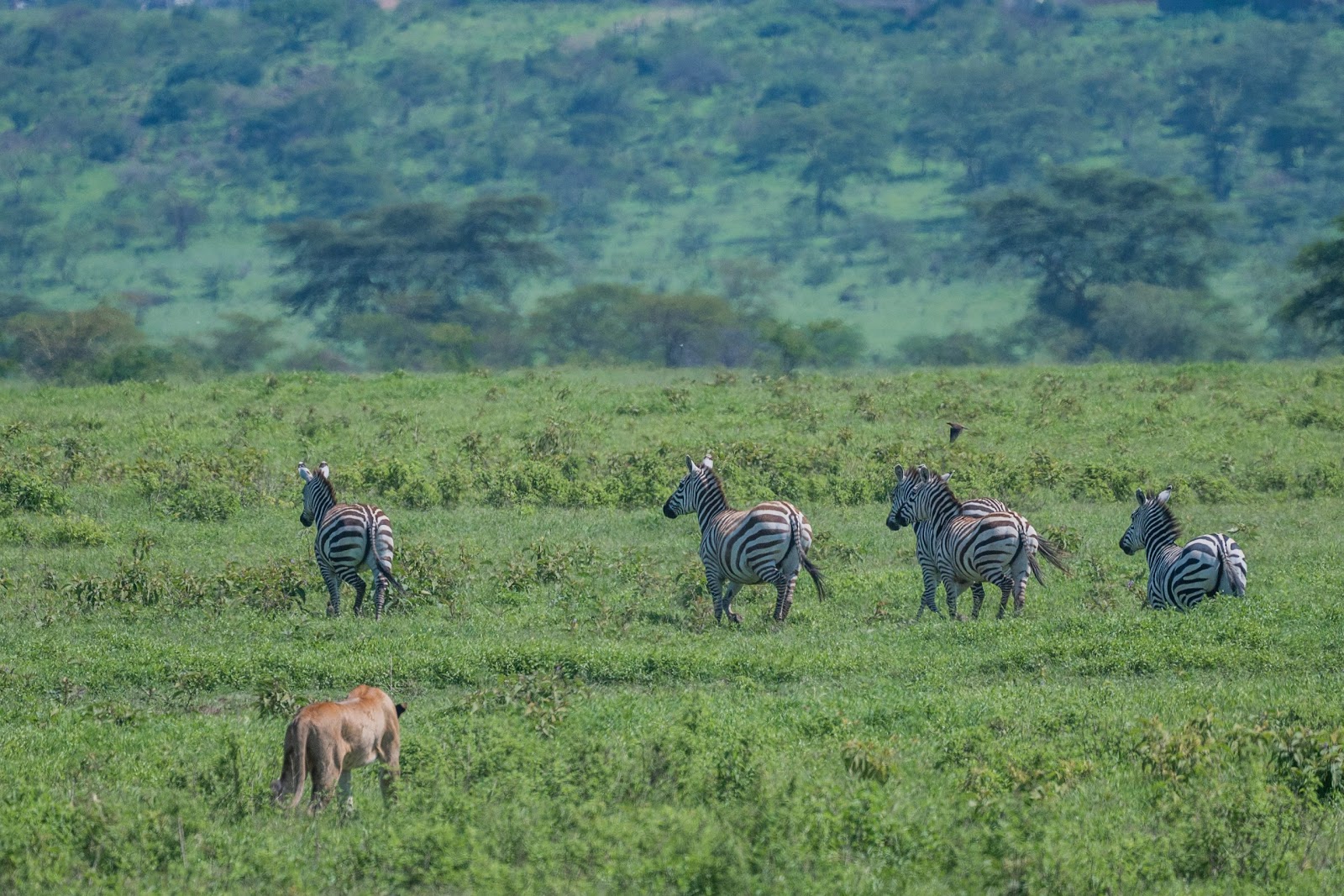
The open grassland near the shore holds buffalo, zebra and waterbuck, so lions often hunt or rest here in the early morning. Hyenas and jackals also cross these flats at dawn, and the open ground makes them easy to watch.
Euphorbia forest and wooded cliffs for leopards
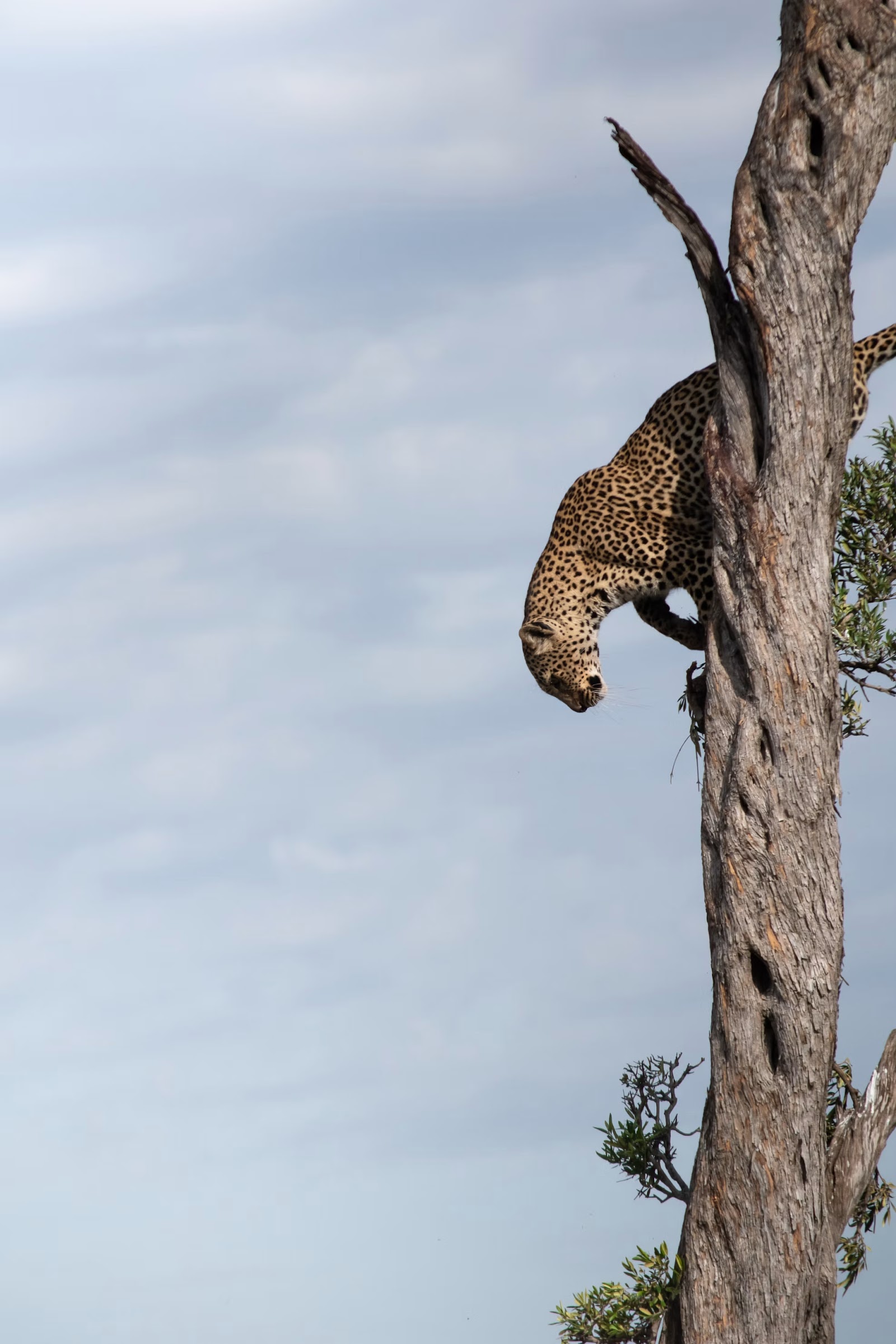
The candelabra euphorbia forest on the eastern slopes and the rocky, wooded cliffs are leopard country. Leopards rest in dense cover by day and move at dawn and dusk, so early and late drives along the forest edge give the best odds.
Leopards at Lake Nakuru
Leopards are shy and mostly active at night, so no park can promise one. Even so, Nakuru’s mix of forest, rocky cliffs and plentiful impala gives you a realistic chance, and many of our guests see a leopard here before they reach the Mara.
Look for a long tail hanging below a branch, a kill stored in a tree or alarm calls from baboons and impala. Ask your guide to stop and wait quietly at a good forest edge rather than rushing between spots. For more on where these cats are easiest to see, read our guide to the best national parks for leopards in Kenya.
Best Time to See Lake Nakuru Lions
Lake Nakuru lions and leopards live in the park all year, so you can see them in any month. The seasons change how easy they are to find.
| Months | Conditions | Predator viewing |
|---|---|---|
| January–February | Warm and mostly dry | Very good; short grass makes cats easier to spot |
| March–May | Long rains, lush bush | Fair; thicker cover, but fewer vehicles |
| June–October | Cool and dry | Excellent; the busiest season |
| November–December | Short rains | Good; green scenery and quieter roads |
Time of day matters more than the month. Lions are most active at dawn and dusk, but Lake Nakuru lions often climb into the acacias in the heat of the day, so midday drives through the southern groves can be rewarding. Leopards and hyenas are best looked for in the first hours after the gate opens at 6 am.
How to Get to Lake Nakuru From Nairobi
Lake Nakuru National Park lies about 160 km north-west of Nairobi, next to Nakuru city. The drive takes roughly two and a half to three hours, with a stop at the Great Rift Valley viewpoint. Most visitors enter at the Main Gate near the city, while the Nderit Gate in the south suits trips heading on to the Masai Mara.
For full routes and logistics, read our Lake Nakuru safari guide, or see our ideas for a Kenya safari from Nairobi.
Lake Nakuru Lions Safari Costs and Packages
The cost of a Lake Nakuru lions safari depends on how long you stay, the season, your lodge and your group size. Park fees are set by the Kenya Wildlife Service and can change, so our quotes always use current rates; our Kenya national parks entrance fees guide explains them. Popular trips with current starting prices include:
- Lake Nakuru Day Safari — from USD 180 per person.
- Masai Mara & Lake Nakuru Camping Safari (4 Days) — from USD 590 per person.
- 5 Days Kenya Safari – Masai Mara, Nakuru & Naivasha — from USD 1,250 per person.
- Kenya Group Safari – Masai Mara, Lake Nakuru & Naivasha (6 Days) — from USD 1,390 per person.
If big cats are your priority, a private Kenya safari lets you wait at a sighting as long as you like. Browse our Masai Mara safari packages to add the Mara’s cheetahs and big prides.
Pairing Nakuru’s Cats With the Bigger Circuit
Nakuru slots naturally between Nairobi and the Mara — our Lake Nakuru day safari makes the intro, and Rift-to-Mara loops like the 7-day Kenya safari give the park its full day. Meet the other residents in our Lake Nakuru rhinos guide and Nakuru birds guide.
Where to Stay to See Lake Nakuru Lions
Staying inside or close to the park means you can be at the gate when it opens and still be out in the late afternoon, the two best times for cats. Lodges inside the park include Sarova Lion Hill Game Lodge, on raised ground with lake views, and there are also simpler options in Nakuru city. Compare them in our guide to Lake Nakuru National Park lodges.
Lion Conservation and Park Rules
The African lion is listed as Vulnerable on the IUCN Red List, and fenced, well-guarded parks like Nakuru help protect small populations. The Kenya Wildlife Service manages the park and sets the rules that keep both cats and visitors safe.
Stay inside the vehicle at all times except at marked sites, keep your voice low and never call or tap to make a cat move. Do not block a lion’s path or crowd a leopard in a tree, and keep to the roads, as off-road driving is not allowed. The park closes at dusk, and there are no night drives.
A Sample Day With Lake Nakuru Lions
A good predator day starts at the gate at 6 am. Head first along the lake flats, where hyenas and jackals are often still active and lions may be finishing a night hunt. Then drive slowly through the southern woodland and the euphorbia forest edge, the best chance of the day for a leopard.
Mid-morning is for rhinos on the lakeshore and the view from Baboon Cliff. After a picnic lunch, return to the southern acacia groves, where Lake Nakuru lions often climb into the branches in the midday heat. Finish with a late-afternoon drive as the cats wake up again. With this plan, most guests see Lake Nakuru lions and many more animals besides.
Photographing Lake Nakuru Lions and Leopards
- Lens: a 100–400 mm zoom covers lions on the ground and leopards high in a tree.
- Exposure: cats in trees are often backlit, so expose for the animal, not the bright sky.
- Light: the first and last two hours of the day give warm light and more activity.
- Stability: use a beanbag on the window and switch off the engine when your guide allows it.
- Patience: wait for a yawn, a stretch or a lioness climbing down; the best moments rarely come in the first minute.
What to Pack for a Big Cat Day
- Binoculars for scanning trees and forest edges
- Warm layers for early mornings in the Rift Valley
- Hat, sunglasses and sunscreen
- Camera with spare batteries and memory cards
- A reusable water bottle; single-use plastic bags are banned in Kenya
See our full Kenya safari packing list for more.
Plan Your Trip to Kenya
Most visitors need a Kenya eTA from the official eTA Kenya portal. UK travellers should check the latest GOV.UK travel advice for Kenya, and you can find more trip ideas on Magical Kenya.
Count the Tails in the Trees
Nakuru’s prides are lounging overhead right now. Message us to put the park properly on your route.
Frequently Asked Questions
Are there lions in Lake Nakuru National Park?
Yes — Lake Nakuru supports resident lion prides within its fenced 188 km², famous for their tree-climbing habit. Prides regularly lounge in the park’s yellow-barked acacias, especially through the midday heat, making Nakuru one of the few places in Africa to see lions in trees.
Why do Lake Nakuru’s lions climb trees?
Lake Nakuru lions climb the low-branched yellow fever acacias to escape biting flies and ground heat and to gain a lookout over prey on the flats. The behaviour is cultural — cubs learn it from their mothers — so some Nakuru prides climb habitually while others rarely do.
Can you see leopards at Lake Nakuru?
Yes — Lake Nakuru has one of central Kenya’s better leopard-sighting records. The park’s unique euphorbia forest, wooded cliffs and dense southern woodland hold well-fed resident leopards; dawn and dusk drives along the forest-edge roads give the best chances.
What predators live in Lake Nakuru?
Lake Nakuru’s predators include tree-climbing lions, leopards, large spotted hyena clans, black-backed jackals, servals and African wildcats. Cheetahs are absent — the fenced, wooded habitat favours ambush hunters over sprinters — but the park’s predator viewing still surprises most visitors.
Is Lake Nakuru good for big cats compared to the Masai Mara?
The Masai Mara offers more cats in bigger country, but Lake Nakuru holds its own: near-guaranteed rhinos plus realistic lion and leopard sightings in a single compact day. The classic plan pairs them — Nakuru’s certainty on the way to the Mara’s abundance.
What is the best time of day to see Lake Nakuru lions?
Early morning and late afternoon are best for active Lake Nakuru lions, when they hunt or move between resting spots. In the midday heat, check the big acacias along the southern shore, because this is when the prides most often climb into the branches to rest and avoid flies.
Are Lake Nakuru lions guaranteed on a day trip?
No sighting is ever guaranteed, but Lake Nakuru lions are seen on many day trips because the park is small and fenced. Your chances rise if you stay overnight and drive at dawn and dusk. Leopards are harder, so treat one as a bonus rather than a promise.
Is it safe to watch Lake Nakuru lions up close?
Yes, watching Lake Nakuru lions is safe when you stay inside the vehicle and follow your guide. Lions here are used to vehicles and usually ignore them. Keep your voice low, keep arms inside and never stand up through the roof when a cat is very close.