
Kenya safari wholesale rates are confidential trade prices that a local operator gives tour operators, wholesalers and agents, below the public price, so you can add your own margin. They combine contracted camp rates, vehicles, guides, flights and activities, with park fees passed through at cost, and they change by season, room type and group size.
Sense of Adventure is a Nairobi-based ground operator licensed by Kenya’s Tourism Regulatory Authority (TRA1/47/C01/77087), supplying trade rates to travel agents, tour operators, wholesalers, OTAs, DMCs and MICE planners. We do not publish our rates, and neither should any trade partner. Instead, this guide explains how Kenya safari wholesale rates are built, how seasons and park fees move them, what a good rate sheet contains, and how to compare quotes and set your selling price with confidence.
✅ Kenya Safari Wholesale Rates: The Quick Answer
- What they are: confidential trade prices for safaris, below the public price, shared only with registered partners.
- What drives them: camp category and season, vehicle type and group size, flights, activities and park fees.
- Park fees: set by KWS and Narok County, passed through at cost and best shown on a separate line.
- Seasons: July to October and the Christmas period are the busiest and dearest; April, May and November are usually the best value.
- Your margin: on net rates you set your own selling price; on commissionable rates you earn an agreed commission.
- How to get ours: request current trade rates; Sense of Adventure replies within 24 hours.
🤝 Pricing a Kenya programme for your brochure or a client?
Tell us your market, dates and product, and we will send our current trade rates or an itemised quote. 📋 Request B2B Rates
What Are Kenya Safari Wholesale Rates?
Kenya safari wholesale rates are the prices the trade buys at, so that every party in the sales chain can earn a fair margin and the client still pays a competitive price.
The term covers several things in practice. A wholesaler or tour operator may receive a seasonal rate sheet for packaged safaris. A retail agent may receive a net quote for one tailor-made trip. An OTA may load fixed products at agreed prices. In each case the rate is confidential, it is lower than the public price, and it comes with written terms. The rest of this guide shows you how those Kenya safari wholesale rates are put together, line by line.
The Price Chain: From Rack Rate to Your Client’s Price
Kenya safari wholesale rates sit in the middle of a chain of suppliers and sellers, and each step adds or deducts a margin.
| Level | Who sets it | What it means for you |
|---|---|---|
| Rack rate | Camp or lodge | The published price for guests booking direct |
| Contract or STO rate | Camp or lodge, agreed with operators | A confidential discount off rack for the trade to package |
| Operator net rate | Kenya ground operator | Camps, vehicles, guides, flights and fees combined, plus the operator’s margin |
| Wholesale or agent price | Tour operator or wholesaler | Net rate plus their margin, sold on to retail agents or direct |
| Retail price | Selling agency | What your client pays, including your margin or commission |
Buying from a Kenya-based operator removes at least one layer of this chain. That is one reason agencies in the UK, Europe, the US, India, Malaysia and the Middle East send clients through local partners: local prices, local knowledge and one accountable team on the ground. If you want the wider context, our guide to working with a Kenya B2B safari operator covers services and onboarding.
What Goes Into Kenya Safari Wholesale Rates
Kenya safari wholesale rates are built from five or six cost lines, and knowing each one lets you check any quote quickly.
| Cost line | Priced per | What moves it |
|---|---|---|
| Accommodation | Person per night, by room type and board basis | Season, camp category, single or triple occupancy |
| Vehicle and driver-guide | Vehicle per day, shared across its passengers | Private or shared use, Land Cruiser or van, number of guests |
| Park and reserve fees | Person per day | Park, residency status, age and, in the Mara, the month |
| Light-aircraft flights | Person per sector | Route, season and luggage needs |
| Activities | Person or group | Balloon safaris, bush meals, walks, cultural visits |
| Operator margin | Built into the net price | Planning, 24-hour support, risk and administration |
Accommodation and board basis
Camps and lodges are usually the biggest cost line in Kenya safari wholesale rates. Rates differ between full board, full board with game drives, and all-inclusive, which may add drinks, laundry and activities. Comparing a full-board quote with an all-inclusive one is not like for like. Our explainer on full board vs all-inclusive safari rates sets out the differences.
Vehicles and guides
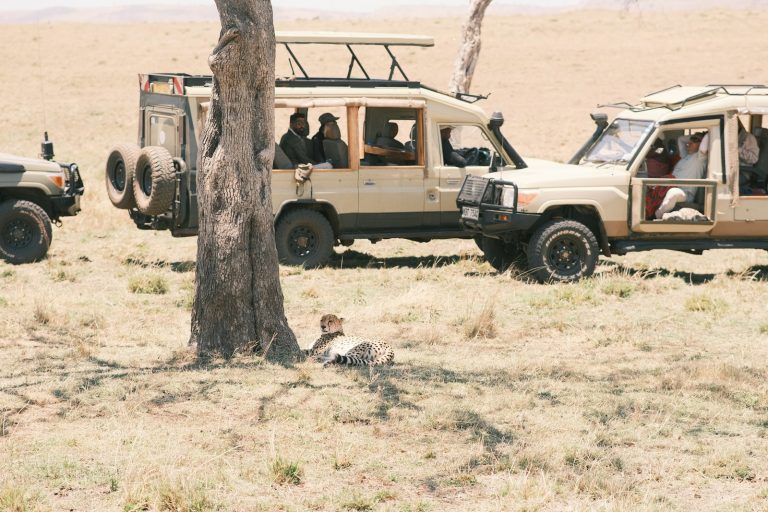
In Kenya safari wholesale rates, vehicles are priced per day, so the cost per person falls as more guests share. A pop-up roof Land Cruiser typically seats six or seven guests with a window seat each, which is why a private safari for two costs more per person than the same route for six. Our guide to safari vehicles in Kenya explains Land Cruisers and safari vans.
Park fees passed through at cost
The Kenya Wildlife Service raised conservation fees on 1 October 2025. Non-resident adults now pay USD 90 per day in Amboseli and Lake Nakuru, USD 80 in Nairobi National Park and Tsavo, and USD 70 in Meru and the Aberdares. The Masai Mara National Reserve, run by Narok County, charges non-resident adults USD 100 per day from January to June and USD 200 from July to December in 2026. Confirm current figures with KWS, the Narok County Government and our guide to Kenya national park entrance fees for 2026.
Expert tip from our Nairobi operations team: keep park fees outside your contracted Kenya safari wholesale rates and state in your terms that they are passed through at cost. When an authority changes a fee, you adjust one line instead of renegotiating the whole price.
How Seasons Change Kenya Safari Wholesale Rates
Season is the single biggest variable in Kenya safari wholesale rates, because camp prices and, in the Mara, park fees both rise in the busiest months.
| Period | Demand | Pricing pattern |
|---|---|---|
| July to October | Highest, Great Migration in the Mara | Peak camp rates; Mara fee at its higher level |
| Christmas and New Year | Very high for families | Peak or festive rates, often with minimum stays |
| January to March, June | Steady | Mid or shoulder rates at many camps |
| Early December | Moderate | Shoulder rates before the festive rise |
| April, May and November | Lower, rainy months | Green-season rates and offers; some camps close |
Park fees alone show how seasons move Kenya safari wholesale rates. A non-resident adult spending three days in the Masai Mara National Reserve pays USD 300 in reserve fees in May and USD 600 in August, before any accommodation. Our guide to the cheapest time for a Kenya safari explains the value months, and our article on how far in advance to book a Kenya safari covers lead times.

Rate Sheets: What a Good One Contains
A good rate sheet answers your sales team’s questions before they ask, so check it against this list when you receive Kenya safari wholesale rates from any supplier.
- Validity: the dates the rates apply to, often a calendar year or season.
- Season dates: exact start and end dates for each season, not just month names.
- Basis: per person sharing, with single supplements and triple or family room rules.
- Child policy: age bands, discounts and any minimum ages at camps or for activities.
- Inclusions and exclusions: board basis, game drives, water, drinks, flights and fees.
- Park fee treatment: included or separate, and how changes are handled.
- Terms: deposit, balance date, cancellation scale and amendment fees.
- Supplements: festive periods, peak events and private vehicle upgrades.
For packaged products, ask whether the Kenya safari wholesale rates are “from” prices or guaranteed for every date. A rate that applies only to the cheapest room in the lowest season can mislead your sales team.
Group Pricing, Tour Leader Places and Minimum Numbers
Group prices work differently from individual Kenya safari wholesale rates, because vehicles, guides and some camp rates are shared across more people.
For a group, the operator prices each vehicle and guide for the trip, then divides by the number of guests. A group of 12 in two full Land Cruisers is cheaper per person than ten guests who still need two vehicles. Some camps offer group rates or a complimentary place for a tour leader above a set size; terms vary by supplier, so ask. Quote groups in price bands, for example 10–13 and 14–18 guests, and agree what happens if numbers fall. Our guide to corporate group safari retreats in Kenya covers incentive groups in detail.
Net, Commissionable and Package Rates
Kenya safari wholesale rates usually come in one of two forms, and the right one depends on how your agency sells.
Net rates are confidential prices to which you add your own margin; they suit tour operators, wholesalers and tailor-made specialists. Commissionable rates are retail prices on which the operator pays or deducts your agreed commission; they suit set packages and occasional bookings. Sense of Adventure offers both, plus seasonal offers when camps release them, and confirms terms in writing. You can browse every itinerary available at trade rates in our B2B trade portfolio.
📩 Request Our Current Trade Rates
Tell us whether you work net or commission, your market and your season, and we will send current rates or a costed sample. ✉ Send Us Your Client Brief on WhatsApp
Currency, Payment Terms and Rate Guarantees
Most Kenya safari wholesale rates for international markets are quoted in US dollars, and the payment terms attached to them matter as much as the price.
Typical practice for Kenya safari wholesale rates is a deposit to confirm, with the balance due a set number of days before arrival, often 30–60 days. Peak dates, small camps, balloon flights and charters can carry stricter rules. Terms vary by supplier and season, so get them in writing. Ask what is guaranteed once you confirm: accommodation and transport are usually fixed, while government fees and taxes can change. Our client-side guides to safari deposits and payment plans and the safari cancellation policy help you align your own terms.
Expert tip from our Nairobi operations team: if you sell in a currency other than US dollars, build a currency buffer into your selling price or fix your exchange rate at deposit. A few percentage points of movement between quote and balance can wipe out a thin margin.
How to Compare Two Quotes Fairly
Two sets of Kenya safari wholesale rates for the same route can differ by a lot for good reasons, so compare them line by line before you decide.
- Check that both use the same dates, room types and number of guests.
- Compare named camps and their location: inside the reserve, outside the gate or in a conservancy.
- Compare board basis: full board, game package or all-inclusive.
- Compare vehicle use: private or shared, Land Cruiser or van, and guests per vehicle.
- Count park days and check the fee for each park and month.
- Check flights, transfers and activities on both quotes.
- Compare terms: deposit, balance date and cancellation scale.
In the Mara, camp location changes both price and experience; our comparison of the Masai Mara reserve and conservancies explains why.
Kenya safari wholesale rates that look too good
Be cautious when Kenya safari wholesale rates are far below the market without explanation. Common causes are missing park fees, shared vehicles sold as private, resident rates applied to overseas clients, unnamed camps, or a supplier that is not licensed. In July 2026 the Tourism Regulatory Authority urged enterprises to verify a partner’s licence through its online platform before signing agreements or paying. Membership of the Kenya Association of Tour Operators and its bonding scheme is a further check.
Building Your Selling Price
Your selling price should start from your Kenya safari wholesale rates and your own costs, not from a competitor’s brochure, and then be checked against the market.
| Step | What to add or check |
|---|---|
| 1. Net land price | The Kenya operator’s net rate, with park fees shown separately |
| 2. Your costs | Card and bank fees, staff time, marketing and client documents |
| 3. Risk | Currency movement and any cancellation exposure you carry |
| 4. Margin | The profit your agency needs on this product |
| 5. Market check | Compare with similar products in your market and adjust |
| 6. Client view | Show inclusions clearly, so value is obvious |
Clients compare more carefully than they used to, so a clear list of inclusions often sells better than a lower headline price. Our guide to what is included in a Kenya safari gives you client-friendly wording, and remind every client to get an approved Electronic Travel Authorisation from the official Kenya eTA portal before travel.
How to Request Kenya Safari Wholesale Rates From Us
To receive our Kenya safari wholesale rates, tell us who you are, what you sell and when your clients travel.
- Your agency name, country, business type and licence or registration details.
- Products of interest: Masai Mara safari packages, private safaris, luxury safaris, groups or MICE.
- Travel periods and expected volume.
- Preferred model: net, commission or not sure yet.
- Whether you need white-label documents under your brand.
We reply to trade requests within 24 hours with our current Kenya safari wholesale rates or an itemised quotation. Every safari includes complimentary AMREF Flying Doctors emergency evacuation cover, and we cover Kenya and Tanzania with Zanzibar, Uganda and Rwanda extensions.
Kenya Safari Wholesale Rates FAQs
What are Kenya safari wholesale rates?
They are confidential trade prices that a Kenyan operator gives tour operators, wholesalers and agents, below the public price. They combine contracted camp rates, vehicles, guides, flights and activities, with park fees passed through at cost, so each seller can add a margin.
Why do Kenya safari prices change so much by season?
Camps charge more in the busiest months, and the Masai Mara reserve fee for non-resident adults rises from USD 100 per day in January to June to USD 200 from July to December in 2026. April, May and November usually offer the best value.
Are park fees included in safari wholesale rates?
Practice varies. Many operators show park and reserve fees as a separate line, passed through at cost, because KWS and Narok County can change them. Keeping fees separate makes it easy to adjust one line if a fee changes after you confirm a booking.
Can I resell East African resident rates to overseas clients?
No. Resident rates apply only to guests who qualify through residence or citizenship, usually with proof. They are not trade rates, and using them for overseas clients can lead to extra charges at check-in or the gate. Always ask which rate basis a quote uses.
What currency are Kenya safari trade rates quoted in?
Most rates for international markets are quoted in US dollars, and non-resident park fees are set in dollars too. If you sell in another currency, build a buffer into your selling price or fix your exchange rate at deposit to protect your margin.
How are group safari rates priced in Kenya?
Vehicles and guides are priced per day and shared among guests, so the cost per person falls as vehicles fill. Many operators quote groups in bands, such as 10 to 13 guests, and some camps offer group rates or a tour leader place. Terms vary by supplier.
How do I get Sense of Adventure trade rates?
Use the Request B2B Rates form on our travel agents page, email info@senseofadventure.co.ke or WhatsApp +254 799 160 081. Tell us your market, business type, products and dates, and we will reply within 24 hours with current rates or a quote.
🏕 Partner With Sense of Adventure in Kenya
Kenya-based ground operator. Real local knowledge. Transparent trade pricing. Ask for our current rates and see exactly how each line is built. 📋 Request B2B Rates · 💬 WhatsApp Our Trade Desk
Call or WhatsApp: +254 799 160 081 · Email: info@senseofadventure.co.ke
Related Trade Guides
- › Kenya DMC for Travel Agents: B2B Rates and Ground Handling
- › Kenya B2B Safari Operator: Services, Rates and How to Partner
- › Kenya Ground Operator: What Ground Handling Covers
- › Kenya Safari DMC: 12 Questions to Ask
- › Kenya National Parks Entrance Fees 2026
Official licensing & park resources: Tourism Regulatory Authority ↗ · Kenya Wildlife Service ↗