
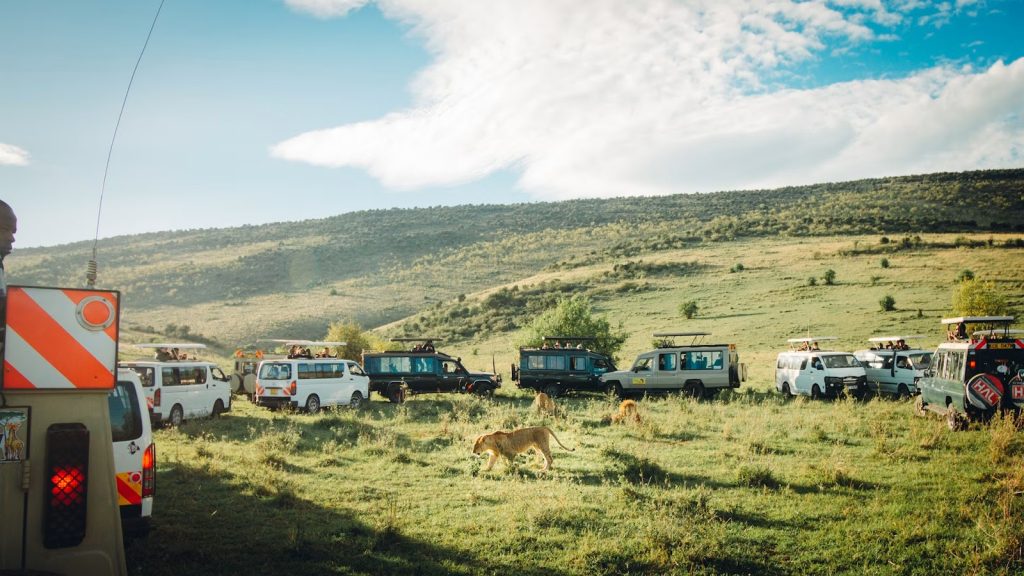
Before you pick a specific Masai Mara conservancy, there’s a more fundamental decision that shapes everything about your safari: reserve or conservancy, and the two operate under genuinely different rulebooks. The Masai Mara National Reserve is government-managed public land — strict operating hours, on-track driving only, and open to day visitors, which means more vehicles at popular sightings. The private conservancies bordering it run on a community-lease model with capped guest numbers, and permit activities that are simply illegal inside the reserve: off-road tracking, night game drives with spotlights, and guided walking safaris. Here’s exactly what each one allows.
Not Sure Whether to Book Reserve or Conservancy?
Message us your priorities and we’ll tell you honestly which setup fits your trip.
Same Ecosystem, Very Different Rulebooks
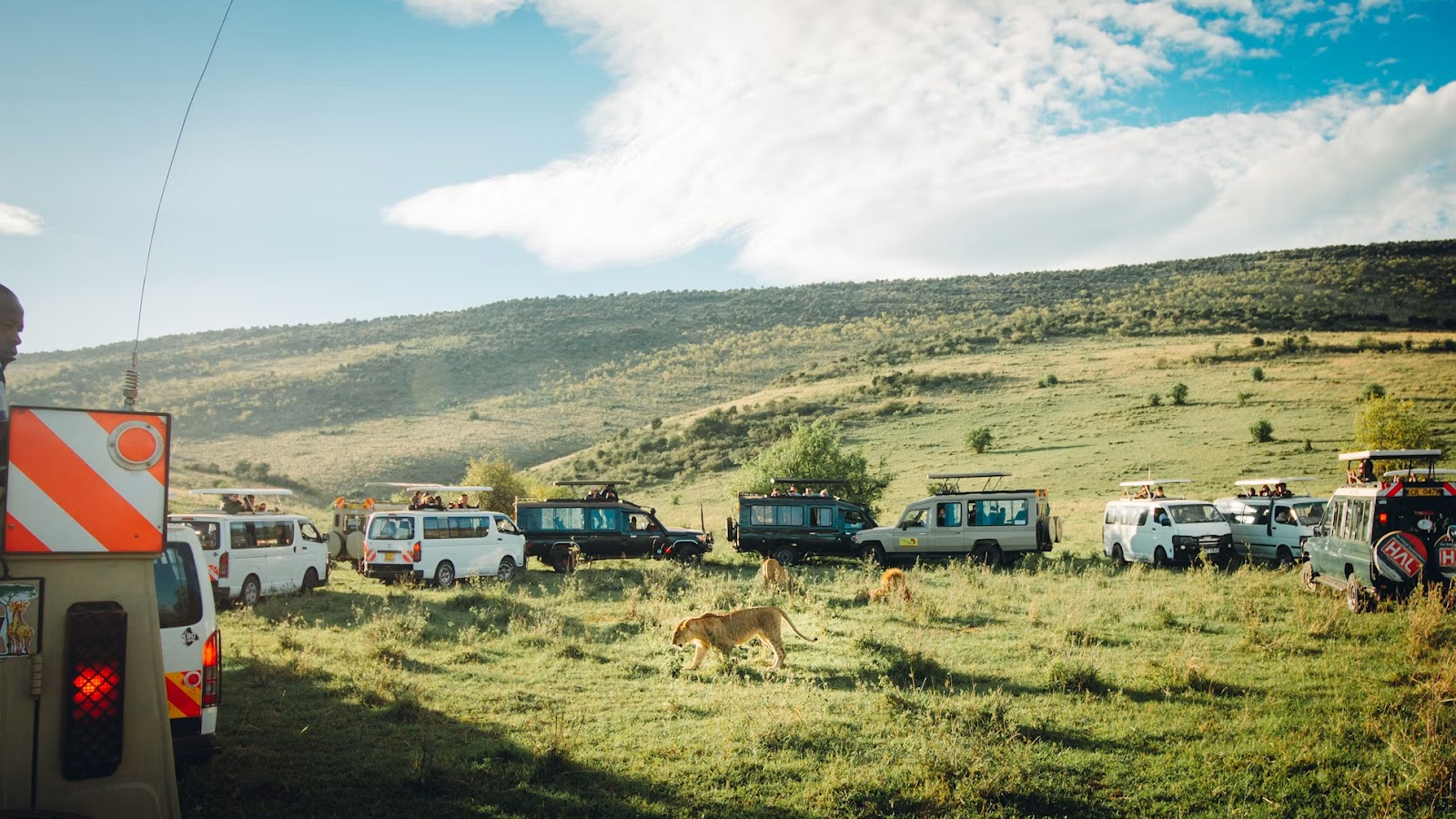
The Masai Mara National Reserve is public land managed under strict county and Kenya Wildlife Service rules: vehicles must stay on marked tracks at all times, operating hours run a fixed 6am to 6pm with no exceptions, and day visitors are permitted alongside overnight guests — which means higher vehicle density at popular sightings, especially during migration season. The private conservancies that surround the reserve — Mara North, Naboisho and Olare Motorogi among the best known — operate on a community-lease model instead: local landowners lease their land to camps, guest numbers are capped by strict bed-to-land ratios, and day visitors generally aren’t permitted at all. That different governance model is what makes off-road tracking, night drives with infrared spotlights, and armed-ranger walking safaris legally possible in conservancies — activities that simply cannot happen inside the reserve’s boundaries, regardless of which camp you’re staying at.
We spent our first two nights inside the reserve for the river crossings, then moved to a conservancy camp and got to do an actual night drive — watching a leopard hunt by spotlight was a completely different experience from anything in the daytime reserve drives, and our guide explained upfront that we simply couldn’t have done that on the reserve side no matter which lodge we’d picked.
— Sense of Adventure guest, Masai Mara reserve and conservancy combination safari
What Each One Actually Allows
Masai Mara National Reserve — on-track only, 6am-6pm, day visitors allowed
Best for guaranteed access to the Mara River crossing points during migration season, since the main crossings happen inside reserve boundaries. Expect more vehicles at top sightings and strictly daytime-only game drives on marked roads.
Private Conservancies — off-road tracking, night drives, walking safaris, capped guest numbers
Best for exclusivity and activity variety — off-road predator tracking, spotlight night drives, and guided bush walks with an armed ranger are all legal here but not in the reserve. See our Mara North vs Naboisho vs Olare Motorogi comparison for choosing between specific conservancies.
Stay in Both — reserve for crossings, conservancy for exclusivity
A common, effective strategy: spend part of your safari inside the reserve for migration-season river crossings, then move to a conservancy camp for off-roading, night drives and lower vehicle density. Book our Fly-in Masai Mara Luxury Safari.
We’ll Build the Right Reserve-Conservancy Mix
Message us your priorities — river crossings, night drives, walking safaris — and we’ll build the itinerary around them.
Masai Mara Reserve vs Conservancy Facts
- Reserve driving rules: on marked tracks only, no off-roading permitted anywhere in the National Reserve.
- Reserve hours: fixed 6am-6pm operating window, with day visitors permitted alongside overnight guests.
- Conservancy driving rules: off-road tracking permitted for close wildlife encounters.
- Conservancy night drives: legal with a professional guide and infrared spotlight — not permitted inside the reserve at all.
- Conservancy walking safaris: guided bush walks with an armed Maasai ranger are legal in conservancies, illegal inside the reserve.
- Conservancy exclusivity: capped guest numbers via bed-to-land ratios and no day-visitor access keep vehicle density low at sightings.
Planning Your Reserve or Conservancy Stay
For the cost breakdown of both options, see our Masai Mara safari cost guide, and for more on conservancy night drives specifically, read where night game drives are actually allowed in Kenya.
Reserve, Conservancy, or Both — We’ll Build It Right
Message us your travel dates and priorities and we’ll put together the ideal Masai Mara itinerary.
Frequently Asked Questions
What’s the difference between the Masai Mara National Reserve and a conservancy?
The reserve is government-managed public land with strict rules (on-track driving only, fixed 6am-6pm hours, day visitors allowed), while conservancies are privately leased community land with capped guest numbers that permit off-road driving, night drives and walking safaris — all illegal inside the reserve.
Can you do a night game drive in the Masai Mara National Reserve?
No — night game drives are not permitted inside the Masai Mara National Reserve under any circumstances; they are only legal in the private conservancies surrounding it.
Is off-road driving allowed in the Masai Mara?
Not inside the National Reserve, where vehicles must stay on marked tracks at all times. Off-road driving for close wildlife tracking is permitted in the surrounding private conservancies.
Should I stay in the reserve or a conservancy for the Great Migration?
The main river crossing points are inside the National Reserve, so staying there (or with easy access to it) is important during migration season; many travellers combine a reserve stay for crossings with a conservancy stay for exclusivity and night drives.
Are conservancies more expensive than the Masai Mara National Reserve?
Conservancy fees vary but are often comparable to or higher than reserve fees due to lower guest density and exclusive activities; see our full Masai Mara safari cost breakdown for exact figures.