
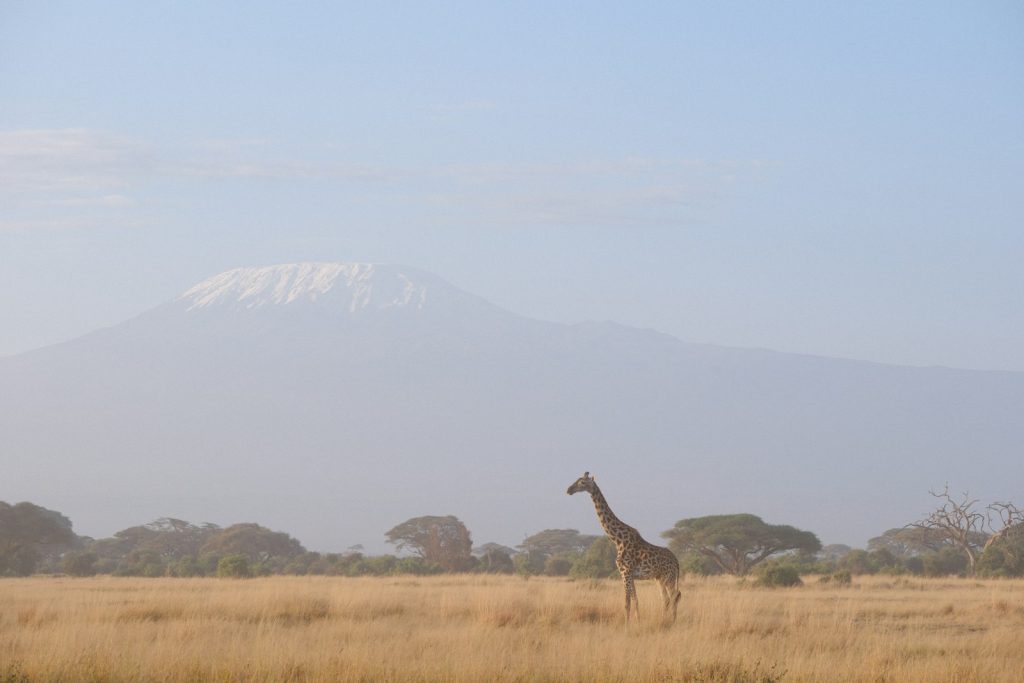
The best Kilimanjaro view from Amboseli comes in the first two hours after sunrise, in the dry months of June to October and January to February. Cloud usually covers the summit by late morning and sometimes lifts again before sunset. Nothing is guaranteed, but two nights in the park give most visitors at least one clear sighting.
Sense of Adventure is a licensed safari operator based at Mountain Mall on Thika Road, Nairobi (TRA licence TRA1/47/C01/77087), and Amboseli is one of the parks our guides visit most. This guide explains when you are most likely to see the mountain, the best times of day, where to stand, how many nights to book, photography tips, and how the Kilimanjaro view changes from month to month.
✅ Kilimanjaro View From Amboseli: The Quick Answer
- Best months: June to October and January to February, the two dry seasons.
- Best time of day: about 6.00 to 8.30 am, with a second chance from about 4.30 pm until sunset.
- Worst time: late morning to mid-afternoon, when cloud and haze build up.
- Best viewpoints: Observation Hill, the dry Lake Amboseli bed and the edges of the swamps near Ol Tukai.
- Nights to book: two nights give you two sunrises and two sunsets, which greatly improves your odds.
- Where the mountain is: in Tanzania, just south of the border, rising to 5,895 metres.
🌎 Planning Amboseli for the Mountain Views?
Tell us your travel month and we will tell you honestly how good your chances are, and which camp gives the best Kilimanjaro view. 💬 WhatsApp Us Now or call +254 799 160 081
Can You Really See Kilimanjaro From Kenya?
Yes. Amboseli National Park, in southern Kenya, has one of the most famous mountain views in Africa, even though Kilimanjaro itself stands in Tanzania.
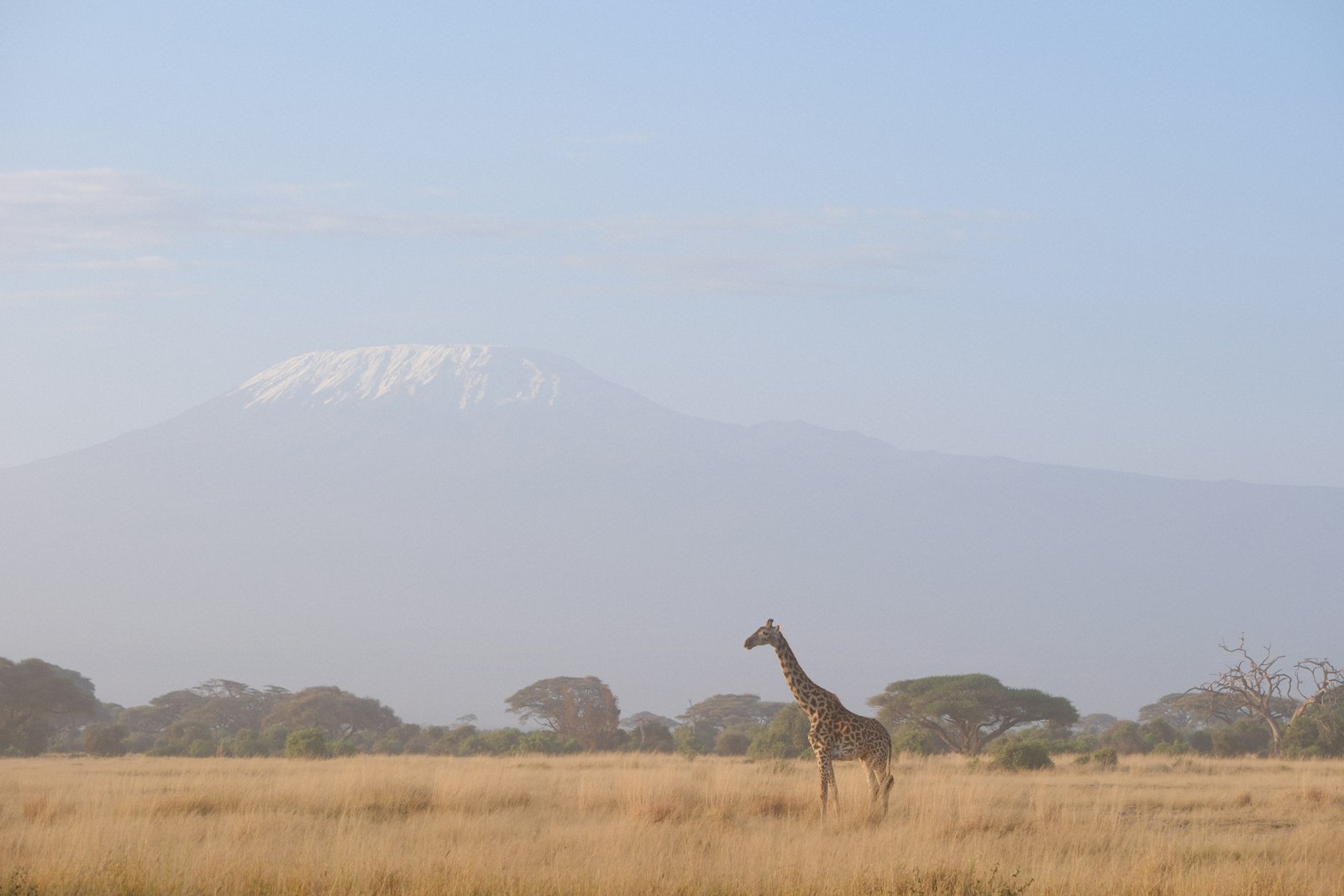
The park sits on a flat, dry basin just north of the Kenya–Tanzania border. Kilimanjaro rises straight out of the plains on the other side, with no foothills in the way. On a clear morning you see the snow-streaked dome of Kibo, the main summit at 5,895 metres, and often the jagged second peak of Mawenzi to its east.
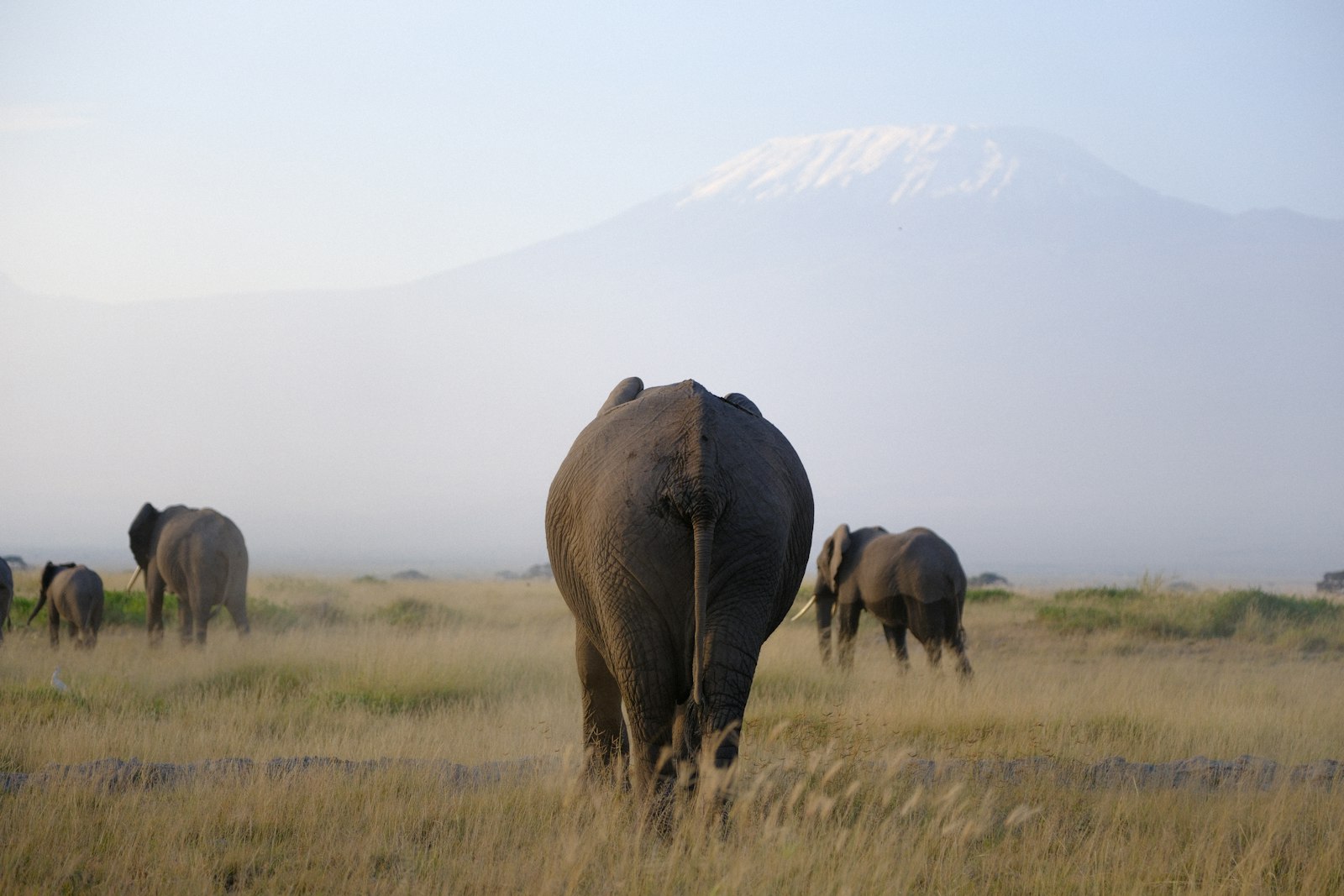
That Kilimanjaro view is why so many classic wildlife photos show elephants walking beneath a white-topped mountain. You will not be on the mountain, and you do not need a Tanzania visa. You simply look south across the border. For an overview of the park itself, read our guide to Amboseli National Park.
Why Clouds Hide the Kilimanjaro View
Kilimanjaro makes its own weather, so cloud forms around the upper slopes on most days as the air warms.
At dawn the air is cool and still, and the mountain is often completely clear. As the sun heats the plains and the forest belt on the lower slopes, moist air rises and cools, and a cap of cloud forms around the middle and upper mountain. By late morning the summit is usually hidden. As the air cools again in the late afternoon, the cloud often thins or breaks apart.
Amboseli itself lies in the mountain’s rain shadow, which is why the park is semi-arid and dusty. The dry basin helps your Kilimanjaro view in one way, with open ground and few trees, but dust and heat haze can soften the outline in the driest months.
Is the snow still visible?
Yes, and snow still adds sparkle to the Kilimanjaro view, though there is less of it than in old photographs. Kilimanjaro’s glaciers have shrunk a great deal over the past century, and scientists expect them to keep retreating. On most clear mornings you can still see white ice fields and fresh snow near the summit, especially after rain. The mountain itself is protected as Kilimanjaro National Park, managed by Tanzania National Parks.
Best Months for a Kilimanjaro View From Amboseli
The dry seasons of June to October and January to February give the most reliable clear mornings, while the rainy months bring more cloud but cleaner air between showers.
| Months | Season | Chance of a clear Kilimanjaro view | What to expect |
|---|---|---|---|
| January–February | Short dry season | Very good | Clear mornings, warm days, green after the short rains |
| March–May | Long rains | Fair to low | Heavy cloud for days, but crisp views after storms |
| June–August | Long dry season | Good | Cool mornings, early clarity, dust and haze later |
| September–October | Dry season | Good | Hot, dusty afternoons; mornings still reliable |
| November–December | Short rains | Fair | Showers and cloud, with sharp views between storms |
Why the rainy months can surprise you
Rain washes dust and haze out of the air. On the day after a storm, the Kilimanjaro view can be the sharpest of the year, with fresh snow on the summit and green plains below. The catch is that the mountain may then stay hidden for two or three days at a time. If your dates fall in April, May or November, book more nights to improve your odds. Our Kenya weather by month guide explains each season in detail.
Value in the green season
The quieter months are also cheaper at many camps. Our guide to the cheapest time for a Kenya safari shows when rates fall, and the Kenya Meteorological Department publishes seasonal forecasts closer to your trip.
Best Time of Day for the Kilimanjaro View
Dawn is the most reliable window, so be at your viewpoint or on the road by about 6.15 am.
- Sunrise to about 8.30 am: the clearest and calmest period, with soft side light.
- 8.30 am to 11 am: the cloud cap begins to build; the summit may disappear quickly.
- 11 am to 4 pm: the mountain is usually hidden or hazy; this is the time for lunch and rest.
- 4.30 pm to sunset: a second chance, as cloud often breaks up and the light turns warm.
- Night: under a bright moon, the snowfields can glow faintly above the plains.
Expert tip from our Nairobi team: ask your guide to plan the first game drive around the mountain, not the other way round. A good guide will check the summit from camp at first light and head straight for an open foreground if it is clear, then look for elephants and lions afterwards.
Best Viewpoints in and Around Amboseli
You can see the mountain from almost anywhere in the park on a clear day, but a few spots give a much better Kilimanjaro view.
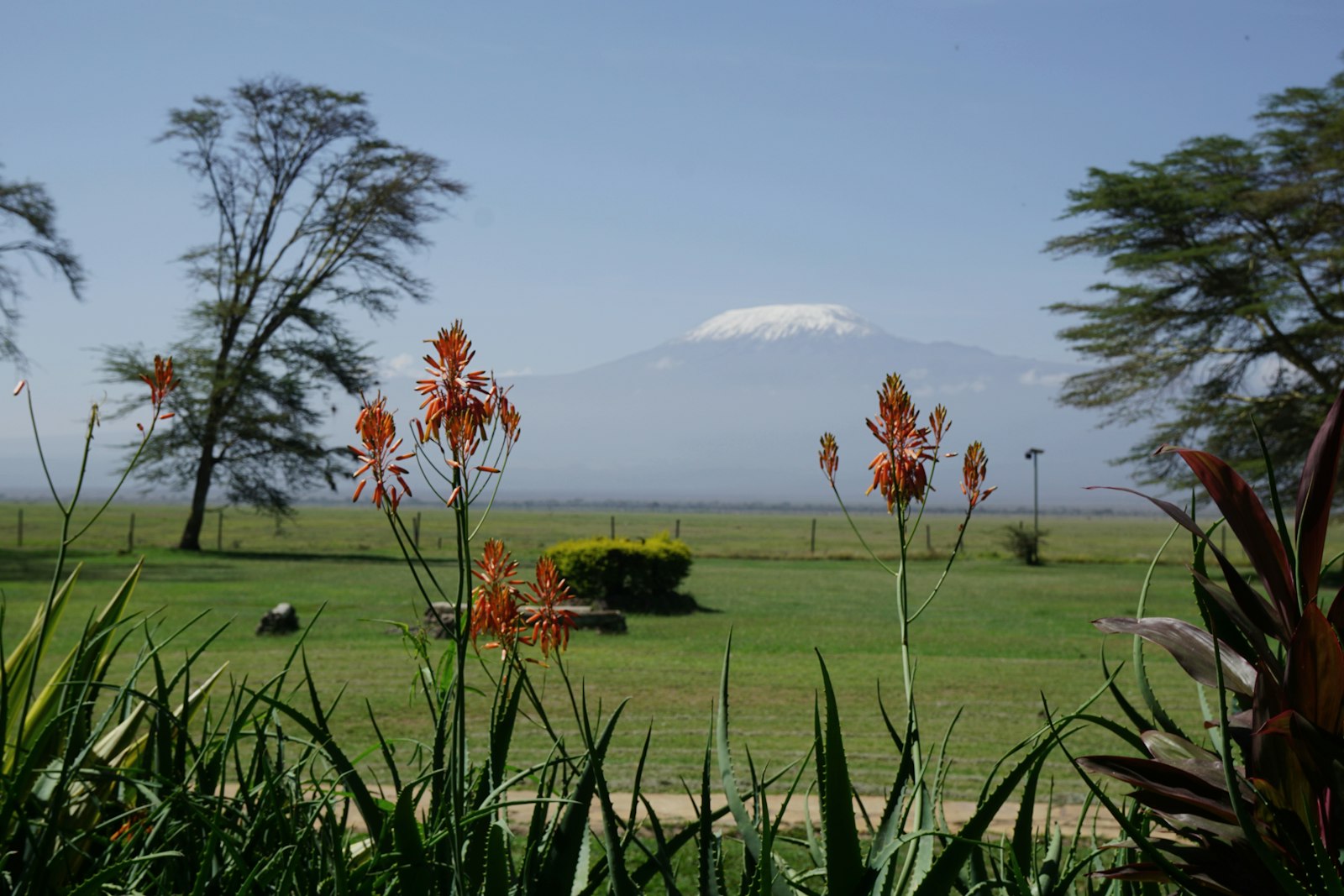
Observation Hill: the classic Kilimanjaro view
Also known by its Maasai name, Noomotio, this small hill is one of the few places in the park where visitors may leave the vehicle. A short walk to the top gives a wide view over the swamps, the plains and the mountain beyond. Late afternoon is lovely here for a Kilimanjaro view, with elephants and hippos in the swamp below.
The dry Lake Amboseli bed
For much of the year the lake is a flat, white expanse of dry clay. With nothing in the foreground but the horizon, it gives the cleanest, widest Kilimanjaro view in the park. In the heat you will see mirages and dust devils too.
The swamps near Ol Tukai
Spring-fed swamps such as Enkongo Narok draw elephants, buffalo and birds every day. The tracks along their edges let you frame wildlife and water with the mountain behind, which is the classic Amboseli photograph.
Conservancies and the park boundary
Several camps outside the park, in community conservancies to the east and south, face Kilimanjaro directly and have fewer vehicles. Our guide to Amboseli conservancy lodges compares them, and luxury lodges in Amboseli covers the stays inside and on the edge of the park.
How Many Nights for a Good Kilimanjaro View?
Two nights is the sensible minimum; one night gives you only one sunset and one sunrise, and both can be cloudy.
With a single night you have roughly two chances to see the mountain: the evening you arrive and the next morning. If both are cloudy, you leave without the view. Two nights give you four chances, and three nights more or less guarantee at least one good look in the dry months.
| Nights in Amboseli | Viewing windows | Realistic odds of a clear Kilimanjaro view |
|---|---|---|
| Day trip from Nairobi | Mostly midday | Low, because you arrive after the morning window |
| 1 night | 1 sunset, 1 sunrise | Reasonable in dry months, poor in the rains |
| 2 nights | 2 sunsets, 2 sunrises | Good in most months |
| 3 nights | 3 sunsets, 3 sunrises | Very good, plus time for conservancy activities |
A long day trip from Nairobi is possible, as on our Amboseli Day Safari, but the drive takes about four to five hours each way, so you arrive after the best light. For the mountain, our 2-Day Amboseli Safari from Nairobi is a better fit, and the 4-day Amboseli Elephant Photographic Safari gives photographers the most chances. Message us for a quote.
📅 Get a Free, No-Obligation Safari Quote
Send us your dates and we will suggest the right number of Amboseli nights and the camp with the best mountain outlook for your budget. ✉ Send Us Your Dates on WhatsApp
Photographing the Kilimanjaro View
You do not need professional gear to capture the Kilimanjaro view, but a little planning makes a big difference to your photos.
- Shoot early: the first hour gives the clearest air and the most even light on the snow.
- Use a zoom: a lens of about 100–400 mm lets you compress elephants and the mountain into one frame.
- Go wide too: a phone or wide lens captures the whole basin from Observation Hill.
- Watch exposure: snow and bright sky can fool your camera; reduce exposure slightly to keep detail in the summit.
- Use a beanbag: rest the lens on the vehicle window frame and ask your guide to switch off the engine.
- Protect your gear: Amboseli is very dusty, so keep a cloth and a zip bag in your daypack.
Expert tip from our Nairobi team: a private vehicle helps more in Amboseli than almost anywhere else, because the Kilimanjaro view can vanish in ten minutes. In a shared vehicle you may be heading the wrong way when the cloud lifts. Our guide to private vs group safaris in Kenya explains the difference.
Wildlife With the Kilimanjaro View
Amboseli is best known for its elephants, and they are the animals most often photographed with the Kilimanjaro view behind them.
The park’s elephants are among the most closely studied in Africa, and the herds include some big-tusked bulls. They move from the woodland to the swamps in the morning and back in the evening, often walking right past vehicles. You will also see buffalo, wildebeest, zebra, giraffe, hippos, hyenas and many water birds, and lions and cheetahs are seen regularly.
Amboseli is not a strong rhino park, so if seeing all of the Big Five matters to you, combine it with another area. Our guide to your chances of seeing the Big Five in Kenya explains which parks to pair.
Getting to Amboseli for the Kilimanjaro View
The park is about 240 kilometres south-east of Nairobi, roughly four to five hours by road, or about 45 minutes by light aircraft.
- By road via Emali: the usual route, on the Mombasa road then south to the Kimana or Iremito gates.
- By road via Namanga: useful if you are coming from or going to Tanzania.
- By air: scheduled flights from Wilson Airport land at airstrips in or near the park.
- From the coast or Tsavo: Amboseli links well with Tsavo West on a southern circuit.
Arrive by mid-afternoon if you can. That gives you a sunset drive on day one and a full sunrise on day two, which is the simplest way to double your chances of a clear Kilimanjaro view.
Kilimanjaro View: Park Fees and Rules
Amboseli is run by the Kenya Wildlife Service, and entry fees are charged per person for each 24 hours in the park.
Since October 2025 the published non-resident rate for Amboseli has been US$90 per adult and US$45 per child or student, per 24 hours. Fees are paid electronically, usually by your operator as part of your package. Fees change from time to time, so check the latest rates on the Kenya Wildlife Service website before you budget. Camps in the community conservancies outside the park charge their own conservancy fees instead.
- Stay on the marked tracks; driving across the swamps and dry lakebed off-road damages the fragile ground.
- Game drives run between about 6 am and 6.30 pm; park gates are closed at night.
- Leave the vehicle only at designated spots such as Observation Hill.
- Drones need special permission; see our guide to drone rules in Kenya’s national parks.
Combining Amboseli With Other Parks
Amboseli works best as one stop on a wider safari, and most travellers who want the Kilimanjaro view pair it with the Masai Mara or Tsavo.
| Route | Days | Why it works |
|---|---|---|
| Amboseli and Masai Mara | 6–7 | Mountain and elephants, then big cats and the plains |
| Amboseli and Tsavo West | 4–5 | A compact southern circuit, easy from Nairobi or the coast |
| Amboseli, Naivasha and Mara | 7 | The classic first-time Kenya route |
| Amboseli and the beach | 7–10 | Safari first, then the Indian Ocean |
Our Kenya Classic Safari: Amboseli, Lake Naivasha and Masai Mara is the most popular way to add the Kilimanjaro view to a first safari. If you prefer to finish on the coast, see the Kenya Safari and Beach Holiday.
Kilimanjaro View FAQs
Can you see Kilimanjaro from Kenya?
Yes. Kilimanjaro stands in Tanzania, but it rises just south of the border and is clearly visible from Amboseli National Park in southern Kenya on clear days. The best views come early in the morning and late in the afternoon, especially in the dry months of June to October and January to February.
What is the best month to see Kilimanjaro from Amboseli?
January, February and June to October usually give the most reliable clear mornings. The rainy months of March to May and November can also produce very sharp views after storms, but cloud may hide the mountain for several days, so book extra nights if you travel then.
What time of day is Kilimanjaro most visible?
The clearest window is usually from sunrise until about 8.30 am. Cloud often builds by late morning and covers the summit through the middle of the day. Many afternoons bring a second chance from about 4.30 pm until sunset, when the cloud thins and the light turns warm.
How many days do you need in Amboseli?
Two nights is the sensible minimum. It gives you two sunrises and two sunsets, so you have four chances of a clear view, plus time for elephants and Observation Hill. A day trip from Nairobi arrives too late for the best morning light and often misses the mountain.
Is Kilimanjaro visible all year?
The mountain is there all year, but it is often hidden by cloud. In the dry seasons most mornings are clear. In the long and short rains, you may have days without a sighting, followed by exceptionally clear views once the air has been washed clean by rain.
Do I need a Tanzania visa to see Kilimanjaro from Amboseli?
No. You enjoy the Kilimanjaro view from inside Kenya, looking south across the border, so you only need your Kenya eTA. You would need Tanzanian entry documents only if you cross the border, for example to climb the mountain or continue to the Serengeti.
Can you still see snow on Kilimanjaro?
Usually, yes. The glaciers have shrunk a great deal over the past century, but on most clear days you can still see white ice fields near the summit. Fresh snow after rain makes the summit look whiter, particularly in the mornings after storms.
🏕 Plan Your Safari With Sense of Adventure
Kenya-based experts. Real local knowledge. Transparent pricing. We will time your Amboseli nights, camp and game drives to give you the best possible Kilimanjaro view. 💬 WhatsApp Us — Start Planning Today
Call or WhatsApp: +254 799 160 081
Related Safari Guides
- ›Amboseli National Park: 11 Things to Know
- ›Luxury Lodges in Amboseli
- ›Kenya Weather by Month
- ›A Typical Day on a Kenya Safari
- ›How Many Days Do You Need for a Kenya Safari?
Official travel & park resources: Kenya Wildlife Service ↗ · Magical Kenya ↗