
Lake Nakuru National Park is the park that surprises people most on a Kenya safari. They come expecting something good — and they get something extraordinary. The lake itself turns pink from hundreds of thousands of lesser flamingos gathered on the alkaline shallows, creating one of the great colour spectacles in the natural world.
The park walls in a complete ecosystem: black and white rhinos graze on the hillsides, Rothschild’s giraffes browse the acacia woodland, leopards rest in fever trees, and lions move through the euphorbia forest on the crater rim. All within 188 km² — the most concentrated wildlife experience in the Great Rift Valley. Sense of Adventure includes Lake Nakuru in Kenya safari circuits because no other park of its size delivers this range and density of wildlife.
Add Lake Nakuru to Your Kenya Safari
Sense of Adventure routes Kenya safari circuits through Lake Nakuru for flamingos, rhinos, and an extraordinary Rift Valley experience. Talk to us today.
The Lake Nakuru Experience: A Rift Valley Jewel
Lake Nakuru sits in the floor of the Great Rift Valley at 1,754 metres above sea level, 160 km northwest of Nairobi. The national park is a fenced sanctuary — unusual in Kenya — which means the wildlife within its walls is protected from both poachers and livestock. This fence makes Nakuru one of Kenya’s most reliable parks for rhino sightings: both black and white rhinos are present, habituated to vehicles, and regularly seen in accessible areas of the park. The lake itself is alkaline — inhospitable to fish, but perfect for the algae on which lesser flamingos feed — which is why the birds gather in such extraordinary numbers on its shores.
The park’s varied terrain — the lake and its shores, open grassland, yellow fever acacia woodland, and rocky hillsides cloaked in euphorbia forest — supports an unusually diverse range of species for its compact size. This variety, combined with the fenced sanctuary and excellent road network, makes Nakuru the most rewarding mid-circuit park addition in Kenya: accessible from Nairobi in 2 hours, easy to explore in a day or overnight, and always delivering memorable sightings.
Lake Nakuru National Park at a Glance
Lake Nakuru National Park is managed by the Kenya Wildlife Service. The lake is one of three alkaline lakes that together form the Kenya Lake System in the Great Rift Valley, listed by UNESCO as a World Heritage Site, alongside Lake Bogoria and Lake Elementaita. The lake is also recognised as a wetland of international importance under the Ramsar Convention.
The park sits right on the edge of Nakuru city, so you can be watching rhinos within minutes of leaving town. The main gate is on the northern side near the city, which makes Lake Nakuru National Park one of the easiest Kenyan parks to reach for a short visit.

The Lake Nakuru Flamingo Spectacle
On a good flamingo day at Lake Nakuru, the lake shore turns solid pink. Lesser flamingos gather in flocks of hundreds of thousands, wading through the shallows with their heads inverted, filtering algae through their specially adapted bills. The sound — a constant, low, nasal honking — carries across the water like a distant crowd.
The birds move in slow, coordinated waves, their pink deepening toward the folded wings, their stick-thin legs the only grey thing in a world of rose and lilac. Greater flamingos wade among them, taller, paler, more deliberate. The concentration of flamingos varies with lake levels and algae blooms, but Lake Nakuru is one of the most reliable flamingo sites in East Africa, and Sense of Adventure’s guides know when and where to find the best gatherings.
In recent years, higher water levels across the Rift Valley lakes have diluted the lake’s alkaline water and changed where and how many flamingos feed. Numbers can move between Nakuru, Bogoria and Elementaita from one season to the next. Our guide to the current flamingo situation at Lake Nakuru explains what to expect, and we always check recent reports before your visit.
We pulled up to the lake shore and there were simply no words. Every metre of visible water was pink. Not pink-ish. Pink. It looked like someone had painted it. A rhino was grazing on the bank 200 metres to our left and seemed entirely unimpressed.— Sense of Adventure guest, Lake Nakuru, June 2024
Five Essential Lake Nakuru Experiences
The Pink Shore — Flamingo Viewing at the Lake
Sense of Adventure positions guests at the best flamingo concentration points on the lake shore — different sections hold the birds at different times depending on water level and algae distribution. The drive along the lake’s western shore at sunrise, with thousands of flamingos taking flight in the golden light against the Rift Valley escarpment, is one of the most painterly wildlife scenes in Kenya.
Rhino Tracking — Black & White in the Same Park
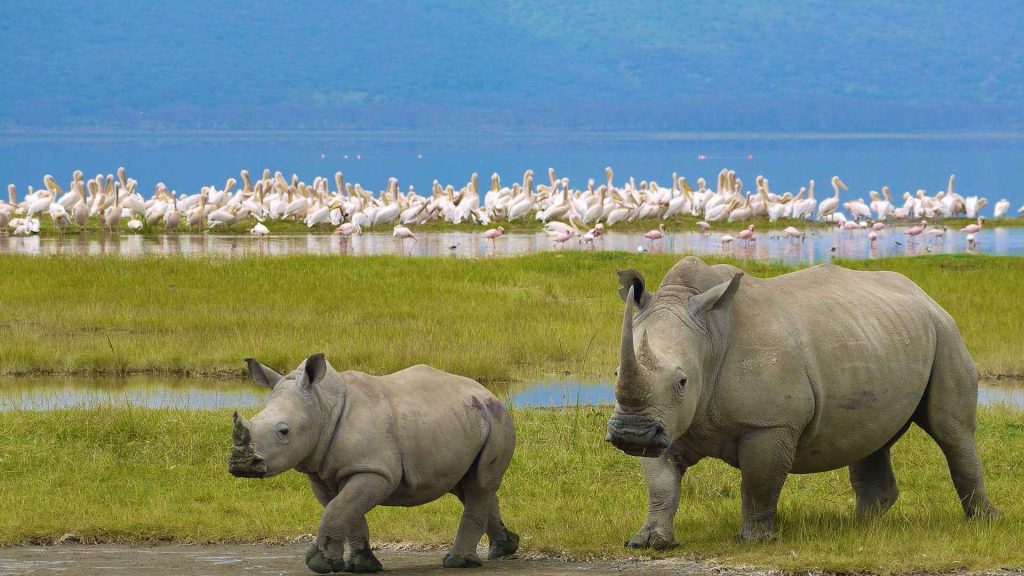
Lake Nakuru is one of Kenya’s best rhino sanctuaries. Both black and white rhinos are present, and our guides know their territories, movement patterns, and favoured grazing areas. White rhinos graze openly on the grassland — large, square-lipped, peaceful. Black rhinos browse in the acacia woodland and are smaller, more elusive, and considerably more alert. Seeing both species in the same park in a single day is a genuinely rare achievement that Nakuru makes possible.
Baboon Cliff — The Great Rift Valley Panorama
Baboon Cliff on the park’s western escarpment gives you one of the great panoramic views in Kenya — the lake laid out in the valley below, the Rift floor stretching in every direction, and a colony of olive baboons that gives the viewpoint its name. The view at sunset, when the lake turns copper and the escarpment on the far side fades to violet, is extraordinary.
Rothschild’s Giraffe Sightings
Lake Nakuru is one of the few places in Kenya where you can reliably see Rothschild’s giraffes — one of the world’s most endangered giraffe subspecies, distinguished by their pale legs and distinctive coat pattern. A population was translocated to Nakuru specifically to establish a viable sanctuary herd. Seeing these elegant animals in the fever tree woodland against the Rift Valley escarpment is a privilege that relatively few safari-goers experience.
Leopard Spotting in the Fever Trees
Lake Nakuru’s yellow fever acacia woodland is excellent leopard habitat, and sightings — usually of leopards resting in the branches of large acacias or moving through the woodland at dusk — are reported regularly. The fenced nature of the park concentrates the animals within a defined area, making Nakuru’s leopards more reliably findable than in the vast open parks of the north.
Other Wildlife and Sights in Lake Nakuru National Park
Flamingos and rhinos get the headlines, but Lake Nakuru National Park rewards a slower, wider look. Herds of buffalo graze along the lake shore, and Defassa waterbuck, impala, Bohor reedbuck and plains zebra are common in the grassland and woodland. Lions are seen fairly often, and spotted hyenas and side-striped jackals patrol the open areas at dawn and dusk.
Birdlife Beyond the Flamingos
With more than 450 species recorded, Lake Nakuru National Park is one of Kenya’s best birding parks. Great white pelicans often fish in rafts near the river mouths, and you may see African fish eagles, marabou storks, yellow-billed storks, grey-headed kingfishers and a wide range of waders. Birders who want to go further can join our Kenya birding tour, which covers several Rift Valley lakes.
Makalia Falls and the Viewpoints
In the south of the park, Makalia Falls is a pretty seasonal waterfall with a picnic site, at its best after the rains. Lion Hill and the Out of Africa viewpoint give wide views over the lake and woodland, and Baboon Cliff is the classic sunset stop. Ask your guide to plan the route so you reach a viewpoint as the light softens.

Best Time to Visit Lake Nakuru National Park
| Season | Flamingos | Rhinos & Wildlife | Notes |
|---|---|---|---|
| Jan – Feb | ⭐⭐⭐⭐ Good | ⭐⭐⭐⭐⭐ Excellent | Dry season, superb game drives |
| Mar – May | ⭐⭐⭐ Variable | ⭐⭐⭐ Good | Rains, green scenery |
| Jun – Oct | ⭐⭐⭐⭐⭐ Best | ⭐⭐⭐⭐⭐ Peak | Peak season, highest flamingo numbers |
| Nov – Dec | ⭐⭐⭐⭐ Good | ⭐⭐⭐⭐ Very Good | Short rains, good all-round |
Because Lake Nakuru National Park has a good network of roads and a compact layout, it works well in every season. The dry months make rhino and leopard sightings easier, as the grass is short and animals gather near water. The rainy months bring lush green scenery, fewer vehicles and good light for photography between showers, though some tracks in the south can become slippery.
How to Get to Lake Nakuru National Park
Most visitors reach Lake Nakuru National Park by road from Nairobi, a drive of around two hours on the main highway north-west through the Rift Valley, with a popular stop at one of the viewpoints on the Rift Valley escarpment. The park is also an easy hop from Lake Naivasha, which is around one and a half hours away by road, so many travellers combine the two.
If you are short on time, our Lake Nakuru day safari leaves Nairobi early in the morning and returns in the evening, with a full game drive in between. For a longer trip, the 8-day Kenya safari through Amboseli, Naivasha, Nakuru and the Masai Mara includes Lake Nakuru as part of a classic circuit.
Park Entry and Practical Tips
Park entry fees are set by the Kenya Wildlife Service and are paid electronically, not in cash at the gate. Fees differ for international visitors, residents and citizens, and they change from time to time, so check the current rates on the KWS website or let us include them in your safari price. Most visitors need an Electronic Travel Authorisation to enter Kenya, which you apply for through the official Kenya eTA portal.
- Bring binoculars: many of the best bird and rhino sightings are at a distance.
- Pack a warm layer, as early mornings on the lake shore can be cool.
- Carry sun protection and plenty of water for a full day’s game drive.
- Stay in your vehicle except at the marked viewpoints and picnic sites.
- Ask your guide about recent flamingo reports, as the best shoreline changes over time.
Photography Tips for Lake Nakuru
The soft light of early morning and late afternoon is best for flamingos, when the pink of the birds glows against the water and the escarpment behind. A zoom lens in the 100–400 mm range covers most situations, from rhinos on the grassland to pelicans on the water. For flamingo flocks, a wider lens lets you show the scale of the shoreline.
Wind can whip up dust along the lake shore in the dry season, so bring a lens cloth and a cover for your camera bag. A beanbag resting on the vehicle window frame gives you a steadier shot than handholding. Above all, ask your guide to switch off the engine at sightings, which removes vibration and lets you hear the birds.
How Lake Nakuru Fits Into Your Kenya Safari Circuit
Lake Nakuru sits perfectly between Nairobi and the northern parks, making it an ideal en-route addition on any Kenya safari circuit. Most Sense of Adventure Kenya itineraries route through Nakuru between the Masai Mara and Samburu — 1 or 2 nights delivers the flamingos, rhinos, and Rift Valley views without adding significant travel time. For guests coming from the south, Nakuru pairs superbly with Amboseli as a 5-night circuit. See our Kenya safari planning guide for full circuit recommendations.
Where to Stay Near Lake Nakuru National Park
There are lodges and camps both inside Lake Nakuru National Park and just outside its gates, from comfortable mid-range lodges to more upmarket options with views over the lake. Staying inside the park means you can be on the first game drive of the morning without queuing at the gate. Our guide to Lake Nakuru National Park lodges compares real properties so you can choose the right one for your budget.
The Flamingos Are Waiting. The Rhinos Are Ready.
Book your Lake Nakuru experience with Sense of Adventure — we build Nakuru into Kenya safari circuits that make the most of this remarkable park.
Frequently Asked Questions — Lake Nakuru National Park
What is Lake Nakuru famous for?
Lake Nakuru is famous above all for its flamingos — lesser flamingos gather on the alkaline lake in numbers that turn the shore solid pink. It is also one of Kenya’s most important rhino sanctuaries, home to both black and white rhinos. The park additionally supports Rothschild’s giraffes, leopards, lions, and over 450 bird species within its compact 188 km² fenced boundary.
Are there always flamingos at Lake Nakuru?
Flamingo numbers at Lake Nakuru fluctuate with water levels and algae blooms. In peak years, over a million birds gather on the lake. In low years, the numbers may be smaller — but there are almost always some flamingos present. Sense of Adventure’s guides track current conditions and will advise you on what to expect before your visit.
Can you see rhinos at Lake Nakuru?
Yes — Lake Nakuru is one of Kenya’s best parks for rhino sightings. Both black and white rhinos are present within the fenced sanctuary, and the habituated animals are regularly seen on game drives. Our guides know the rhinos’ territories and movement patterns, making Nakuru one of the most reliable rhino destinations in East Africa.
How far is Lake Nakuru from Nairobi?
Lake Nakuru is approximately 160 km northwest of Nairobi — about a 2-hour drive on the A104 highway through the Rift Valley. Nakuru town and Nakuru National Park are easily accessible by road, making it an ideal first or last stop on a Kenya safari circuit. Sense of Adventure arranges road transfers as part of all Kenya itineraries.
How many nights should I spend at Lake Nakuru?
One night at Lake Nakuru is sufficient for a focused visit — an afternoon arrival game drive and a full morning drive the next day covers the park well. Two nights gives you more flexibility for flamingo timing and Baboon Cliff sunset. Most Kenya safari circuits include Nakuru as a 1-night en-route stop, which Sense of Adventure recommends for most guests.
Can you visit Lake Nakuru National Park as a day trip from Nairobi?
Yes. Lake Nakuru National Park is about two hours from Nairobi by road, so a day trip is very practical. Leave early, enjoy a full game drive with a picnic or lodge lunch, and return to Nairobi in the evening. Our Lake Nakuru day safari is planned around exactly this timing.
Is Lake Nakuru National Park good for families with children?
Yes. The park is compact, the roads are good and drives between sightings are short, which suits children well. Rhinos, giraffes, buffalo and baboons are usually easy to spot, and the viewpoints and picnic sites give everyone a chance to stretch their legs safely. It pairs well with nearby Lake Naivasha on a family trip.
Can you see the Big Five in Lake Nakuru National Park?
You can see four of the Big Five: rhino, buffalo, lion and leopard. Elephants are not found in Lake Nakuru National Park, so most travellers combine Nakuru with Amboseli or the Masai Mara to complete the five. Rhino sightings here are among the most reliable in Kenya.