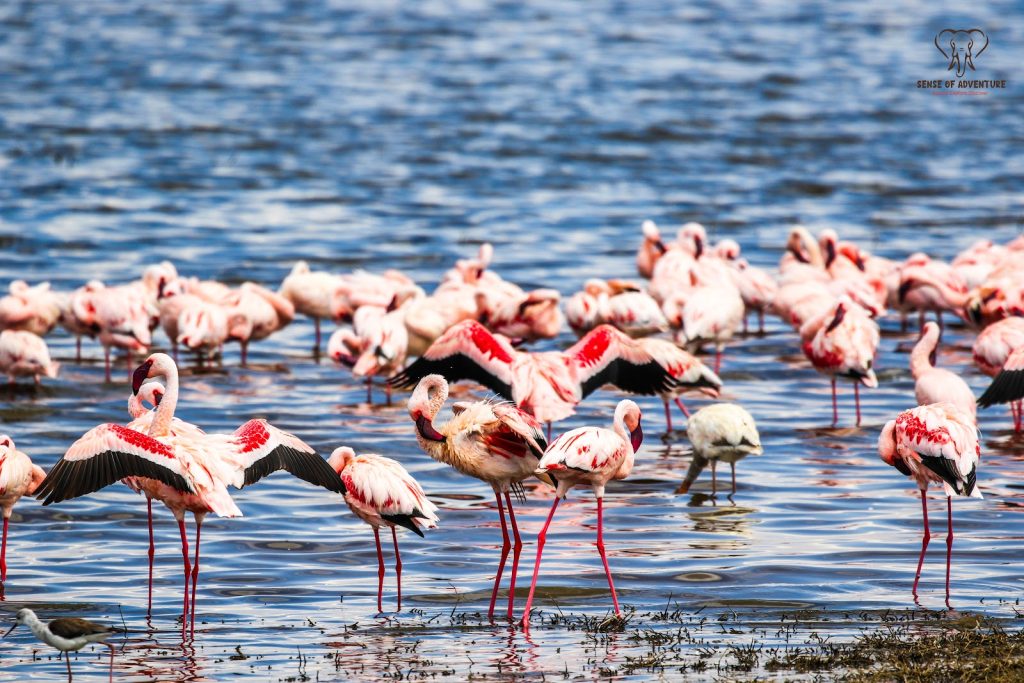
A Kenya flamingo safari takes you to one of Africa’s most overwhelming wildlife spectacles: hundreds of thousands of flamingos turning a Rift Valley soda lake pink. The sound reaches you before the sight — a continuous, low murmur rising from the birds — and then the shoreline comes into view, painted a luminous pink that seems to belong more to a painting than to the natural world.
Kenya’s flamingo lakes are among the most extraordinary wildlife destinations on the continent. This guide covers every site worth visiting, the best times to see big numbers, how to get there, what it costs and how to fit flamingos into a wider Kenya safari.
✅ Kenya Flamingo Safari: The Quick Answer
- Best lakes: Lake Bogoria (often the largest flocks), Lake Nakuru (easiest to combine with rhino and big game), Lake Elementaita and Lake Magadi.
- Species: lesser flamingos (the vast majority) and the taller, paler greater flamingo.
- Best time: numbers depend on water levels and algae rather than a fixed season; the drier months are usually most reliable.
- Getting there: Lake Nakuru is roughly 3 hours by road from Nairobi; Bogoria is a further 1.5–2 hours north.
- Time needed: one full day for Nakuru; two to three days for a Nakuru, Bogoria and Baringo circuit.
- Top tip: ask us where the flocks are before you book — they move between lakes.
🌎 Thinking About a Kenya Safari?
Our team is on WhatsApp right now — ask us anything about destinations, dates, or prices. No obligation.
💬 WhatsApp Us Now or call +254 799 160 081
Understanding Kenya’s Flamingos
Two flamingo species live on Kenya’s Rift Valley lakes: the lesser flamingo (Phoeniconaias minor) and the greater flamingo (Phoenicopterus roseus). Lesser flamingos are far more numerous — usually the overwhelming majority at any lake — and create the dense pink carpets seen in Kenya’s most famous photographs.
Greater flamingos are taller and paler, almost white with pink accents and a pink bill with a black tip. They appear in smaller numbers at the same lakes and often feed in slightly deeper water. Spotting the difference between the two is one of the small pleasures of a Kenya flamingo safari.
Why soda lakes attract flamingos
Lesser flamingos feed mainly on blue-green algae (Arthrospira, often called spirulina) that thrive in the alkaline, mineral-rich water of Kenya’s soda lakes. Greater flamingos eat more small invertebrates. The high alkalinity that makes these lakes hostile to most animals is exactly what creates the algae-rich conditions flamingos depend on.
The flamingo’s bill is a marvel of design. It works upside down, and fine comb-like plates called lamellae strain microscopic food from the water as the bird pumps with its tongue. The pigments in this diet give flamingos their pink colour, as we explain in why are flamingos pink?
Why flamingo numbers change
Numbers at any single lake can change dramatically with algae levels, water depth and rainfall. In good conditions a lake can hold several hundred thousand birds, and at peaks well over a million. In other years the flocks spread across several lakes or move to a different site altogether.
This is the most important fact for planning a Kenya flamingo safari: the birds go where the food is. Our team checks recent reports from guides on the ground, so we can tell you which lake is best for your dates before you book.
Lake Nakuru: The Most Accessible Kenya Flamingo Safari
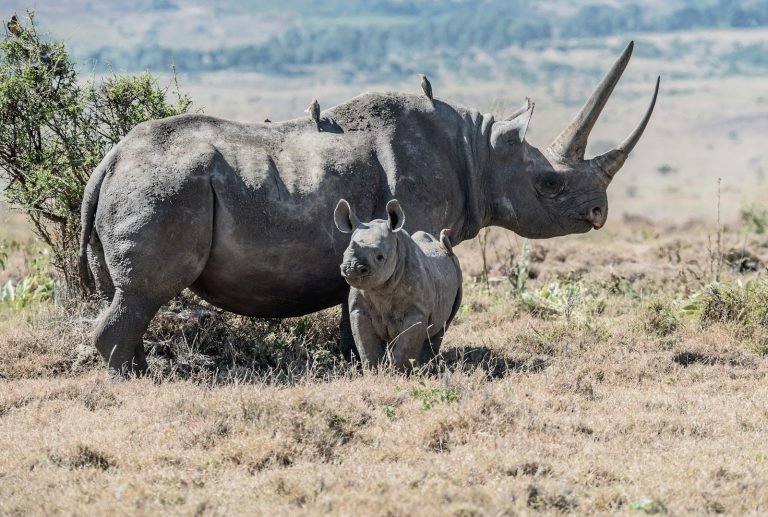
Lake Nakuru National Park is the flamingo destination most Kenya visitors see first, and for good reason. It is the easiest major flamingo lake to reach from Nairobi, has good roads and lodges, and combines birds with excellent big game, including black and white rhino, lion, buffalo and Rothschild’s giraffe.
When conditions are right, parts of the shoreline disappear beneath a pink band of lesser flamingos. The view from Baboon Cliff, looking down over the lake with the Rift Valley escarpment beyond, is one of Kenya’s most photographed scenes.
However, Lake Nakuru’s water level has risen sharply in the last decade. Higher water dilutes the algae, and flamingo numbers at Nakuru have often been much lower than in the past, with many birds moving to Bogoria or other lakes. Nakuru is still well worth visiting for rhino and birdlife, but check current flamingo numbers before making it the centrepiece of your trip. Our guide to Lake Nakuru flamingos and rhinos explains more.
📅 Get Your Free Safari Proposal
Share your travel dates and interests — we will send you a tailored, fully itemised itinerary within 24 hours.
Lake Bogoria: Kenya’s Flamingo Secret
Lake Bogoria, a long, narrow alkaline lake in the Rift Valley north of Nakuru, is less visited than Lake Nakuru but often hosts the biggest flamingo concentrations in Kenya, especially when Nakuru’s water is high. It is now the first choice for many travellers planning a Kenya flamingo safari.
Bogoria’s setting is dramatic: steep rocky hillsides, steaming hot springs and geysers that spurt boiling water into the air, with flamingos wading through the warm shallows nearby. Bubbling pools and the smell of sulphur give a real sense of standing on a geological frontier, where the African continent is slowly pulling apart along the Rift Valley.
Take care near the springs — the water is scalding, the ground can be fragile, and you should stay on marked paths and listen to local guides. Read our full Lake Bogoria guide for practical details.
Combining Bogoria with Lake Baringo
Bogoria is usually visited as a day trip from Nakuru or with an overnight stay nearby. It combines naturally with Lake Baringo, a short drive further north. Baringo is a freshwater lake, so it has no big flamingo flocks, but it is one of Kenya’s best birdwatching lakes, with boat trips past hippos, crocodiles and fish eagles.
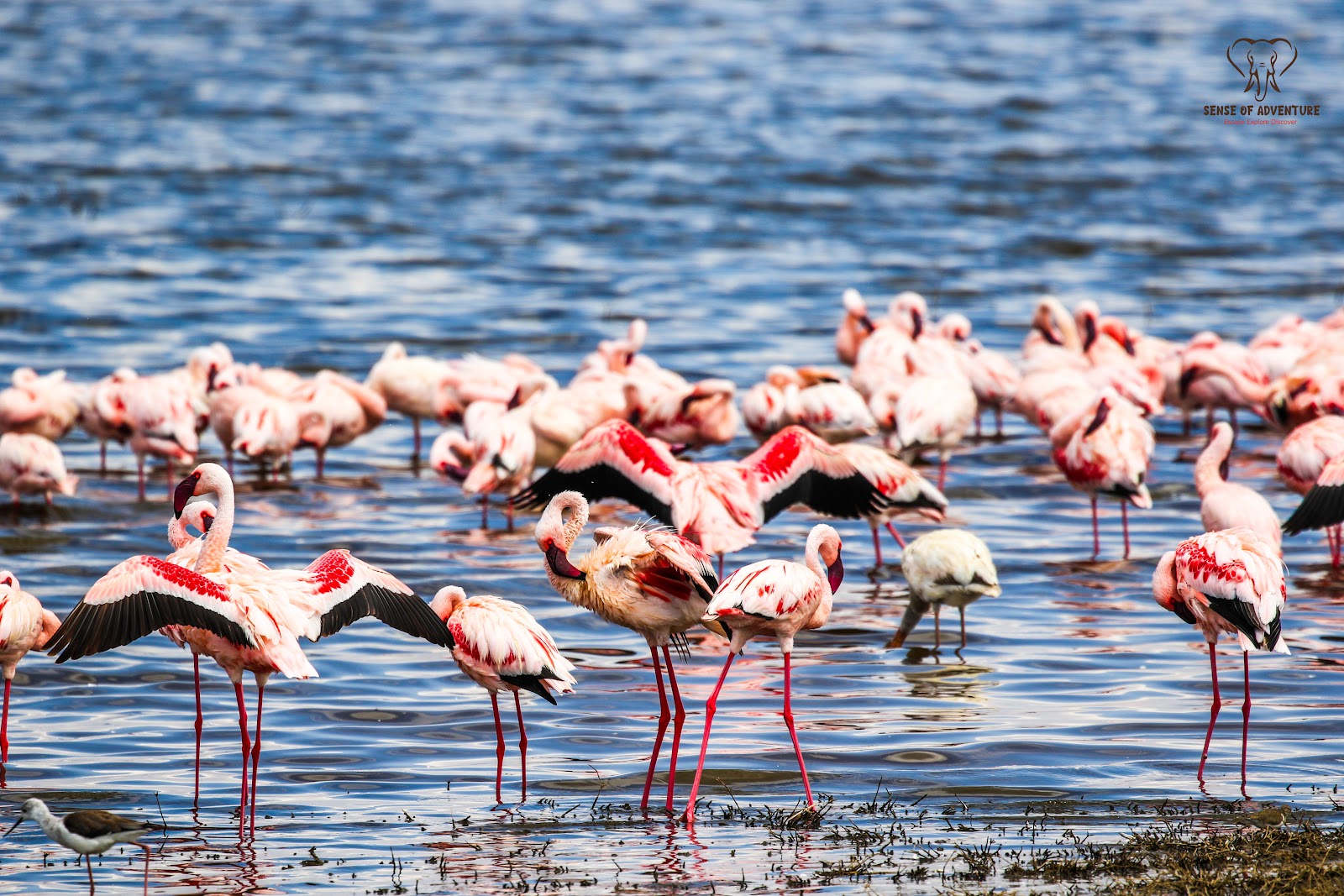
Lake Elementaita: The Quiet Alternative
Lake Elementaita is a small soda lake between Naivasha and Nakuru, right beside the main road. Flamingos gather here in good numbers in some seasons, and the lake is also a breeding area for great white pelicans. The surrounding area is part of the Kenya Lake System in the Great Rift Valley, a UNESCO World Heritage Site that also includes Nakuru and Bogoria.
Elementaita is a peaceful stop with few vehicles, and some lodges offer guided walks along the shore. It is an easy add-on to a Naivasha or Nakuru itinerary if the flocks happen to be there.
Lake Magadi: Kenya’s Remote Pink Wilderness
Lake Magadi, Kenya’s southernmost Rift Valley lake near the Tanzanian border, is a vast soda pan where commercial soda extraction takes place alongside important flamingo feeding grounds. It receives far fewer visitors than Nakuru or Bogoria, making it a real off-the-beaten-track choice.
The landscape of pink and white salt crust, shimmering heat and scattered flamingos is otherworldly and very photogenic. It is hot, so go early and carry plenty of water. Our Lake Magadi day trip guide covers the drive, the hot springs and the Olorgesailie prehistoric site on the way, and you can book it as our Olorgesailie & Lake Magadi Day Trip.
Best Time for a Kenya Flamingo Safari
Unlike the Great Migration, flamingo numbers do not follow a neat calendar. The deciding factors are water levels and algae, which change with rainfall. As a general rule, drier spells concentrate algae and often bring bigger flocks, while very heavy rains can dilute lakes and scatter the birds.
The dry months of roughly June to October and January to February are good starting points for a Kenya flamingo safari, and they also suit game viewing in the Masai Mara and other parks. But because flocks move, always check current reports first. For general seasonal advice, see our Kenya weather guide for safari.
Best time of day
Early morning is best. The light is soft, the air is cooler, there is less heat haze over the water and the birds are often actively feeding. Late afternoon can also be beautiful, especially when flocks lift off and fly low over the lake in golden light.
How to Get to Kenya’s Flamingo Lakes
All the main flamingo lakes are reachable by road from Nairobi. The drive along the edge of the Rift Valley escarpment is scenic in itself, with a classic viewpoint over the valley floor on the way down.
- Lake Nakuru: around 3 hours from Nairobi via Naivasha, depending on traffic.
- Lake Elementaita: on the main road between Naivasha and Nakuru.
- Lake Bogoria: about 1.5–2 hours north of Nakuru town.
- Lake Magadi: around 2–3 hours south-west of Nairobi.
A guided road safari is the easiest way to link the lakes. For short trips, our Lake Nakuru Day Safari runs from Nairobi, and there are more options in our Kenya safaris from Nairobi.
Incorporating Flamingos Into Your Kenya Itinerary
A Kenya flamingo safari works best as part of a broader circuit rather than a standalone trip. Our most popular format is 3–4 nights in the Masai Mara, then 2 nights in the Rift Valley (Lake Naivasha, Lake Nakuru and, if the flocks are there, Lake Bogoria), then back to Nairobi.
This combines the Mara’s big cats with the Rift Valley’s flamingos, geology and birdlife in a compact six-night trip. See our East Africa safari itinerary guide for more circuits, or compare our Masai Mara safari packages.
Kenya flamingo safari for birdwatchers
Serious birders can spend a week on the Rift Valley lakes alone. Pelicans, storks, avocets, African spoonbills and many migrant waders share the flamingo lakes, while Baringo, Naivasha and the forests further west add hundreds more species. Our Kenya Birding Tour (8 Days) covers the Rift Valley lakes, Kakamega Forest and the Masai Mara.
What a Kenya Flamingo Safari Costs
Costs depend on how many days you travel, the lodges you choose, the season and whether you share a vehicle. A day trip to Nakuru or Magadi is the most affordable option, while a multi-day circuit with park nights costs more but gives far better chances of finding the big flocks.
Park entry fees are set by the authorities and change from time to time; the official Kenya Wildlife Service publishes current rates for Lake Nakuru. For a longer trip that includes the lake, our Kenya Highlights Safari (9 Days) through Samburu, Ol Pejeta, Lake Nakuru and the Masai Mara starts from USD 2,350 per person.
Photography Tips for Flamingos
- Shoot at dawn: heat haze builds quickly over soda lakes.
- Use a long lens: 300–500mm lets you isolate patterns and individual birds without disturbing them.
- Look for movement: flocks taking off or landing make dramatic images; use a fast shutter speed.
- Expose carefully: bright water and pale birds can fool your camera, so check highlights.
- Think about patterns: from a viewpoint, a pink shoreline against blue water makes a striking abstract.
What to Pack for a Kenya Flamingo Safari
The Rift Valley lakes are hotter and drier than Nairobi, and the light reflecting off soda lakes is intense. Pack for sun, dust and the occasional cool morning, and keep bags soft and light if you will be moving between lodges.
- Binoculars: essential for picking out greater flamingos, pelicans and waders among the flocks.
- Sun protection: a wide-brimmed hat, sunglasses and high-factor sunscreen, especially at Magadi and Bogoria.
- Light, neutral clothing: breathable layers in khaki or olive, plus a fleece for early starts.
- Closed shoes: useful for lakeshore walks and the rough ground around hot springs.
- Plenty of water: lake shores have little shade and the heat builds quickly by midday.
- Camera kit: a long lens, spare batteries and a cloth to wipe off fine alkaline dust.
Lake Nakuru and the other Rift Valley lakes lie in an area where mosquitoes are present, so ask a travel clinic about malaria advice before your Kenya flamingo safari and pack insect repellent for the evenings.
Responsible Flamingo Watching
Flamingos are easily disturbed, and a flock that takes off in alarm wastes precious energy. Keep a respectful distance, move slowly and quietly when on foot, and never chase birds for a photograph. Stay on marked tracks and paths, especially near Bogoria’s hot springs.
The lesser flamingo is listed as Near Threatened by the IUCN Red List, partly because it relies on a small number of breeding and feeding sites. Choosing operators who respect park rules helps protect them.
Kenya Flamingo Safari: Frequently Asked Questions
Where is the best place to see flamingos in Kenya?
In recent years Lake Bogoria has often held the largest flocks, while Lake Nakuru is the easiest lake to combine with rhino and big game. Lake Elementaita and Lake Magadi can also be excellent. Because flamingos move between lakes as conditions change, check recent sightings before you decide where to go.
Are there still flamingos at Lake Nakuru?
Yes, but numbers vary a lot. Rising water levels over the last decade have diluted the algae flamingos eat, so flocks at Nakuru are often smaller than in the past, and many birds move to Bogoria. Nakuru remains an outstanding park for rhino, lion, buffalo and other birds.
What is the best month for a Kenya flamingo safari?
There is no single best month, because flamingo numbers follow water levels and algae rather than the calendar. Drier periods, roughly June to October and January to February, are often good and also suit general safari travel. Always ask your operator for current reports before you finalise dates.
Can I see flamingos on a day trip from Nairobi?
Yes. Lake Nakuru and Lake Magadi can both be visited on a long day trip from Nairobi. Lake Bogoria is further, so it is better with an overnight stay. A day trip to Nakuru also gives you a good chance of seeing rhino, buffalo and many water birds.
Why are some flamingos pinker than others?
Flamingos get their colour from pigments called carotenoids in the algae and small creatures they eat. Birds with a richer diet are usually pinker, and young flamingos are grey or white until their diet colours their feathers. Greater flamingos tend to look paler overall than lesser flamingos.
How long should a Kenya flamingo safari be?
One day is enough to see Lake Nakuru. Two to three days lets you add Lake Bogoria and Lake Baringo for bigger flocks and excellent birding. Most travellers add the flamingo lakes to a five- to nine-day safari that also includes the Masai Mara.
Ready to plan your Kenya flamingo safari? Tell us your dates and we will check where the flocks are. For more about Kenya, visit Magical Kenya, the official tourism board website.
🏑 Ready to Book Your Kenya Safari?
Sense of Adventure — Kenya-based experts with real local knowledge. Transparent pricing. Personalised itineraries. Guests who return year after year.
Call or WhatsApp: +254 799 160 081