

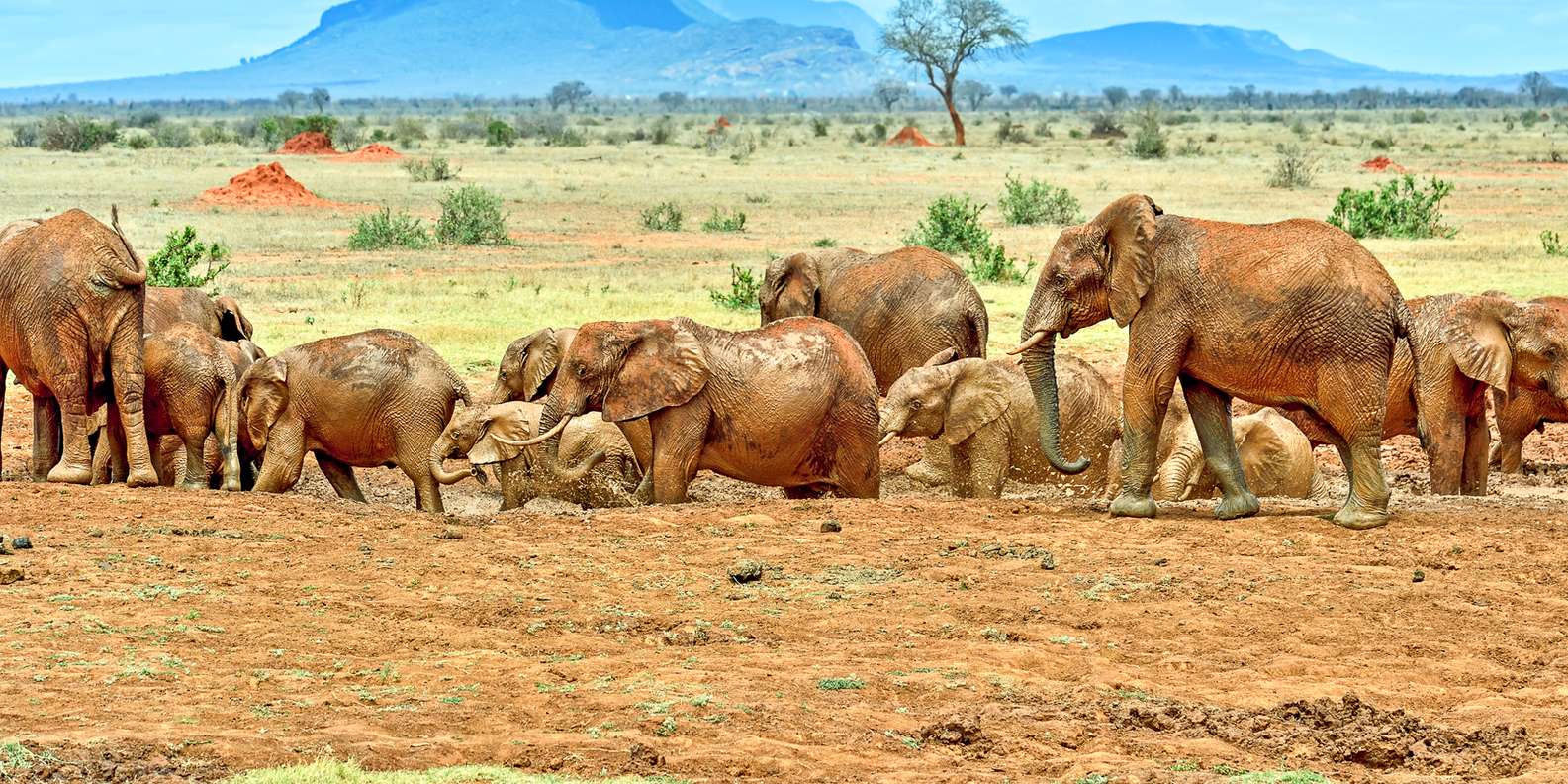
A Tsavo East and West safari takes you into Kenya’s largest wilderness, a vast and wild landscape that covers more than 22,000 square kilometres. This three-day trip starts in Tsavo East, with its open plains and dust-red elephants, and then crosses into Tsavo West for hilly volcanic scenery and the crystal-clear pools of Mzima Springs. It begins from Nairobi or the coast, so it pairs easily with a beach stay, and prices start from USD 600 per person.
Why Choose a Tsavo East and West Safari?
Tsavo is raw, uncrowded big-game country. It is split into two national parks, Tsavo East and Tsavo West, and each has its own character. Choosing a Tsavo East and West safari means you do not have to pick one: you see the open plains of the east and the springs and volcanic hills of the west in one journey.
The area is famous for its dust-red elephants, the Yatta Plateau, Mzima Springs and the man-eating lions of legend. It is also much quieter than Kenya’s most visited reserves, which gives the trip a sense of space and discovery. Because Tsavo lies inland from the coast, it is the closest big-game country to Diani and Watamu, and it combines naturally with a beach holiday.
- Red elephants: Tsavo’s famous dust-coloured herds.
- Vast, uncrowded wilderness: one of the largest protected areas in Africa.
- Mzima Springs: crystal-clear pools with hippo and crocodile viewing.
- The Yatta Plateau and Lugard Falls: dramatic scenery in Tsavo East.
- Easy to combine: pair it with a Diani beach stay.
Tsavo East and West Safari at a Glance
- Duration: 3 days and 2 nights
- Route: Nairobi or the coast, Tsavo East, Tsavo West, Nairobi or the coast
- Vehicle: private safari vehicle with a professional guide
- Park entrance fees: included
- Start and end: Nairobi or the coast, with airport and hotel transfers
- Price: from USD 600 per person
Day-by-Day Tsavo East and West Safari Itinerary
Day 1: Nairobi or the coast to Tsavo East
You travel to Tsavo East National Park from Nairobi or the coast, and the first afternoon is a game drive among the red elephants. By road, Tsavo East is about 5 to 6 hours from Nairobi and 2 to 3 hours from Mombasa or Diani. You can also take the Madaraka Express train to Voi, where our guide meets you, which is a comfortable and scenic alternative to driving.
Tsavo East is known for open plains, river sections and waterholes, and the late afternoon is a good time to find elephants, buffalo and plains game. The Yatta Plateau, one of the longest lava flows in the world, forms a long ridge on the horizon, and Lugard Falls is a dramatic stretch of rapids on the Galana River.
Day 2: Tsavo West and Mzima Springs
On the second day you transfer to Tsavo West for game drives and a visit to the crystal-clear Mzima Springs. Tsavo West is hillier and more varied than the east, with volcanic cones, lava flows and thicker bush. Mzima Springs is the highlight, a series of pools fed by water that filters through volcanic rock from the Chyulu Hills.
An underwater viewing chamber lets you watch hippos and crocodiles from below the surface, and the pools are fringed with palms and fig trees that attract monkeys and birds. For a fuller picture of the area, read our Tsavo safari guide.
Day 3: Final drive and departure
You take a morning game drive, when animals are most active, and then head back to Nairobi or the coast. If you are continuing to Diani Beach or Watamu, we can arrange the transfer and the beach hotel as one package, so that you go straight from the bush to the sea.

Tsavo East vs Tsavo West on a Tsavo East and West Safari
The two parks are administered separately but sit side by side, and they feel very different. Seeing both is the best way to understand Tsavo.
Tsavo East: open plains
Tsavo East is flat, dry and open, with long views and a strong sense of wilderness. It is the better park for large herds of elephants and for seeing wildlife across wide plains. The Galana River and the Aruba Dam draw animals, especially in the dry season, and the Yatta Plateau runs along the northern edge.
Tsavo West: hills, springs and lava
Tsavo West is greener, hillier and more scenic, with volcanic landscapes that are quite different from the east. Mzima Springs is its best-known attraction, and the hills give you views across the plains towards Kilimanjaro on clear days. Bush is thicker here, so game viewing requires patience, but the scenery is a reward in itself.
Wildlife on a Tsavo East and West Safari
Tsavo is a spacious park, and its animals are spread over a huge area, so game viewing rewards patience and a good guide. In three days you can expect to see a wide variety of species.
Why are Tsavo’s elephants red?
Tsavo’s elephants dust-bathe in the park’s red volcanic soil, which coats their skin and protects it from sun and insects. This makes them some of the most photogenic elephants in Africa. Look for family herds at waterholes, along the Galana River and at the springs.
Lions and other wildlife
Tsavo is the home of the legendary man-eating lions of history, and lions are still present today, although they can be harder to spot than in some other parks. Buffalo, giraffe, zebra, waterbuck, hippos and many kinds of antelope and birds also live here. Leopards and cheetahs are seen less often, so treat them as a bonus.
Mzima Springs on a Tsavo East and West Safari
Mzima Springs is one of the great sights of Tsavo West. Water that falls on the Chyulu Hills filters slowly through volcanic rock and emerges here in clear, cool pools. The springs supply fresh water to a wide area, and the pools are home to hippos, crocodiles, fish and many birds.
The underwater viewing chamber is the highlight. From below the surface you can watch hippos walk and swim and see fish moving through the clear water. Paths around the pools are shaded and easy to walk, and your guide will explain which animals to look for. Follow the instructions of the rangers, because hippos are dangerous if approached.
Best Time for a Tsavo East and West Safari
The dry seasons, from late June to October and from January to February, are best. Wildlife gathers at rivers and waterholes, and the bush is thinner, so animals are easier to see. The green months are quieter and lush, with excellent birdlife, although some tracks can be muddy.
- June to October: dry season, with the best game viewing and the clearest skies.
- January to February: hot and dry, with good sightings and fewer visitors.
- March to May: the long rains bring green scenery, lower prices and quieter parks.
- November to December: short rains, fresh landscapes and good birding.
How Much Does a Tsavo East and West Safari Cost?
This Tsavo East and West safari starts from USD 600 per person. The final cost depends on the season, the accommodation you choose and the size of your group, and the price per person falls when more guests share the vehicle. Park entrance fees are included. For a wider guide to budgeting, see how much an African safari costs.
What Is Included and Not Included
- Park entrance fees
- Luxury safari vehicle
- Professional guide
- Airport and hotel transfers
- Bottled drinking water
- Morning game drive
Not included: international flights, Kenya eTA or visa fees, travel insurance, tips and gratuities, meals unless specified and personal expenses. Ask us to confirm exactly which accommodation and meals are in your quote, because we tailor these to your budget.
Getting to Tsavo from Nairobi or the Coast
By road, Tsavo East is about 5 to 6 hours from Nairobi and 2 to 3 hours from Mombasa or Diani. You can also take the Madaraka Express train to Voi, where our guide meets you, and the train is a pleasant way to see the countryside. If you start in Nairobi, our Kenya safari from Nairobi page lists more trips that begin in the capital.
If you have only a day or two, a shorter option is our 2 day Tsavo safari from Mombasa. If you want to add Kilimanjaro views, read about our Amboseli safari, which combines well with Tsavo West.
Combining a Tsavo East and West Safari with a Beach Stay
Tsavo is the closest big-game park to the Kenyan coast, so many guests finish their safari with a few days at Diani Beach or Watamu. We can arrange the transfer and a beach hotel as one package, so you travel from the bush to the sea without any extra planning. A typical combination is three days in Tsavo followed by three or four days on the beach.
You will find more ideas on our Kenya beach experience page, and our Kenya safari packages include longer routes that combine several parks.
Who Is a Tsavo East and West Safari For?
This trip suits travellers who want a genuine, uncrowded safari and who enjoy landscapes as much as animals. It is ideal for beach holidaymakers who want to add a safari, for photographers who love red elephants and for repeat visitors who have already seen the busier reserves. You travel in a private vehicle at your own pace, with comfortable stops and plenty of rest, so it also works well for children and older travellers.
Tsavo is a malaria area, so check with your doctor about precautions before you travel. If you want a more tailored trip, we also offer a private Kenya safari designed around your dates and interests.
Photography on a Tsavo East and West Safari
Tsavo is a photographer’s park. Red elephants against green bush, wide plains under big skies and the clear pools of Mzima Springs offer very different subjects within a few days. A lens of 200 to 400 mm suits most wildlife, while a wide lens helps with landscapes and the springs. The golden light of early morning and late afternoon gives the richest colour. Dust can settle on equipment, so carry a cloth and keep your camera in a bag between stops, and protect it from spray near water.
What to Pack for a Tsavo East and West Safari
- Comfortable clothes in neutral colours such as khaki, olive and beige, plus a warm layer for early mornings.
- A wide-brimmed hat, sunglasses and high-factor sunscreen.
- A scarf or buff for dust.
- Closed, comfortable shoes, and sandals for the lodge.
- Binoculars and a camera with a zoom lens, spare batteries and memory cards.
- Insect repellent and any malaria prevention advised by your doctor.
- A soft-sided bag, because space in the vehicle is limited.
Visas, Health and Safety
Most visitors need a Kenya eTA before arrival, so apply online ahead of your trip and check the latest rules for your nationality. Tsavo is in a malaria area, so speak to your doctor about prevention, and take out travel insurance that covers medical evacuation. Your guide is experienced and will brief you on safety in the parks. For official information, see the Kenya Wildlife Service and Magical Kenya.
Tsavo East and West Safari FAQs
How many days do I need for a Tsavo East and West safari?
Three days is ideal for seeing both Tsavo East and Tsavo West: one full day in each park plus travel. With more time, add a night at the coast or extend to Amboseli.
What is the best time to visit Tsavo?
The dry seasons, from late June to October and from January to February, are best: wildlife gathers at rivers and waterholes and the bush is thinner. The green months are quieter and lush, with excellent birdlife.
Why are the elephants in Tsavo red?
Tsavo’s elephants dust-bathe in the park’s red volcanic soil, which coats their skin and protects it from sun and insects. It makes them some of the most photogenic elephants in Africa.
How do I get to Tsavo from Nairobi or Mombasa?
By road, Tsavo East is about 5 to 6 hours from Nairobi and 2 to 3 hours from Mombasa or Diani. You can also take the Madaraka Express train to Voi, where our guide meets you.
Can I combine a Tsavo East and West safari with a beach holiday?
Yes. Tsavo is the closest big-game park to the Kenyan coast, so many guests finish with a few days at Diani Beach or Watamu. We can arrange the transfer and beach hotel as one package.
Is a Tsavo safari suitable for children and older travellers?
Yes. You travel in a private vehicle at your own pace, with comfortable lodges and plenty of rest stops. Tsavo is in a malaria area, so check with your doctor about precautions before you travel.
Book Your Tsavo East and West Safari
Send us your dates, your starting point and the number of guests by WhatsApp or email, and we will reply with a written quote and a suggested route. A deposit secures your place, and we send final documents and packing advice before you travel. If you would like a longer adventure, we can combine Tsavo with Amboseli and the coast in a single itinerary.
Overview
Tsavo is Kenya’s biggest national park, a vast and wild landscape split into Tsavo East and Tsavo West. Famous for its dust-red elephants, the Yatta Plateau, Mzima Springs and the man-eaters of legend, Tsavo offers raw, uncrowded big-game safari just inland from the coast.
Price is from USD per person; final cost depends on season, accommodation and group size.
Ready to go? Book this safari instantly on WhatsApp — we’ll take it from there.
Highlights
- Tsavo’s famous red elephants
- Vast, uncrowded wilderness
- Mzima Springs and hippo viewing
- The Yatta Plateau and Lugard Falls
- Easily combined with a Diani beach stay


