

Lake Manyara National Park punches wildly above its compact 330 km², stacking habitats like a highlight reel: groundwater forest thick with blue monkeys and hornbills, open grassland where buffalo herds graze in their hundreds, an alkaline lake often lined pink with flamingos, and — most famously — lions that climb into the acacia canopy to escape the heat below. Ernest Hemingway called the setting, hemmed by the sheer 600-metre Rift Valley escarpment, one of the most beautiful he had seen in Africa, and the compliment holds up. Most visitors treat Manyara as a warm-up en route to the Serengeti; Sense of Adventure treats it as a genuine highlight in its own right, worth a full, unhurried day.
A Full Day in Tanzania’s Most Compact Gem
Forest, lake and tree-climbing lions in one drivable loop — ask us to build Manyara into your northern circuit.
Why Manyara Packs So Much Into So Little Space
The park occupies a narrow shelf between the soda lake and the towering Rift wall, and that geography compresses an entire ecosystem gradient into a single game-drive loop: entering through dense groundwater forest fed by underground springs off the escarpment, opening into acacia woodland and grassy floodplain, and finally reaching the lake’s alkaline shallows where, water levels permitting, thousands of lesser flamingos gather alongside pelicans and storks. Manyara’s tree-climbing lions — a behaviour shared with only a handful of populations continent-wide — favour the sausage trees and acacias of the woodland zone, believed to escape biting flies and ground heat exactly as their cousins do at Kenya’s Lake Nakuru.
We planned half a day and stayed the whole one — blue monkeys in the forest canopy within minutes of the gate, then a lion draped through a sausage tree an hour later, flamingos pink along the shore at the end. Manyara felt like four parks stitched into one.
— Sense of Adventure guest, Tanzania northern circuit
The 5 Essential Lake Manyara Experiences
Tree-Climbing Lions — the park’s signature oddity
Manyara’s lions are famous for lounging along horizontal branches — a behaviour rare enough worldwide to draw researchers, most convincingly explained as escape from ground heat and biting insects. Scan the woodland’s big sausage trees and acacias; a paw dangling from the canopy is the sighting everyone hopes for.
The Groundwater Forest — a jungle fed from underground
Springs seeping from the Rift wall feed a lush, almost jungle-like forest at the park entrance — blue and vervet monkeys crashing through the canopy, silvery-cheeked hornbills calling, olive baboons troop-sized in the shade. It is a cool, green contrast to every dusty savannah image of Africa, and it announces itself the moment you enter.
Flamingos on the Alkaline Shore — the Rift lake spectacle
When conditions align, Lake Manyara’s shallow soda shoreline hosts thousands of lesser flamingos feeding on algae, joined by pelicans, storks and herons — a scene rivalling Kenya’s famous Rift lakes. Numbers swing with water level and algae bloom, so ask your guide for the current picture before setting expectations.
Buffalo and Elephant Herds — big numbers on the floodplain
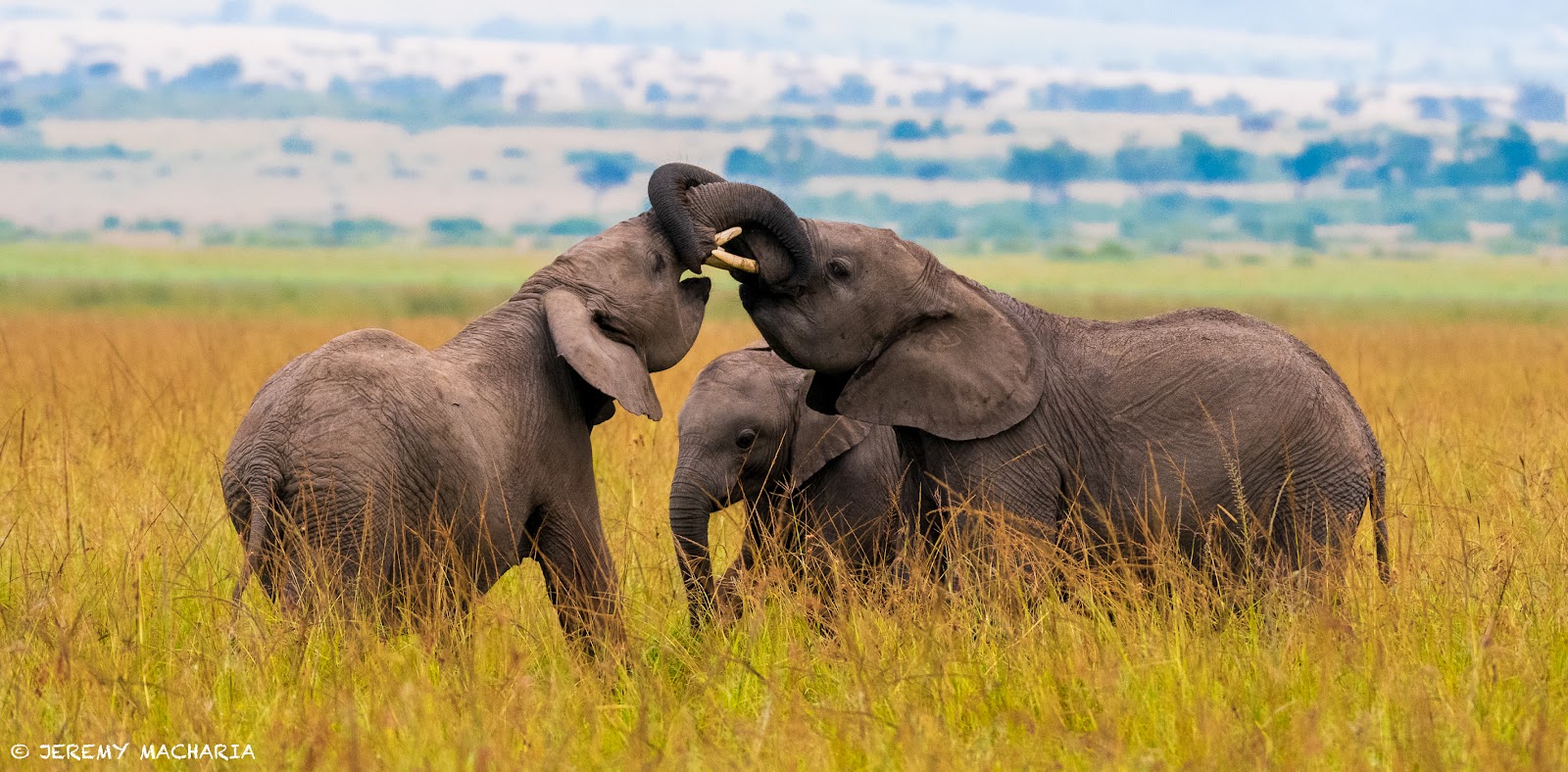
Manyara’s open grassland supports some of Tanzania’s densest buffalo herds — hundreds strong — alongside elephant families that move confidently between forest and floodplain. The compact park concentrates these big-number sightings efficiently, often within the first hour of a drive.
The Hemingway Escarpment View — the backdrop that impressed a legend
The sheer 600-metre Rift wall framing the park’s western edge is the view Ernest Hemingway praised in Green Hills of Africa. A stop along the escarpment-facing tracks, especially in late afternoon light, delivers the postcard shot — lake, cliff and open plain in one frame.
Serengeti Warm-Up or Standalone Highlight
Manyara rewards a full day, not a drive-through. Ask us to build it properly into your Tanzania route.
Lake Manyara Facts
- Compact scale: just 330 km², with roughly a third of that area being the lake itself.
- Bird list: over 400 species recorded — flamingos, pelicans and forest species combined.
- Tree lions: one of very few known tree-climbing lion populations in Africa, alongside Uganda’s Ishasha and Kenya’s Nakuru.
- The wall: the Rift Valley escarpment rises about 600 metres along the park’s western boundary.
- Literary fame: Ernest Hemingway praised the setting in his 1935 book Green Hills of Africa.
- Timing: a half-day covers the highlights; a full day allows the forest, floodplain and lakeshore all unhurried time.
Fitting Manyara Into a Tanzania Circuit
Manyara sits on the classic route to the Serengeti and Ngorongoro Crater — see our Tanzania Northern Circuit guide for the full loop. Compare parks in our Serengeti vs Masai Mara article, or combine it with Kenya on the 10-day Kenya-Tanzania Classic.
Four Habitats, One Unforgettable Day
Forest monkeys, tree lions, flamingos and a Rift wall view — message us to add Manyara properly to your trip.
Frequently Asked Questions
What is Lake Manyara National Park known for?
Lake Manyara National Park is known for its rare tree-climbing lions, lush groundwater forest, large buffalo and elephant herds, and — water levels permitting — spectacular flamingo flocks along its alkaline lake shore, all packed into a compact 330 km² beneath a dramatic Rift Valley escarpment.
Why do Lake Manyara’s lions climb trees?
Manyara’s lions climb into sausage trees and acacias primarily to escape ground-level heat and biting flies, a behaviour shared with only a few populations worldwide, including Uganda’s Ishasha and Kenya’s Lake Nakuru. Sightings aren’t guaranteed but are a realistic highlight of a game drive.
Is Lake Manyara worth visiting or just a stopover?
Lake Manyara deserves a full day, not just a drive-through en route to the Serengeti — its groundwater forest, buffalo-dense floodplain, flamingo shoreline and tree-climbing lions together offer a habitat range few parks match in such a small area.
Are there flamingos at Lake Manyara?
Lesser flamingos gather on Lake Manyara’s alkaline shallows when algae conditions favour them, sometimes in flocks of thousands, alongside pelicans and storks. Numbers vary with water level and season, so ask your guide for the current situation when planning your visit.
How does Lake Manyara compare to the Serengeti?
Lake Manyara is far smaller and more compact than the Serengeti, trading vast plains and the migration for concentrated habitat diversity — forest, floodplain and lake — in a single easy day-loop. Most itineraries visit both, with Manyara as an excellent, differently-flavoured complement rather than a substitute.