This Serengeti vs Masai Mara safari comparison tackles the most searched safari question on the internet — and the honest answer is that you are choosing between two parts of the same ecosystem. The Serengeti-Mara ecosystem is one continuous, 25,000 km² animal kingdom that straddles the Tanzania-Kenya border. The Great Migration, the resident predators, the vast open grassland — all of it is shared. The international boundary that divides them is, from the animals’ perspective, a meaningless line through the middle of their habitat.
What actually differs between the two parks is infrastructure, access, regulations, cost, and character — and those differences matter significantly when planning your safari. Sense of Adventure operates in both parks and books hundreds of guests to each every year. This is the most honest comparison you will find because we have no interest in sending you to the wrong one.
✅ Quick Answer
- July–October: both parks are excellent; the Masai Mara is easier to reach from Nairobi and its conservancies offer more flexibility.
- January–March: choose the Serengeti for the calving season on the southern plains.
- Short trip or tighter budget: the Masai Mara usually gives better value and less travel time.
- Space and remoteness: the Serengeti is ten times larger and feels wilder.
- Best of all: combine both in one East Africa circuit.
Tell Us Your Dates. We’ll Tell You Which One to Book.
Sense of Adventure will give you an honest recommendation based on your dates, budget, and what matters most to you — and we can combine both in a single circuit. Contact us now.
Serengeti vs Masai Mara Safari Comparison: The Short Verdict
If you only read one section, read this one. The Masai Mara National Reserve in Kenya is compact, easy to reach and surrounded by private conservancies that allow off-road driving, night drives and walking. The Serengeti National Park in Tanzania is vast, varied and has wildlife on show somewhere in the park in every month of the year.
Neither is “better” in general. The right choice depends on three things: when you are travelling, how many days you have, and what else you want to see in East Africa. The rest of this Serengeti vs Masai Mara safari comparison explains each of those factors in detail, with the practical points we discuss with guests every week.
Our Serengeti vs Masai Mara safari comparison rule of thumb
Travelling between July and October with a week or less? Book the Mara. Travelling between December and March, or planning a longer trip with Ngorongoro, Kilimanjaro or Zanzibar? Book the Serengeti. Have ten days or more? Do both.
The Full Comparison: 10 Dimensions That Actually Matter
| Factor | Masai Mara (Kenya) | Serengeti (Tanzania) |
|---|---|---|
| Size | 1,510 km² (reserve) + 1,500 km² conservancies | 14,763 km² — 10x larger |
| Best season | Jul–Oct (migration); year-round for Big Cats | Year-round; Jan–Mar (calving), Jul–Oct (north) |
| Night drives | Yes — in private conservancies | Yes — in private concessions |
| Off-road driving | Yes — in conservancies | Restricted — tracks only in main park |
| Vehicle crowds | Can be high at peak sightings | Less crowded overall (larger area) |
| Cost | Mid-range to luxury; conservancies add value | Higher park fees; Tanzania generally pricier |
| Combine with | Amboseli, Samburu, Lewa, coast | Ngorongoro, Zanzibar, Kilimanjaro |
| Access from Nairobi | 45 min flight, 5–6 hrs road | Flight via Arusha (2–3 hrs total) |
| Walking safaris | Yes — in conservancies | Limited; available in some concessions |
| Migration calving | Not in Kenya | January–March in southern Serengeti |
Where the Great Migration Is, Month by Month
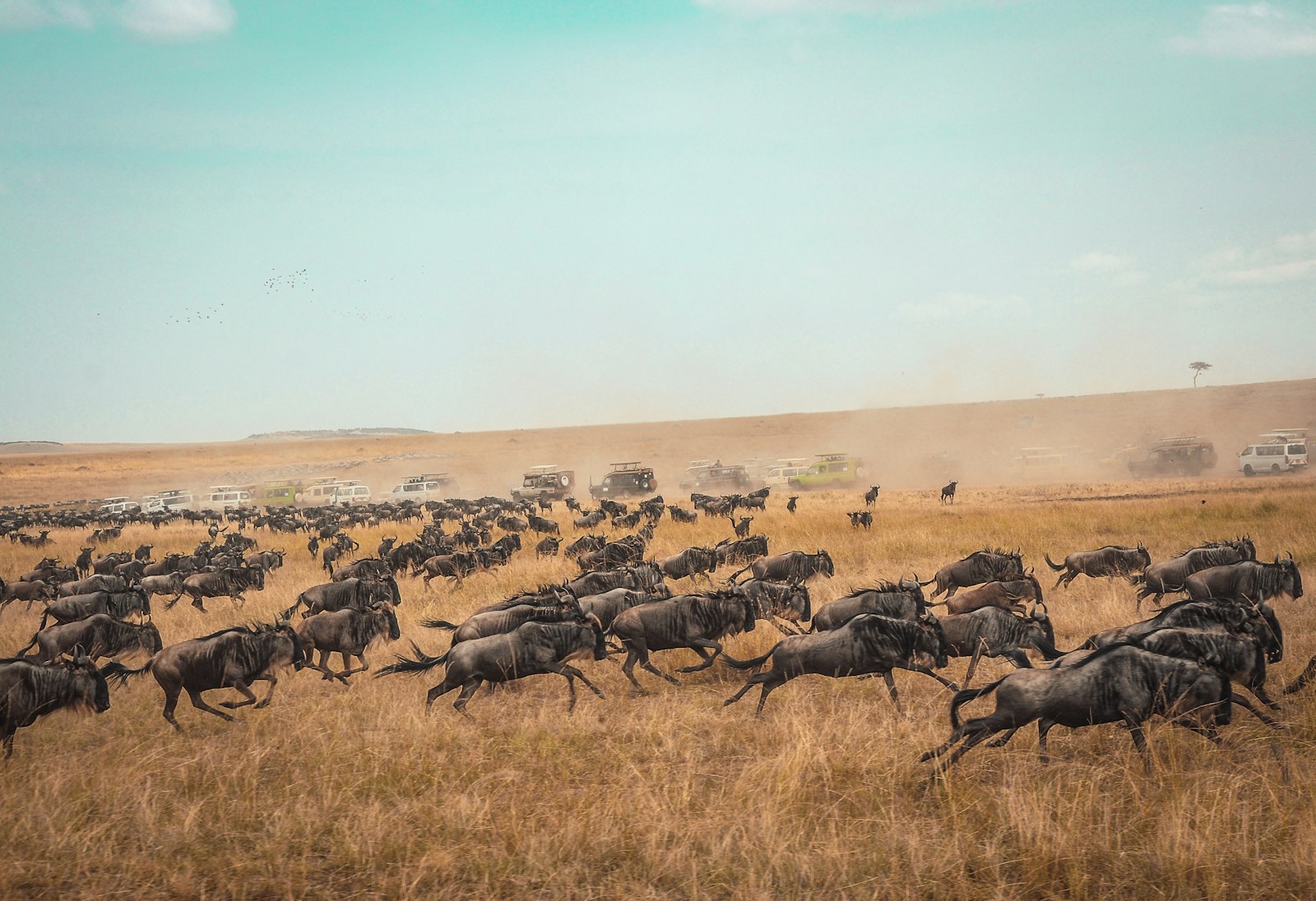
The single biggest factor in any Serengeti vs Masai Mara safari comparison is the Great Migration. Roughly 1.5 million wildebeest, along with hundreds of thousands of zebra and gazelle, follow the rains around the ecosystem in a loose clockwise circuit. The timing shifts a little every year with the rainfall, but the broad pattern is reliable.
- December–March: southern Serengeti and the Ndutu area, with calving peaking around February.
- April–May: herds move through the central Serengeti during the long rains.
- June: the Western Corridor, with crossings of the Grumeti River.
- July–October: northern Serengeti and the Masai Mara, with the famous Mara River crossings.
- November: the herds drift south again through the eastern Serengeti.
January to March: Calving in the Southern Serengeti
Around half a million wildebeest calves are born on the short-grass plains of the southern Serengeti in a few weeks. Predators gather in large numbers, and cheetah, lion and hyena sightings can be outstanding. None of this happens in Kenya, so if your trip falls in these months, the Serengeti is the clear choice for migration viewing.
July to October: River Crossings on Both Sides
The Mara River runs through both the northern Serengeti and the Masai Mara, and crossings happen on both sides of the border during the same months. In Kenya, more crossing points are within a short drive of camps. In Tanzania, the northern Serengeti around Kogatende and Lamai is more remote and often has fewer vehicles. Crossings are never guaranteed on any given day; patience and a full-day drive give you the best chance.
Game Viewing Beyond the Migration
The migration gets the headlines, but most of the animals in both parks are resident. Lion, leopard, cheetah, elephant, giraffe, buffalo, hippo, topi and gazelle are present all year in both. Outside the migration months, the Mara still offers some of Africa’s densest big cat populations, while the Serengeti’s central Seronera valley is famous for leopards in the sausage trees and lions on the kopjes.
Big Cats
Both parks are world-class for big cats. The Mara’s smaller size means sightings often come quickly, which suits short safaris. The Serengeti’s kopjes — granite outcrops rising from the plains — give lions and cheetahs natural lookouts and create classic photographs.
Rhino and the Big Five
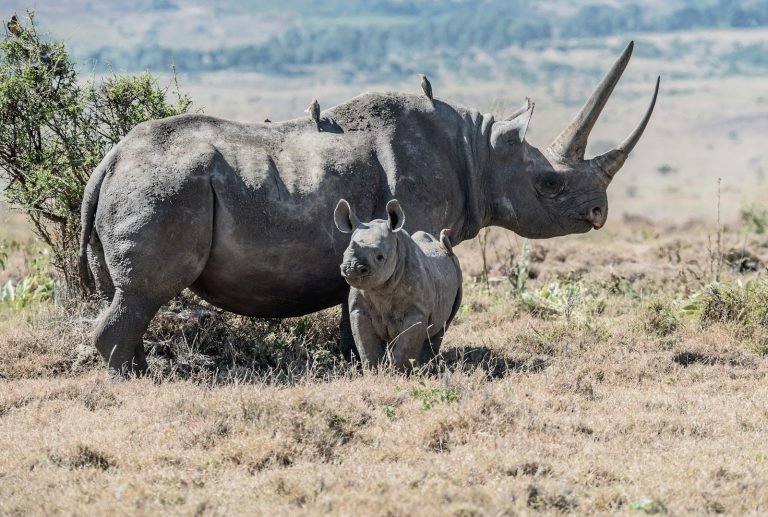
Black rhino live in both parks but are rare and shy. In Kenya, the Mara Triangle holds a small population. In Tanzania, the Ngorongoro Crater, a few hours from the Serengeti, gives a much better chance. If ticking off the Big Five matters to you, a Tanzania circuit including Ngorongoro, or a Kenya trip adding Ol Pejeta and the Masai Mara, is the surest route.
Areas to Know in Each Park
Masai Mara: Reserve and Conservancies
The reserve itself divides into the Mara Triangle, west of the Mara River, and the larger eastern sector around Talek and Musiara. Around it lie private conservancies such as Mara North, Olare Motorogi, Naboisho and Ol Kinyei, leased from Maasai landowners. Conservancy camps limit guest numbers, which keeps sightings uncrowded and brings income directly to local communities. Our Masai Mara safari packages include both reserve and conservancy options.
Serengeti: Four Distinct Regions
The Serengeti is best understood as four regions. The south and Ndutu host the calving. The central Seronera valley has year-round resident wildlife and the most lodges. The Western Corridor follows the Grumeti River towards Lake Victoria. The north, around Kogatende and Lamai, borders the Mara and sees the river crossings. Most itineraries focus on one or two regions, not all four.
Getting There and Getting Between the Two Parks
Reaching the Masai Mara
Scheduled light aircraft fly from Nairobi’s Wilson Airport to Mara airstrips in about 45 minutes, several times a day. By road, the drive from Nairobi takes five to six hours, with views over the Great Rift Valley on the way. Road safaris are popular because they keep costs down and combine easily with Lake Naivasha or Lake Nakuru.
Reaching the Serengeti
Most visitors start in Arusha or at Kilimanjaro International Airport. Light aircraft reach Serengeti airstrips in roughly one to two hours, depending on the region. By road, the drive from Arusha to central Serengeti takes most of a day, usually broken with stops at Tarangire, Lake Manyara or the Ngorongoro Crater.
Crossing Between Kenya and Tanzania
Although the two parks share a border, there is no open tourist crossing directly between them. To combine both, you either fly via Nairobi and Kilimanjaro or Arusha, or drive through the Namanga border post between Nairobi and Arusha. With good planning, the transfer takes most of one day.
Cost Differences Explained
Cost is where a Serengeti vs Masai Mara safari comparison often surprises people. Prices vary with season, accommodation and group size, but some patterns are consistent. Tanzania’s park fees are generally higher than Kenya’s, and Serengeti trips usually rely more on internal flights or long drives, which adds cost. Kenya has a wider range of mid-range camps and a well-developed road safari network, so the Mara often gives better value for shorter trips.
At the luxury end the gap narrows, as both countries have exceptional camps. Masai Mara reserve fees are set by the county authorities, while Serengeti fees are set by Tanzania National Parks and published on the TANAPA website. For a line-by-line breakdown, read our Kenya vs Tanzania safari cost guide, and check current rates with us for your dates.
When the Masai Mara Wins
✅ Choose the Masai Mara if:
You are travelling July–October and want the river crossings with private conservancy access (night drives, walking safaris, off-road driving, fewer vehicles per crossing).
You want to combine your safari with other Kenya destinations — Amboseli, Samburu, the coast — as part of a Kenya-only circuit from Nairobi.
Budget is a consideration — Kenya’s mid-range safari market is more developed and more competitive than Tanzania’s, giving better value at the mid-price point.
You want walking safaris and night drives as standard features of your safari experience, not special arrangements.
When the Serengeti Wins
✅ Choose the Serengeti if:
You are travelling January–March and want the calving season — half a million wildebeest calves born on the southern plains, surrounded by predators. This is exclusively in Tanzania.
You want to combine safari with Ngorongoro Crater, Zanzibar, or a Kilimanjaro climb — Tanzania’s headline circuit.
Scale matters to you — the Serengeti’s vastness, the sense of being genuinely remote in a 14,000 km² ecosystem, is a different experience from the more accessible Mara.
You want the northern Lamai triangle — the migration with significantly fewer vehicles than the Kenya side of the same river.
Which Park Suits Which Traveller?
First-time safari-goers
The Masai Mara is often the easier first safari. It is close to Nairobi, sightings come thick and fast, and a three- or four-day trip feels complete. The 3 Day Masai Mara Safari Package is a popular starting point.
Families
Shorter transfers make the Mara easier with young children, and many conservancy camps welcome families with dedicated activities. In Tanzania, the long road days between parks can be tiring for small children, so flying between the Serengeti and Ngorongoro is worth considering.
Photographers
Conservancy off-road rules in the Mara let guides position vehicles for the best light and angle. The Serengeti offers more varied scenery, from kopjes to endless short-grass plains, and the calving season produces dramatic predator action. Many serious photographers eventually visit both.
Honeymooners
Both parks pair beautifully with the beach. The Mara connects easily to Diani or Zanzibar, and the Serengeti links naturally to Zanzibar. Our 7 Days Masai Mara and Zanzibar flying package is a favourite with couples.
Visas, Health and Entry Requirements
Kenya and Tanzania have separate entry systems, so you need to sort both if you are combining the two parks. Most visitors to Kenya need an Electronic Travel Authorisation, which you apply for online through the official Kenya eTA portal. Tanzania has its own visa process. Rules change, so check them well before you travel.
Both parks are in malaria areas, so speak to a travel clinic about prevention. If you travel from Kenya into Tanzania, you may be asked for a yellow fever vaccination certificate. For up-to-date safety and entry advice, the UK foreign travel advice for Kenya and the Kenya tourism board’s Magical Kenya site are useful starting points.
The Best Answer: Do Both
The most rewarding decision is not choosing between the Serengeti and the Masai Mara — it is doing both in a single East Africa circuit. Sense of Adventure designs 10–14 day Kenya-Tanzania circuits regularly: Masai Mara (3 nights) + Serengeti (3 nights) + Ngorongoro (1 night) + Zanzibar (3 nights). The two parks deliver genuinely complementary experiences — the Mara’s conservancy intimacy and the Serengeti’s scale — and Zanzibar provides the perfect decompression.
The flights between parks are 1–2 hours. The logistics, for a guest using Sense of Adventure, are invisible. Ready-made options include our 10-day Kenya and Tanzania Classic Safari and the 12-day Great Migration Safari across Kenya and Tanzania. Contact us for a full East Africa itinerary quote, or see our month-by-month guide to Masai Mara or Serengeti for your exact dates.
Why Choose? Book Both.
Sense of Adventure builds Masai Mara + Serengeti circuits routinely — contact us with your dates and we will design the East Africa safari that makes the most of both parks.
Frequently Asked Questions — Serengeti vs Masai Mara
Is the Great Migration better in Kenya or Tanzania?
It depends entirely on the month. The Mara River crossings (July–October) happen on both sides of the border simultaneously — the Kenya side (Masai Mara) has more private conservancy access and fewer vehicle restrictions; the Tanzania side (northern Serengeti) has fewer vehicles per sighting. The calving season (January–March) is exclusively in Tanzania. Sense of Adventure monitors migration position in real time and routes guests to the right side of the border for their dates.
Is the Masai Mara more crowded than the Serengeti?
The Masai Mara’s popular crossing points can have more vehicles than the Serengeti’s equivalent during peak migration season. However, the Masai Mara’s private conservancies — Ol Kinyei, Mara North, Naboisho — strictly limit vehicle numbers, giving an experience that is less crowded than either park’s standard game drive areas. Sense of Adventure books conservancy accommodation for guests who want the Mara experience without the vehicle concentrations.
Is it more expensive to safari in Tanzania or Kenya?
Tanzania generally costs more at every accommodation tier — Tanzania’s national park fees are higher, and the Tanzania tourism sector has fewer budget and mid-range options than Kenya. The value difference narrows significantly at the luxury end. For a first-time safari on a moderate budget, Kenya typically offers more options at better value. For a pure luxury safari, Tanzania’s private concessions and the Serengeti’s intimate camps are among the finest in Africa.
How many days do I need for the Masai Mara or the Serengeti?
Three nights is the sweet spot for the Masai Mara, giving you two full days of game drives plus arrival and departure. The Serengeti is much larger, so allow three to four nights, ideally split between two regions. Combining both parks with Ngorongoro works well over ten to twelve days.
Can you drive from the Masai Mara to the Serengeti?
Not directly. There is no open tourist border crossing between the two parks, even though they share a boundary. Travellers usually fly via Nairobi and Kilimanjaro or Arusha, or drive through the Namanga border between Nairobi and Arusha. Allow most of a day for the transfer.
Which is better for a first safari, the Serengeti or the Masai Mara?
For most first-time visitors, the Masai Mara is easier. It is less than an hour by air from Nairobi, sightings come quickly in a compact area and a three-day trip feels complete. The Serengeti rewards longer stays and suits travellers who want to combine it with Ngorongoro, Kilimanjaro or Zanzibar.