
The Masai Mara's rare predators rarely make the highlight reel next to lions and cheetahs, yet a wild dog pack, a hunting serval or a jackal pair working the plains at dusk can be the sighting a guide remembers for years. These three carnivores share a common thread: they succeed by being overlooked, hunting in the gaps the big cats leave behind. Spot a mottled black, white and gold coat weaving low through the grass, or a pair of oversized ears rotating above a marsh, and you are watching some of the ecosystem's most efficient hunters at work. Sense of Adventure briefs every guide on where these three actually turn up, because finding them takes more than luck.
Track the Mara's Rarest Predators
Wild dogs, servals and jackals take a guide who knows where to look. Message us and we will brief yours.
Why Wild Dogs, Servals and Jackals Are Worth Seeking Out
African wild dogs are one of the world's most endangered carnivores, with a global population estimated between 3,000 and 6,000 remaining, and they vanished from the Masai Mara reserve itself after a canine distemper outbreak in the 1990s wiped out the resident packs. Conservationists now report small numbers turning up again in the conservancies bordering the reserve, particularly Mara North, Naboisho and Siana, where lower vehicle density gives a nervous, wide-ranging species room to operate. Servals and black-backed jackals never disappeared, but both are easy to miss: servals hunt mostly at dawn, dusk and after dark, and jackals move in quiet, monogamous pairs rather than the visible prides and packs tourists expect.
Our guide stopped the vehicle for what looked like nothing, just grass moving. Ninety seconds later a serval came up out of the grass with a rat in its mouth, pounced from somewhere I never saw. I have watched a hundred lion documentaries and none of them prepared me for how that jump actually looks in real life.
— Photography safari guest, Mara Triangle
Six Facts on the Masai Mara's Overlooked Hunters
African Wild Dogs Are Almost Absent From the Reserve Itself
A distemper outbreak in the 1990s wiped out the packs that once ranged the Masai Mara National Reserve, and lion and hyena competition has kept them from fully recolonising it since. What sightings do happen are now concentrated in the private conservancies, especially Mara North, Naboisho and Siana, where conservationists report small numbers of dogs returning in recent years. A wild dog encounter here is genuinely rare and worth building a conservancy stay around if it is on your list.
A Painted Coat No Two Dogs Share
Every African wild dog has a unique mottled pattern of black, white, yellow and brown, as individual as a fingerprint, which is how researchers identify pack members from photographs alone. Weighing 23 to 32 kilograms and standing 0.6 to 0.8 metres at the shoulder, they hunt in packs of five to twenty with a hunting success rate of 60 to 90 percent, well above a lion's, using stamina and coordinated relay chasing rather than a single ambush.
The Serval Is Built for the Marsh, Not the Open Plain
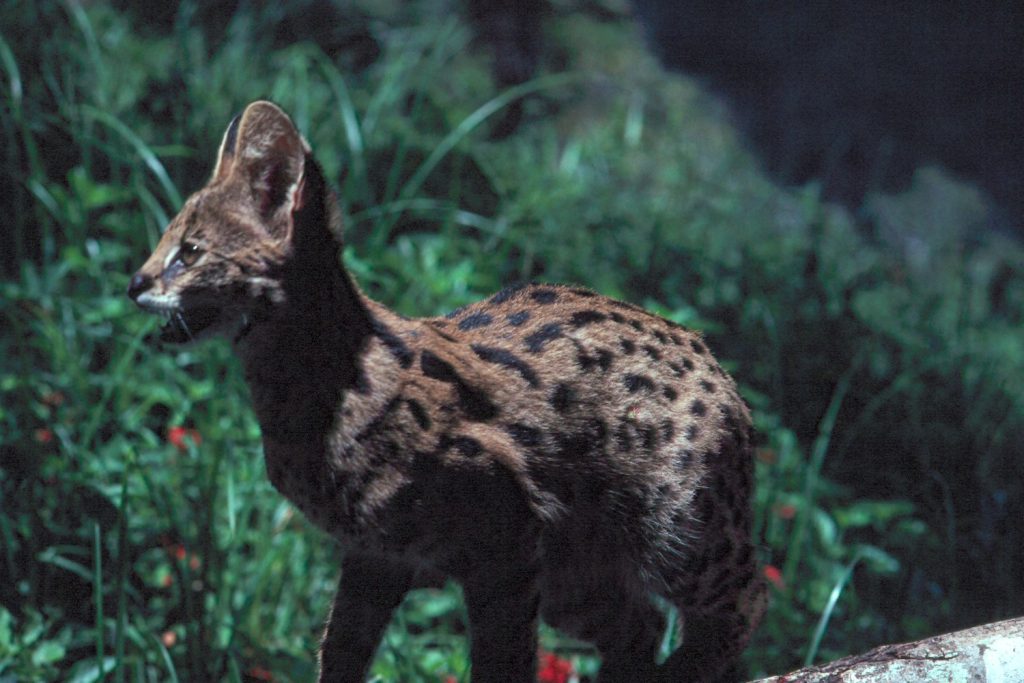
Weighing just 9 to 18 kilograms with the largest ears relative to body size of any cat, a serval hunts almost entirely by sound, tracking rodents moving through tall grass before leaping to pin them down. That leap is the serval's signature: it can spring several times its own body height straight up to snatch a bird out of the air or crash down on prey it never saw. Musiara Marsh, the Talek River and the damp long grass of the Mara Triangle are the classic serval strongholds.
Best Seen on a Night Drive, in a Conservancy
Servals are mostly crepuscular and nocturnal, which means the standard daytime game drive misses most of their activity. Night drives, permitted only in the private conservancies bordering the reserve and not inside the reserve itself, are by far the best way to actually watch one hunt rather than catch a fleeting daytime glimpse crossing a track.
Jackals Mate for Life and Hunt as a Pair
Black-backed jackals are strictly monogamous, pairing for life and defending a shared territory together rather than joining packs. Guides most often point them out working open plains in twos, targeting Thomson's gazelle fawns and Cape hares with quick, opportunistic chases rather than the sustained pursuits wild dogs use.
Every Pup Needs the Whole Family
A jackal litter typically numbers three to four pups, but without help, only around one usually survives to adulthood. Older offspring from a previous litter often stay on as helpers, babysitting and provisioning the new pups, which measurably improves survival odds. It is a small, easy-to-miss piece of family behaviour worth asking your guide about if you spot a den.
Add the Rare Sightings to Your Itinerary
Wild dogs, servals and jackals are conservancy specialities. Tell us what is on your list and we will build a stay in the right conservancy around it.
Rare Predator Facts at a Glance
- Wild dog status: locally extinct in the Masai Mara reserve since a 1990s distemper outbreak, with occasional sightings now reported in Mara North, Naboisho and Siana conservancies.
- Wild dog pack size: typically 5 to 20 individuals, hunting with a 60 to 90 percent success rate.
- Serval size: 9 to 18kg, with the largest ears relative to body size of any cat.
- Serval habitat: Musiara Marsh, the Talek River and the Mara Triangle's damp, long grass are the classic strongholds.
- Jackal social life: strictly monogamous pairs, raising litters of 3 to 4 pups with help from older offspring.
- Best viewing method: night drives, permitted only in the private conservancies, give the best chance of watching servals and jackals hunt.
Pair Rare Predators With the Mara's Bigger Names
A rare-predator sighting is even better alongside the animals most visitors come for. Our Masai Mara lions guide explains the pride dynamics that shape where wild dogs and jackals can safely operate, our Masai Mara cheetah safari guide covers the reserve's other daylight specialist hunter, and our nocturnal wildlife guide lists everything else worth watching for after dark.
Build a Conservancy Stay Around the Rare Sightings
Night drives and the quiet trails where wild dogs, servals and jackals turn up both require a conservancy stay. Message us and we will set the right base camp.
Frequently Asked Questions
Are there African wild dogs in the Masai Mara?
African wild dogs are rare in the Masai Mara and are considered locally extinct within the national reserve itself, following a distemper outbreak in the 1990s. Small numbers are now occasionally reported in the private conservancies bordering the reserve, particularly Mara North, Naboisho and Siana, though a sighting is never guaranteed.
Where can I see a serval in the Masai Mara?
Servals in the Masai Mara are most reliably seen around Musiara Marsh, the Talek River and the damp long grass of the Mara Triangle, where their rodent prey is abundant. Because servals are mostly active at dawn, dusk and after dark, a night drive in one of the conservancies gives a far better chance of watching one hunt than a standard daytime game drive.
Are black-backed jackals dangerous?
Black-backed jackals in the Masai Mara pose no threat to safari guests and are typically seen from a vehicle hunting gazelle fawns or hares in pairs. They are opportunistic but small, weighing under 10 kilograms, and are far more interested in avoiding lions and hyenas than approaching humans.
Why are wild dogs so rare in the Masai Mara?
Wild dogs are rare in the Masai Mara because a canine distemper outbreak in the 1990s eliminated the resident packs, and heavy competition from the reserve's dense lion and hyena populations has made it difficult for the species to reestablish itself since. Conservationists report a small number of dogs returning to the surrounding conservancies in recent years, but sightings remain uncommon.
What is the difference between a serval and a cheetah?
A serval is far smaller than a cheetah, weighing under 20 kilograms against a cheetah's 40 to 65, with a shorter tail, huge ears and a coat of bold spots rather than the cheetah's fine, dense speckling. Servals hunt small prey like rodents and birds in tall grass and marshland, while cheetahs chase gazelle-sized prey across open plains in daylight.