
Tsavo lions carry the most notorious back-story in Africa. In 1898, two maneless males halted the British Empire’s railway by hunting the bridge-builders of the Tsavo River — a months-long terror that killed dozens of workers, inspired books and Hollywood films, and still shapes how the world imagines this wilderness. The man-eaters’ descendants-in-spirit remain: Tsavo’s males famously grow little or no mane, hunt in ones and twos rather than big coalitions, and rule territories vaster than anywhere in Kenya. Meeting one across a red-soil clearing — huge, bare-shouldered, utterly unbothered — is a different flavour of lion encounter, and Sense of Adventure guides know the prides that provide it.
Walk Into the Legend (By Vehicle)
Man-eater history at the Tsavo bridge, maneless males on the plains — ask for our lion-focused Tsavo routing.
The True Story of the Man-Eaters of Tsavo
Between March and December 1898, construction of the Uganda Railway bridge over the Tsavo River was repeatedly halted as two male lions dragged workers from tents by night. Chief engineer Lt. Col. J.H. Patterson eventually shot both — the first in December after weeks of failed hunts — and counted the campaign’s toll in the dozens (Patterson claimed 135 victims; modern analysis suggests around 35). The pair, now mounted in Chicago’s Field Museum, were classic Tsavo males: large-bodied and maneless. Science has since offered explanations for the man-eating — an 1890s rinderpest plague that emptied the plains of prey, injured teeth in one lion, and the railway’s buffet of unburied dead — but standing at the rebuilt bridge today, the story needs no embellishment.
Our guide told the man-eaters story as we crossed the Tsavo river — properly told it, dates and all — and then an hour later we found a maneless male on a termite mound. The hair on my arms stood up. History and safari in one afternoon.
— Sense of Adventure guest, Tsavo West safari
The 5 Essential Tsavo Lion Experiences
The Maneless Male Encounter — Tsavo’s signature big cat
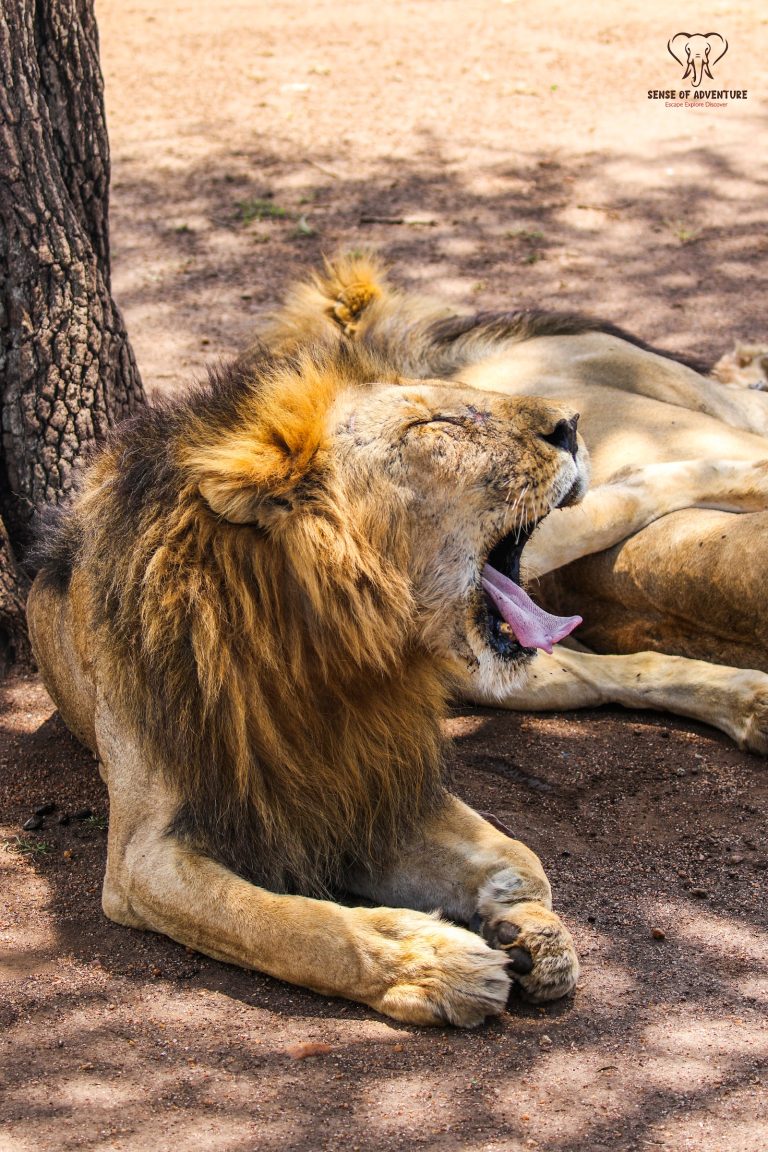
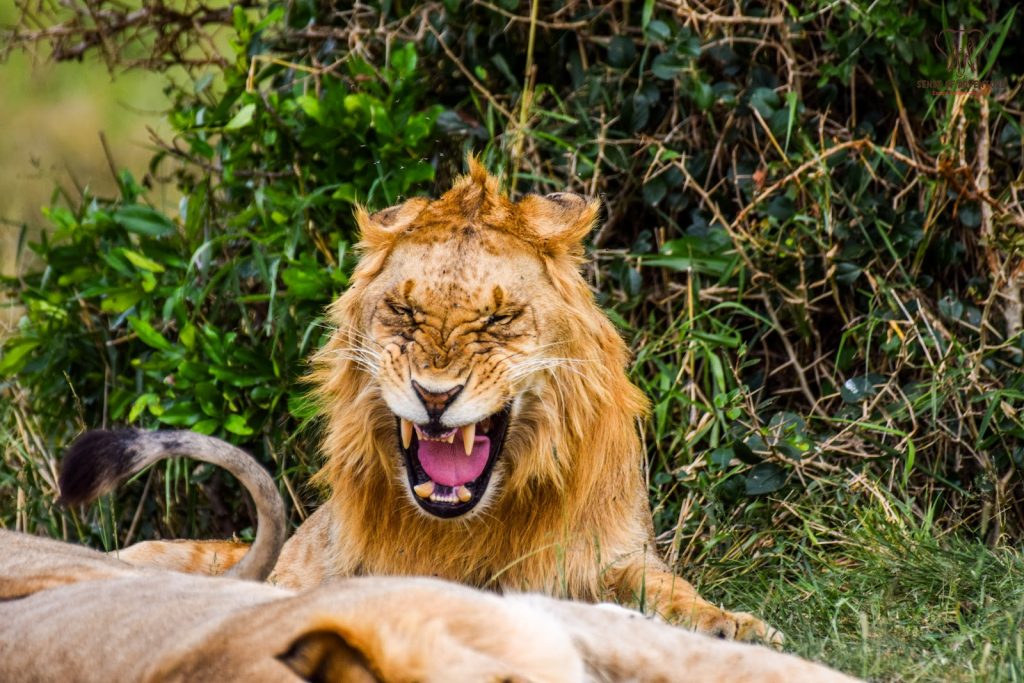
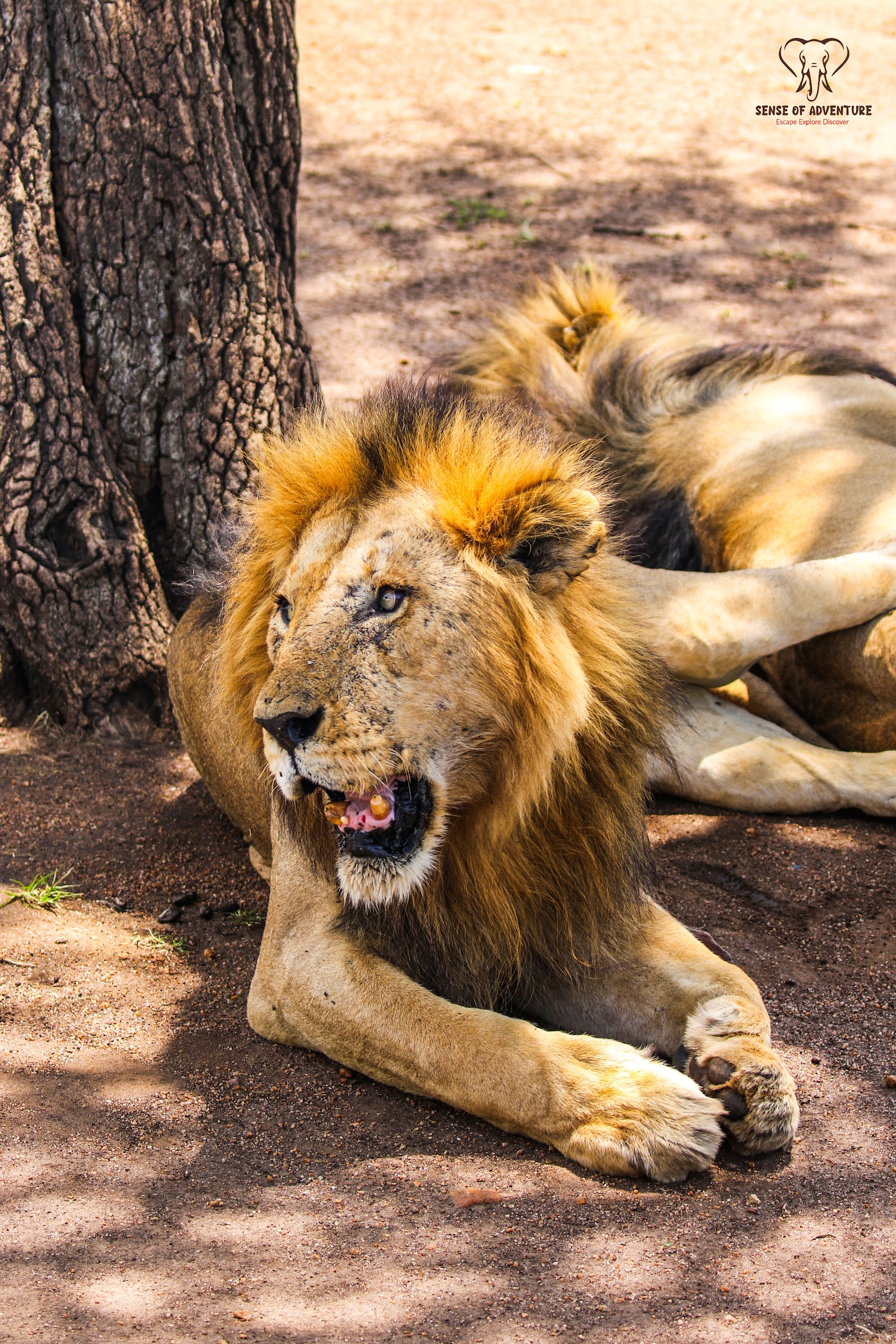
Tsavo’s adult males grow manes ranging from thin mohawks to nothing at all — likely an adaptation to heat and dense thornbush, possibly linked to the region’s distinctive lion society. The bare-shouldered look makes them appear even bigger and more ancient. Finding one on open ground is the park’s definitive predator sighting.
Man-Eater History at the Bridge — standing where it happened
The railway crossing at the Tsavo River — rebuilt, but on the same line — anchors the 1898 story in real geography. Pair it with the “Man Eaters” junction area and your guide’s telling of Patterson’s hunt, and the park’s thorny silence acquires a certain weight. It is Kenya’s most atmospheric history stop.
Prides of the Waterholes — predators follow the water
In the dry months Tsavo’s prey concentrates at the dams, rivers and waterholes — and the lions follow. Dawn stakeouts at Aruba dam or along the Galana river regularly produce hunts, and the floodlit waterholes of Tsavo West’s lodges occasionally deliver midnight theatre from your veranda.
Big Territories, Big Walkers — lions built for distance
Prey density in Tsavo’s semi-arid bush is low, so prides here are smaller and territories enormous — males patrol ranges several times larger than a Mara pride’s. That means fewer, wilder sightings: a Tsavo lion is often walking somewhere with intent, and following one on patrol beats watching a sleeping pride any day.
Night Voices at Camp — the soundtrack of old Africa
Tsavo’s low tourist density means quiet nights — and lion roars carry over five kilometres of still thornbush. Lying in a tented camp hearing males answer each other across the dark is as close as modern safari gets to what the railway workers heard in 1898. Considerably more comfortable, too.
Lions, Elephants and Empty Roads
Tsavo delivers big predators without the vehicle queues. Ask us to build your two-park Tsavo safari.
Tsavo Lion Facts
- The toll: Patterson claimed 135 railway workers killed in 1898; modern isotope analysis of the lions’ remains suggests around 35 human victims.
- Where they are now: both man-eaters are displayed at the Field Museum, Chicago — bought from Patterson in 1924.
- Manelessness: most Tsavo males grow little or no mane — heat, thornbush and genetics are the leading explanations.
- Society: Tsavo prides run smaller, with single males often holding several female groups across huge ranges.
- Why man-eating happened: rinderpest had destroyed prey herds, one lion had severe dental injury, and railway camps offered easy targets.
- Today: the Tsavo ecosystem holds several hundred lions — sightings are wilder and less crowded than any premium park.
Building Lions Into Your Tsavo Trip
The 3-day Tsavo East & West safari covers the bridge history and the waterhole prides; the full Tsavo safari guide maps both parks. Compare lion cultures with our Masai Mara lions guide, or read about the red elephants that share these plains.
The Legend Has a Sequel — You’re In It
Tsavo’s maneless males still patrol the thornbush. Come meet them with a guide who tells the story properly.
Frequently Asked Questions
What were the man-eaters of Tsavo?
The man-eaters of Tsavo were two maneless male lions that killed dozens of workers building the Uganda Railway bridge over the Tsavo River in 1898, halting construction for months until engineer J.H. Patterson shot them. Their story inspired several books and the film “The Ghost and the Darkness”.
How many people did the Tsavo man-eaters kill?
Patterson claimed the Tsavo man-eaters killed 135 people; modern chemical analysis of the lions’ hair and bones suggests the true figure was around 35. Either number was enough to stop an imperial railway for the better part of a year.
Why do Tsavo lions have no manes?
Most male Tsavo lions grow little or no mane, an adaptation researchers link to the ecosystem’s intense heat and dense thornbush, where a heavy mane costs more than it signals. Maneless males are perfectly healthy — and often look even larger without the fringe.
Where are the man-eaters of Tsavo now?
The two man-eaters of Tsavo are mounted and displayed at the Field Museum of Natural History in Chicago, which bought the skins and skulls from Colonel Patterson in 1924. In Kenya, you can visit the rebuilt railway crossing area on the Tsavo River where the attacks happened.
Can you still see lions in Tsavo today?
Yes — several hundred lions live across Tsavo East and West today, including the region’s distinctive maneless males. Dry-season game drives around Aruba dam, the Galana river and Tsavo West’s waterhole circuits give the best chances, with far fewer vehicles than Kenya’s busier parks.