
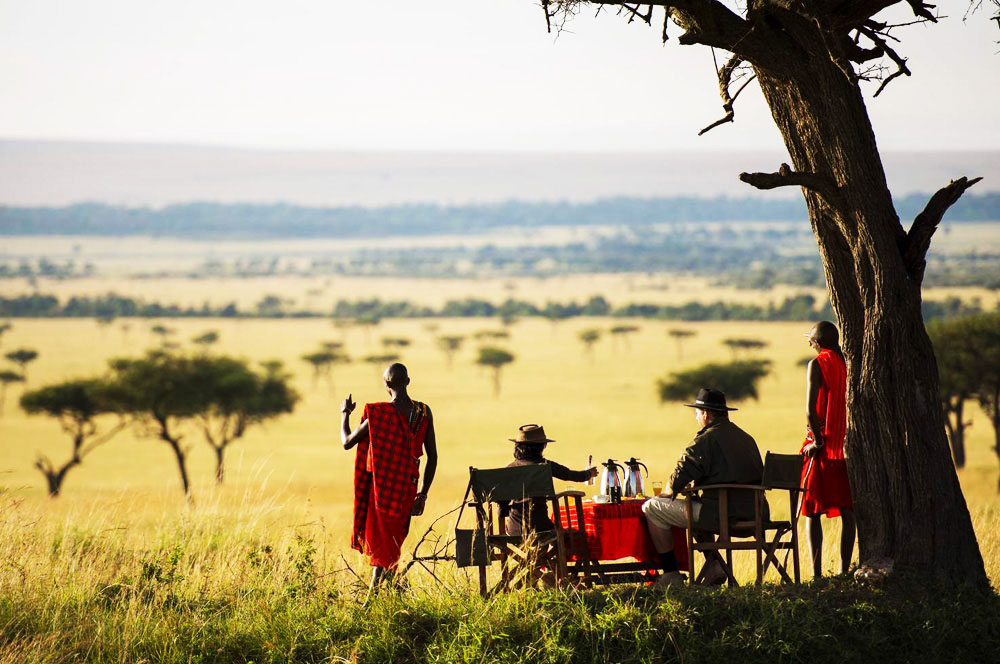
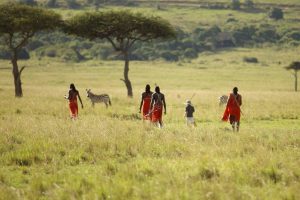
A walking safari completely changes the scale of your perception of Africa. From a vehicle, the bush is a landscape; on foot, it becomes a living world you are physically part of, the soil beneath your boots, the scent of wild vegetation, and the awareness that lion, elephant, and buffalo move through the same terrain. The guide walking ahead with a rifle, not as a symbol but as essential field equipment, is what separates a walking safari from every other safari experience: you are no longer observing Africa, you are immersed in it. This Walking Safari Kenya Guide explores the exceptional guided bush walks available in Kenya’s private conservancies, from the Mara conservancies and Laikipia to the Chyulu Hills and areas around Lake Nakuru, where some of East Africa’s finest walking safaris take place. Sense of Adventure includes walking safari options wherever conservancy access permits, offering travelers an intimate, thrilling, and deeply authentic way to experience the African wilderness.
Walk Into the Wild With Sense of Adventure
We include walking safaris in all conservancy itineraries where they are available. Tell us you want to walk when you book. Our guides are specialists. Contact us now.
Where Walking Safaris Are Available in Kenya – Walking Safari Kenya Guide
Walking safaris are not available inside Kenya’s national parks; they require either a private conservancy or a specifically licensed operator in approved areas. The key walking safari destinations accessible from Nairobi:
Masai Mara Private Conservancies — Walking at Dawn
All of the major Mara conservancies — Mara North, Naboisho, Ol Kinyei, Olare Motorogi- permit walking safaris with a licensed guide and armed ranger. Morning walks of 2–3 hours, typically starting before the vehicle game drive, cover the terrain at ground level: tracking, plant identification, insect ecology, and the experience of standing quietly in open grassland with lion country on all sides. Sense of Adventure arranges dawn walks as part of all conservancy stays for guests requesting them.
Laikipia Plateau — Multi-Day Walking Safaris
The Laikipia and Lewa conservancies in Kenya’s north offer the most extensive walking safari programme in the country, multi-day walks of 2–5 days covering the plateau landscape on foot, camping in fly-camps overnight, encountering elephant, black and white rhino, lion, and the northern species unique to this region. This is the deepest walking safari experience in Kenya, and Sense of Adventure designs it for physically active guests wanting the most immersive bush experience available.
Chyulu Hills — Lava Tubes & Big Five on Foot
The Chyulu Hills ecosystem between Amboseli and Tsavo holds guided walks in extraordinary volcanic terrain, lava tubes, cave systems, and the elevated savannah of the Chyulu plateau with views to Kilimanjaro. Walking in the Chyulus combines geological interest with wildlife (elephants, lions, giraffes) in a less-visited landscape that gives the experience a genuinely remote quality. Sense of Adventure includes Chyulu walks in extended Amboseli circuits for guests wanting walking as a primary activity.
What the Walking Safari Guide Actually Does
A walking safari with an experienced Sense of Adventure guide is primarily a masterclass in ecological literacy within the Walking Safari Kenya Guide framework. The rifle is there for safety, but is rarely used; the guide’s skill lies in reading the bush, understanding animal movement patterns, interpreting wind direction, and positioning the group at safe, comfortable distances from wildlife. What guests experience on foot is not the adrenaline of risk (though the awareness of risk sharpens perception), but a fundamentally different quality of attention that walking demands. On a walking safari in Kenya, you notice details that are invisible from a vehicle: the call of a bird that signals a predator nearby, dung beetle tracks crossing rhino spoor on a game trail, and the unmistakable scent of a lion marking its territory, a pungent, immediate reminder of Africa’s apex predator.
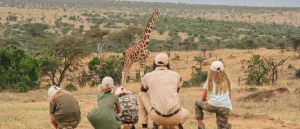
The guide stopped and raised his hand. We all froze. He pointed. Forty metres away, a bull elephant was standing completely still in the acacia, watching us. We had walked to within 40 metres of a wild elephant on foot. We stayed there for ten minutes, not breathing very much. He moved on first.
— Sense of Adventure guest, Mara North walking safari, June 2024
Walk Into Africa. Sense of Adventure Shows You How.
Tell us you want walking as part of your Kenya safari and we’ll build a conservancy itinerary around it — from a single dawn walk to a full multi-day walking circuit. Contact us now.
Frequently Asked Questions — Walking Safari Kenya
Is a walking safari dangerous?
A walking safari with a licensed, experienced guide is not inherently dangerous; it is carefully managed within the Walking Safari Kenya Guide framework. The guide reads the environment continuously, maintains safe distances from animals, and uses wind direction and terrain to position the group correctly. The armed ranger is a legal requirement and a genuine safety measure, not a theatre. In decades of walking safaris led by professional Kenyan guides, serious incidents are extraordinarily rare. Sense of Adventure only uses guides with specific walking safari qualifications and extensive field experience, ensuring every experience aligns with best-practice safety standards for a Walking Safari Kenya Guide experience.
What fitness level do I need for a walking safari?
A standard 2–3 hour conservancy walk requires only normal walking fitness; the terrain is typically flat to gently rolling savannah, the pace is slow (the objective is observation, not speed), and rest stops are frequent. Multi-day Laikipia walking safaris require better fitness, 4–6 hours of walking per day over varied terrain at altitude. Sense of Adventure assesses fitness requirements for each walking format and advises guests accordingly.
Can children do a walking safari in Kenya?
Short guided walks are available for children aged 12+ in most Mara conservancies, accompanied by an experienced guide. Walks for younger children are not offered; the safety protocols and the behavioural requirements (silence, stillness, immediate compliance with the guide’s instructions) require a maturity that most children under 12 do not yet have in a wildlife environment. Sense of Adventure provides specific age guidance for each walking safari operator and format.
Description