Kenya safari vs Tanzania safari: which should you choose? It is the most common question we hear from first-time East Africa safari travellers, and it deserves a genuinely honest answer — not a promotional one. Both countries offer extraordinary safari experiences. Both share the same vast Mara-Serengeti ecosystem. Both have world-class wildlife, iconic national parks, and superb infrastructure for international visitors. The right choice depends entirely on your specific dates, priorities, budget, and how much time you have.
As a Kenya-based operator, we will be straight with you: there are times when Tanzania is genuinely the better choice for what a traveller is seeking. And there are many, many reasons why Kenya consistently wins for first-time visitors, for those entering through Nairobi, and for travellers combining their safari with a broader East Africa itinerary.
Quick answer: In the Kenya safari vs Tanzania safari decision, Kenya usually wins for first-time visitors, short trips and Mara River crossings from July to October, thanks to easy access from Nairobi. Tanzania wins for the calving season from January to March, the Ngorongoro Crater and a Zanzibar beach finale. With ten days or more, combine both.
Table of Contents
The Shared Foundation: Same Ecosystem, Different Countries
The Masai Mara (Kenya) and the Serengeti (Tanzania) are the same ecosystem, divided by an international border. The wildebeest herds cross freely between them — there is no wildlife fence at the boundary. The landscape, the species, the ecological dynamics are continuous. This means the wildlife quality debate between Kenya and Tanzania is, in many ways, a debate about timing, logistics, and access — not about fundamentally different wildlife experiences.
However, beyond the Mara-Serengeti corridor, Kenya and Tanzania diverge significantly in what they offer. Tanzania’s Ngorongoro Crater, the Selous/Nyerere ecosystem, Ruaha, and the Mahale chimpanzee forests offer experiences with no Kenyan equivalent. Kenya’s Laikipia Plateau, Samburu-Buffalo Springs, and Amboseli (with its unmatched Kilimanjaro-elephant combination) offer experiences with no Tanzanian equivalent. A complete East Africa safari ideally visits both countries — but when you must choose one, here is how to decide.
Accessibility: Kenya’s Strongest Advantage
Kenya wins the accessibility argument emphatically. Nairobi’s Jomo Kenyatta International Airport is one of Africa’s busiest international hubs, with direct flights from London, Amsterdam, Dubai, Mumbai, Doha, Singapore, and multiple North American gateways. From Nairobi, the Masai Mara is 45 minutes by air. Amboseli is 40 minutes. Samburu is under an hour. The entire Kenyan safari circuit is accessible within a day’s travel from your international arrival.
Tanzania’s main entry points — Kilimanjaro International Airport (KIA) and Julius Nyerere International Airport (DAR) — have fewer direct international connections and require more complex in-country logistics for multi-park circuits. Accessing the Serengeti from KIA requires a connecting flight or a multi-hour drive. Tanzania is manageable, but it requires more planning and often more travel days.
For travellers with 5–7 days for their entire safari, Kenya’s superior access to extraordinary wildlife in minimal travel time is a decisive advantage. Read our guide to reaching Masai Mara from Nairobi for detail on how seamless the Kenyan logistics are.
The Migration: When Each Country Wins
The Great Wildebeest Migration is year-round. Both countries host it at different times:
- Kenya (Masai Mara) wins: July to October, specifically for the Mara River crossings. The crossings in Kenya are particularly dramatic — a compact river section, riverside camps with close proximity to crossing points, and the volume of animals crossing in a short period creates the most intense individual crossing events anywhere on the circuit. If dramatic river crossings are your goal, the Masai Mara in August or September is unbeatable.
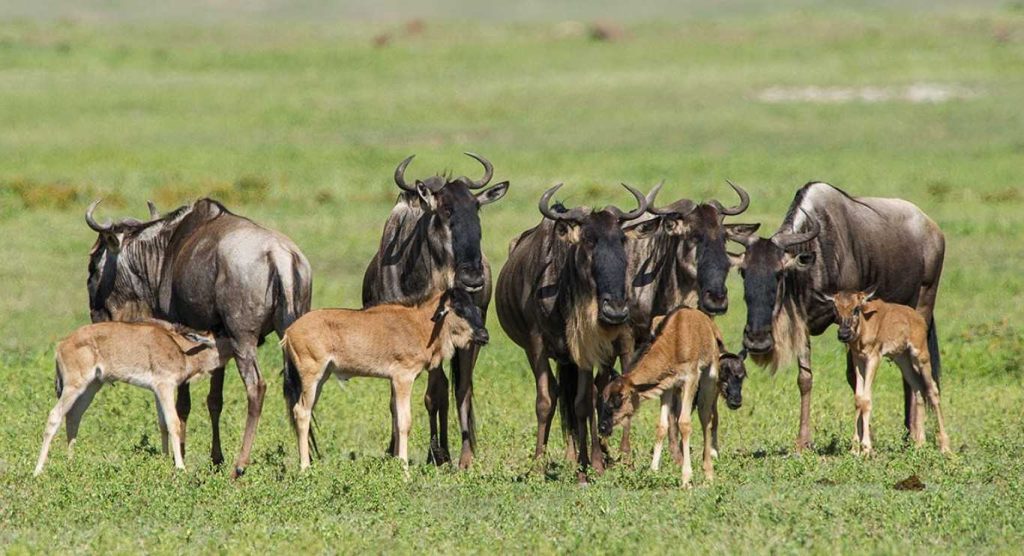
- Tanzania (Serengeti) wins: January to March, specifically for the calving season on the southern Serengeti plains around Ndutu. Approximately 500,000 calves born in a few weeks, with cheetah, lion, hyena, and wild dog converging for extraordinary predation. Also for the western corridor crossings (May-June), which can be dramatic but are less accessible than the Mara crossings.
See our detailed Masai Mara wildebeest migration guide for the full calendar and what to expect on each side of the border.
Cost Comparison
Tanzania’s national park fees are among the highest in Africa. The Serengeti charges approximately $80 per person per day for non-residents. The Ngorongoro Crater charges an additional $200+ per vehicle per crater descent. Vehicle regulations in some Tanzanian parks are more restrictive (no off-road driving in the Serengeti, for example), which can limit game viewing flexibility compared to Kenya’s Masai Mara, where off-road driving is permitted and allows guides to follow predators wherever they go.
At the accommodation level, prices are broadly comparable between Kenya and Tanzania at mid-range and luxury levels, with Tanzania’s more remote camps sometimes carrying a logistics premium. Budget options are slightly more accessible in Kenya, particularly near the Masai Mara’s multiple entry gates. For a full Kenya cost breakdown, see our Kenya safari cost guide.
Unique Experiences in Kenya
- Amboseli National Park: Elephants against a Kilimanjaro backdrop — one of Africa’s most iconic wildlife images and a uniquely Kenyan experience.
- Laikipia Plateau: Private conservancy safari with elephants, lions, wild dogs, and black rhino in an exclusive environment with minimal visitor pressure.
- Samburu National Reserve: Five “special” northern species found nowhere else in Kenya’s south: reticulated giraffe, Grevy’s zebra, beisa oryx, Somali ostrich, and gerenuk.
- Hell’s Gate National Park: Cycling safaris among zebra and antelope — genuinely unique in Africa.
- Ol Pejeta Conservancy: Home to the world’s last two northern white rhinos and the best rhino viewing in East Africa.
Unique Experiences in Tanzania
- Ngorongoro Crater: The world’s largest intact volcanic caldera, with exceptionally high densities of wildlife including both black and white rhino — the most reliable rhino viewing in Tanzania.
- Selous/Nyerere National Park: Africa’s largest game reserve; boat safaris, walking safaris, and wild dog sightings.
- Ruaha National Park: Wild, remote, and uncrowded — extraordinary for elephant and lion.
- Mahale Mountains: Chimpanzee trekking on the shores of Lake Tanganyika — an utterly unique experience.
- Zanzibar: The perfect beach complement to a Serengeti safari — pristine Indian Ocean beaches, Swahili architecture, and exceptional food.
Combining Both: The East Africa Circuit
For travellers with 10–14 days, a Kenya-Tanzania combination is the ultimate East Africa safari experience. A typical circuit might begin in Nairobi, fly to the Masai Mara for 4 nights, cross to the northern Serengeti for 3 nights, visit Ngorongoro for 2 nights, and end with 3 nights in Zanzibar. This circuit covers the migration (seasonally), the crater’s remarkable wildlife, and a beach recovery that balances the intensity of the safari.
We design these cross-border circuits frequently and handle the logistics of Tanzania entry, East Africa Tourist Visa, and cross-border transfers seamlessly. If a combined trip interests you, talk to us — it is one of our most popular itinerary formats. Also useful: our side-by-side Masai Mara vs Serengeti comparison for the specifics of the two headline parks.
Kenya Safari vs Tanzania Safari: Packages and Prices Compared
Comparing real itineraries is often easier than comparing countries in the abstract, so here is how a Kenya safari vs Tanzania safari looks in our own packages. These are the starting prices on our own trip pages. Each is a “from” price, and the final cost depends on season, accommodation and group size.

Kenya safari vs Tanzania safari on a one-week trip
With about a week, the Kenya safari vs Tanzania safari choice matters most, because staying in one country keeps travel time low. In Kenya, our 7-day Amboseli and Masai Mara safari starts from USD 1,650 per adult sharing and includes a private 4×4 Land Cruiser, full board on safari and all park fees. In Tanzania, our 8-day Tanzania safari covers the Serengeti, Ngorongoro, Tarangire and Lake Manyara.
Combining both countries in one trip
Our Kenya and Tanzania Classic Safari links the Masai Mara, the Serengeti, the Ngorongoro Crater and Tarangire in ten days, from USD 3,500 per adult. For the migration season, our Great Migration Safari Kenya and Tanzania spends four nights in the Mara and three in the northern Serengeti, then finishes at the crater, from USD 4,600 per adult sharing.
Sample 12-Day Itinerary Across Both Countries
If you cannot settle the Kenya safari vs Tanzania safari debate, this outline of our Great Migration Safari Kenya and Tanzania shows how the two countries fit together between July and October.
- Day 1, Nairobi: Arrive and transfer to your hotel.
- Days 2–5, Masai Mara: Four nights following the herds, with full days at the Mara River waiting for crossings and an optional balloon flight.
- Days 6–8, northern Serengeti: Fly via a border airstrip to a seasonal camp near the Mara River, with game drives around Kogatende.
- Days 9–10, Ngorongoro: Fly to Lake Manyara airstrip, stay on the crater highlands and spend a full day on the crater floor looking for lions and black rhinos.
- Days 11–12, Arusha and home: Drive to Arusha with a coffee farm stop, then transfer to Kilimanjaro International Airport.
Spending time on both sides of the river improves your chances of seeing a crossing, as the herds move back and forth through the season. Crossings are never guaranteed, because they depend on the herds and the rains.
Crossing Between Kenya and Tanzania
If your Kenya safari vs Tanzania safari plan includes both parks, note that there is no open tourist border crossing directly between the Masai Mara and the Serengeti, so the quickest route is a short flight via border airstrips. Driving between the two parks takes a full day via the Isebania border post. Our guide to the Masai Mara to Serengeti border crossing explains both options in detail.
You will need a Kenya eTA and a Tanzania visa or eVisa. Apply for the Kenya eTA on the official Kenya eTA website, and check park rules and fees on the official Tanzania National Parks (TANAPA) website before you travel.
Who Each Country Suits Best
Your travel style matters as much as the wildlife when you weigh up a Kenya safari vs Tanzania safari.
- First-time visitors: Kenya. Short flights or drives from Nairobi mean more time watching wildlife and less time travelling.
- Families with young children: Kenya is often easier, because drive times are shorter and Nairobi offers the elephant orphanage and Giraffe Centre on arrival day. Read our Kenya family safari guide.
- Honeymooners: Either. Tanzania pairs naturally with Zanzibar, while Kenya pairs with Diani Beach or Lamu.
- Photographers: Kenya’s Mara conservancies limit vehicle numbers, while the Ngorongoro Crater offers dense wildlife in a dramatic setting.
- Travellers on a tight budget: Kenya usually offers more budget camps and shared departures near the Masai Mara gates.
- Repeat visitors: Tanzania’s remote parks, such as Ruaha and Nyerere, reward travellers who have already seen the Mara.
For a wider view that includes Uganda and Rwanda, see our comparison of the best African safari country, and visit the official Magical Kenya tourism website for ideas on the Kenyan side.

Best Time to Visit: Kenya Safari vs Tanzania Safari by Season
Your travel month often settles the Kenya safari vs Tanzania safari question on its own. This is how the year usually looks on each side of the border.
- January to March: Tanzania leads for the calving season in the southern Serengeti. In Kenya, January and February are mostly dry and quieter, with good game viewing in the Mara, Amboseli and Samburu.
- April and May: The long rains fall in both countries. Some camps close, but those that stay open are quieter and often cheaper.
- June: The herds move north through the Serengeti’s western corridor, and the dry season begins in both countries.
- July to October: Kenya leads, with the herds in the Masai Mara and Mara River crossings at their most likely in August and September. The northern Serengeti also sees crossings.
- November and December: The short rains bring green landscapes, fewer visitors and good birdlife. The herds move back south towards the Serengeti.
For a month-by-month view of both countries, read our guide to the best time to visit East Africa for safari.
Practical Tips Before You Decide
- Start with your dates. Fix your travel month first, then let the Kenya safari vs Tanzania safari choice follow the herds and the weather.
- Count your travel days. On a trip of a week or less, every extra flight or long drive costs you wildlife time.
- Check your flights. If your best international fare lands in Nairobi, Kenya is the natural start. If it lands at Kilimanjaro, start in Tanzania.
- Think about the beach. Zanzibar suits a Tanzania trip, while Diani Beach and Lamu suit a Kenya trip.
- Ask for one quote for both. Comparing a Kenya safari vs Tanzania safari is easier when one operator prices both routes on the same basis.
Our Recommendation
First-time visitor, 5–7 days: Kenya, Masai Mara. The logistics are simplest, the wildlife density is extraordinary, and the experience is the best introduction to African safari available anywhere.
Migration calving season priority (Jan-Mar): Tanzania, southern Serengeti/Ndutu.
Rhino as a priority: Tanzania (Ngorongoro) or Kenya (Ol Pejeta/Laikipia) — both excellent; discuss with us for your specific dates.
10+ days: Do both. You will not regret it.
Kenya Safari vs Tanzania Safari: Frequently Asked Questions
Which is better, a Kenya safari or a Tanzania safari?
Neither is better for everyone. Kenya suits first-time visitors, short trips and Mara River crossings from July to October, because Nairobi makes access easy. Tanzania suits the calving season from January to March, the Ngorongoro Crater and a Zanzibar finale. With ten days or more, many travellers combine both countries.
Is Kenya or Tanzania cheaper for a safari?
In a Kenya safari vs Tanzania safari price comparison, Kenya is often slightly cheaper overall, mainly because Tanzania’s park and crater fees are high and its remote camps can carry a logistics premium. Accommodation prices are broadly similar at mid-range and luxury level. On our site, Kenya trips start from USD 590 per adult sharing for a 4-day camping safari.
Can I see the Great Migration in both countries?
Yes, at different times of year. The herds are usually in the Masai Mara and northern Serengeti from about July to October, when river crossings happen. From January to March they are in the southern Serengeti for the calving season. Crossings depend on the rains and are never guaranteed.
How do I travel between the Masai Mara and the Serengeti?
There is no open tourist border crossing directly between the two parks. The quickest route is a short flight via border airstrips, which is what we use on our migration safari. Driving is possible but takes a full day via the Isebania border post, so most travellers choose to fly.
Do I need two visas for a Kenya and Tanzania safari?
Yes. You need a Kenya eTA, applied for online before you travel, and a Tanzania visa or eVisa. Requirements can change, so check the official government websites for your nationality a few weeks before departure. We send visa guidance to all our guests when they book.
How many days do I need to compare a Kenya safari vs Tanzania safari in one trip?
Allow at least ten days to enjoy both countries without rushing. Our classic Kenya and Tanzania safari takes ten days, and our Great Migration safari across both countries takes twelve. With a week or less, choose one country and spend more nights in fewer parks for the best wildlife viewing.
Or call us: +254 799 160 081 — we are happy to help plan your safari.