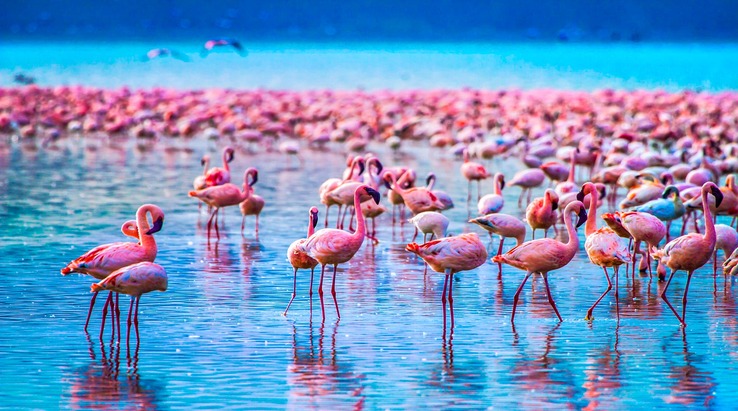
Flamingos in Kenya produce one of the most visually overwhelming wildlife spectacles in Africa. Nothing prepares you for the moment the Rift Valley escarpment road descends to reveal a lake shore that, in a good year, is not a lake shore any more — it is a solid pink line of lesser flamingos feeding shoulder to shoulder in the alkaline shallows. The sound reaches you before the full image resolves: a vast, low murmur, like a distant crowd, that is actually the feeding noise of tens of thousands of birds.
East Africa’s Rift Valley lakes hold the largest population of lesser flamingos in the world, and Kenya offers some of the most accessible flamingo viewing anywhere on earth. Numbers move from lake to lake with the algae, so no single lake is pink every month. Sense of Adventure designs itineraries around the flamingo lakes because the experience is genuinely unlike anything else in Africa, and because most international visitors have no idea it exists at this scale.
✅ Flamingos in Kenya Quick Answer
- Best lake for numbers: Lake Bogoria, which has held more than a million lesser flamingos in peak years.
- Best for flamingos plus big game: Lake Nakuru, with rhinos and lions, though flamingo numbers there are now lower and less predictable.
- Quiet alternatives: Lake Elementaita for greater flamingos and pelicans, and Lake Magadi on a day trip south of Nairobi.
- Best time: flamingos are present all year; drier months often help, but numbers depend on algae, so ask us for current reports.
- From: our Lake Nakuru Day Safari and Lake Magadi day trip start from USD 180 and USD 160 per person.
See the Pink Shore With Sense of Adventure
We monitor flamingo numbers at all four Rift Valley lakes in real time and route you to the best concentration on your travel dates. Contact us to plan.
Kenya’s Four Flamingo Lakes — Where to Go and When
🕝 The Flamingo Lake Comparison
Lake Bogoria — Kenya’s flamingo capital and, in peak years, one of the greatest flamingo concentrations on earth. More than a million lesser flamingos have gathered here at times, alongside active geothermal hot springs that steam behind the flamingo shoreline. Guided walks along the shore bring you close to the flocks. Often the best overall flamingo experience in Kenya.
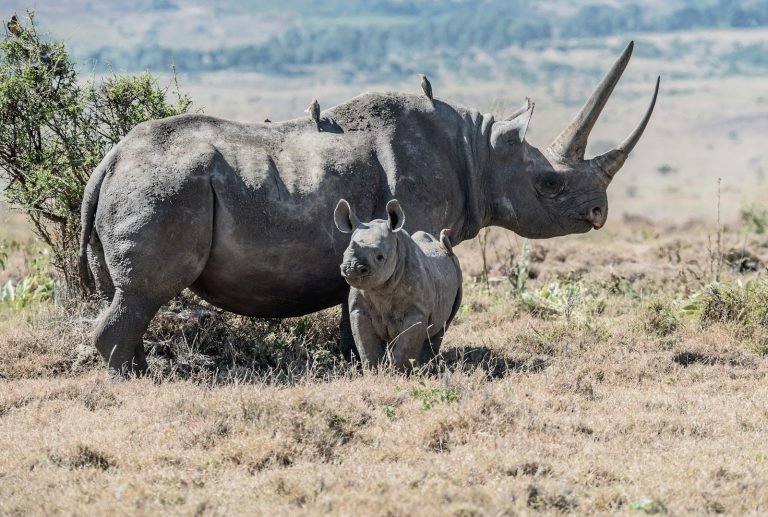
Lake Nakuru — Variable flamingo numbers, from very few to many thousands, and lower on average since the lake rose and freshened from around 2013. Its great advantage is combining any flamingos with rhinos, leopards, lions and a dramatic Rift Valley escarpment view. The fever tree backdrop to the shore is uniquely photogenic. Best for combining flamingos with Big Five wildlife.
Lake Elementaita — A smaller, quieter alkaline lake between Nakuru and Naivasha and part of the UNESCO World Heritage Site. Usually lower flamingo numbers than Bogoria but good for greater flamingos, great white pelicans and a wide range of Rift Valley waterbirds. Extremely photogenic, with the Sleeping Warrior hill as a backdrop. Often overlooked and therefore uncrowded.
Lake Magadi — Kenya’s southern soda lake, towards the Tanzania border. Extremely alkaline, extremely hot, and visited by flamingos when conditions suit them, especially in the lagoons near the hot springs. Remote and rarely visited by tourists, yet reachable on a day trip from Nairobi. For serious flamingo enthusiasts and birdwatchers wanting the full Rift Valley picture.
Other places to see flamingos in Kenya
Beyond the big four, flamingos turn up on several smaller lakes. Lake Oloiden, a small alkaline lake beside Lake Naivasha, sometimes holds flocks that you can see on a short boat trip. Lake Simbi Nyaima, a crater lake near Lake Victoria in western Kenya, is another occasional site. In the remote north, Lake Logipi in the Suguta Valley holds flamingos but needs a serious expedition to reach.
Flamingos in Kenya: The 2026 Picture
Since about 2010 the Rift Valley lakes have risen markedly. Higher, fresher water dilutes the salts that the flamingos’ food needs, so the birds have shifted between lakes more than before. Nakuru in particular now holds far fewer birds on average than in the famous photographs, while Bogoria and Elementaita have often been the better bets. For the latest situation at Nakuru, read our flamingos in Lake Nakuru 2026 status update.
The practical lesson is simple: build flexibility into your plan. A route that passes two or three lakes almost always finds good flocks somewhere, and we check recent reports from guides before your trip so the day is spent where the birds actually are.
The Science of the Pink — Why Flamingos Are Pink
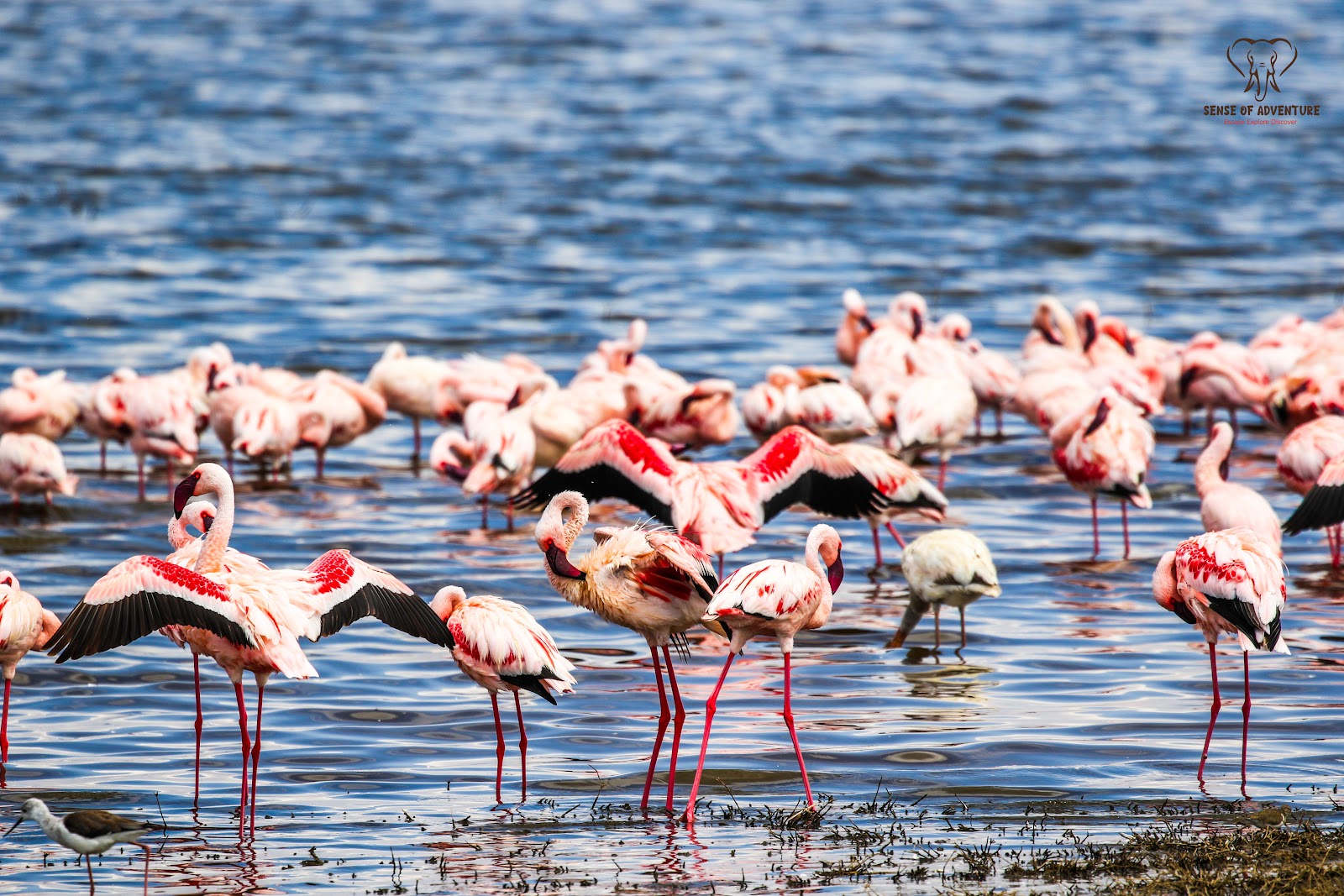
Flamingos are not born pink — juvenile flamingos are grey-white. The pink colour develops over 1–3 years as the birds eat blue-green algae (especially Spirulina and related cyanobacteria) and tiny crustaceans that contain carotenoid pigments, which are processed and deposited in the feathers and skin. The intensity of the pink reflects the quality and quantity of the diet. Where the alkaline chemistry produces dense algae blooms, lesser flamingos are among the most intensely pink in Africa; where food is poorer, the same birds look paler. For more detail, see our guide to why flamingos are pink.
Lesser vs Greater Flamingo — How to Tell Them Apart
| Feature | Lesser Flamingo | Greater Flamingo |
|---|---|---|
| Size | Smaller (80–90 cm tall) | Larger (110–145 cm tall) |
| Colour intensity | More intensely pink | Paler pink-white |
| Bill | Dark red, looks blackish at a distance | Pink with black tip |
| Diet | Blue-green algae (Spirulina) | Invertebrates & algae |
| Numbers at Bogoria | Over a million in peak years | Far fewer, usually in smaller groups |
| Feeding position | Head inverted at the surface | Head submerged, often stirring mud |

Best Time to See Flamingos in Kenya
Flamingos are present somewhere in the Kenyan Rift every month. The real variable is which lake holds the biggest flocks, and that depends on food rather than the calendar.
- Dry seasons (January–March and June–October): lower rainfall can concentrate salts and algae, and roads to the lakes are easier. These months also fit neatly with a Masai Mara safari.
- Rainy seasons (April–May and November–December): heavy rain can dilute the lakes and scatter the birds, but the landscape is green, migrant birds arrive and the lakes are quieter.
- Time of day: early morning gives the softest light, calm water for reflections and cooler temperatures at hot lakes such as Bogoria and Magadi.
Planning Your Kenya Flamingo Lake Circuit
The three-lake Rift Valley circuit — Naivasha (hippos and boat safaris), Nakuru (rhinos and, often, flamingos), Bogoria (hot springs and, in good years, huge flamingo flocks) — is one of Kenya’s most rewarding and underrated itineraries. Sense of Adventure builds this circuit as a 3–4 day standalone trip from Nairobi or as part of a longer Kenya safari. The driving distances are manageable (around 1.5–2 hours between each lake) and the landscapes — the escarpment descent into the valley, the volcanic hills, the soda lake shorelines — are spectacular throughout. For a Kenya trip that combines flamingo lakes with the Masai Mara, read our Kenya safari planning guide for complete circuit options.
A sample three-day flamingo route
- Day 1 – Nairobi to Naivasha: drive down the escarpment, take an afternoon boat ride on Lake Naivasha and check nearby Lake Oloiden for flamingos.
- Day 2 – Elementaita and Nakuru: an early stop at Lake Elementaita for greater flamingos and pelicans, then a full game drive in Lake Nakuru National Park for rhinos and any flamingos on the shore.
- Day 3 – Bogoria and back: an early start north to Lake Bogoria for the hot springs and, conditions permitting, the largest flocks of the trip, before the long drive back to Nairobi or an extra night at Lake Baringo.
Flamingo trips and prices
All prices come from our current trip pages; park and reserve fees change from time to time, so check current rates with us.
- Lake Nakuru Day Safari — from USD 180 per person.
- Olorgesailie & Lake Magadi Day Trip from Nairobi — from USD 160 per person.
- Lake Naivasha Family Safari – Hell’s Gate & Lake Nakuru (4 Days) — from USD 780 per person.
- Kenya Birding Tour – Rift Valley Lakes, Kakamega & Masai Mara (8 Days) — from USD 2,050 per adult sharing.
To add Bogoria or Elementaita, or to time your route around the latest flamingo reports, ask about a private Kenya safari.
Photographing Flamingos in Kenya
Flamingos reward patience. Arrive early, keep low and let the flock settle rather than walking towards it, because birds that keep feeding make far better pictures than birds taking off. A lens of 300 mm or more isolates individual birds, while a wide angle captures the scale of a flock against the escarpment. Watch for courtship marching, when groups of birds walk in tight formation and flick their heads in unison, and for take-offs, when a running start across the water makes for dramatic shots.
Fascinating Flamingo Behaviour to Watch For
Once the first thrill of the colour wears off, flamingo flocks are full of behaviour worth watching through binoculars.
- Filter feeding: lesser flamingos hold their bills upside down and pump water through comb-like plates that trap algae.
- Group displays: flocks march together, stretch their necks and flash their wings in synchronised courtship displays.
- Night flights: flamingos usually move between lakes at night, which is why a lake can fill or empty almost overnight.
- Crop milk: both parents feed their chick a red “milk” produced in the upper digestive tract.
What to Pack for the Flamingo Lakes
- Binoculars, ideally 8×42 or 10×42, for scanning distant flocks.
- A wide-brimmed hat, sunglasses and high-factor sunscreen for the glare off soda lakes.
- Closed shoes with good soles for the hot, crusty ground at Bogoria and Magadi.
- A warm layer for cool early mornings at Nakuru and Naivasha.
- Plenty of drinking water, especially for the hot lakes.
Flamingos Beyond Kenya: Tanzania
Kenya’s flamingos are part of a wider East African population. Many travellers combine Kenya with northern Tanzania, where flamingos gather at Lake Manyara and on the soda lake in the Ngorongoro Crater, and where Lake Natron is the main breeding site. Our Lake Manyara day safari from Arusha is an easy add-on, and official park information is available from Tanzania National Parks.
Protecting Kenya’s Flamingos
The lesser flamingo is listed as Near Threatened, largely because it depends on so few breeding sites. Most East African birds breed at Lake Natron in northern Tanzania, then spread across the Kenyan lakes to feed. Pollution, water abstraction and changing lake levels all affect them. As a visitor, keep your distance so flocks are not flushed, never fly drones over the birds without the proper permits, and follow the rules of each park set by the Kenya Wildlife Service. Bogoria, Nakuru and Elementaita together form the Kenya Lake System World Heritage Site, recognised for their importance to these birds.
Before you travel
Most visitors need a Kenya eTA from the official eTA Kenya portal. For wider trip ideas see Magical Kenya, and UK travellers should check the latest GOV.UK travel advice for Kenya.
Two Million Birds. One Shore. One Morning.
Sense of Adventure monitors current flamingo concentrations at all Kenya lakes and routes every guest to the best spectacle on their travel dates. Contact us to plan your Rift Valley flamingo circuit.
Frequently Asked Questions — Flamingos in Kenya
Which Kenya lake has the most flamingos?
Lake Bogoria has often held the largest flamingo concentrations in recent years, with more than a million birds in peak years. Since the mid-2000s Bogoria has frequently surpassed Lake Nakuru, though the lakes share the same population and numbers move between them. Sense of Adventure checks conditions at the Rift Valley flamingo lakes and routes guests to the best concentration on their dates.
Are flamingos at Kenya’s lakes year-round?
Yes — the Kenyan Rift Valley lakes hold flamingos year-round, but not always on the same lake. Numbers shift with algae productivity, water salinity and rainfall. Drier months often bring larger concentrations, though this varies from year to year. Sense of Adventure can advise on recent sightings for your specific travel dates.
Can you walk among the flamingos at Kenya’s lakes?
At Lake Bogoria, guided walks along the shore can bring you close to the flocks and the hot springs. At Lake Nakuru, flamingo viewing is mainly from vehicle tracks and a few marked points. At Lake Elementaita, walking is possible in parts with a guide. Keep a respectful distance so the birds keep feeding.
Why do flamingos stand on one leg?
The leading explanation is heat conservation: tucking one leg against the body reduces heat loss, especially in cool water. Research also suggests flamingos can balance on one leg with very little muscle effort, thanks to the way their joints lock. It is not a sign of injury, and they can take off directly from this resting position.
Where do Kenya’s flamingos breed?
Most lesser flamingos in East Africa breed at Lake Natron in northern Tanzania, where the caustic mudflats keep predators away from the nests. After breeding, the birds spread out across the Kenyan Rift Valley lakes to feed. Greater flamingos breed less often in the region. Breeding is irregular and depends on water levels.
Is Lake Nakuru still good for flamingos?
Sometimes, but less reliably than in the past. Since the lake rose and freshened from around 2013, flamingo numbers at Nakuru have been much lower on average, with occasional good spells. Nakuru remains excellent for rhinos, lions and Rothschild’s giraffes, so we often pair it with Bogoria or Elementaita for flamingos.
Can I see flamingos on a day trip from Nairobi?
Yes. Lake Magadi, south of Nairobi, can be visited on our Olorgesailie & Lake Magadi Day Trip from USD 160 per person, and flamingos are present when conditions suit. Lake Nakuru is also possible in a long day, with our Lake Nakuru Day Safari from USD 180 per person. Bogoria is better with an overnight stay.
Are flamingos in Kenya endangered?
The lesser flamingo, the species you see most often, is listed as Near Threatened rather than endangered. Its main risks are its dependence on very few breeding sites, changing lake levels, pollution and disturbance. The greater flamingo is more widespread and is not considered threatened. Responsible, distant viewing helps keep the flocks undisturbed.
What is a group of flamingos called?
A group of flamingos is often called a flamboyance, although you will also hear colony, stand or flock. In the Kenyan Rift Valley a single flock can stretch for kilometres along the shore. Lesser flamingos are highly social and rarely feed alone, which is why their gatherings can be so vast.